 By The Diplomat | Created at 2026-10-19 17:21:33 | Updated at 2026-10-19 22:29:06
8 hours ago
As U.S. Secretary of State Marco Rubio departed the U.S. capital on October 17, bound for Uzbekistan and India, a journalist asked, “With everything going on in the world and with crisis all over, why are you choosing now, at this time, to go to Uzbekistan?”
Rubio replied that it was the time that worked for the Central Asians. “This is an important relationship,” he added without expounding on that importance.
In response to questions from the Associated Press regarding Rubio’s schedule, the State Department said the secretary’s “responsibility is not to generate a public profile around every challenge; it is to help the president develop and execute a strategy that advances American interests. Some of the most consequential diplomatic work takes place outside the public spotlight.”
The AP’s October 18 article was titled “Rubio heads to Central Asia as some wonder if he’s keeping the most pressing matters at a distance.” Rubio is involved in discussions on a blooming array of international crises, from Iran to China, Gaza to Ukraine, both in his role as secretary of state but also as national security adviser. But he’s not the public face of any of those issues, as the AP argued.
“The Iran, Gaza, and the Russia-Ukraine conflicts each demand serious attention, but they cannot be approached in isolation from the president’s broader national security objectives,” the State Department told the AP, pushing back against the implication that Rubio was avoiding tackling politically risky issues publicly. “The right question is not whether the secretary is visible enough on a particular issue.”
Not only can Rubio avoid the most pressing international crises by jetting off to Central Asia, but he – and the Trump administration more broadly – were guaranteed to receive a warm welcome in the region. There is no free press in Samarkand lobbing difficult questions. There are no allies feeling sour about how much Washington has changed. Kazakhstan and Uzbekistan, in particular, have been enthusiastic to endorse Trump administration initiatives, such as the Board of Peace, that traditional U.S. allies have avoided.
In Samarkand, Rubio commented to the media that “Central Asia has simply not received the level of attention from our policymakers over the last 20 years that it deserves. But that’s changing. That’s why we’re here now.” That’s a common refrain from the Trump administration, but it does not match reality.
U.S. foreign policy regarding Central Asia over the last decade has been fairly consistent, as epitomized by the 11-year-old C5+1 format that brought Rubio to Samarkand in the first place to meet with the foreign ministers of Kazakhstan, Kyrgyzstan, Tajikistan, Turkmenistan, and Uzbekistan.
The format was launched in 2015 when then-U.S. Secretary of State John Kerry visited all five regional countries in one trip – a feat Rubio promised to repeat last year during celebrations marking the C5+1’s 10th anniversary. While Rubio did meet bilaterally with the Central Asian foreign ministers, his only regional stop was in Uzbekistan.
The overarching consistency of U.S. policy toward Central Asia does not mean nothing has changed. No longer do U.S. officials mention human rights or press freedom, areas which Central Asia’s autocratic governments score poorly on. And the Trump administration’s transactional style and its focus on business deals resonates with regional states, even as it narrows relations to the economic sphere.
When Rubio’s trip to Uzbekistan was first announced in a late September press release from the U.S. Embassy in India – the U.S. ambassador to India is Sergio Gor, who also wears the hat of special envoy for South and Central Asian Affairs – it remarked that the secretary would be traveling with “a historic business delegation of more than 100 American companies.”
When the trip’s dates were announced in an October 13 press release, the delegation had become “over 200 business leaders.”
In Samarkand, Rubio referred to the commercial delegation as “incredible,” with representatives of almost 300 American businesses joining.
On October 14, The Diplomat had asked the State Department if it had a list of the participating businesses. That question went unanswered.
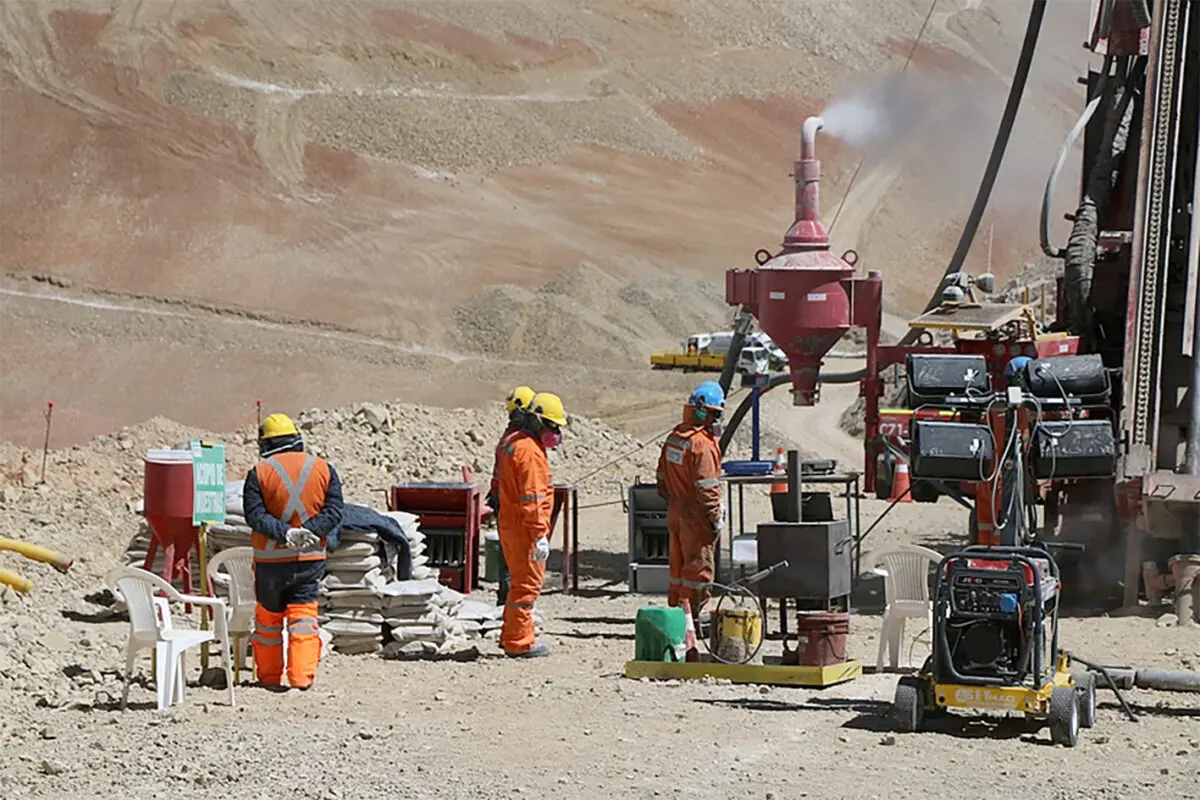
RFE/RL reported that the delegation would include representatives from Boeing, Citibank, and Franklin Templeton, “as well as businesses operating in critical minerals and other strategic sectors.”
In comments to RFE/RL, Daniel Rosenblum, formerly deputy assistant secretary of state for Central Asia from 2014 to 2019 and then U.S. ambassador to Uzbekistan (2019-2022) and Kazakhstan (2022-2025), noted that the secretary of state’s large business delegation was unusual but “may lead to more successes in terms of deals being signed and new investments.”
He added, however, that “the realities of investing in Central Asia remain the same.” He pointed to “the realities of distance, logistics, financing, finding a good partner. All of those things remain the same, regardless of whether you have 100 companies, 200 companies, or 20 companies.”
The joint statement published on October 19 – titled “C5+1: Historic Partnership, Prosperous Future” – concluded with this: “We envision C5+1 cooperation that continues to deliver regional solutions to global challenges.”
Of course, per usual with the Trump administration, those challenges don’t include climate change, a major complicating issue for regional states bent on building their future economies on the back of AI and mining, both of which are water and energy-intensive industries. And they didn’t touch on human rights, either.
Instead, the statement highlighted trade and connectivity, specifically the Trans-Caspian Trade Route, as well as security. It references “untapped natural resources” and states, “we will combine our strengths to be a collective, powerful driver of regional energy sector development.”