 By Blockchain News | Created at 2026-10-19 15:31:39 | Updated at 2026-10-19 16:14:26
48 minutes ago
News
AMD says Absci’s antibody-design workflow ran 3x faster on Instinct GPUs using ROCm and optimized Triton kernels, while keeping output quality.
Caroline Bishop Oct 19, 2026 15:26 UTC
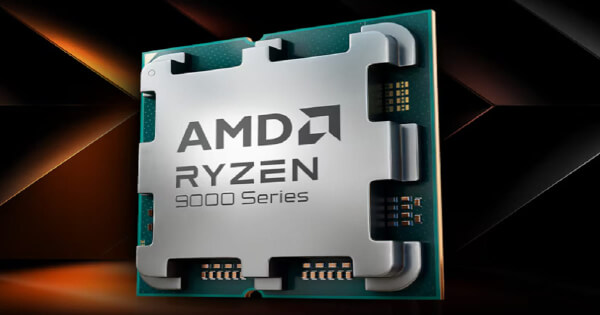
AMD said on 19 Oct. 2026 that its collaboration with Absci has delivered a threefold speedup in Absci’s AI antibody-design workflow after the company ran its AbsciBind co-folding model on AMD Instinct accelerators using the open ROCm software stack and optimized Triton kernels. The result matters because the workflow sits inside Absci’s broader Origin platform for target discovery and de novo antibody design, where inference and model training are part of the company’s experimental development loop.
Evidence and context
According to AMD’s blog post dated 19 Oct. 2026, the companies set up an AMD Instinct environment to mirror Absci’s production stack in Oracle Cloud Infrastructure and then tested the same workloads under Absci’s benchmarking protocols. AMD said the team initially found output quality metrics to be consistently equal in early runs, then addressed performance gaps through kernel optimization work. The post says the final result was a 3x performance improvement versus the production version of Absci’s AbsciBind model while maintaining output quality.
AMD attributed the gain to triangle-attention and triangle-multiplicative-update operations used in the co-folding model, which were optimized through Triton kernels contributed as part of AMD’s work on OpenFold3. The company said those kernels also apply to other Absci models that use the same operations, including AbsciDiff. Jovan Cejovic, principal software engineer and AI platform lead at Absci, said in the AMD post that the ROCm setup was straightforward once configured correctly, and that the kernel additions substantially increased throughput in the antibody-design pipeline.
The announcement also says Absci has acquired a new cluster of AMD Instinct MI300X GPUs from OCI to support Origin-3, which it describes as its next-generation structural-biology and antibody-design platform. AMD said the companies plan to continue working together on future Instinct accelerators and broader deep-learning-stack optimizations. The post adds that the kernels are open source and are intended to be reusable by other teams working on the same operations.
Absci is a clinical-stage biopharmaceutical company headquartered in Vancouver, Washington. In separate company updates, it said on 11 Aug. 2026 that it had reported positive interim Phase 1 HEADLINE data and completed a $100 million offering that included a $40 million strategic investment from Eli Lilly. On 24 Sept. 2026, it announced preliminary details for a planned Phase 2 STORYLINE trial of ABS-201 for endometriosis, with initiation anticipated in mid-2027. Absci is scheduled to report third-quarter 2026 results on 12 Nov. 2026, according to its investor relations page.
AMD included a disclosure that all performance and cost-savings claims in the post were provided by the third-party organization featured and were not independently verified by AMD. The company also said the results may not be typical and depend on a range of variables.