By The Diplomat | Created at 2026-08-14 19:25:43 | Updated at 2026-08-14 21:40:33
9 hours ago
By The Diplomat | Created at 2026-08-14 19:25:43 | Updated at 2026-08-14 21:40:33
9 hours ago
The Pulse | Society
How the Taliban turned Afghanistan into a country where half the population has been ordered to disappear.
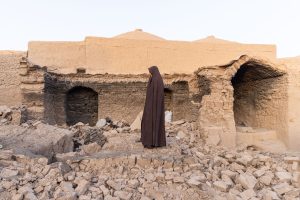
Fatima keeps her medical textbooks in a cupboard she no longer opens. Her university ID card, with its photograph of a 19-year-old who intended to become a doctor, sits among them like a relic from another country. In a sense, it is. The Afghanistan that printed the card – a state with a constitution, a free press and women in its universities, courtrooms, and newsrooms – no longer exists.
“Sometimes I look at a bird and feel jealous, because it has more freedom than I do,” she told me from Kabul, where, at 24, she describes herself as a prisoner in her own home. “I often think that if the Taliban had not come, I would still be at university, working toward my biggest dream of becoming a doctor. Now, instead of dreaming about my future, I spend my days wondering how I will survive and asking myself, ‘Why me?’”
August 15 marks five years since the fall of Kabul, and Fatima’s question has an answer, though not one that offers her any comfort. It is not just her. Roughly 20 million Afghan women and girls have been erased from public life – not by accident or by the chaos of war but by design. Decree by decree, ministry circular by ministry circular, the removal of half of Afghanistan’s population from its schools, offices, parks, and airwaves transitioned seamlessly from an emergency into an administrative routine.
A System Built Decree by Decree
What began in the autumn of 2021 as a scattering of individual prohibitions has hardened into a legal and bureaucratic machine. According to U.N. monitoring, the Taliban have issued hundreds of decrees and directives since seizing power, a large share of them aimed specifically at women and girls. Each one has shrunk the space in which a woman may learn, work, travel, speak, or simply exist, and together they form what U.N. experts and a growing number of governments now call a “gender apartheid.”
The dismantling of education came first and cut deepest. In March 2022, girls were barred from school beyond the sixth grade. In December 2022, women were expelled from every public and private university in the country. In December 2024, the Taliban closed even medical and midwifery institutes, the last narrow professional medical path left open to women like Fatima. Afghanistan is today the only country on earth where girls are forbidden to study because of their gender; UNESCO puts the number locked out of secondary school at more than 2.2 million.
Work followed the same trajectory. Women were dismissed from the civil service and told to stay home on reduced salaries; in January of this year, according to the U.N. human rights office, even those payments stopped and their employment was formally terminated. Women were banned from working for national and international NGOs in December 2022 and for the United Nations itself in April 2023. In July 2023, the Taliban ordered the closure of thousands of beauty salons, one of the last sectors in which women could still earn an income, destroying an estimated 60,000 jobs. Since September 2025, Taliban forces have gone further still, physically blocking women, including U.N. staff, from entering U.N. compounds.
These restrictions now define a woman’s daily life. She may not travel any long distance without a mahram, a male guardian. She is banned from parks, gyms, sports facilities, and public bathhouses. Unmarried women have been denied work and health care simply for having no husband. The “vice and virtue” law of August 2024 ordered women to cover their faces and declared that a woman’s voice should not be heard in public; in several provinces, women’s voices have since been banned from radio and television altogether, and female journalists can no longer work at all, according to Human Rights Watch. Women have been arrested on the street for “improper hijab,” most recently in a wave of detentions in Herat this January, part of a broader crackdown on women’s clothing and public presence.
The law itself has been remade around their absence. The courts, constitution, and statutes that once protected Afghan women, including a minimum marriage age and the criminalization of forced marriage, have been swept away. A decree published in May of this year sets out procedures for annulling a child marriage once the girl reaches puberty while establishing no minimum age of marriage at all. U.N. Women and Amnesty International warn that it effectively normalizes the marrying-off of children.
Not Only Women
The war on women is the most visible face of Taliban rule, but five years in, almost every group outside the movement’s own narrow circle has something to fear.
Consider the Hazaras, the country’s Shiite minority, comprising perhaps a fifth of the population. The Hazaras sit at the intersection of every persecution in Afghanistan: ethnic, religious, and, for Hazara women, gender. A growing number of experts describe their treatment as meeting the threshold of crimes against humanity, and potentially genocide. In July 2025, Taliban authorities forcibly evicted some 200 Hazaras – 25 families, including children and the elderly – from Rashk village in Bamiyan after siding with rival land claimants; similar seizures and displacements have been documented in Daykundi, Uruzgan and across the central highlands. The law governing the personal affairs of Shiite Muslims has been revoked, stripping the community of legal protections, and Ashura and Muharram commemorations, the heart of Shiite public religious life, have been pushed behind closed doors. The bombs, meanwhile, have never stopped: Islamic State-Khorasan Province (ISKP) continues to strike Hazara neighborhoods, schools and buses, as it did at the Kaaj Education Center in 2022, killing 54 people, most of them young Hazara women sitting a practice exam.
Or consider the journalists. The free press built over 20 years – 547 outlets before the takeover – has been gutted. Nearly half of Afghanistan’s media organizations have closed, and more than two-thirds of its 12,000 journalists have left the profession, including eight in ten women journalists, according to Reporters Without Borders. More than 165 media workers have been arrested since August 2021, 25 of them in 2025 alone, while the U.N. has documented 256 instances of arbitrary arrest and detention of journalists, some of whom were tortured.
Men are also suffering. While women and girls have been excluded from the classroom, the boys’ curriculum has been rewritten too. Mathematics and science have been chipped away to expanded religious instruction, as if the project were not only to remove women from the nation’s future but to narrow the future itself. Meanwhile, men who served the previous government’s army and police live in hiding, vulnerable to reprisals, disappearances and killings despite a promised amnesty.
LGBTQ Afghans face criminalization under the vice and virtue law, along with arrest, lashing, and imprisonment. The International Criminal Court’s arrest warrants against the Taliban’s supreme leader and chief justice cite the persecution of women, girls, and LGBTQ people as crimes against humanity.
Public floggings and executions have returned to the grounds where football was once played. By the Taliban Supreme Court’s own account, at least 1,186 people were flogged and six publicly executed in a single year, from March 2025 to March 2026, bringing the total to at least 11 public executions since the takeover. The spectacles are watched by crowds of thousands, including children. The lashes fall for “crimes” such as theft, adultery, and, for women, “running away from home.” In one day in Sar-e Pol province, 63 people, 14 of them women, were flogged in a sports stadium. The U.N. has condemned the punishments as cruel, inhuman and contrary to the right to life, to no discernible effect.
Beyond the decrees, there is exile. Some 5.8 million Afghans were refugees in 2025, one of the largest displaced populations on earth, even as Iran and Pakistan expelled more than 2 million people in a single year – many of them born abroad, deported into a country they had never lived in, arriving in a homeland where almost half the population needs humanitarian aid to survive.
The Cost of Erasing Half a Country
U.N. Women estimates that denying girls a secondary education costs Afghanistan 2.5 percent of its gross domestic product every year. Only one in four Afghan women is working or seeking work, against nearly 90 percent of men, one of the widest gender gaps in the world. According to UNICEF the education ban will cost the country some 25,000 future teachers and health workers, in a nation where maternal mortality is projected to rise sharply and early childbearing to surge. Around 21.9 million people, nearly half the population, are projected to need humanitarian assistance this year, a crisis deepened by aid cuts, drought, and the return of almost 3 million deportees.
The Afghans still inside the country keep asking the international community the same question: Why the silence? U.N. experts describe the situation as gender apartheid. The ICC has sought the arrest of the Taliban’s most senior leaders. And yet foreign governments have begun to normalize relations, receiving Taliban delegations to discuss migration and deportations – negotiating, in effect, over how many more Afghans can be sent back into the system described above.
For Fatima, and for millions like her, normalization means one thing: that the world has accepted her disappearance. Five years ago, she was studying to save lives. Today her books are hidden in a cupboard, her university ID is a relic, and her future is a window she is not allowed to open.