By The Rio Times | Created at 2026-08-14 07:06:58 | Updated at 2026-08-14 09:55:15
2 hours ago
By The Rio Times | Created at 2026-08-14 07:06:58 | Updated at 2026-08-14 09:55:15
2 hours ago
REGIONAL · TRADE
Key Facts
—The deal: The AfCFTA Secretariat has signed a 20-year, US$3.1 billion concession with Bergmans Security Consultants and Supplies Limited. It was signed in Abuja on 6 August 2026.
—Who pays: Bergmans finances the full US$3.1 billion under the concession. The Secretariat says member states take on no additional financial obligation.
—The reach: About 50 African countries have already signed on, according to Secretary-General Wamkele Mene.
—The market: The AfCFTA covers roughly 1.3 billion people and a combined GDP the Secretariat puts at about US$3.4 trillion.
—What gets built: Non-intrusive inspection technology, integrated data centres and multilingual customs portals covering the continent’s official languages.
—The rollout: Bergmans says the platform will be deployed in at least six countries first, then expanded.
—The template: The model follows Nigeria Customs Service reforms delivered through the same company’s Trade Modernisation Project.
Africa has handed a single private company a 20-year contract to rebuild the machinery of its borders. The AfCFTA customs modernisation project, signed in Abuja on 6 August 2026, gives Bergmans Security Consultants and Supplies Limited a US$3.1 billion concession covering about 50 countries.
One-stop reference
Company Intelligence
Every listed company in Latin America — financials, ownership and structure for 1,450+ companies across 26 exchanges, in one place.
What the AfCFTA customs modernisation concession covers
The agreement runs for 20 years and is valued at US$3.1 billion. Wamkele Mene, secretary-general of the African Continental Free Trade Area Secretariat, signed for the trade bloc; Saleh Ahmadu, chairman of Bergmans, signed for the company.
The company finances the whole amount. Under the concession structure, member states are not asked to contribute capital, and the Secretariat has stressed that the arrangement adds no new financial obligation for them.
The physical and digital build-out is broad. It includes non-intrusive inspection technology, integrated data centres and multilingual customs portals designed to work in the continent’s official languages.
Deployment will not be simultaneous. Bergmans has said the platform goes live in at least six countries first, before wider rollout across the roughly 50 states that have signed on.
Why borders, not tariffs, are the binding constraint
The AfCFTA began trading in January 2021 and brings together 54 African nations, making it the world’s largest free trade area by number of participants. Its central promise is to remove tariffs and non-tariff barriers across a market of about 1.3 billion people.
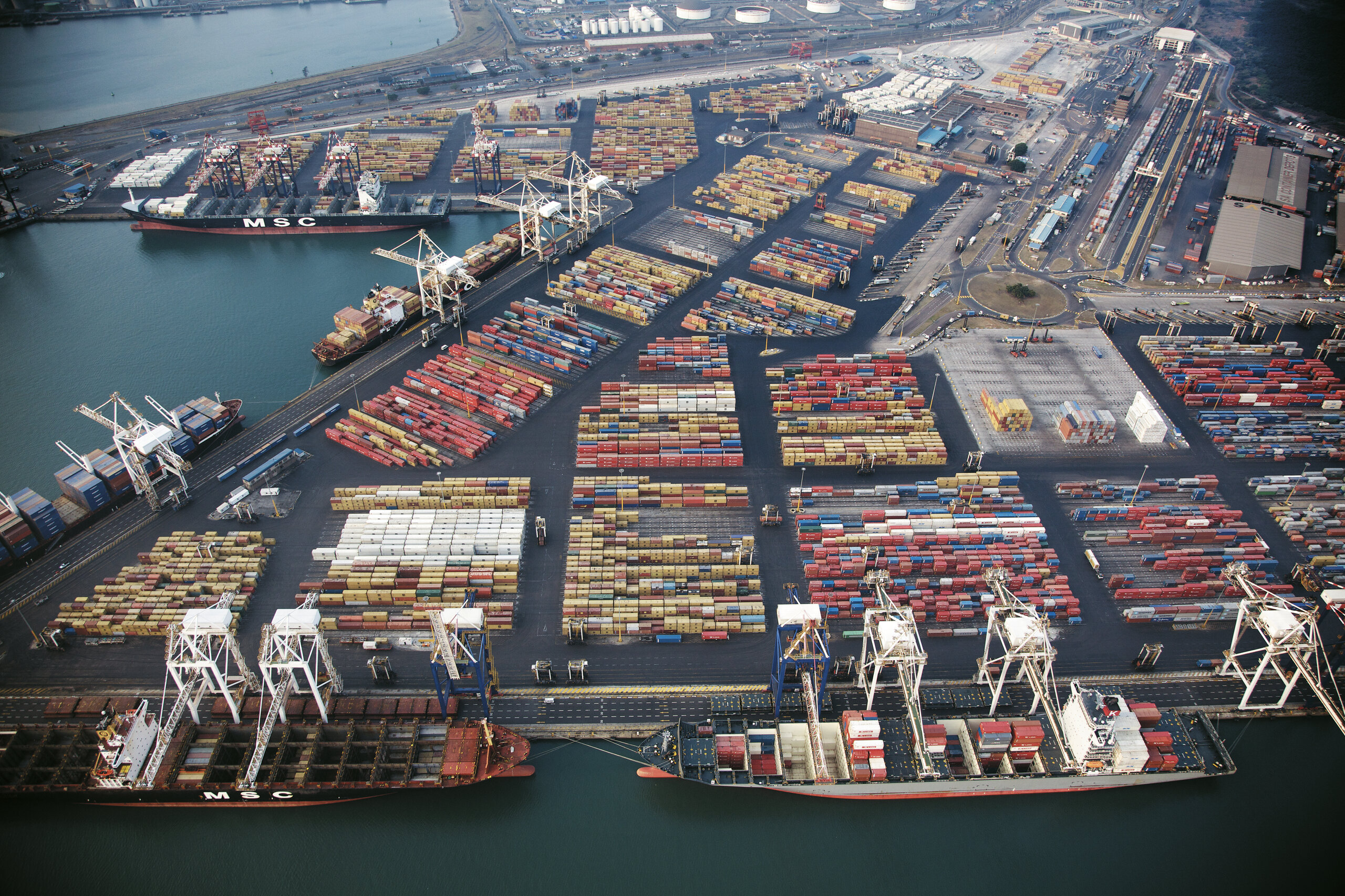
Tariff schedules, however, were never the hardest part. Trade economists have consistently identified fragmented border systems, incompatible paperwork and slow cargo clearance as the real cost.
A truck that waits three days at a crossing is paying a tax that no tariff schedule records. Multiply that across a continent of 54 customs regimes and the arithmetic explains why intra-African trade has stayed stubbornly low.
The project is designed to attack exactly that: harmonised procedures, shared information, better risk management and faster clearance. Improved revenue collection for governments is the sweetener that makes it politically saleable.
Nigeria as the pilot
The model did not come from a consultancy report. It came from the Nigeria Customs Service, which deployed the same company’s digital systems under the country’s Trade Modernisation Project.
Mene was explicit about the lineage. “The Nigerian experience demonstrated that technology can transform customs administration,” he said at the signing, adding that the results gave the Secretariat confidence to replicate the approach.
Nigeria’s Infrastructure Concession Regulatory Commission has since claimed the wider credit, saying its public-private partnership structure became the template for the continental deal. Its director-general, Jobson Ewalefoh, made the point in a statement issued in Abuja on 11 August.
For Nigeria this is a rare export of governance rather than commodities. Whether the results travel is the open question, since customs performance is as much about political will as about hardware.
The risk in a single 20-year concession
Concession structures are attractive to cash-constrained governments because the private partner carries the upfront cost. The trade-off is duration and dependence.
Twenty years is a long time to be locked into one supplier for something as sensitive as border data. Customs systems handle commercially confidential trade flows and, in many countries, a large share of government revenue.
There is also a sovereignty question that African governments have raised repeatedly in other contexts. Integrated data centres serving 50 states will hold information that ministries have historically guarded closely.
None of that makes the project wrong. It does mean the governance arrangements, rather than the technology, will determine whether it is judged a success in a decade.
Why outside investors should care
Intra-African trade remains a small share of the continent’s total commerce, and most African economies still trade more with Europe, China and increasingly the Gulf than with each other. Anything that lowers the cost of moving goods internally changes that calculation.
For exporters in Latin America and elsewhere, faster and more predictable clearance also makes the continent easier to sell into. A shipment that clears in hours rather than days is a different commercial proposition.
The project sits inside a broader contest over who builds and controls African infrastructure, from railways and ports to the software at the border. The Rio Times follows that competition in Africa: The New Scramble.
A single signature in Abuja will not integrate a continent. It does, however, put a price and a timetable on the least glamorous part of the job.
Frequently asked questions
What is the AfCFTA customs modernisation project?
It is a continental programme to digitise and harmonise customs administration across Africa, delivered under a 20-year, US$3.1 billion concession signed between the AfCFTA Secretariat and Bergmans Security Consultants and Supplies Limited. It covers inspection technology, data centres and multilingual customs portals.
Who is paying for it?
Bergmans is financing the entire US$3.1 billion under the concession agreement. The AfCFTA Secretariat says the arrangement imposes no additional financial obligations on member states.
How many countries are involved?
Secretary-General Wamkele Mene said about 50 African countries had already signed on to the initiative. Bergmans says deployment will begin in at least six countries before wider expansion.
Why does African customs need modernising?
Inefficient customs procedures, fragmented border systems and slow cargo clearance are widely identified as the main obstacles to realising the benefits of the free trade agreement. The project is intended to harmonise procedures, speed clearance and improve revenue collection.
This article was produced by The Rio Times’ automated newsroom system. How we use AI · Report an error
The Rio Times · Power Map
See who really holds power in Latin America
Click to open the Power Map →