By The Rio Times | Created at 2026-08-07 16:36:29 | Updated at 2026-08-07 17:46:29
1 hour ago
By The Rio Times | Created at 2026-08-07 16:36:29 | Updated at 2026-08-07 17:46:29
1 hour ago
Rio Times · Africa Intelligence Brief August 7
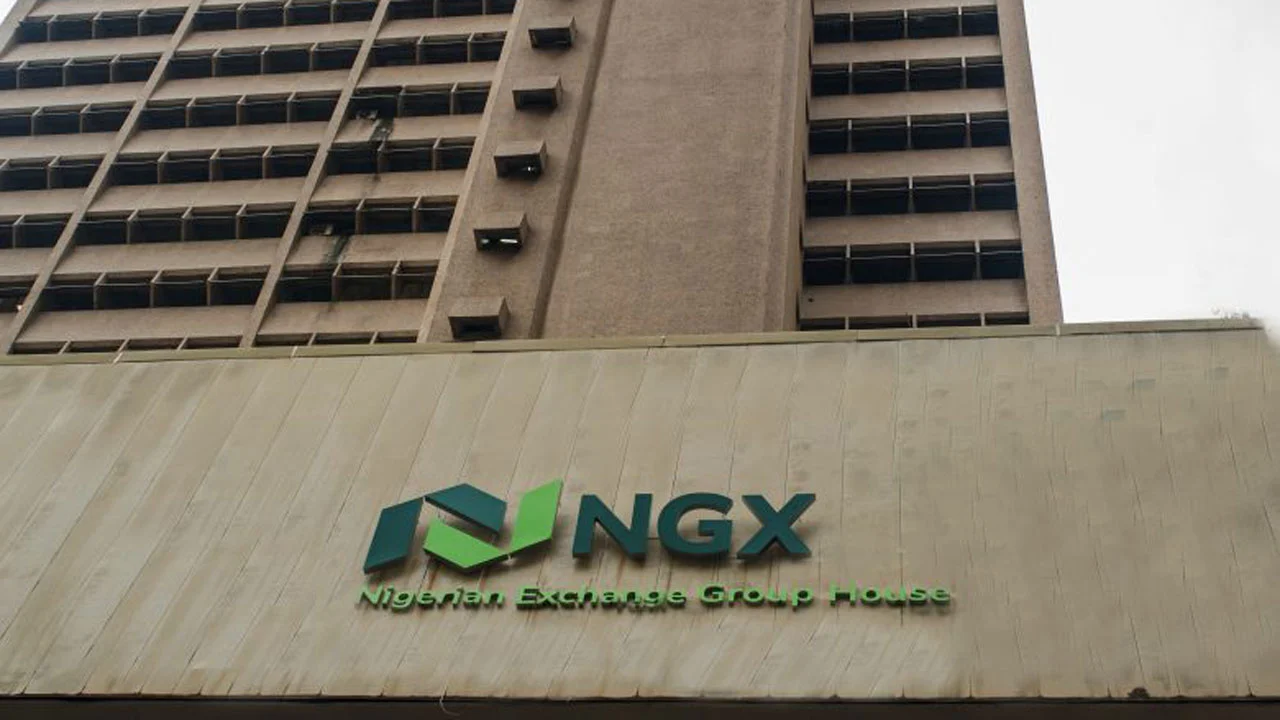
—NNPC listing President Bola Tinubu said on Thursday that Nigeria’s state oil company will be reformed and listed on the Nigerian Exchange, without setting a date.
—Market surge Nigeria’s market value has risen from about 30 trillion naira in 2023 to roughly 160 trillion, with the main index up from 52,000 to 244,000.
—Pension money South Africa’s SA-H2 hydrogen fund closed a first round of 3 billion rand, backed by the pension fund of government employees.
—Fuel prices Dangote cut its depot price of petrol to 1,165 naira a litre from 1,215, though filling stations have kept their old rates.
—Namibia’s terms Namibia is seeking about 250 million dollars for industrial decarbonisation, insisting on processing lithium and rare earths at home.
—A memorial Burkina Faso has budgeted 117 billion CFA francs for a memorial to the revolutionary leader Thomas Sankara.
One-stop reference
Company Intelligence
Every listed company in Latin America — financials, ownership and structure for 1,450+ companies across 26 exchanges, in one place.
An oil company, a pension fund, a hospital chain and the memory of a dead revolutionary all acquired a figure this week.
Nigeria – The State Takes Its Oil Company to Market
A promise made in the villa
President Bola Tinubu told the leadership of the Nigerian Exchange on Thursday that the state oil company will be reformed and listed on the market. He offered no timetable, which makes this a commitment rather than a plan.
The exchange had just presented him with its own scorecard. The market’s value has climbed from about 30 trillion naira in 2023 to roughly 160 trillion, and the main index from 52,000 points to 244,000.
Confidence upstairs, doubt at the pump
The mood in Abuja is that of a country that has decided it is investable again, willing to sell shares in the thing it once guarded most jealously. Tinubu tied the argument back to his early support for the Dangote refinery, casting private money as the engine rather than the guest.
Ordinary Nigerians spent the same day watching a different signal. Dangote cut its depot price of petrol to 1,165 naira a litre and diesel to 1,570, and filling stations simply kept charging the old rates.
Angola – The Exhale
Prices finally slow
Angola is approaching single-digit inflation for the first time in decades, and its central bank has begun cutting rates. For a country that spent a generation outrunning its own prices, that is less a data point than permission to stand still.
The national feeling is one of cautious relief rather than celebration. Angolans have seen disinflation promised before.
Courted for a railway
Luanda is also being courted, because its coastline is where a railway meets the sea. The Lobito corridor carries copper and cobalt from Congo and Zambia to Angolan ports, and it is the infrastructure Washington has backed most heavily on the continent.
American and Angolan naval commanders met in Rabat last month to discuss modernising that capability. Nothing was signed, and the relationship remains long on frameworks and short on hardware.
South Africa – Thoroughness Without Joy
Civil servants buy into hydrogen
The SA-H2 fund closed its first round at 3 billion rand, about 182 million dollars, on Thursday. Among the five backers is the Public Investment Corporation, investing on behalf of the pension fund of government employees.
The others are the European Commission through its Global Gateway strategy, the Dutch state investor Invest International, Sanlam and the Industrial Development Corporation. The fund is aiming for 12 billion rand by the middle of 2028.
A country doing the paperwork
Twenty million dollars has already gone to a green ammonia project at Coega in the Eastern Cape, and up to four million to a fuels producer in Gauteng. South Africa is turning ports, minerals and sunlight into an industrial argument, one committed rand at a time.
The temper is the same grim competence it showed a day earlier, sending its own police commanders towards prosecution. This is a country doing correct things without appearing to enjoy any of them.
Morocco – The Composed Transaction
Gulf money buys a stake
The private hospital group AKDITAL is opening 15% of its international holding to Arab Invest, a Saudi-based investor. It is a Moroccan company selling part of its expansion abroad to Gulf capital.
Separately, Saham Bank has launched a 500 million dirham programme to overhaul the lender. Two deals in one day, in two different industries.
Neither eager nor anxious
Morocco spent a decade making itself investable, through finance-centre rules, ports and energy contracts. The mood now is neither eager nor anxious but simply businesslike, a country that has stopped explaining itself to investors.
The buyers are increasingly from the Gulf rather than Europe. That shift is quiet, and it is the part worth watching.
An oil company, a pension fund, a hospital group and the memory of a dead revolutionary all acquired a number this week — the clearest sign yet of a continent that has stopped asking what it is worth and started saying it.
Namibia – Impatient Dignity
Terms, not just money
Namibia is chasing about 250 million dollars for industrial decarbonisation, having been chosen for a billion-dollar global programme aimed at hard-to-abate industries. Its stated priority is processing lithium and rare earths at home rather than shipping them out raw.
The country’s position is blunt and often repeated. It does not want to merely export raw materials, it wants to industrialise.
A small country setting conditions
That insistence sits inside a wider financing structure built with Dutch and European partners, including a fund targeting around a billion euros. The same Dutch managers appear in South Africa’s hydrogen vehicle, which tells you the machine is regional rather than national.
There is an awkward detail underneath. The official who framed Namibia’s hydrogen ambition left last November and now works for a German engineering group that sells electrolysers into exactly this market.
Burkina Faso – A Price on Self-Reliance
117 billion francs for a memory
Burkina Faso has budgeted 117 billion CFA francs for a memorial to Thomas Sankara, the revolutionary president killed in 1987. That is roughly 190 million dollars committed to remembrance.
Sankara is remembered above all for preaching that his country should owe nobody anything. The government is spending heavily to honour a man whose central argument was frugality.
Reverence as policy
The mood in Ouagadougou is reverent and defiant at once, using the past to explain the present. A military government leaning on a revolutionary’s memory is making an argument about legitimacy, not history.
It is the sharpest counterpoint on the continent today. Everywhere else states are selling stakes in themselves, and here one is buying back its own myth.
The Bigger Picture
Today’s through-line is pricing. Nigeria has offered its state oil company to the market, Morocco has sold a slice of a hospital group to Riyadh, and South Africa has put the retirement savings of its civil servants behind green hydrogen.
What is genuinely new is not the foreign money, which has always come. It is that African institutions are now on the other side of the table with capital of their own, and that Namibia feels able to name conditions rather than accept them.
Against all of it stands Burkina Faso, budgeting 190 million dollars to honour a man who preached owing nothing to anyone. A continent that has stopped asking what it is worth is also arguing with itself about what should never have been for sale.
Africa Intelligence Brief August 7: What We Are Watching
- Coming months – Whether Nigeria attaches an actual timetable to the promised NNPC listing.
- Today – Whether Nigerian regulators force filling stations to pass on Dangote’s price cut.
- 13 August – Zambia’s presidential and parliamentary vote, six days away.
- Mid-2028 – The SA-H2 fund’s target of 12 billion rand, against 3 billion committed so far.
- Coming months – Whether Angola’s rate cuts continue as inflation approaches single digits.
- Ongoing – Whether Namibia’s insistence on local processing survives contact with buyers.
Go Deeper
The full Africa Intelligence Dossier — the interactive risk dashboard, the six people who matter and the downloadable PDF — is updated daily by the Rio Times Intelligence Desk.
More from the Rio Times Intelligence Desk on August 7: the Europe Intelligence Brief, the Asia Intelligence Brief and the USA & Canada Intelligence Brief. For how these stories developed, see the Africa Intelligence Brief for August 6 and the Africa Intelligence Brief for August 4.
The Africa Intelligence Brief August 7 returns tomorrow morning.
Frequently Asked Questions
Is Nigeria actually listing NNPC on the stock exchange?
President Bola Tinubu said on Thursday 6 August 2026, during a meeting with the board of Nigerian Exchange Group and his economic management team at the Presidential Villa in Abuja, that the Nigerian National Petroleum Company Limited would be reformed and listed on the Nigerian Exchange. No timetable, size or structure was announced, so it remains a stated commitment rather than a scheduled transaction.
How much has the Nigerian stock market grown?
Nigerian Exchange Group told the president that the total value of listed stocks has risen from just under 30 trillion naira in 2023 to about 160 trillion naira, while the All-Share Index has climbed from around 52,000 points to roughly 244,000. The exchange said it expects the market’s value to reach about 230 trillion naira by the end of this year on the strength of expected listings.
Who is funding South Africa’s SA-H2 green hydrogen fund?
The fund announced a first close of 3 billion rand, about 182 million United States dollars, on 6 August 2026, from five committers: the European Commission through Global Gateway, the Dutch state investor Invest International, the Public Investment Corporation on behalf of the Government Employees Pension Fund, Sanlam Life Insurance and the Industrial Development Corporation. It targets a final close of 12 billion rand by mid-2028 and has committed 20 million dollars to the Hive Hydrogen Coega green ammonia project and up to 4 million dollars to a fuels producer in Gauteng.
Why is Burkina Faso building a memorial to Thomas Sankara?
The government has budgeted 117 billion CFA francs, roughly 190 million United States dollars, for a memorial to the revolutionary president assassinated in 1987, whose central message was that Burkina Faso should be self-reliant and owe nothing to outside powers. The scale of the spending has drawn attention precisely because it honours a leader remembered for frugality, and because the current military government leans heavily on his legacy for its own legitimacy.
Sources: Nigerian Exchange Group, BusinessDay NG, Punch, Legit.ng
LatAm Markets: Live Signals → — real-time movers, turnover leaders and FX across Latin America.