 By The War Zone | Created at 2026-08-18 12:41:32 | Updated at 2026-08-18 12:51:39
24 minutes ago
By The War Zone | Created at 2026-08-18 12:41:32 | Updated at 2026-08-18 12:51:39
24 minutes ago
The TWZ Newsletter
Weekly insights and analysis on the latest developments in military technology, strategy, and foreign policy.
The U.S. Air Force is looking for a new family of aerial targets that can replicate an extremely broad range of airborne threats, from small drones operating in swarms to stealth fighters, large uncrewed aircraft, strategic bombers, and airborne early warning aircraft.
The service wants these targets to be realistic enough to challenge modern sensors and weapons, but inexpensive and simple enough that they can be routinely risked, and even destroyed, during testing.
The requirements are laid out in a new Air Force Request for Information (RFI), which calls for a family of systems capable of representing the “full range of airborne threats, spanning from inexpensive ‘hobby drones’ to the most advanced adversary fighter and large-scale aircraft.” Responses are due September 28.
The service says the next-generation systems should be sufficiently inexpensive and straightforward to manufacture that they can be “treated as attritable or expendable when required.”
That represents a significant departure from the economics of certain existing aerial targets. The Air Force’s QF-16 full-scale aerial target, for example, is based on a converted fighter aircraft, and can be crewed when required. It solves the problem of putting a full-sized, high-performance target in the air, but consuming an F-16 for a test is fundamentally different from losing a purpose-built target designed to be produced and expended in quantity. The service also uses purpose-designed drones of many kinds as targets, as we will come on to later.

Test Missile Fired at Boeing's QF-16
The new effort is also deliberately open to approaches outside the traditional defense-industrial base.
The RFI calls for industry proposals “including commercial, modified commercial, dual-use, and non-developmental solutions.” The government is “particularly interested in non-traditional, commercially derived, or dual-use solutions” that can offer advantages in “cost, scalability, and simplicity over legacy systems.”
That language suggests the Air Force is not necessarily looking for another clean-sheet aircraft program. Instead, it appears interested in exploiting existing commercial technologies, manufacturing methods, propulsion systems, electronics and other readily available components to produce targets in significantly larger numbers and at lower cost.
The proposed systems would cover several distinct threat categories, with requirements changing substantially depending on what the target is intended to represent.
For advanced fighter aircraft, the Air Force wants targets capable of “supersonic capabilities (up to and exceeding Mach 1.6 at 40,000 feet)” along with high-agility and high-G combat maneuvers.
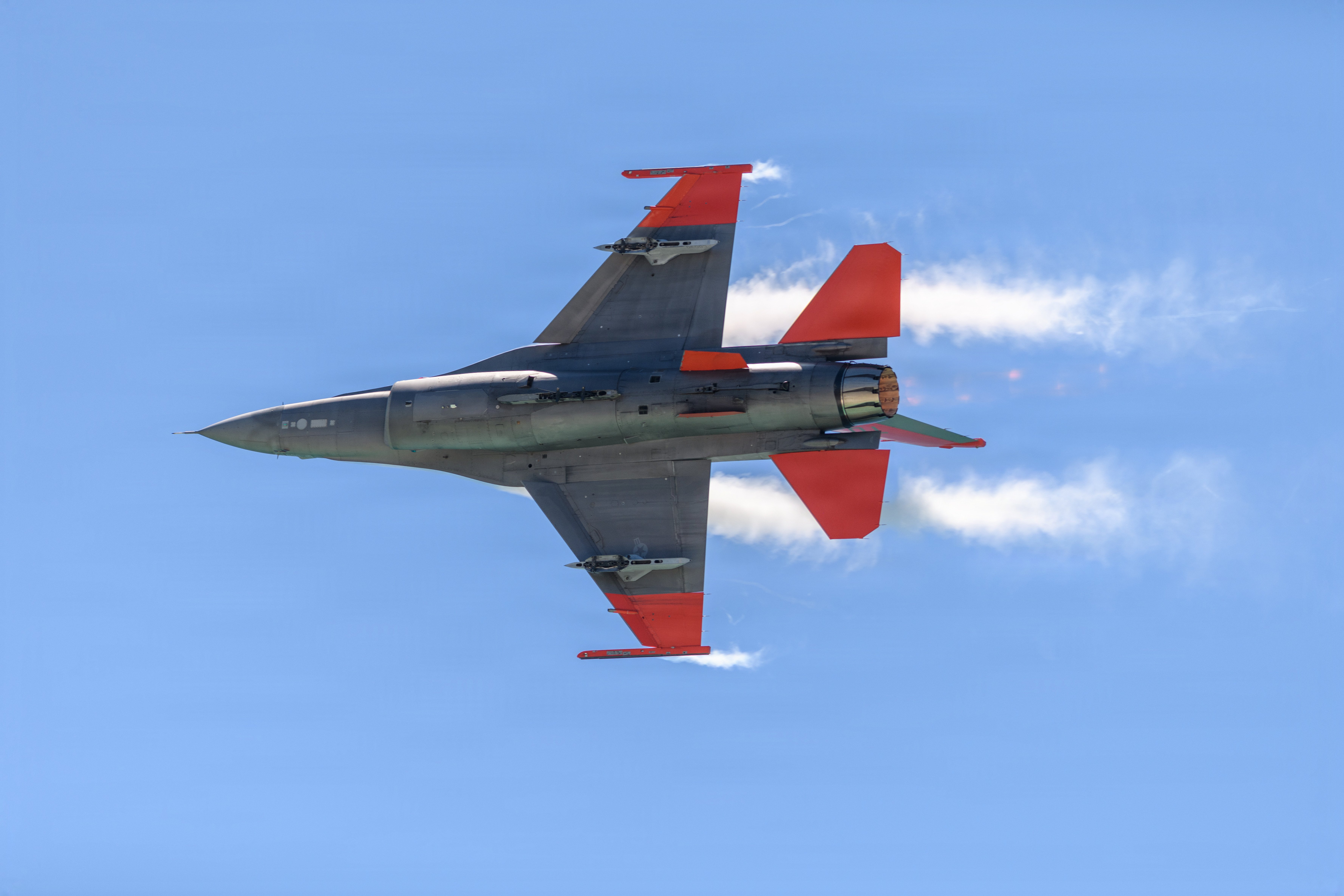 A U.S. Air Force QF-16 full-scale aerial target, assigned to the 82nd Aerial Targets Squadron at Tyndall Air Force Base, Florida, performs a high-speed flyby. U.S. Air Force photo by Capt. Justin Davidson-Beebe Capt. Justin Davidson-Beebe
Reflecting the need to mimic more advanced threat, including stealthy ones, the Air Force says the new targets should also provide precise low-observable radar cross-section profiles, multispectral infrared signatures, active radio-frequency emissions, and integrated electronic-attack capabilities.
That could be particularly important for testing weapons and sensors against fifth-generation-type threats — and what might come after. A conventional subscale target can reproduce aspects of an aircraft’s flight behavior, but it does not necessarily reproduce the radar, infrared, electromagnetic or electronic-warfare environment presented by a sophisticated combat aircraft.
The Air Force has been trying for years now to acquire new full-size target drones, or ones that can at least mimic real fast-moving tactical jets. As in the new RFI, the goal has also been for those drones to have stealth and other more modern features, or the ability to simulate those capabilities with a high degree of fidelity. So far, however, despite the launch of programs such as the 5th Generation Aerial Target (5GAT), progress in this regard has been extremely limited.
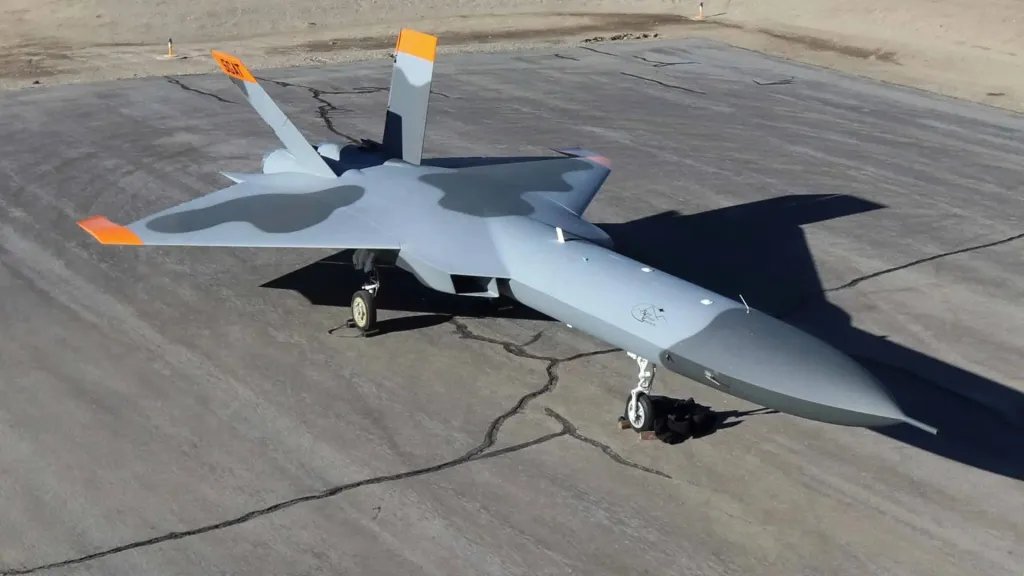 Sierra Technical Services’ 5GAT stealthy target drone seen here is a design the U.S. military has been at least testing for some time now. Sierra Technical Services
 A different set of requirements are outlined for targets representing C-130-sized multi-engine aircraft.
Here, the RFI calls for “matching the physical scale, slow subsonic flight envelopes, and propeller or turbofan propulsion characteristics of larger multi-engine aircraft.”
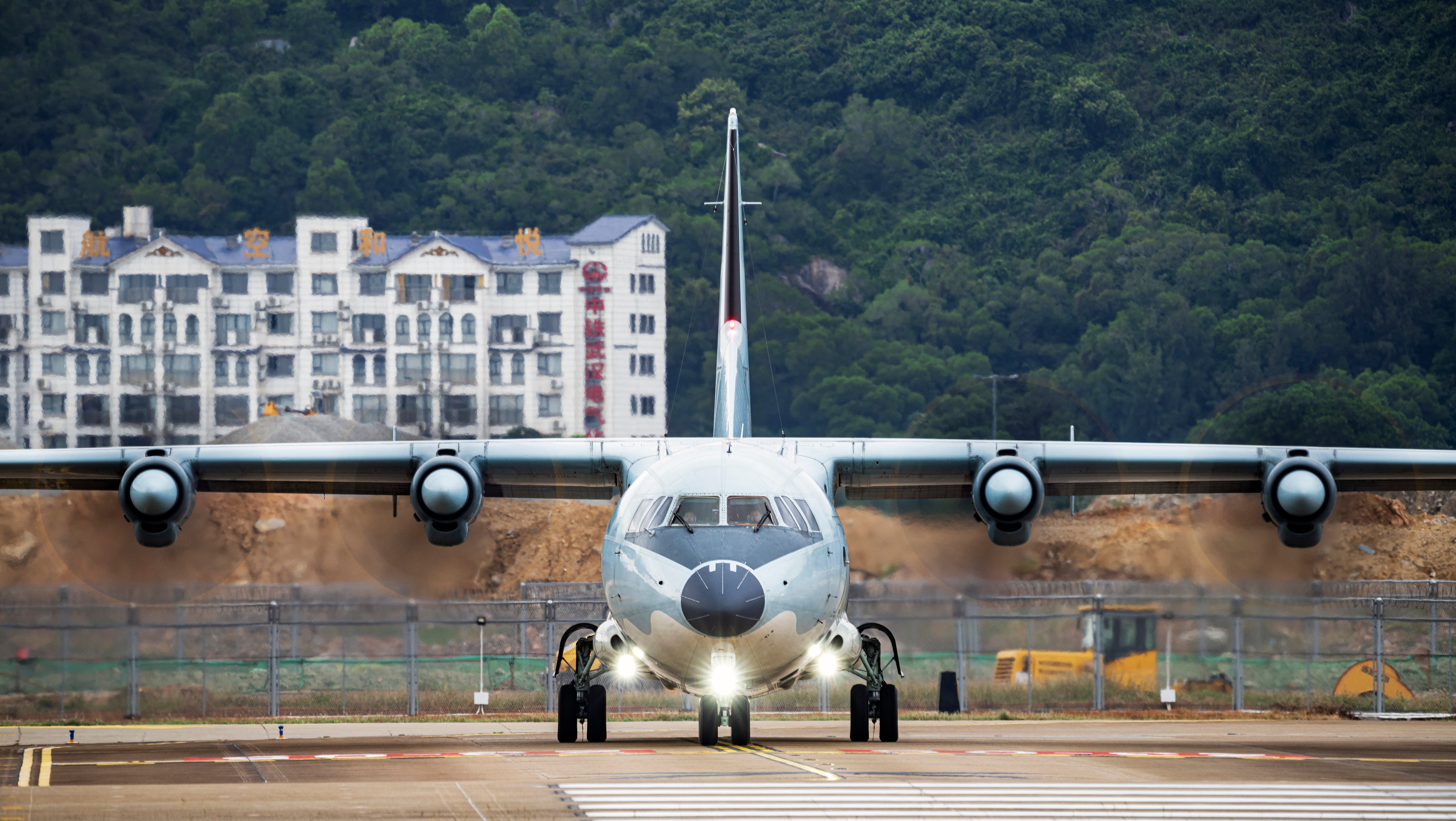 The Y-9 transport aircraft is broadly the Chinese equivalent of the C-130. Photo by VCG/VCG via Getty Images VCG
Those targets would need representative physical volume as well as basic RF and IR emissions and realistic radar returns. The Air Force specifically says these characteristics are intended to help verify missile-seeker guidance and assess warhead lethality against large-airframe targets.
For still larger aircraft, such as strategic bombers and AEW&C platforms, the emphasis shifts toward physical scale and signatures. The service wants targets capable of reproducing the “massive physical dimensions, multi-spectral thermal signatures, and heavy-aircraft radar strategic threats” associated with these aircraft.
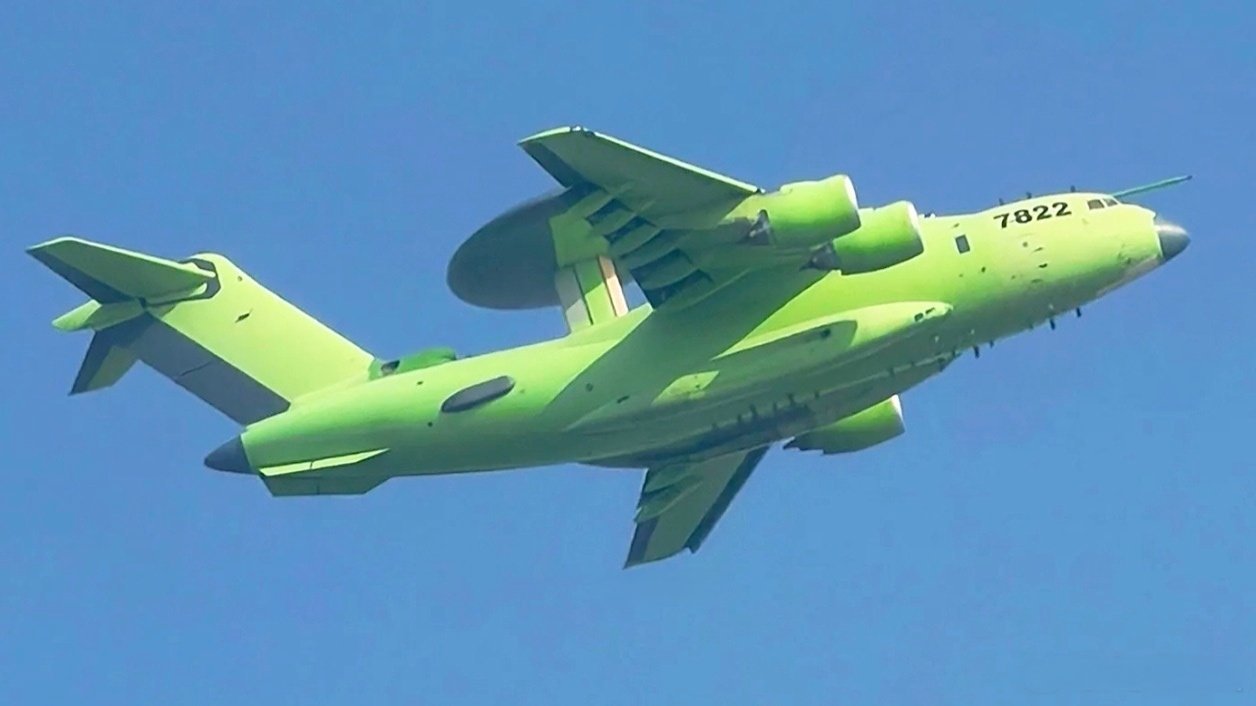 China’s new heavyweight AEW&C platform, the KJ-3000, which is based on the four-jet Y-20 cargo plane. via Chinese internet
 That requirement highlights one of the limitations of today’s subscale aerial targets. A small drone can be made to generate a particular radar return, but there are important differences between artificially reproducing a signature and putting a target into the test environment that physically occupies something approaching the volume and presentation of the aircraft being simulated.
The proposed family would also encompass multiple classes of uncrewed aircraft.
For Group 5 UAVs, the targets should be capable of operating at altitudes up to 50,000 feet.
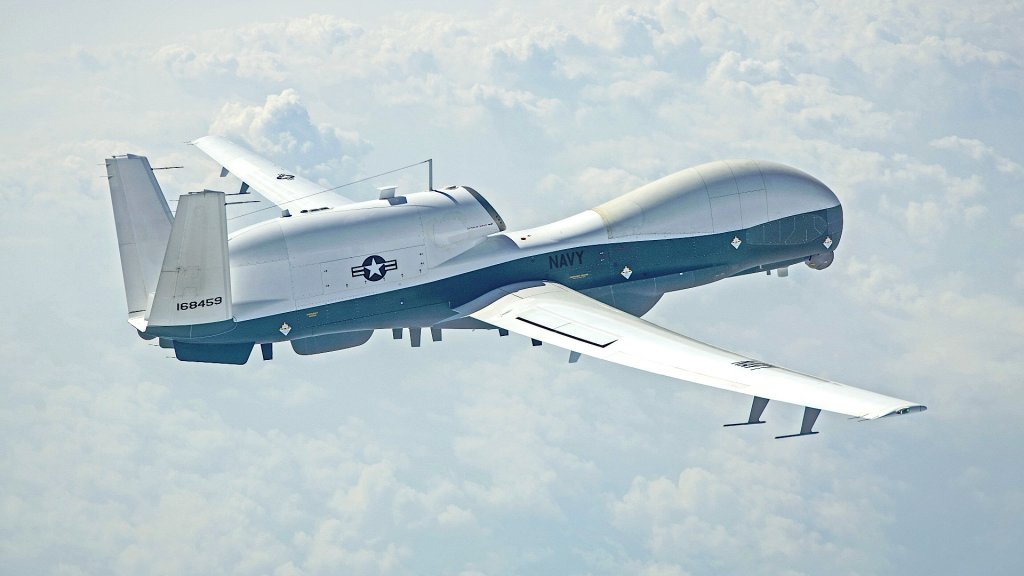 A stock picture of a U.S. Navy MQ-4C Triton surveillance drone. This represent Group 5 UAVs, which are the largest and most advanced uncrewed aircraft systems. U.S. Navy USN
Group 3 and Group 4 targets would need to fly at approximately Mach 0.5 to 0.8 and maneuver at between 3 and 6 Gs.
At the other end of the spectrum, Group 1 and Group 2 targets should fly below 150 knots and be capable of operating in swarms.
The inclusion of swarm operations reflects the fact that the Air Force wants at least part of the new target family to be able to reproduce the massed airborne threat that small uncrewed systems can present.
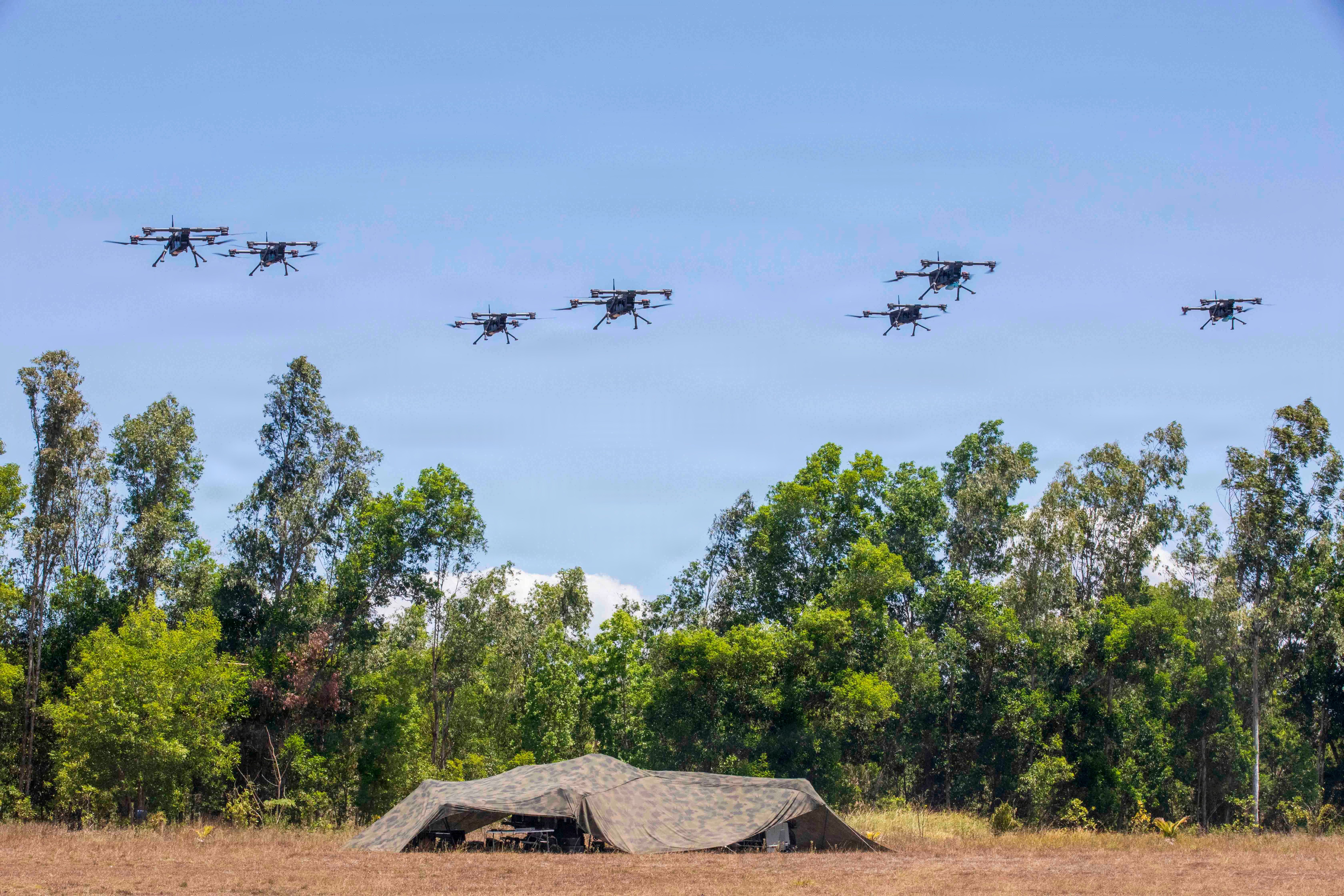 Unmanned Aerial Systems conduct a swarm demonstration in preparation for the Joint Pacific Readiness Center Exportable Exercise in Laoag City, Philippines, May 10, 2026. U.S. Army photo by Spc. Hunter Carpenter Spc. Hunter Carpenter
That could allow weapons and sensors to be evaluated against scenarios involving numerous inexpensive targets rather than a single isolated aircraft.
The Air Force has operated remote-controlled aerial targets for decades, but many of its existing systems represent very different approaches.
The BQM-167A, which entered service in 2007, is a subsonic subscale target roughly 20 feet long with an 11-foot wingspan. It is inexpensive relative to a fighter-sized aircraft, but its physical dimensions are nowhere near those of many of the aircraft the Air Force may need to replicate.
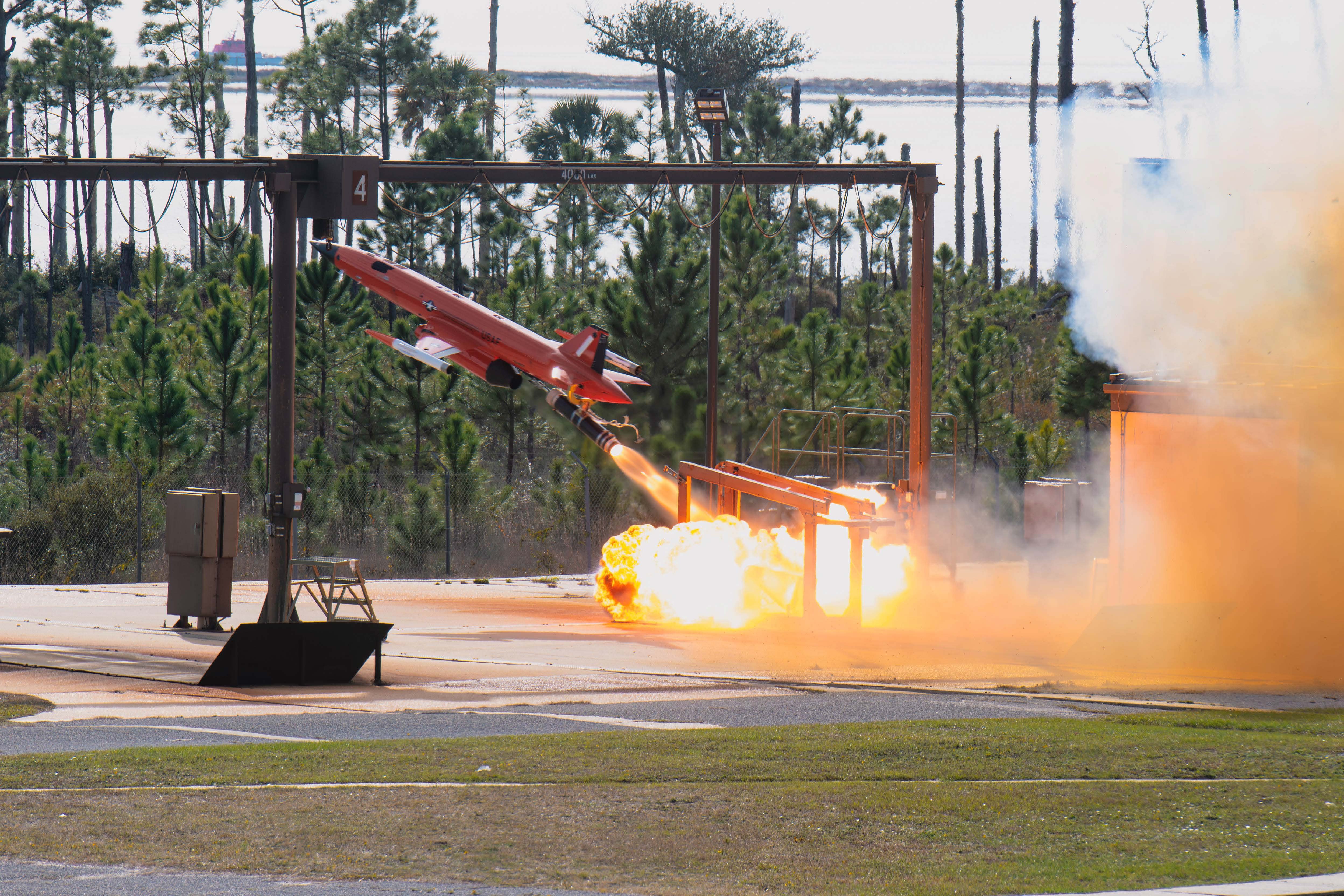 A BQM-167A Subscale Aerial Target launches from Tyndall Air Force Base, Florida, December 8, 2023. U.S. Air Force photo by Venessa Armenta Venessa Armenta
At the other end of the scale, converted QF-16s provide a full-scale target with genuine fighter performance, making them useful for testing against fourth-generation fighter-type threats.
But a converted F-16 is expensive to operate, cannot be expended in large numbers, and increasingly falls short when it comes to replicating a fifth-generation stealth aircraft, let alone a strategic bomber, an airborne early warning and control (AEW&C) aircraft, or a mass of inexpensive drones.
The new RFI appears designed to bridge that gap, and potentially eliminate it altogether by creating multiple classes of targets optimized for different threats.
Significantly, the effort put the requirement for targets to reproduce the characteristics that modern weapons and sensors use to find and defeat aircraft in the foreground.
That suggests the targets are intended to support testing across the entire kill chain, from initial detection and tracking through seeker acquisition, guidance, and terminal engagement.
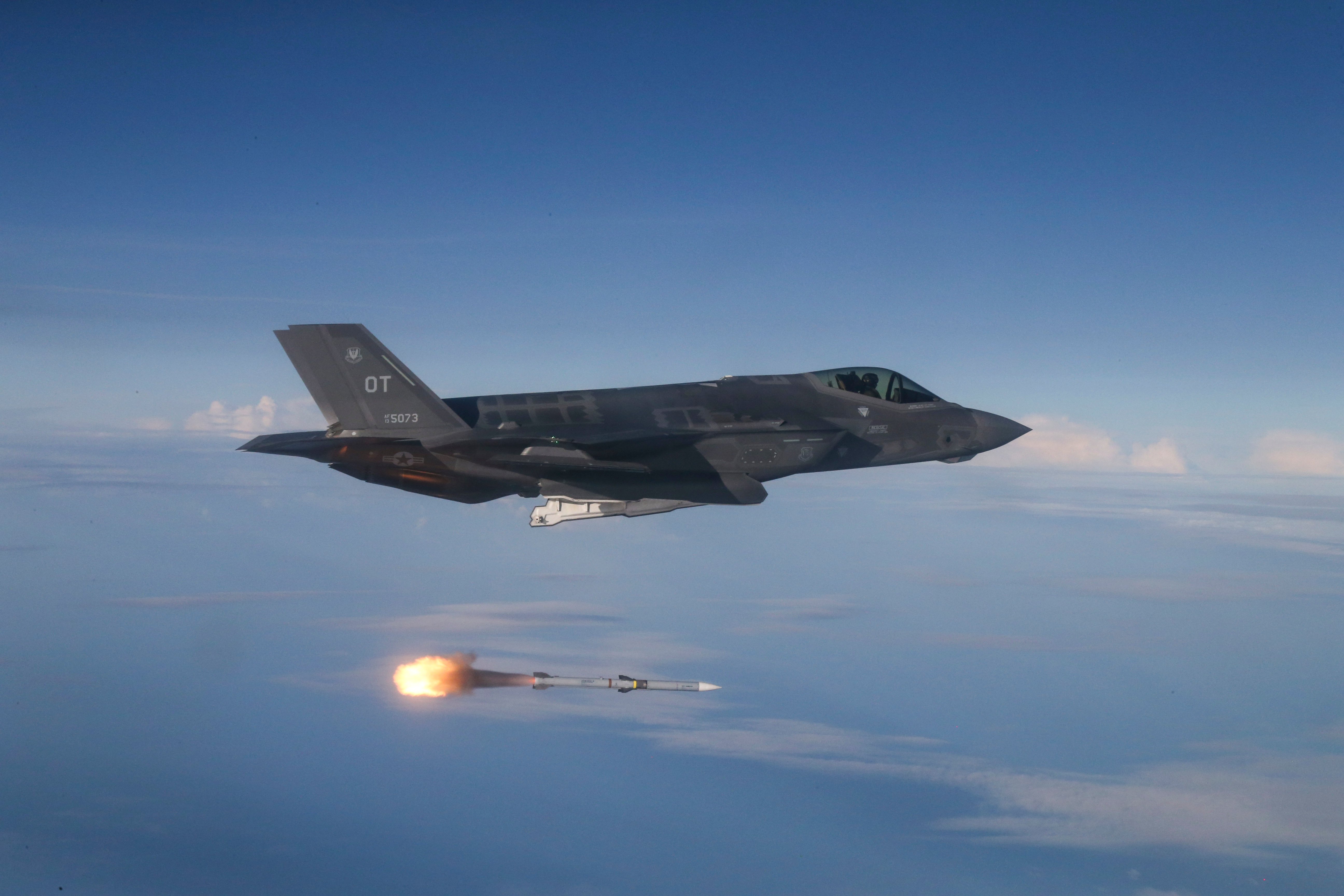 An F-35A assigned to the 31st Test Evaluation Squadron from Edwards Air Force Base, California, releases AIM-120 AMRAAM and AIM-9X missiles at QF-16 targets during a live-fire test over the Gulf of Mexico on June 12, 2018. U.S. Air Force Senior Master Sgt. Michael Jackson
There is also a strong emphasis on simplicity and scalability.
A target that costs almost as much as the system being tested is of limited value if the objective is to conduct repeated, realistic engagements. A target that can be manufactured cheaply enough to be routinely expended, meanwhile, would enable much more aggressive testing and larger numbers of test scenarios.
While it is relatively straightforward to produce a low-cost drone, the challenge will be producing one that can fly above 40,000 feet at supersonic speed, perform high-G maneuvers, generate controlled low-observable radar signatures, reproduce multispectral IR characteristics and conduct electronic attack.
The Air Force is therefore effectively asking industry to find the sweet spot where high-fidelity threat representation and mass-produced affordability intersect.
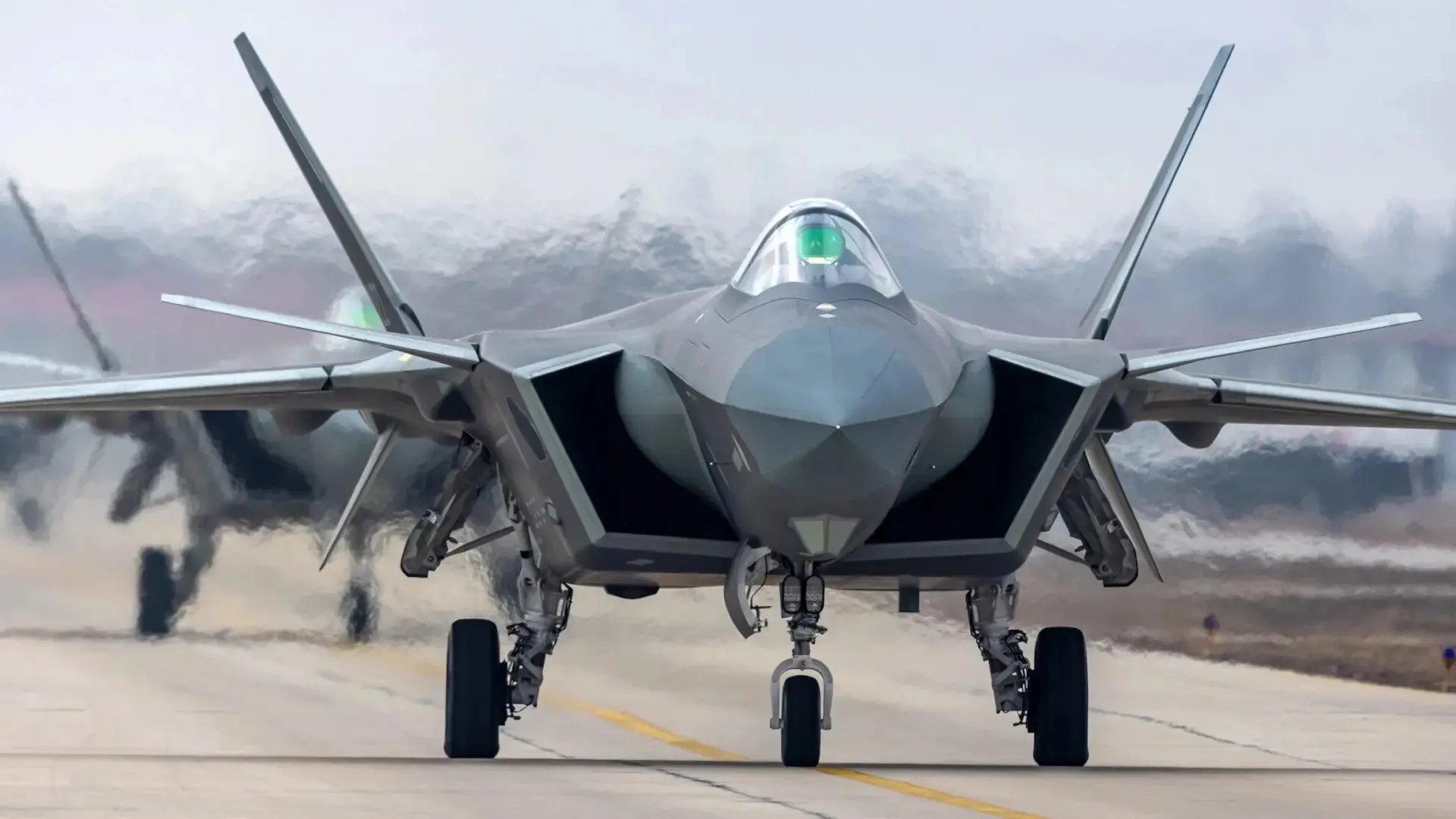 Chinese J-20 stealth fighters, one of the higher-end threats that the Air Force wants new target drones to help replicate. PLAAF
 If it succeeds, the resulting target fleet could look very different from today, with the Air Force employing a family of relatively inexpensive systems that can be configured to represent almost any fixed-wing aircraft that might be encountered.
As well as training, the same family of drones could support development and evaluation of radars, infrared sensors, electronic warfare systems, air defense networks, and other technologies against a much broader range of realistic airborne threats.
The breadth of the requirement is noteworthy. If it achieves its goals, it could allow the Air Force to replicate large numbers of future Collaborative Combat Aircraft (CCAs) as well as simulating swarms of small drones and barrages of one-way attack drones, reflecting the expected scale and diversity of future air warfare.
The new requirement ultimately calls for targets that can reproduce the speed, maneuverability, size, radar signature, infrared signature, electromagnetic emissions and electronic warfare capbilities of an increasingly diverse range of aircraft, while being cheap enough that losing them is an acceptable cost of testing and training.
Contact the author: [email protected]