By The Rio Times | Created at 2026-10-06 09:37:03 | Updated at 2026-10-06 10:56:55
2 hours ago
By The Rio Times | Created at 2026-10-06 09:37:03 | Updated at 2026-10-06 10:56:55
2 hours ago
ALGERIA · JUSTICE
Key Facts
- —The country Algeria, Africa’s largest country by area, is a gas-exporting North African state that keeps the death penalty in law.
- —What happened A criminal court in Algiers sentenced nine people to death over 113 kg of cocaine and 225,030 pregabalin pills.
- —Why it matters These are the first death sentences under Law 25-03 of July 2025, which added capital punishment for major drug crimes.
- —Who was sentenced Three defendants were present at the hearing, while six fugitives were tried and sentenced in absentia.
- —The catch Algeria has carried out no execution since September 1993, according to its own report to the United Nations.
- —The wider push On Thursday 1 October, the lower house of parliament voted to extend the death penalty to arson and child abduction.
An Algerian court has handed down the country’s first death sentences under a tough 2025 drug law. A criminal court in Algiers condemned nine people over 113 kilograms of cocaine, the state news agency reported on Monday 5 October.
Three of the nine were present at the hearing, and six fugitives were tried in absentia. Algeria has carried out no execution since September 1993, its government told the United Nations in 2017.
What the Algiers Court Decided
The verdicts came from the criminal court attached to the Cour d’Alger, the regional appeals court in the capital. APS, Algeria’s state news agency, said the cases involved 113 kg of cocaine and 225,030 pregabalin pills.
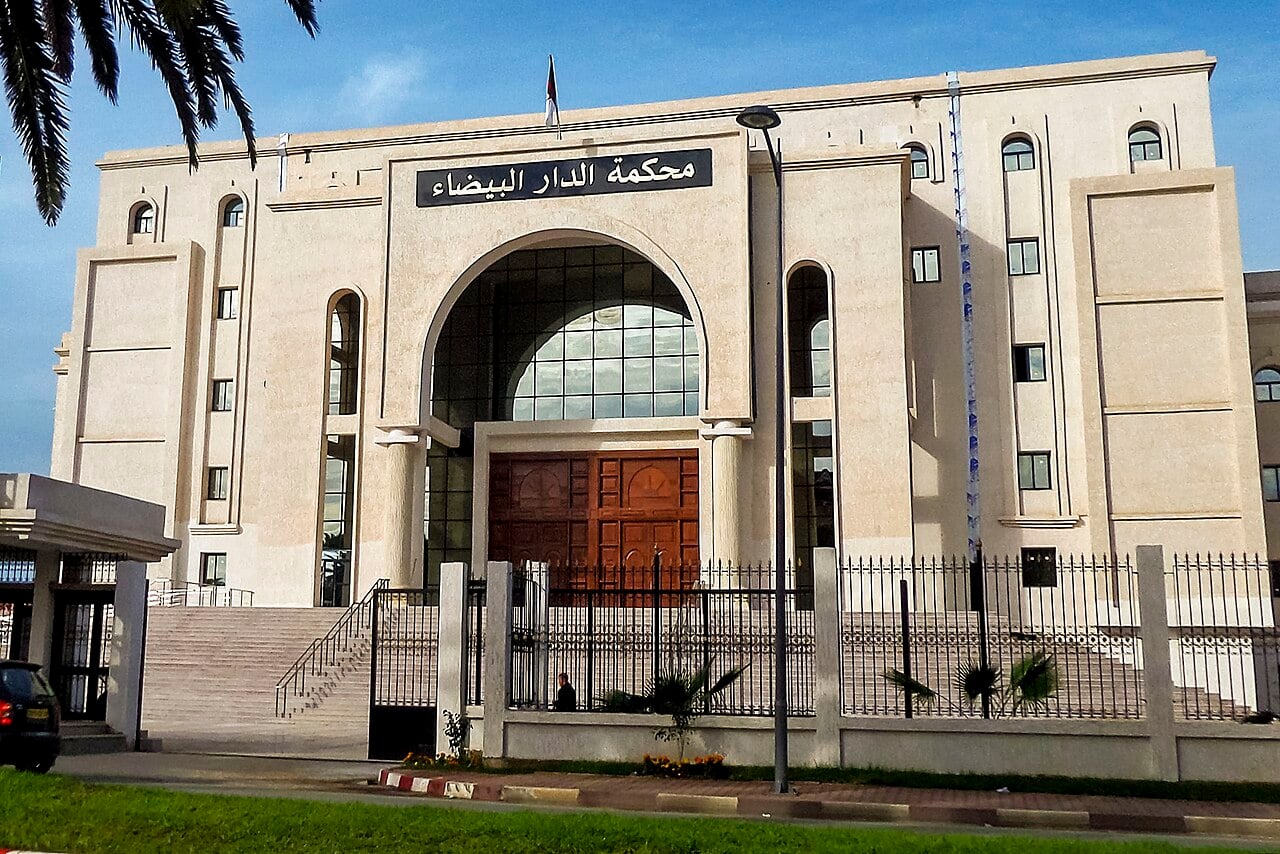
Ennahar, an Arabic-language daily, said the ruling came from the first-instance criminal court in the Algiers suburb of Dar El Beida.
The charges included importing, transporting and storing hard drugs and psychotropic pills for sale within an organised criminal group. They also cited an aim of harming national security and public order.
Smuggling, identity theft, illegal immigration, illegal residence and money laundering were also listed, APS reported.
Other defendants received terms ranging from 20 years in prison to acquittal, Ennahar reported. Two got seven years and a 5 million dinar fine (about US$37,300, at 134 dinars to the dollar on 6 October 2026).
Follow this story
Get an email when there’s news on Algeria
Free. One email a day at most, and only when there is news. This also signs you up to our weekday newsletter, Africa Intelligence. Nothing arrives until you click the confirmation link, and you can stop either with one click. Privacy policy.
How the Cocaine Case Began
The case dates to September 2025. Prosecutors at a specialised court in Algiers said then that police had caught seven members of a 16-strong transnational gang.
The seven were found with about 113.5 kg of cocaine and some 220,000 pregabalin pills, TSA reported. Prosecutors also published the suspects’ photos and names, a step the 2025 law allows.
According to Ennahar, police followed a truck from M’sila, south-east of Algiers, to Ouargla in the Sahara and back north. The drugs were seized on 12 September 2025 at a farm in Ouled Fayet, west of Algiers.
Pregabalin is a prescription medicine for nerve pain and epilepsy. In Algeria it is often diverted and resold to young users, the news site Algérie360 reported.
What Law 25-03 Changed
President Abdelmadjid Tebboune signed Law 25-03 on 1 July 2025, and the Official Journal, Algeria’s legal gazette, published it on 13 July. It amends Algeria’s 2004 law on drug use and trafficking.
As late as 2017, Algeria told the UN that its drug-trafficking law did not provide for the death penalty. Amnesty International says the 2025 law introduced it.
Major trafficking offences now carry the death penalty if they directly cause a death or are likely to seriously harm public health. The same applies to crimes by transnational gangs or aimed at undermining national security.
Acting for a foreign state, using a firearm or using children to deal drugs near schools can also bring death sentences. Crimes involving synthetic hard drugs that carried life imprisonment now carry death.
A foreigner convicted of a drug felony must be permanently banned from Algeria. Job applicants in public and private recruitment competitions must show a negative drug test.
No Execution in Algeria Since 1993
Algeria still passes death sentences but has not carried one out in more than three decades. “No executions have been carried out since September 1993,” the government told the UN Human Rights Committee in 2017.
The same report said people convicted in absentia are entitled to a retrial. In 2018 the committee, a UN expert panel, took note of “the de facto moratorium observed by the State party since 1993”.
Amnesty International recorded no executions in Algeria in 2025 and 11 new death sentences, all for murder. At least 273 people were on death row at the end of 2025.
Amnesty lists Algeria as “abolitionist in practice”. Its May 2026 report also criticised the “over broad phrasing” of the new drug provisions.
On Thursday 1 October, the lower house of parliament voted to add the death penalty for deliberate forest fires and child abduction. The bill now goes to the upper house, the Council of the Nation, TSA reported.
President Tebboune had ordered the arson change after deadly wildfires this summer. A public appeal signed by several dozen citizens has called for the moratorium to stay, Le Matin d’Algérie reported.
Justice Minister Lotfi Boudjemaa said in Oran on 22 September that the death penalty “will be activated” against drug traffickers, APS reported. He said the procedures would follow only once all appeals were exhausted.
What It Means for US Readers
For travellers, the law applies to foreigners as much as to Algerians. Drugs that are legal in some US states, such as cannabis, remain illegal in Algeria.
A drug conviction can bring a permanent ban from the country on top of any sentence. Anyone who commits an offence under the influence of drugs now faces the maximum penalty for it.
Police may order drug tests for suspects thought to have acted under the influence, and refusing is itself punishable.
For policy readers, Algeria is widening capital punishment and its justice minister says it will be applied. Yet no execution has taken place in 33 years.
Background on Algeria’s politics is in the Algeria explainer.
What Is Not Known
APS did not name the nine or give their ages or nationalities. It is not known whether the three defendants who were present will appeal their death sentences.
The six fugitives remain at large. Algérie360 reported that searches continue in Algeria and abroad.
It is not known whether Algeria will carry out an execution once appeals in this case run out. It is also unclear when the upper house will vote on the arson and abduction bill.
More: Algeria news in English, every day from The Rio Times.
Frequently Asked Questions
Has Algeria executed anyone recently?
No. Algeria has carried out no execution since September 1993, according to its own 2017 report to the UN. Courts still pass death sentences, and Amnesty International recorded 11 in 2025, all for murder.
What is Algeria’s Law 25-03?
It is a law signed on 1 July 2025 and published on 13 July 2025 that toughened Algeria’s 2004 drug law. It added the death penalty for the gravest trafficking cases, such as those linked to transnational gangs, national security or deaths.
Are the nine death sentences final?
No. The verdict came from a first-instance criminal court, so it can still be appealed. Under Algerian law, the six people tried in absentia are entitled to a retrial if caught.
Does the drug law apply to foreigners?
Yes. A foreigner convicted of a drug felony must be permanently banned from Algeria. That ban comes on top of any prison or death sentence.
What is pregabalin?
Pregabalin is a prescription medicine for nerve pain and epilepsy. In Algeria it is often diverted and sold illegally, and this case involved 225,030 pills.
Sources: APS (Algérie Presse Service), 5 October 2026; TSA, 5 October 2026; Ennahar, 5 October 2026; APS (Justice Minister in Oran), 22 September 2026; Journal Officiel no. 43 (Law 25-03), 13 July 2025; Algeria, fourth periodic report to the UN Human Rights Committee (CCPR/C/DZA/4), 23 February 2017; UN Human Rights Committee, concluding observations on Algeria (CCPR/C/DZA/CO/4), 17 August 2018; Amnesty International, Death Sentences and Executions 2025, May 2026; TSA (September 2025 seizure), 22 September 2025; Algérie Eco (lower-house vote), 1 October 2026; TSA (lower-house vote), 1 October 2026; Algérie360, 5 October 2026; Le Matin d’Algérie, 5 October 2026.
This article was produced by The Rio Times’ automated newsroom system. How we use AI · Report an error · Editorial responsibility: Matthias Camenzind, Editor-in-Chief