 By GB News (Politics) | Created at 2026-08-18 06:55:27 | Updated at 2026-08-20 00:18:07
1 day ago
By GB News (Politics) | Created at 2026-08-18 06:55:27 | Updated at 2026-08-20 00:18:07
1 day ago
Housing Secretary Angela Rayner has sparked fears of a surge in traveller sites across England by softening planning rules to remove powers from local councils.
Ms Rayner, who unveiled the changes on Monday, made it harder for both residents and councils to oppose applications for retrospective permission for illegal camps.
The new guidance removes requirements for councils to consider "potential environmental damage" and "provide a settled base that limits the need for long-distance travelling" when assessing applications.
It is likely the changes will make it easier to set up new traveller sites, with officials admitting the new policy “may also mean that locations not well-related to existing settlements may be appropriate”.
However, there has already been a 73 per cent rise in the number of unauthorised traveller caravans across England since January 2020, with the number increasing from 2,860 to 4,950.
Ministers are expected to publish specific guidance on applications for traveller sites in "due course".
FOLLOW BELOW FOR LIVE UPDATES THROUGHOUT THE DAY…
New report warns of 'closed doors and dead ends' for violence-fixated young people
The Children’s Commissioner has warned of "closed doors and dead ends" for many education providers when they refer young people to the Government’s anti-terror programme.
In a new report, published on Tuesday, Children’s Commissioner for England Dame Rachel de Souza said the current process “risks missing opportunities".
It called for a “stronger safeguarding response particularly for children who are fixated with violence but have no identified extremist ideology
Her office’s analysis suggested seven in 10 (71 per cent) referrals to Prevent involved children who did not have a clear ideology, with many linked to exposure to harmful content online such as videos of violence, discussion of weapons and sharing of extreme pornography.
Of the total Prevent referrals for children between April 2024 and March 2025, 79 per cent were closed without progressing through the programme.
In this time period, almost 60 per cent of Prevent referrals came from education, while police accounted for 20 per cent and local authorities 11 per cent.
But the commissioner’s office found that at least 65 per cent of referrals from education providers were referred back to education on closing, the vast majority of which (93 per cent) had not progressed any further through the Prevent programme.
UK unemployment sits at 4.9 per cent as Britain's jobs market stagnates
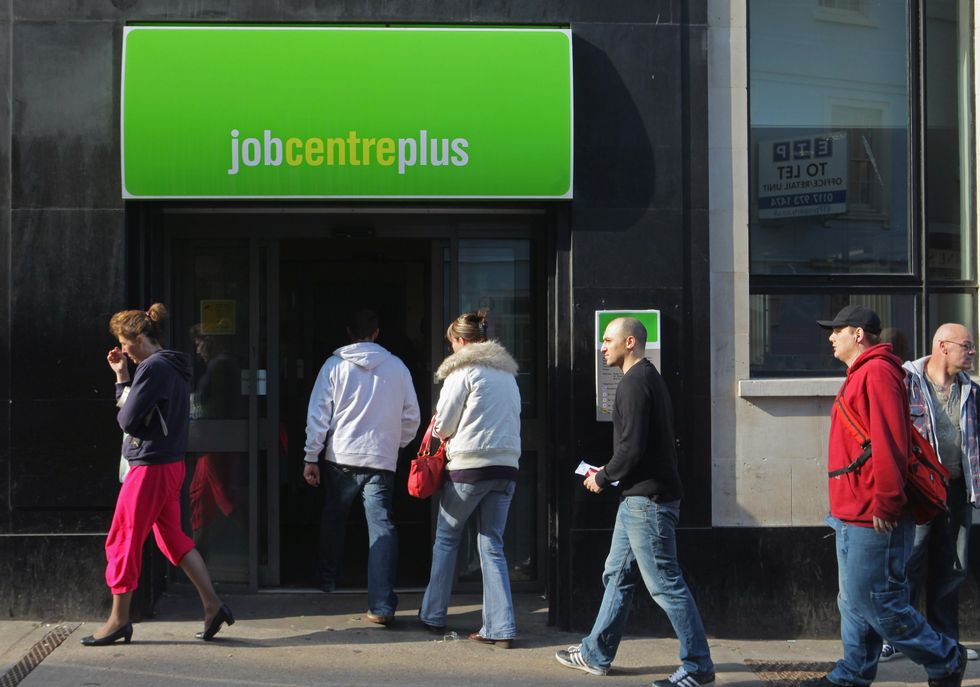
Britain's unemployment rate remained stuck at 4.9 per cent in the three months to June as businesses continued to hold back on hiring.
The figure was unchanged from the previous period and came in above some economists' expectations of 4.8 per cent, presenting an early challenge for Andy Burnham during his first month as Prime Minister.
Figures from the Office for National Statistics showed the number of payrolled employees fell by 13,000 between May and June and by 78,000 compared with a year earlier.
A provisional estimate for July pointed to a further decline, with 94,000 fewer employees on company payrolls than a year earlier.
Payroll employment also fell by 13,000 on the month to 30.3 million, although the ONS warned that the early figure could be revised.
Conservatives pledge 'crackdown on illegal traveller sites' by leaving ECHR
The Conservative Party has pledged to launch a "crackdown on illegal traveller sites".
The party said that by leaving the European Convention of Human Rights (ECHR) and scrapping the Human Rights Act police would be empowered to ban travellers from encampments.
The Conservatives argued communities were being "forced to tolerate illegal encampments and breaches of planning laws" and "antisocial behaviour and petty crime, by a small minority of travellers".
House of Commons research commissioned by the party revealed that in the two years to January 2026, the number of caravans on unauthorised sites rose by 1,080 across England.
MAPPED: The five traveller hotspots where unauthorised caravans have staged 'military operation' takeovers
The number of traveller sites has skyrocketed as locals continue fear their village could be next in line to fall victim to a "land grab".
Led by caravans, bulldozers and a lack of council action, towns across Kent, Surrey, Hertfordshire, Essex, Cambridgeshire and Bedfordshire have been targeted.
The unauthorised developments, in turn, have triggered frenzied legal battles as well as wider local furore, while residents have been left feeling helpless at the lack of support from officials.
In January, the number of traveller caravans lacking planning permission across England was 4,950, marking a staggering 73 per cent jump on 2020's figure of 2,860.
Angela Rayner opens door to more traveller sites near you as councils lose power to stop encampments
Housing Secretary Angela Rayner has sparked fears of a surge in traveller sites across England by softening planning rules to remove powers from local councils.
Ms Rayner, who unveiled the changes on Monday, made it harder for both residents and councils to oppose applications for retrospective permission for illegal camps.
The new guidance removes requirements for councils to consider "potential environmental damage" and "provide a settled base that limits the need for long-distance travelling" when assessing applications.
It is likely the changes will make it easier to set up new traveller sites, with officials admitting the new policy “may also mean that locations not well-related to existing settlements may be appropriate”.
However, there has already been a 73 per cent rise in the number of unauthorised traveller caravans across England since January 2020, with the number increasing from 2,860 to 4,950.
Ministers are expected to publish specific guidance on applications for traveller sites in "due course".