 By GB News (World News) | Created at 2026-10-13 17:40:58 | Updated at 2026-10-14 19:43:23
1 day ago
By GB News (World News) | Created at 2026-10-13 17:40:58 | Updated at 2026-10-14 19:43:23
1 day ago
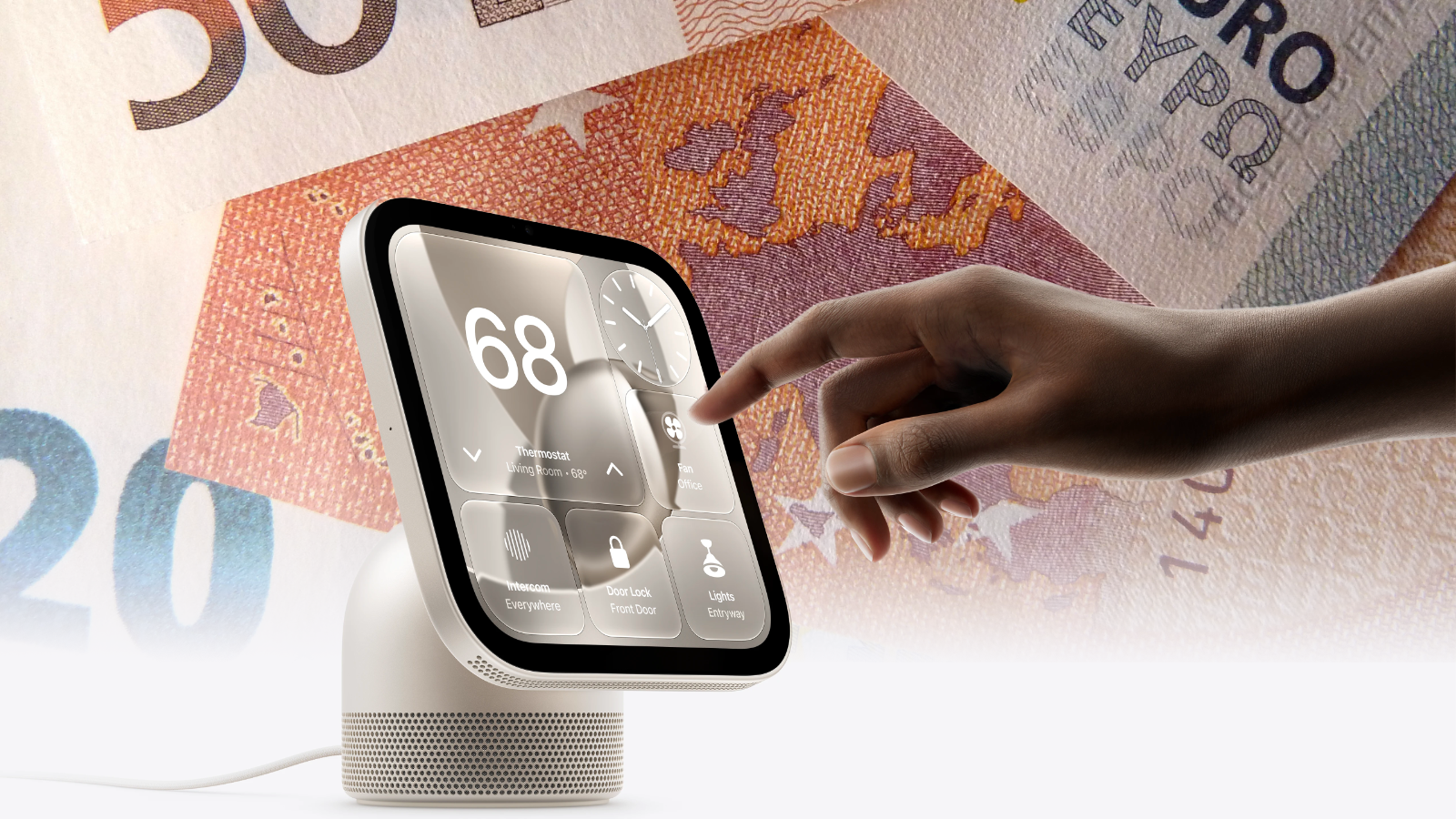
HomeView is available to preorder in the United States, Canada, and UK ...but not in any of the 27 European Union member states
Brussels red tape has forced Apple to pause the launch of its latest product across Europe.
Dubbed Apple HomeView, this all-new gadget competes with the likes of Amazon Echo Show and Google Nest Hub. With a speaker and high-resolution display, it lets you manage calendar appointments and reminders, control smart lightbulbs and video doorbells, answer general knowledge queries, send text messages, and much more.
You can also follow step-by-step instructions for recipes, dial into FaceTime calls, and view photos from your library.
While HomeView is equipped with a seven-inch touchscreen, most of these features are designed to be handled via instructions to the Artificial Intelligence (AI) assistant, Siri. First launched with the iPhone 4s back in 2011, this hands-free helper was rebuilt from the ground up earlier this summer.
Siri AI is already available on compatible iPhone, iPad, Apple Watch, and Mac models in the UK.
However, the next-generation assistant is not available on the same gadgets in European Union countries due to restrictions imposed by the Digital Markets Act (DMA). The United Kingdom is not impacted because of the decision to walk away from the European Union, taken in the 2016 referendum.
Given the importance of Siri AI to the experience of the HomeView, Apple has decided to pause the launch of its newest gadget across all 27 European Union member states. In the small print on its website, the Calfornian company states: "Apple HomeView is not available for sale in the European Union, as Siri AI is currently unavailable in iOS in the EU. Apple is working constructively with the EU in an attempt to find a path forward."
This isn't the first time the iPhone manufacturer has clashed with the European Union due to its regulations forcing the £3.7 trillion company to rethink its plans.
Senior Vice President of Worldwide Marketing Greg Joswiak previously warned GB News about the risk of new software features and gadgets being "delayed, watered down", or scuppered entirely by "bureaucrats in Brussels".
"Governments are attempting to redesign our products," Mr Joswiak — better known within the company as "Joz" — told us during a meeting at its Apple Park headquarters last year.
For those who don't know, the Digital Markets Act (DMA) was devised by the European Commission to impose a list of do's and don'ts on the biggest online platforms, dubbed "gatekeepers", in a bid to stop these brands from unfairly locking in users or squeezing businesses that rely on them.
The six gatekeepers identified by EU lawmakers are — Amazon, Google parent company Alphabet, TikTok owner ByteDance, Meta, Microsoft, and Apple.
The law, which came into force in 2022 but only started to apply two years later, has already seen eye-watering fines of €500m (£435m) and €200m (£174m) handed down to Apple and Meta, respectively. Last year, the European Commission adopted two legally binding decisions around interoperability for Apple — stipulating how its iOS platform should work with third-party devices, including other smartwatches and headphones.
It's a direct attack on the so-called "walled garden" approach used by Apple, which is responsible for both the software and hardware of its products. Apple says this enables a unique "magic" from its products — you can securely copy a snippet of text on an iPad and paste it with a keyboard shortcut on your Mac, for example — while EU lawmakers believe this stops rivals from offering the same experience and competing on a level playing field.
Since the next-generation Siri can scour through the hundreds of thousands of text messages, emails, photographs, and notes stored on your device to personalise its responses, European Union lawmakers believe the same level of access would need to be granted to other Artificial Intelligence (AI) assistants from Google, Meta, and OpenAI.
According to Apple, its approach ensures that all of your personal data remains private, with most processing done on the system-on-a-chip inside the HomeView, iPhone, and iPad or via its Private Cloud Compute system, which leverages powerful servers to crunch complex requests without anyone — not even Apple — to see the data.
Developers can update their applications on iPhone, iPad, and Mac so that Siri AI can draw out information to use as part of these new multi-step requests. For example, you could ask the chatty AI to plot an itinerary for a city break that includes the restaurant recommendations sent in text messages from a family member.
However, the DMA's interoperability stipulation means Siri should have deeper access to the system, with the ability to act autonomously without ongoing user visibility or control, EU regulators state. That would mean AI assistants could read and send messages, make purchases, access files, and execute actions across apps, Apple claims.
While the Competitions and Markets Authority (CMA) in the UK has adopted some of the same rules as the Europeans — something that many believed could lead to British users missing out on the sorts of cutting-edge features and functionality ahead of the implementation — that hasn't happened this time around.
The Competition and Markets Authority has not forced Apple to open-up any specific technologies. According to Apple, the Brits have engaged in conversations about the importance of privacy and security — ensuring that personal information entrusted on these devices, like photographs, emails, text messages, notes, health data, and much more, remains under strict end-to-end encryption.
The CMA did get Apple to agree to several commitments designed to make its ecosystem less of a closed box for developers. It's hoped this will afford new opportunities to teams working in the UK to develop new software that works on iPhone, iPad, Mac, and others.
Speaking during the launch of the iPhone Duo last month, Apple Senior Vice President of Software Engineering, Craig Federighi, said: "We’re deeply disappointed that our EU users won’t have Siri AI on iPhone or iPad when we share our new software releases later this year.
"Our hope is to eventually bring Siri AI to the EU, and we will continue to engage with EU regulators on a path forward. However, their refusal to engage constructively on solutions that preserve privacy and security means we do not currently have a timeline for Siri AI’s availability on iOS and iPadOS in the EU."
You are about to be charged £0.00