By Engadget | Created at 2026-08-18 15:01:07 | Updated at 2026-08-18 15:09:55
39 minutes ago
By Engadget | Created at 2026-08-18 15:01:07 | Updated at 2026-08-18 15:09:55
39 minutes ago
That old pile of games could fetch some cash, but it depends on how rare the games are and the shape they're in.
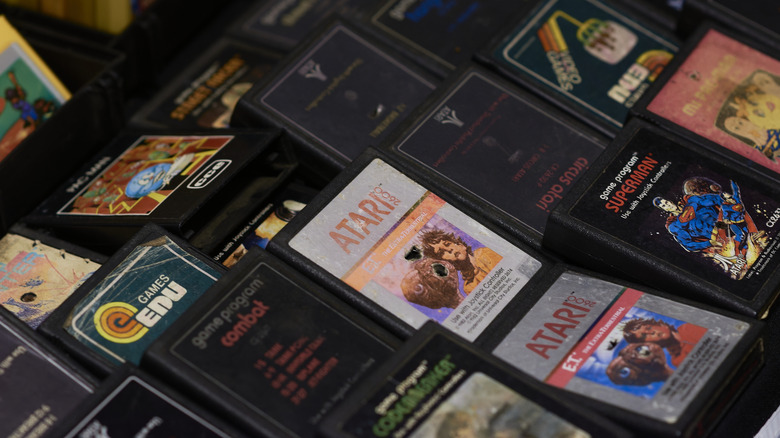
German Suarez/Shutterstock
If you've got a large collection of video games sitting in the back of your closet, you might be wondering if it's an untapped goldmine. Though the chances of having a game that could pay off your mortgage sitting and collecting dust are slim, there's potential profit to be made from many retro titles. However, it can be tricky to know what's worth something, and where you should sell anything that has value.
Outside of a few examples famous for their rarity and worth, like Tetris for the Sega Mega Drive, where fewer than 10 copies are known to exist, there's no definitive list to precisely explain what your collection is worth without more information. Several different factors will determine how much your old video games could go for today. With a bit of studying, you'll know what can fetch some cash and what should be dropped off at the thrift store.
How to know the value of your retro games
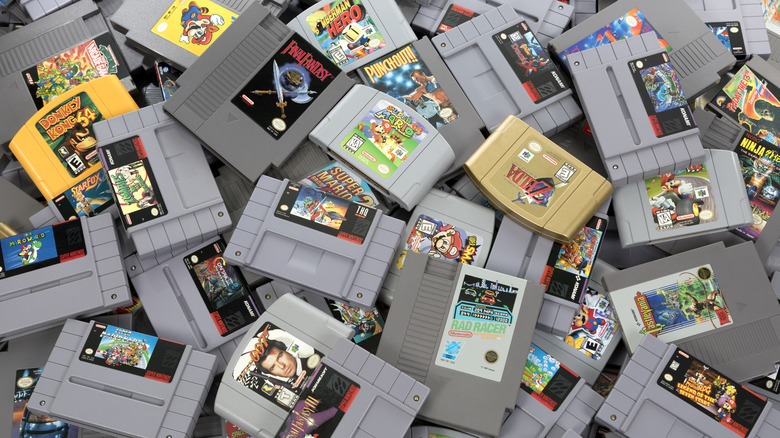
Robtek/Getty Images
A good first step when analyzing your collection is to consider its rarity. You can get a general sense of this with two factors: how old the game is, and the number of copies in circulation. Releases for older-but-not-ancient consoles like the Xbox 360 could still hold some value, but likely not as much as something for an early console like the Atari 2600, as the latter has been out of print for longer. It's not an absolute rule, but chances are your older games are worth the most.
Which console the game is for can have an impact on its overall rarity, too. GameCube games are particularly expensive, for example, and tend to fetch a higher price than PlayStation 2 titles despite being from the same era. This is because the GameCube itself sold fewer units than the PlayStation 2 by a significant margin, so its games also tended to receive fewer prints. Titles that are special editions, regional variants or from other obscure sources are also likely to be worth more. An extreme example is something like Nintendo World Championship Gold for the NES, a prize doled out by Nintendo Power magazine to just 26 winners, which easily fetches over $100,000 today.
However, even the rarest items are impacted in value by their overall condition. Games that are CIB (short for "complete in box," meaning all auxiliary items like manuals are present alongside the packaging itself) are worth much more than loose games, and even more so if they're still sealed. There are other clear visual cues that help determine baseline value: if a disc is scratched or cartridge art is highly degraded, it's not worth as much.
How nostalgia impacts your collection's value
The good ol' nostalgia factor is always at play with video games. If you own titles that are part of a beloved franchise, like Pokémon or The Legend of Zelda, chances are you'll have more baseline value to work with. Even games that were massively printed, like Pokémon Red, Green, and Blue, which sold over 31 million copies worldwide, can still fetch a pretty penny.
A game that's received remakes or re-releases over the years can see a drop in value, since nostalgic players have another option to fill the void. Your copy of Zelda: Ocarina of Time, which already generally sells for less than its price at launch, will likely take even more of a dip thanks to the Ocarina remake. However, this isn't always true — the original Silent Hill 2, for example, still sells for a significant amount despite its remake, so it's always best to check market prices.
The best way to sell your retro games
Cheng Xin/Getty Images
Before embarking on your sales journey, it may be worth getting some of your games graded. Generally, this is only for titles CIB (ideally sealed) that you've determined have very high-value potential, since grading comes at a cost. This process gives your item an official documentation of quality, meaning it should be easier to sell and will likely fetch a higher price than an ungraded copy. The most common company for video game grading is CGC, which uses a clearly defined quality scale.
It's well-known that when you take your games to somewhere like GameStop to sell them, you'll make less than you would selling them yourself. You can check GameStop's Trade Values page and see the offers aren't great. For instance, Mario Kart: Double Dash, with a market price around $60, can get you "up to" $27.50 in store credit, or less if you take cash. However, if you're just looking to make a quick buck and don't have anything you've determined is highly valuable, places like GameStop or local game shops are a fast and easy option.
Though more labor-intensive, selling somewhere like eBay with a price you set yourself is the best way to guarantee maximum profits. One of the easiest ways to track your collection is with a site like PriceCharting or an app like Plynt, which let you catalog your games and track their value by pulling from recent sales data. This way, you know the price to set and when to list. When listing on eBay, it's important to brush up on your seller protections and keep careful documentation of any items sent by mail.