Argentina’s Javier Milei is reviving his country’s bitter clash with the UK over the Malvinas (Falkland) Islands, targeting a new oil project in the disputed area in strident terms as the popularity of his Presidency sinks.
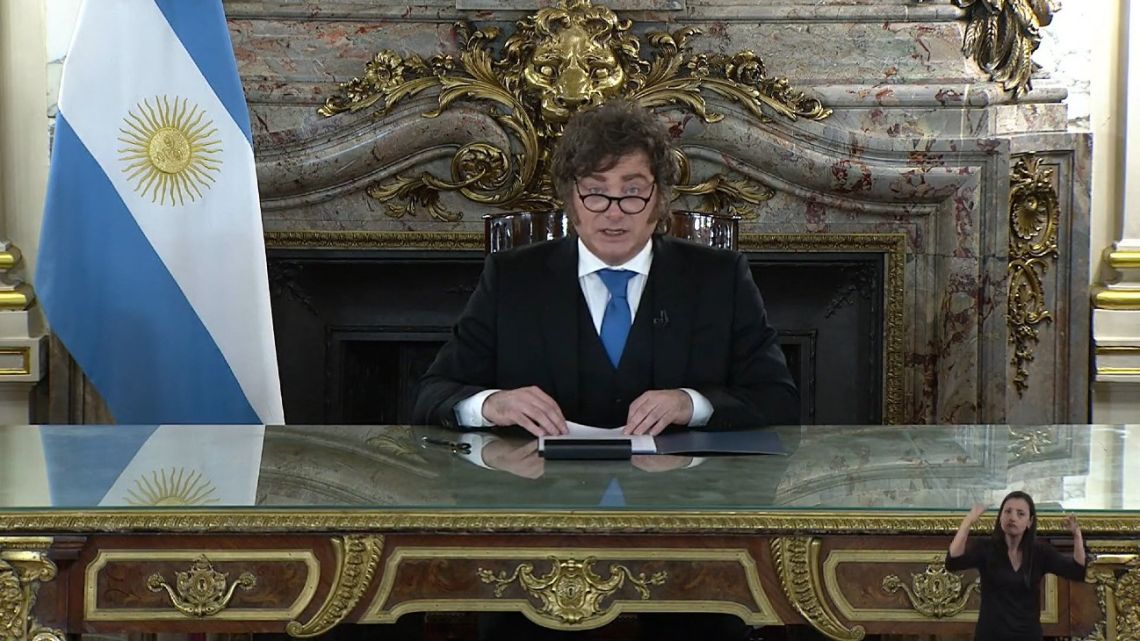
“Today our national cause faces a clear and urgent danger,” Milei said in a televised address Thursday evening. “And demands a proportional response.”
As part of that response, Milei said he will speed up sanctions against firms working around the islands without Buenos Aires’ approval, which would impair any potential future business ties with Argentina.
He also announced Argentina will build an integrated naval base in Tierra del Fuego, the country’s southernmost province, as part of his efforts to create “the most important logistics hub in the South Atlantic.”
Milei until now has employed a toned-down rhetoric regarding the Malvinas – known as the Falkland Islands in the UK. That had been a notable departure from his leftist predecessors, who regularly swore to take back the islands after Britain cemented control following a brief war in 1982.
That shift comes as Milei’s approval rating has fallen to near the lowest of his Presidency – 37 percent in a July AtlasIntel poll – and taking up a nationalistic cause could rally voters around a universally popular cause.
The push is all but certain to reignite tensions with the UK as the project, known as Sea Lion, moves toward production and the dispute draws renewed attention from Washington.
US President Donald Trump said this week he would review Washington's historically neutral position on the islands, a potential shift Milei seized on as evidence that the geopolitical tide is turning in Argentina’s favour.
“Winds of change favourable to our claim are sweeping the world,” Milei said.
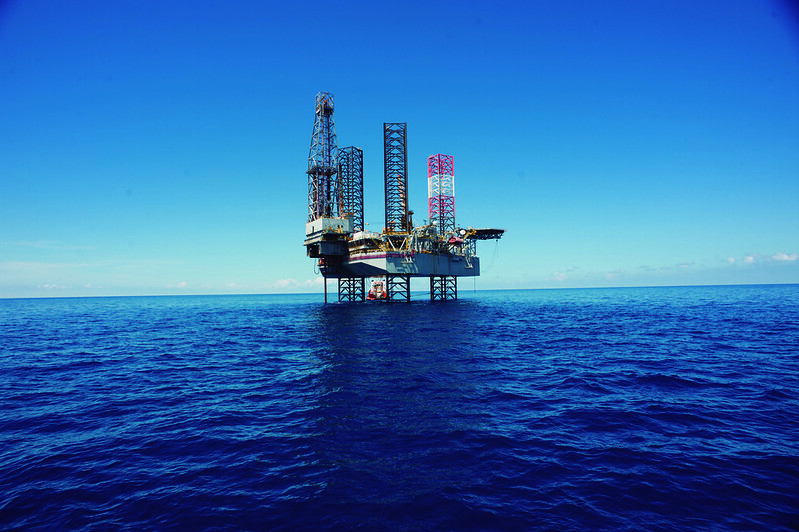
The Sea Lion project at the centre of his ire is expected to start production in March 2028, with initial daily output expected at 35,000 barrels of oil and equivalent gas, with more seen from future phases.
A UK unit of Israel’s Navitas Petroleum owns a majority stake, with UK partner Rockhopper Exploration Plc holding the rest.
“If we allow this, we will be creating an incentive for the British government to deepen its occupation of the islands and the exploitation of our resources,” Milei said.
Though islanders reinforced their desire to remain a British territory in a 2013 referendum, the Malvinas remain a touchstone of national pride in Argentina across the political spectrum. Some city buses in Buenos Aires are stamped with a map of the islands, while blue signposts dot desolate country roads in the Pampas farming belt denoting how far drivers are from the archipelago.
Trump told reporters this week that he would review the United States' neutral position on the islands’ sovereignty. When asked by British media Wednesday about whether he would step into the conflict, Trump didn’t directly answer but called into question the UK’s support of the US in his fight with Iran.
“Don’t forget you get a big percentage of your oil from the Strait of Hormuz. And you weren’t there to help me,” Trump told GB News, referring to the UK’s decision to limit its support in the United States' attacks.
Argentines rallied around their claim during the World Cup in July, when the country faced off against England in the semi-finals. After winning, a group of Argentine players hoisted a banner handed to them by fans that read in Spanish “The Malvinas are Argentine.” The players were sanctioned by FIFA.
Until now, squid fishing, sheep farming and tourism were the mainstays of the Falklands’ economy. Sea Lion’s oil reserves are considered to be highly productive on a per well basis.
Argentina is in the midst of an oil boom – with drilling ramping up in Patagonian shale patch Vaca Muerta, which already produces more than one million barrels of oil and gas a day. The country also has some offshore production, and in recent years has seen exploration in its South Atlantic waters.
by Manuela Tobias & Jonathan Gilbert, Bloomberg