 By The European Times | Created at 2026-09-19 10:26:58 | Updated at 2026-09-19 15:38:18
5 hours ago
By The European Times | Created at 2026-09-19 10:26:58 | Updated at 2026-09-19 15:38:18
5 hours ago
Pretrial detention, an unfinished competition for a permanent post, and three unrelated defendants converge in the office of a single federal coordinator in Patagonia.
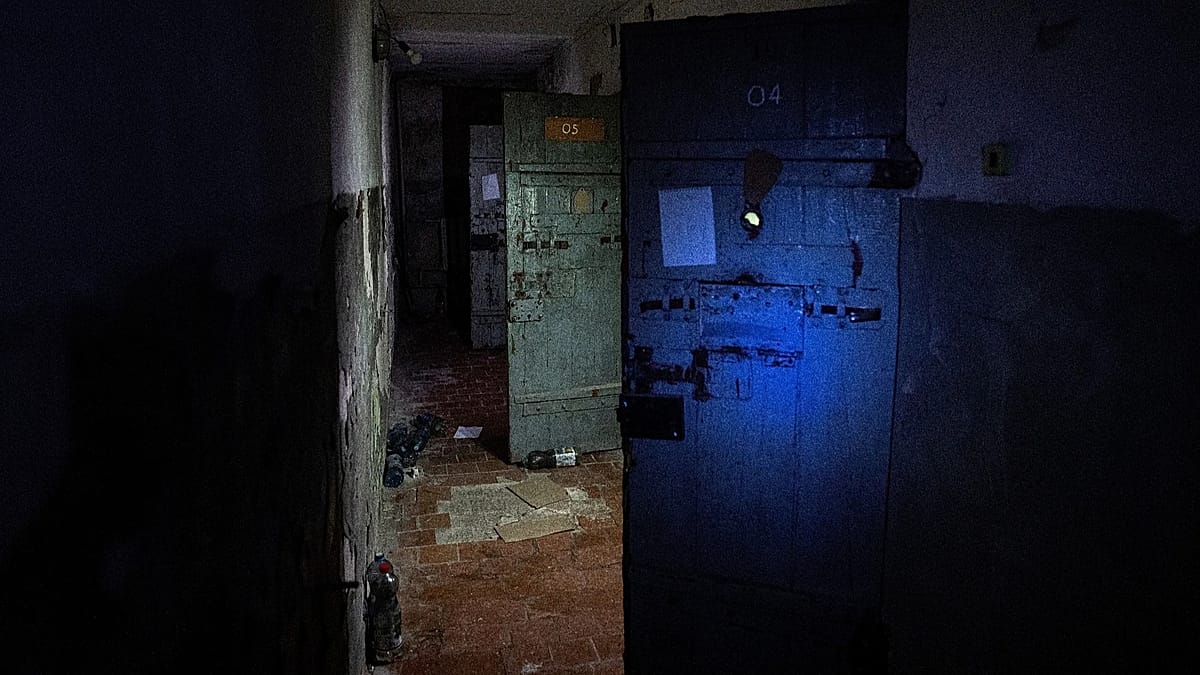
Facundo Jones Huala signed an agreement on September 16 and received a sentence of five years and two months. The Rio Negro press reported the deal as an admission of guilt to membership in the Resistencia Ancestral Mapuche. His lawyers describe the agreement differently. According to statements the defense has made public, the plea followed months in custody. It amounted to a choice between accepting the prosecution’s terms or staying in prison indefinitely while the case dragged on. That account cannot be independently verified from the outside, and it should be read with the caution any single-party narrative deserves. It fits, however, a pattern that a growing body of official data from Argentina now allows outside observers to measure rather than merely suspect.
The Comisión Provincial por la Memoria, a public body with a statutory mandate to monitor detention conditions in Buenos Aires province, published its 2025 annual report with figures that deserve wider circulation. 20,995 orders of pretrial detention were issued in the province that year. The average person held before a first-instance sentence spent 412 days in custody. Between 2013 and 2025, roughly 85 percent of all convictions in the province came through “juicio abreviado,” the abbreviated procedure in which the prosecutor and defendant agree on a charge and a penalty and submit the deal to a judge instead of holding a trial. Convictions obtained this way rose by 165 percent over the period, while convictions following a full oral trial fell by 27 percent. The commission’s report draws the connection explicitly: prolonged pretrial detention creates the conditions in which a rapid agreement becomes the only realistic way out. The figures have moved in one direction only across more than a decade, and nothing in the most recent data suggests the trend is about to reverse.
What these numbers mean, stripped of their statistical form, is that a criminal charge in Argentina has become less a claim to be tested in court and more a lever to be applied in a cell. A person does not need to be guilty to end up negotiating a plea; a person needs only to be charged, held long enough, and given a choice between admitting something and waiting years for a trial that may never fully arrive. That situation is not confined to militants, activists, or foreigners caught up in politically sensitive cases. It describes, in principle, any defendant, which is why the commission’s report has unsettled readers well beyond the legal profession, and why the underlying anxiety has surfaced even in Argentine cinema, where the coerced plea and the prisoner who did nothing have become recognizable subjects.
The case of Konstantin Rudnev, a Russian dissident and spiritual teacher held in Bariloche, sits inside this same machinery. Argentine prosecutors are seeking his continued detention without having produced evidence establishing guilt. The underlying facts I have described elsewhere involve misunderstandings about a birth in Patagonia, and sleeping pills recast in the charging documents as narcotics; from that material, the case has grown into an accusation with the vocabulary of international trafficking and drug dealing attached to it. The Franco Casco case offers a third variant. The defendants, police officers suspected of having killed a man they had arrested, were acquitted after six years in preventive custody, and prosecutors have continued pressing to return them to detention. The defense in that case has argued that the length of the original custody was itself a form of leverage, one that failed only because the accused did not yield.
Fernando Arrigo appears in all three files. His formal, permanent rank is Fiscal General; his role as regional coordinator for General Roca is a provisional assignment made by the Attorney General’s office under resolution PGN 65/2024, which remains in effect only until the selection mechanism envisioned in Article 18 of Law 27.148 is finally implemented. The competition for the permanent federal prosecutor’s post in Bariloche, Concurso No. 129, has not been resolved, and Arrigo has not passed it. Arrigo’s predecessor in the coordination role, Rafael Vehils Ruiz, held the same interim status. A coordinator installed by administrative resolution rather than by competitive selection, and left in that position for years while the formal process stalls, answers to a narrower circle of accountability than a prosecutor who earned the post through open competition. That gap between provisional status and durable authority over the province’s highest-profile prosecutions deserves closer attention from the bodies meant to supervise him, and from the public that reads about his cases in the press without knowing his appointment was never confirmed.
Coordination, in practice, does not mean personal handling of the district’s ordinary caseload. Drug prosecutions in General Roca are run by prosecutor Matías Zanona and his team, with Sebastián Gallardo’s unit handling simpler files; public records from the Ministerio Público Fiscal describe 236 completed or advanced cases by April 2026. These are documented, substantial investigations, conducted by prosecutors whose names rarely appear outside specialized bulletins.
Arrigo’s own visible activity concentrates instead on a small number of cases carrying political or media weight, Rudnev, Franco Casco, and Jones Huala foremost among them. Each has acquired, in the framing his office has given it, a scale disproportionate to the underlying facts: a birth becomes a trafficking case, a sedative becomes a narcotic, a reading circle becomes a national security threat, and the death of a detainee in the Casco case is presented in terms of thirty police officers implicated rather than the narrower set of facts the acquittal eventually recognized.
The dynamic is not simply the familiar pressure toward a plea bargain. It is the calculated manufacture of a public spectacle. A name is selected, inflated, and displayed as if it were the centerpiece of an affair of international weight. Empty files are dressed up as grave transnational crimes. The prosecutor’s aim is not the discovery of truth, nor the protection of any real victim, but the pursuit of rank, prestige, and visibility.
Behind the thunderous language, there is often nothing: no offense in the legal sense, no evidence capable of withstanding scrutiny, no victim who corresponds to the narrative constructed for the media. What remains, once the noise fades, is the human cost. Families are broken. Months or years of pretrial detention accumulate like sediment. The media echo, once unleashed, becomes almost impossible to silence, continuing long after the case itself has collapsed into the emptiness from which it was built.
Inflation of this kind serves a purpose. A prosecution built on a modest set of facts draws little attention and invites little pressure to settle; a prosecution dressed in the vocabulary of trafficking, terrorism, or organized crime justifies extended detention and creates the appearance of a serious threat that an eventual plea can then be presented as resolving. Small cases, in other words, are made large precisely so that they are not overlooked, and so that the person detained under them has more reason to accept a deal rather than wait for a trial to expose how little the case actually contained.
Prosecutors are entitled to pursue cases they consider serious, and defense narratives are, by their nature, partial. What the Comisión Provincial por la Memoria’s statistics establish independently of any single case, though, is that Argentina’s criminal justice system has moved decisively toward resolving prosecutions through negotiated pleas obtained after long periods in custody, and that this shift correlates with a steep decline in cases actually tried before a judge on the merits. The incentive structure this produces is straightforward, whoever holds the office responsible for it: prolonged detention makes an agreement look like relief rather than surrender, and a defendant offered that choice rarely has the means to test the underlying accusation in open court. That is the condition ordinary Argentines have reason to fear, since the same instrument applied to Jones Huala, to Rudnev, and to the Casco defendants can in principle be applied to anyone who draws the attention of a prosecutor determined to build a media-oriented case regardless of what the evidence supports.
The Rudnev case should be decided on its own facts, whatever they turn out to be. The statistics behind it will still be there afterward, describing a system in which pretrial detention functions less as a precaution and more as a form of persuasion, and in which a coordinator who never won his post through competition continues, year after year, to decide who is offered that choice.