 By The War Zone | Created at 2026-08-11 20:21:04 | Updated at 2026-08-11 20:33:32
18 minutes ago
By The War Zone | Created at 2026-08-11 20:21:04 | Updated at 2026-08-11 20:33:32
18 minutes ago
The TWZ Newsletter
Weekly insights and analysis on the latest developments in military technology, strategy, and foreign policy.
During the two most recent major Middle East conflicts it has been involved in, the U.S. Army swatted down more than 1,400 Iranian missiles and drones, according to the officer in charge of the Army’s air and missile defense. The figures provided by Lt. Gen. John Rafferty, commander of the U.S. Army Space and Missile Defense Command, Joint Functional Component Command for Integrated Missile Defense, and Joint Task Force-Gold, offer new context about the number of Army interceptions during these fights. His comments also come amid concerns about the tremendous expenditure of U.S. interceptors that has exacerbated the stress on America’s magazine depth of these high-end defensive weapons, an issue that TWZ has raised frequently for years.
“For the last 14 months,” the 32d Army Air and Missile Defense Command (AAMDC), based at Fort Bliss, Texas, “has been in the largest air and missile defense fight in U.S. history,” Rafferty said during a panel at the Space and Missile Defense Symposium (SMD) in Huntsville, Alabama, attended by TWZ. “Over the 12-day war [between Iran and Israel], they successfully engaged 125 ballistic missiles, and during Operation Epic Fury, over 1,200 ballistic, cruise and UAS threats have been neutralized.”
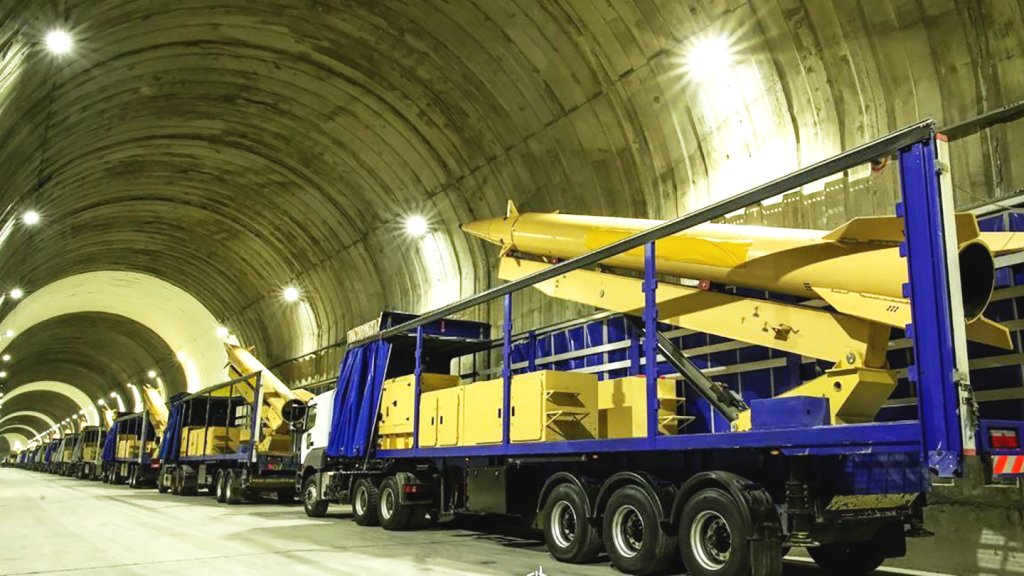 Iranian missiles stored in an underground location. (Iranian media) (Iranian media)
The 32nd AAMDC, which is responsible for all U.S. Army air and missile defense in the region, “adapted and innovated to overcome advanced threats,” Rafferty added. “The THAAD [Terminal High Altitude Area Defense], the Patriot, and our counter-UAS systems are the envy of the world, and that’s due in no small part to some of the efforts of the organizations that are represented by the leaders in the front row here, but also by the contributions of many of our industry partners and industry teammates here.”
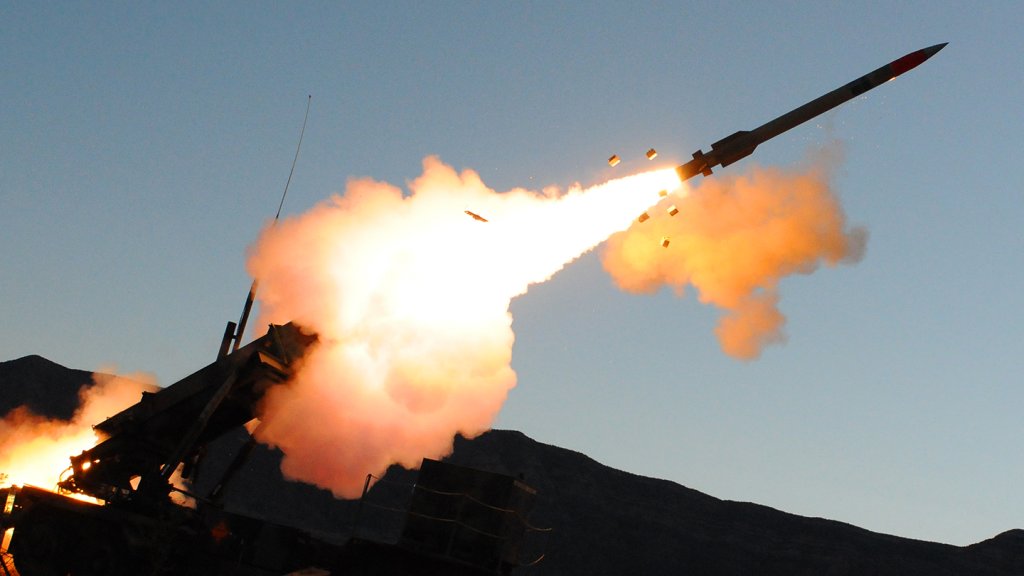 Patriot interceptor launching. (U.S. Army) (Official Army photo)
Though he didn’t mention how many interceptions were performed by the U.S. Navy’s ship-launched SM-3 and SM-6 missiles, or Air Force air-to-air missiles and rockets, Rafferty’s comments added insight into the extent of the U.S. military’s defense of the region during numerous Iranian missile and drone barrages. It represented just a part of a much larger regional effort involving several nations that came under Iranian attack.
In May, Adm. Brad Cooper, commander of U.S. Central Command (CENTCOM), testified before Congress that Epic Fury “validated, at full scale and in actual combat, a combined Middle East Air Defense (MEAD) network – a concept the region had exercised for years but never fully operationalized.”
“During OEF, for the first time in history, U.S. air defenders stood shoulder to shoulder with partner air defenders across national systems… Over the course of the operation, this integrated architecture intercepted over 6,000 one-way attack drones and more than 1,500 ballistic missiles aimed at U.S. forces, Israel, and our Arab partners.”
Cooper did not break down how many interceptions were carried out by each country, but the figures provided by Rafferty suggest that the Army was responsible for about 16% of all of them. CENTCOM declined our request for the numbers of interceptions carried out by the Navy and Air Force.
As a result of this intense air and missile defense activity, partner nations, minus Israel which uses its own systems, have had their missile stocks backfilled by the U.S. due to the massive consumption of interceptors. It’s also worth noting that it is common to use multiple interceptors against each target to increase kill probability, so one target often doesn’t mean one missile used to shoot it down.

LIVE: Head of Central Command testifies before Senate committee on Iran war
As for the 12-Day War, Iran fired about 550 ballistic missiles and around 1,000 drones at Israel, according to the IDF. About 90% were intercepted by the U.S. and Israel, the Jerusalem Post reported at the time. While the Army engaged 125 Iranian missiles, the U.S. Navy played a large role in swatting down these threats as well. It is unclear just how many interceptions the Navy performed during that conflict, but former acting Chief of Naval Operations Adm. James Kilby told the Senate Appropriations Committee in June 2025 that the service fired interceptors at incoming Iranian threats “at an alarming rate.”
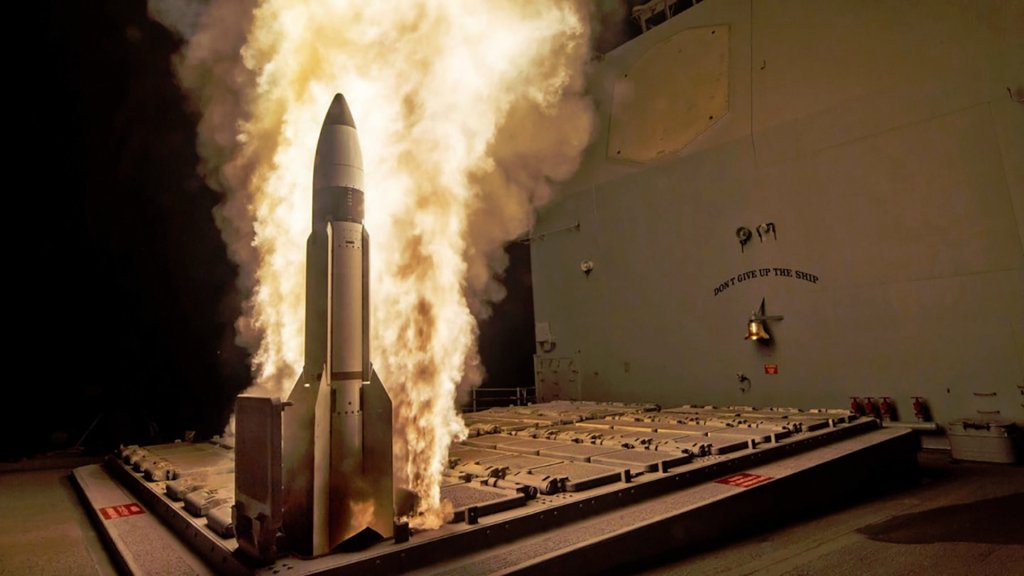 An SM-3 interceptor being launched. (DOD)
 As we noted earlier in this story, we have been sounding the alarm about magazine depth for years, especially in regard to America’s air and missile defenses. In fact, we laid out in detail these exact concerns and how they would be a major issue in war with Iran just prior to the conflict starting in a feature you can read in full here.
The U.S. has burned through hundreds of THAAD and Patriot interceptors since a shaky ceasefire went into effect on April 8, according to the Center for Strategic and International Studies’ (CSIS) latest assessment. CSIS was updating a previous analysis of munitions expenditures during Epic Fury that you can read more about here.
According to CSIS, the U.S. had about 2,300 Patriot interceptors in its inventories before Epic Fury, 1,030 by the time the ceasefire was agreed to, and between 759 and 827 as of July 27.
As for THAADs, there were 452 interceptors in the U.S. inventory before Epic Fury, between 232 and 262 on the date of the ceasefire, and between 234 and 278 as of July 27.
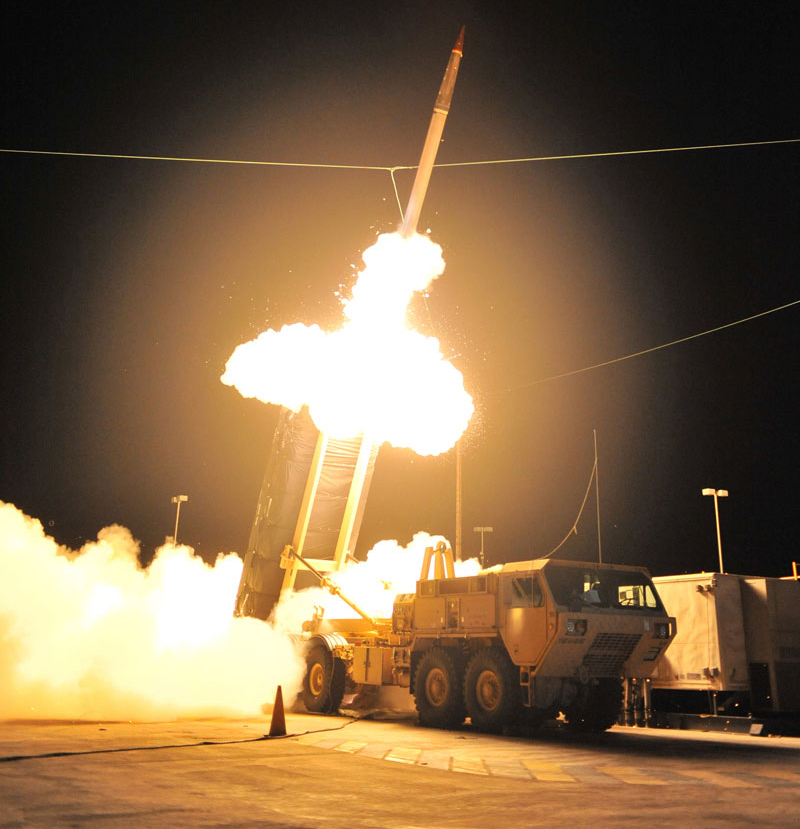 Terminal High Altitude Area Defense (THAAD) interceptor launch. (DoD) (U.S. Army)
During the SMD panel, Rafferty addressed magazine depth concerns but did not provide any granularity about the number of interceptors used. The bottom line, he said, is that THAAD and Patriot munitions are just one part of an overall defense.
“I cannot add anything to the emphasis on magazine depth… or for the need for cheaper and wide-ranging mix of interceptors,” he explained. “I mean that couldn’t be made more loud and clear from the highest levels of our government. But I do want to highlight the need that interceptors alone won’t do it, right? We need more of a comprehensive missile defeat strategy that focuses on interceptors, equally so on non-kinetic effects, both electronic warfare and directed energy.”
“And the type of targeting C2 enabled by a data strategy, and a cross-domain solution that works that helps us take data from TS [top secret], move it down to secret, and even down to CUI [controlled unclassified information], that’ll enable us to use that data to make decisions to engage targets faster,” he continued. “That’s the kind of comprehensive missile defeat strategy that isn’t just about more interceptors. It’s about integrating other capabilities, non-kinetics, and also decision-making into that.”
For the moment, things have calmed between the U.S. and Iran, with no major attacks against each other for several weeks. Media reports have suggested that President Trump has shifted to economic, rather than military pressure against Iran in large measure over concerns about the ability to sustain a conflict with greatly diminished magazine depth.
🇺🇸🇮🇷New: President Trump tells me he is "low keying it" on Iran and signals he's prepared to allow economic pressure on Iran to mount. My story on @axios https://t.co/65O3dIYQ6S
— Barak Ravid (@BarakRavid) August 9, 2026Still, Trump has been unable to compel Iran to give up its nuclear ambitions, reopen the Strait of Hormuz, pare its ballistic missile stocks or stop supporting proxies like the Houthis and Hezbollah. Given that, it remains possible the notoriously impatient president could resume hostilities at any time. So too could the Iranians, who have done it before.
Meanwhile, the heavy use of these expensive, hard-to-build, long-lead-time weapons raises additional questions about how the U.S. can defend itself from another major threat, and especially should a war break out with China.
Rafferty didn’t bring up concerns about whether the supply of air defense munitions and general capacity was sufficient for a China fight, nor was he asked about it in the ensuing question and answer session. Still, he did imply that the U.S. Army’s air defenders were under significant stress battling Iran.
Contact the author: [email protected]