By The Rio Times | Created at 2026-10-18 22:11:10 | Updated at 2026-10-18 23:26:53
2 hours ago
By The Rio Times | Created at 2026-10-18 22:11:10 | Updated at 2026-10-18 23:26:53
2 hours ago

SOUTH KOREA · ANALYSIS
Key Facts
- —What is happening South Korea’s KOSPI index fell 7.57% to 5,554.22 on 15 October 2026, its seventh straight loss, and Japan’s Nikkei 225 dropped 4.90%.
- —Why it matters A lasting slump in Asian chip demand could cut Chinese industrial buying of Latin American copper, iron ore and other exports, weakening currencies and earnings.
- —The numbers Samsung Electronics fell 9.48% and SK hynix 11.06%, while Korea’s September chip exports hit a record US$60.5 billion, up 260.3% from a year earlier.
- —Who is who The KOSPI is South Korea’s main stock index; Samsung Electronics and SK hynix are its best-known memory-chip makers; the Nikkei 225 is Japan’s main index.
- —What to watch China’s third-quarter GDP on 19 October, the Bank of Korea rate decision on 22 October and the US Federal Reserve decision on 28 October.
- —Prediction markets Polymarket traders put the chance of a new KOSPI record high before 2028 at 27.5% (US$40,463 traded; 5:25 p.m. ET, 18 October 2026).
- —What it means for you US investors in Brazilian, Chilean or Peruvian assets should check whether currency moves are eroding local share-price gains, especially in copper and mining equities.
A chip-led rout in Seoul and Tokyo on 15 October 2026 raised a question for Latin America: is it a one-day valuation shock or an early sign of weaker Asian demand for metals? One trading day cannot settle that, and the first signals from Latin American markets were mixed.
South Korea’s KOSPI index fell 7.57% on Thursday 15 October, led by Samsung Electronics and SK hynix. This analysis explains how a chip shock in Seoul can reach copper mines in Chile and iron ore ports in Brazil, and what US investors should watch, building on our Asia Intelligence Brief.
What Triggered the Selloff
The KOSPI ended at 5,554.22 after dipping as low as 5,450.81, its seventh straight daily loss and the longest losing streak since September 2024, the Korea JoongAng Daily reported. Sell-side trading curbs known as sidecars were triggered on both the KOSPI and the smaller KOSDAQ in the morning.
The exchange then halted trading on the main board for 20 minutes at 12:38 p.m. local time, after the index fell more than 8% from the previous close. Foreign investors sold a net 3.62 trillion won (about US$2.7 billion) of shares.
Three worries came together, according to the same report: a possible supply glut from Chinese chipmakers, doubts about returns on artificial-intelligence spending and the prospect of another US interest-rate rise. US consumer prices rose 3.7% in the year to September, up from 3.4% in August, the US Bureau of Labor Statistics reported on 14 October.
Samsung Electronics fell 9.48% to 210,000 won, and SK hynix fell 11.06% to about 1.26 million won. Japan’s Nikkei 225 dropped 4.90% to 64,425.95 the same day, according to RT market data.
Both indices recovered part of the losses on 16 October. The KOSPI rose 2.05% to 5,668.05 and the Nikkei 225 gained 1.39% to 65,324.29, but one day of recovery does not show that the selling has ended.
Follow this story
Get an email when there’s news on US investors
Free. One email a day at most, and only when there is news. This also signs you up to our weekday newsletter, The LatAm Brief. Nothing arrives until you click the confirmation link, and you can stop either with one click. Privacy policy.
The Transmission Chain to Latin America
A technology rout triggered by inflation worries generally pushes investors toward cash and US Treasury assets. The resulting dollar strength tends to weaken the Brazilian real, Chilean peso and Peruvian sol.
That creates mixed effects for Latin American economies. Exporters earn more local currency per dollar of sales, but dollar debt becomes dearer and foreign investors demand a larger risk premium.
For US investors, the first impact often shows in dollar returns rather than share prices. A Chilean copper producer can outperform in pesos and still produce a negative return for an unhedged US investor if the peso falls sharply.
What Latin American Markets Did on the Day
On 15 October the Brazilian real weakened 1.4% to 5.0970 per US dollar from 5.0278, RT data show. The Chilean peso moved the other way, firming 0.4% to 981.2 per dollar, while the Peruvian sol was almost flat at 3.438.
Chile is the most copper-exposed of the three, so that pattern does not look like a simple copper scare. It suggests investors treated Thursday mainly as an Asian technology event, not yet as a metals event.
The US-listed copper fund CPER slipped 0.53% to US$39.45 on 15 October and edged up to US$39.50 on 16 October. By 16 October the real stood at 5.0627, the peso at 984.83 and the sol at 3.4397 per dollar.
The China Channel
South Korea and Japan use large volumes of industrial commodities, but China is the pivotal buyer for Latin America. A Korean chip shock becomes a China-demand concern only if investors read it as a sign that the wider electronics or investment cycle is turning down.
Current orders do not yet show such a turn. Korea’s final September figures, released by the Korea Customs Service on 15 October, put chip exports at a record US$60.503 billion, up 260.3% from a year earlier.
Total exports reached a record US$121.1 billion, up 83.7%, and shipments to China rose 123.1% to US$26.06 billion, according to Chosun Biz. The selloff therefore reflects doubts about the price of future profits more than weak demand today.
Which Commodities React First
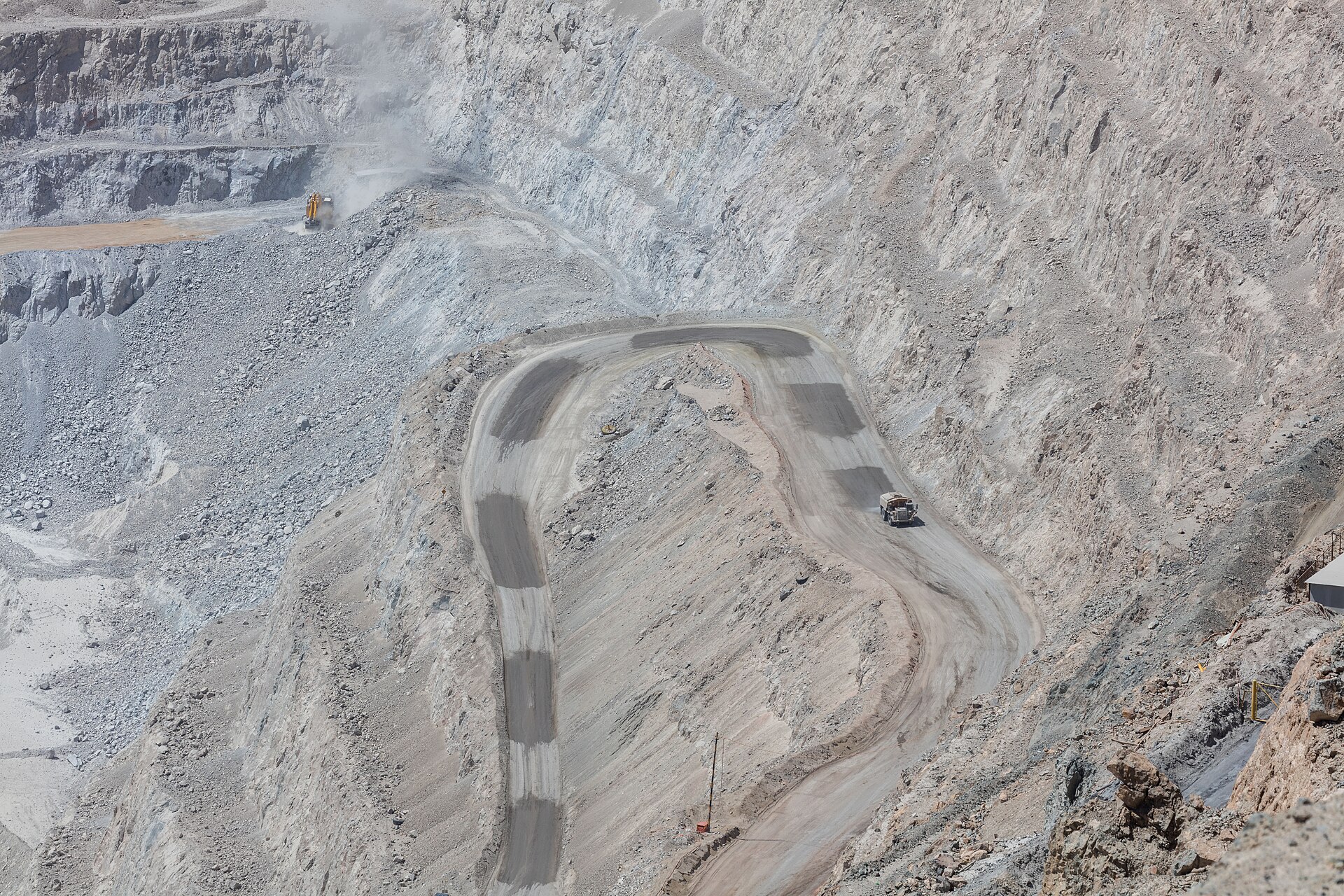
Copper is the cleanest barometer of Asian industrial demand. It combines deep financial liquidity with direct exposure to electrical equipment, manufacturing and construction.
A sustained break in copper alongside weaker Chinese purchasing data would suggest a real industrial slowdown rather than a repricing of Korean technology shares. Chile and Peru are directly exposed through export prices, mining profits and fiscal revenue.
Lithium needs more caution, because its prices can fall even when other industrial commodities rise. Mine expansions, inventories and changes in battery chemistry all play a part.
Iron ore is a China-property trade first. A one-day technology rout should not automatically be read as a Brazilian iron-ore shock, but the warning grows if iron ore, Chinese steel margins and the yuan weaken together.
Soybeans and oil are second-round exposures. They respond less to memory-chip demand than to the income and currency effects of a broader Asian slowdown.
For context on the metal, see our guide to copper in Latin America and the copper market report for 15 October. The guide covers mines, prices and politics.
Country Effects and US Investor Exposure
Brazil combines large exposure to iron ore, soybeans and oil with a liquid equity market widely owned by global investors. Lower iron ore prices would reduce Vale’s earnings, while weaker soy prices would pressure farm margins.
The Brazilian market could still outperform if the selloff stays concentrated in Asian technology shares and investors rotate toward value or dividend stocks. The key question is whether Brazil is treated as a commodity beneficiary or as a high-beta emerging market.
Chile is the most direct Latin American equity and currency proxy for a copper-centred Asian slowdown. Lower copper prices reduce mining cash flow and tax receipts, while a weaker peso erodes dollar returns for foreign investors.
Peru is exposed through copper, gold and other minerals, and its currency and equities are sensitive to foreign portfolio flows. Gold offers a partial counterweight in broader financial stress, but a stronger dollar and higher US rates can limit that protection.
US investors should separate three risks: equity risk from falling share prices, commodity risk from lower Asian demand and currency risk from a weaker real, peso or sol. Hedged exchange-traded products or companies with large dollar revenues can reduce, but not remove, currency exposure.
What Would Make This a Commodity Shock
The cause and duration of a technology selloff matter more than its one-day percentage decline. A short valuation reset can leave commodity demand intact, while a prolonged retreat with falling Chinese output and credit growth can become an emerging-market export shock.
The central conclusion is that a South Korean chip-led rout does not automatically mean a Latin American commodity crash. It becomes consequential when markets read it as evidence of weaker Chinese manufacturing, slower global investment and tighter US financial conditions.
What Prediction Markets Say
Implied probabilities as of 5:25 p.m. ET, 18 October 2026
- —KOSPI record high Polymarket, “KOSPI all-time high before 2028?”: 27.5%, US$40,463 traded.
- —Fed rate hike in 2026 Polymarket, “Another Fed rate hike in 2026?”: 78.5%, US$864,159 traded.
- —Next Fed hike Kalshi, “Next Fed rate hike?”: 81% before 2027. Kalshi is regulated in the US by the CFTC.
These prices are bets, not polls, and we do not have their price history around 15 October. They show that traders still see a US rate rise as likely, which is the pressure that hit Asian chip shares.
Why we show this: prediction markets turn real-money bets into a live probability that moves within minutes of the news, which is why investors, campaigns and newsrooms in the United States now follow them closely. We show them next to polls and official results, never instead of them.
What It Means for You
If you hold Brazilian, Chilean or Peruvian equities, check whether currency losses are eroding local share-price gains. A Chilean copper producer can rise in pesos and still lose value in dollars.
If you are weighing new positions, copper miners offer the most direct exposure to the Asia demand story but also the most concentrated China risk. Diversified Brazilian exporters may give more cushion if the selloff stays confined to technology shares.
What Is Not Known
It is not yet known whether the selloff reflects a real slowdown in Asian industrial demand or a repricing of expensive technology shares. Korea’s September export data still show exceptional strength.
Spot prices for copper, iron ore and lithium are outside this analysis, so the commodity read-through rests on currency moves and the copper fund. The direction of US interest rates is also unsettled until the Federal Reserve meets.
What to Watch
The most convincing sign of contagion would be Asian tech shares down, copper down, China data weaker, the dollar up and Latin American currencies falling together. Any single signal can be noise.
China publishes third-quarter GDP and September industrial output at 02:00 UTC on Monday 19 October (10:00 p.m. ET on Sunday). The RT calendar shows a forecast of 4.4% year-on-year growth against 4.3% before, and industrial output of 5.4% against 5.2%.
The Bank of Korea decides on rates at 01:00 UTC on 22 October, with the previous level at 3.00%. The US Federal Reserve announces its decision at 18:00 UTC (2 p.m. ET) on 28 October.
Korea’s next monthly trade release will show whether the chip boom continued into October. For background on the trading halts, see our explainer on how KOSPI circuit breakers work; our Asia coverage follows the region.
Frequently Asked Questions
How does an Asian tech selloff affect Latin American commodity exporters?
An Asian technology rout can reduce Chinese industrial demand for copper, iron ore and other Latin American exports. It also tends to strengthen the US dollar, which weakens Latin American currencies and can erode dollar returns for foreign investors.
Which Latin American countries are most exposed to a Korean chip selloff?
Chile is the most direct proxy for copper-centred Asian demand, followed by Peru. Brazil has broader exposure through iron ore, soybeans and oil, and its mix of commodities can give some cushion.
What happened to South Korean markets on 15 October 2026?
The KOSPI fell 7.57% to 5,554.22, its seventh straight loss, and trading was halted for 20 minutes. Samsung Electronics fell 9.48%, SK hynix fell 11.06% and Japan’s Nikkei 225 fell 4.90%.
Is a technology selloff the same as a commodity crash?
Not by itself: a short valuation reset can leave commodity demand intact. It becomes a commodity shock only if markets read it as a sign of weaker Chinese manufacturing and slower global investment.
Did Latin American currencies fall on 15 October?
Not uniformly. The Brazilian real weakened 1.4% against the US dollar, the Chilean peso firmed 0.4% and the Peruvian sol was almost unchanged, according to RT data.
How can US investors limit currency risk in Latin America?
Hedged exchange-traded products or companies with large dollar revenues can reduce currency exposure. Investors should also check whether local share-price gains are being eroded by a weaker real, peso or sol.