By The Straits Times | Created at 2026-06-23 09:36:50 | Updated at 2026-06-23 11:02:16
1 hour ago
By The Straits Times | Created at 2026-06-23 09:36:50 | Updated at 2026-06-23 11:02:16
1 hour ago
SYDNEY – Bookstores in Australia are struggling to survive due to heavy discounting by supermarkets and online sellers, prompting calls for the government to introduce measures such as tax breaks, student book vouchers or price controls.
According to the Australian Booksellers Association, there are now just 600 bookstores in Australia, down from 895 in 2001. Separate analysis by the Wordsrated website estimated that the number of bookstores halved in the decade to 2023.
The rapid disappearance of bookstores from shopping strips in city suburbs and large towns in recent years has raised concerns about the impact on the country’s cultural landscape.
Local bookstores in Australia often serve as community hubs, hosting regular events such as book launches and author. However, they have been struggling to compete with online sellers and department stores and supermarkets which often offer large discounts.
An expert on publishing in Australia, Katherine Day, from Melbourne University, told The Straits Times that the federal government should consider introducing tax offsets for booksellers, noting that offsets already exist to encourage film producers to make films in Australia.
She said the government could also consider removing the federal 10 per cent goods and services tax for educational and children’s books.
“The film industry has tax breaks – so why can’t we have tax incentives for the book trade?” she said. “It could help independent booksellers with rents, wages and ancillary costs.”
Independent bookstores have struggled in Australia in recent years, especially as department store chains and online stores such as Amazon can offer big discounts of up to 75 per cent on bestselling items and are sometimes willing to make a loss on individual items. Smaller bookstores typically cannot afford such discounts.
The Australian Booksellers Association (ABA), which represents the sector, has called for the federal government to offer tax offsets for bookstores’ costs such as rent, wages and purchases of Australian-authored books. The association also says that the state or federal governments could consider providing book vouchers for school students to spend at local bookstores, similar to vouchers that some states currently offer for sports activities.
The head of the association, Susannah Bowen, told ST that governments need to acknowledge the contribution that bookstores make to local communities. Local bookstores, she said, often hold book launches and reader talks, host book clubs and writing workshops, introduce readers to new or local writers, and have events that promote literacy for children.
“Bookstores are community hubs – they put on a lot of events and give back to the community,” she said.
“Running a bookshop is extremely challenging at the moment. They are facing competition from discount department stores and online global giants that sell books at deeply discounted rates.”
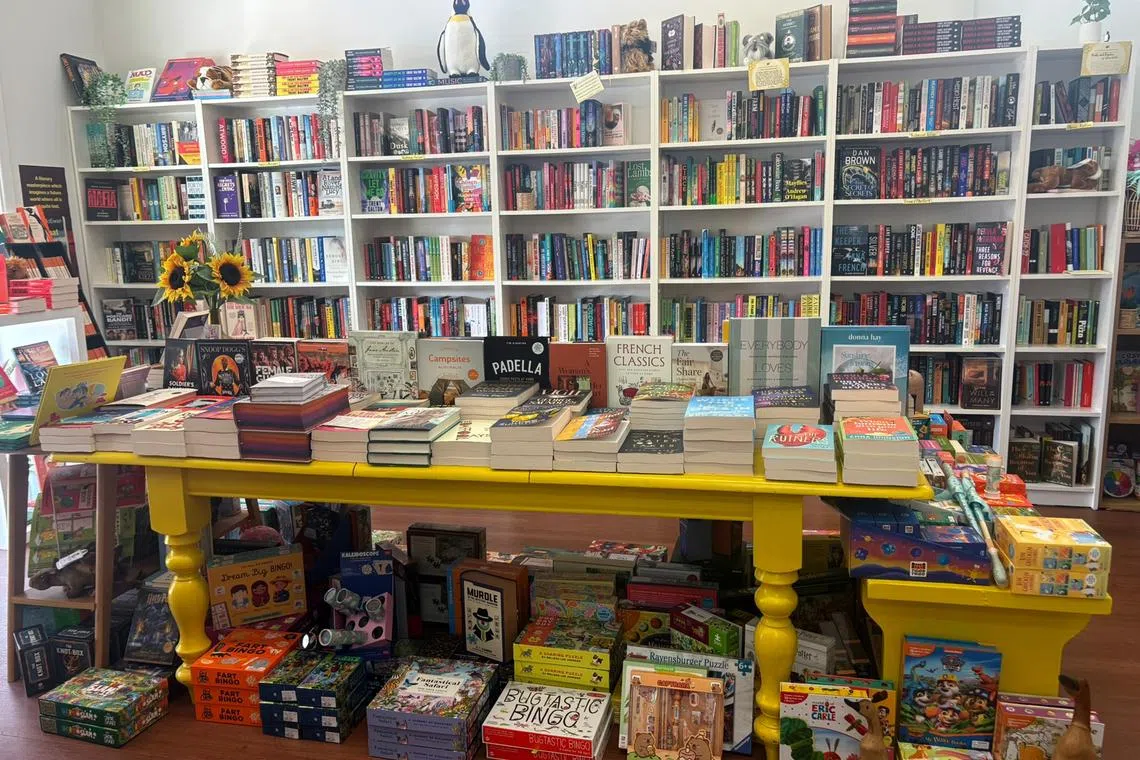
According to a report by the ABA, the number of bookstores in Australia has been falling by 3.5 to 5 per cent a year.
PHOTO: COURTESY OF THE AUSTRALIAN BOOKSELLERS ASSOCIATION
The association has also called for local councils to reduce council rates, a type of property tax, and allow bookstores to apply for local community cultural grants.
“Bookshops are amazing,” Bowen said. “They drive literacy and passion for reading, they can introduce readers to a diversity of titles, and they sustain Australian stories.”
Across Australia, a series of much-loved, decades-old bookstores has closed down in recent years. In Perth, a 37-year-old store in the city centre, Boffin Books, shuttered on June 6, pointing to increased costs of wages, freight, insurance and rent, as well as changes in consumer spending. The bookstore also noted a decline in foot traffic within the central business district as workplaces allow staff to work from home.
“To everyone who ever walked through our doors, browsed our aisles, searched for knowledge, or discovered a book they loved — thank you for letting us be part of your lives,” the bookstore said on its website.
According to a report by the ABA, the number of bookstores in Australia has been falling by 3.5 to 5 per cent a year.
A Melbourne bookseller, Jaye Chin-Dusting, who owns three stores, said it was “tough times” and that bookstores could not compete with the prices offered by department stores and online sellers. In addition, she said, costs such as rent and wages had increased but book prices had remained static.
“It is not a level playing field,” she said. “We cannot price match. Some of our customers understand this.”
Chin-Dusting, 62, who moved from Malaysia to study at age 18 and was an academic before buying a bookstore in 2016, said bookstores had a future but “we will never be rich selling books”. She said she had adapted by offering events such as a monthly mystery night in which customers pay A$50 (S$45) and receive a surprise, wrapped-up book and a glass of wine and also meet the author.
“It is challenging,” she added. “A lot of bookshop owners pay themselves a lot less than what they should be paying. We keep pedalling like crazy.”
Some writers in Australia have called for the government to introduce fixed pricing for books, which involves restricting discounts on the publishers’ recommended retail prices of new books for a limited time – such as six months – after their release. Some European countries such as France and Germany, as well as South Korea and Japan, have fixed pricing schemes. Australia had fixed pricing for books until 1972, when a trade tribunal deemed it uncompetitive.
Responding to a public petition in 2024 calling for fixed pricing, the federal government said it had no plans to introduce such a scheme, noting that fixed pricing can reduce competition.
Day said she supported government intervention to support the sector but was wary of fixed pricing, which can reduce competition and lead to overall increases in book prices as discounting is restricted. Still, she said, government intervention such as tax offsets could help to prevent further closures.
“These stores are operated by people who love reading – it is important to keep them,” she said.