By The Rio Times | Created at 2026-08-07 12:01:57 | Updated at 2026-08-07 12:48:48
46 minutes ago
By The Rio Times | Created at 2026-08-07 12:01:57 | Updated at 2026-08-07 12:48:48
46 minutes ago
Earnings · Brazil
Key Facts
—Q2 net profit Axia Energia reported net income of R$1,191 million (US$233 million) in the second quarter of 2026, against a loss of R$1,325 million (US$259 million) a year earlier.
—The underlying figure On the company’s own adjusted basis, which strips out one-off items, net income was R$1,608 million (US$314 million) — up just 9.5 per cent.
—New York exit The company’s depositary receipts were due to trade on the New York Stock Exchange for the last time on or about 6 August 2026. Trading moves over the counter.
—Transmission pipeline 288 large-scale transmission projects are under construction, carrying estimated capital spending of R$15.5 billion (US$3.03 billion).
—Company name Eletrobras now trades as Axia Energia, under the ticker AXIA3, after completing its migration to B3’s Novo Mercado in June 2026.
—Currency Reais are converted at R$5.12 to the US dollar throughout this article.
Axia Energia, the former Eletrobras, reported a second-quarter net profit of R$1,191 million (US$233 million), reversing a loss of R$1,325 million (US$259 million) a year earlier. On the company’s adjusted measure, however, profit rose only 9.5 per cent — and its receipts were due to leave the New York Stock Exchange on or about 6 August.
One-stop reference
Company Intelligence
Every listed company in Latin America — financials, ownership and structure for 1,450+ companies across 26 exchanges, in one place.
The profit, and what it does not say
Axia Energia booked a net profit of R$1,191 million (US$233 million) in the second quarter of 2026. In the same quarter of 2025 it lost R$1,325 million (US$259 million).
The reversal is real. It is also smaller than the headline suggests.
On the company’s own adjusted basis, which removes non-recurring items, net income was R$1,608 million (US$314 million). That is 9.5 per cent above the R$1,469 million (US$287 million) it earned on the same basis a year earlier.
In other words, the year-earlier quarter was dragged into loss by one-offs rather than by the operating business. Strip those out and this was a quarter of modest progress, not a transformation.
Net operating revenue reached R$11,188 million (US$2.19 billion), 9.7 per cent above the R$10,199 million (US$1.99 billion) of a year earlier. On the regulatory basis the company also reports, revenue was R$10,007 million (US$1.95 billion), up 4.3 per cent.
Reported EBITDA was R$5,925 million (US$1.16 billion), against R$1,259 million (US$246 million) a year before. Once again the base was depressed: adjusted EBITDA rose a far more sober 22.5 per cent, to R$6,307 million (US$1.23 billion).
Two operating factors did most of the work, both reported on the company’s regulatory basis rather than under IFRS. The generation contribution margin rose 17.5 per cent to R$3,653 million (US$713 million), helped by more energy available for sale after the end of the quota regime and a generation scaling factor of 99.2 per cent, while operating provisions fell 64 per cent.
Equity income, also on that regulatory basis, swung from a loss of R$205 million (US$40 million) to a gain of R$296 million (US$58 million). Transmission, the larger of the two margins and likewise a regulatory figure, was essentially flat at R$4,025 million (US$786 million) against R$3,972 million (US$776 million).
Net debt closed June at R$45,461 million (US$8.88 billion), R$585 million (US$114 million) below the March figure. The average cost of that debt fell to the interbank CDI rate minus 0.02 per cent a year, from CDI plus 0.58 per cent a year earlier.
For a foreign reader, the useful discipline here is to watch the adjusted line rather than the reported one. Brazilian utilities carry large provisions, tariff-cycle timing effects and legal contingencies that can throw a single quarter in either direction.
The last day on the New York Stock Exchange
Axia Energia filed a Form 25 with the US Securities and Exchange Commission on 27 July 2026 to withdraw its American Depositary Shares from the New York Stock Exchange. The last day of trading was expected to be on or about 6 August.
This is a voluntary exit, not an expulsion. The board approved it on 1 April 2026, and the company said the receipts represented only about 2.5 per cent of its outstanding shares.
Two classes are affected: the common receipts, which traded under the ticker AXIA, and the Class C preferred receipts, which traded as AXIA PRC.
Delisting takes legal effect ten days after the Form 25 was filed. Deregistration is a separate and later step.
Axia says it intends to file a Form 15F to deregister its securities and end its US reporting duties, a process that can take up to 90 days after filing and is subject to no objection from the regulator.
Holders of the receipts need do nothing immediately. The receipts are expected to continue trading in the United States over the counter, through a Level 1 sponsored programme with Citibank as depositary.
What genuinely changes is disclosure. On the notice’s own account, filing the Form 15F suspends Axia’s duty to file 20-F annual reports and 6-K updates immediately; only full deregistration waits up to 90 days. Either way, American holders will have to follow the company through Brazilian filings instead.
The exit ran alongside a second change at home. In June the company completed its migration to the Novo Mercado, B3’s strictest governance tier, leaving a capital structure of common shares under the ticker AXIA3 and Class C preferred shares under AXIA7.
The trade-off is straightforward. Some large US funds cannot hold a security that is not listed on an American exchange, and Axia is betting that concentrating liquidity in São Paulo, where the overwhelming majority of its shares already trade, is worth losing them.
It is a wager repeated across the region in recent years, as boards weigh the prestige of a New York listing against its cost and legal exposure. In Axia’s case the 2.5 per cent figure made the arithmetic unusually easy.
Where the transmission money is going
Axia invested R$3,117 million (US$609 million) in the quarter, 52.6 per cent more than the R$2,043 million (US$399 million) of a year earlier. Transmission took the bulk of it.
Spending on transmission expansion reached R$636 million (US$124 million), against R$85 million (US$17 million) in the same quarter of 2025. Reinforcements and improvements to the existing grid absorbed a further R$1,073 million (US$210 million).
The forward pipeline is much larger. The company reports 288 large-scale transmission projects under construction, carrying total estimated capital spending of R$15.5 billion (US$3.03 billion).
Those projects are expected to add roughly R$2.0 billion (US$391 million) of allowed annual revenue between 2026 and 2030. Allowed annual revenue, known in Brazil as RAP, is the regulated sum a transmission operator is paid each year for keeping its lines available.
Axia also won Lots 8, 9 and 10 at Brazil’s Transmission Auction 01/2026, awarded on 3 July 2026, shortly after quarter end. On the terms set out in the auction notice, those lots should generate an additional R$50.8 million (US$9.9 million) of allowed annual revenue once operating, for R$668 million (US$130 million) of investment.
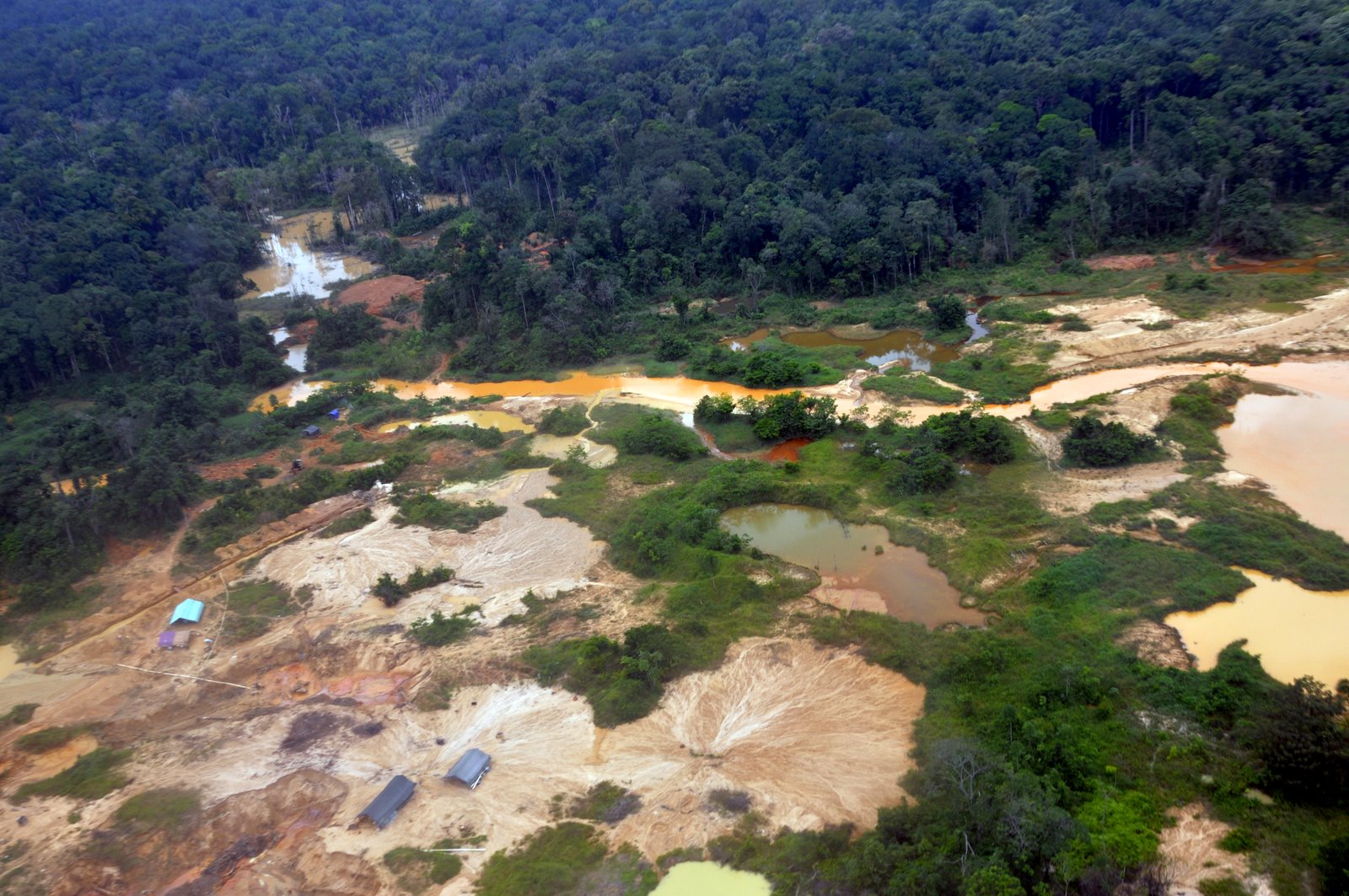
Transmission is the unglamorous backbone of the Brazilian electricity system. Power is generated in northern hydro basins and in a fast-expanding north-eastern wind and solar belt, while the demand centres sit hundreds or thousands of kilometres to the south-east.
Regulated transmission offers something generation cannot: inflation-linked, long-dated revenue that does not depend on how much rain falls. For a company still proving its post-privatisation credibility, that predictability matters more than headline growth.
Brazil’s recent transmission auctions have drawn fierce competition from domestic players, Chinese state-owned groups and European infrastructure funds, compressing the returns on offer. Whether Axia can deploy this much capital and still earn an acceptable spread is the open question.
Alongside the capital spending, the board approved up to R$3.7 billion (US$723 million) of capital available for allocation to shareholders from the second-quarter result. Added to the R$4.0 billion (US$781 million) approved on the first quarter, that takes the half-year total to as much as R$7.7 billion (US$1.50 billion).
What the rebrand to Axia Energia signals
The change from Eletrobras to Axia Energia is not cosmetic. The old name carried half a century of history: a state-controlled champion created in 1962, the symbol of Brazil’s ambition to electrify a continent-sized nation, and later the subject of endless political battles over its role, its tariffs, and its eventual sale.
Axia, by contrast, suggests a leaner, more private-sector identity. The word means “value” or “worth” in Greek, a deliberate signal that this is now a corporation measuring itself by returns rather than by the number of households it connects.
Yet the legacy cannot be erased with a new logo. The company remains Brazil’s largest electricity generator and transmitter, with 74,829 kilometres of transmission lines and 44,430 megawatts of installed generating capacity.
The state has not gone away either. The Brazilian government and related entities still hold about 40 per cent of the total capital, though no shareholder may cast more than 10 per cent of the votes at a general meeting.
The rebrand therefore expresses a duality at the heart of Brazilian capitalism. It tells the financial world that the privatised entity is a normal company, subject to market discipline. At the same time, it must operate within a political ecosystem where the state never truly steps back, where affordability is a permanent demand, and where profit can quickly be recast as profiteering if the weather turns bad and bills rise.
This tension is what makes covering Brazil so compelling. Axia Energia is not just a stock ticker—it is a portrait of a country that has liberalised deeply but not completely, that welcomes foreign capital but keeps a hand on the regulatory tiller, and that wants First World energy infrastructure while still grappling with Third World inequality. Every quarterly result is a fresh snapshot of that unresolved, entirely human negotiation.
Frequently Asked Questions
What did Axia Energia report for the second quarter of 2026?
Net profit of R$1,191 million (US$233 million), against a loss of R$1,325 million (US$259 million) a year earlier. On the company’s adjusted basis, which excludes one-off items, net income was R$1,608 million (US$314 million), up 9.5 per cent.
Has Axia Energia really left the New York Stock Exchange?
Yes. It filed a Form 25 on 27 July 2026 and its depositary receipts were due to trade for the last time on or about 6 August. The receipts are expected to trade over the counter instead. Separate deregistration from the US regulator has not yet been completed.
How much is Axia Energia investing in transmission?
It has 288 large-scale transmission projects under construction, with estimated capital spending of R$15.5 billion (US$3.03 billion), expected to add about R$2.0 billion (US$391 million) of allowed annual revenue between 2026 and 2030.
Note on currency: reais are converted throughout at R$5.12 to the US dollar.
Sources: AXIA Energia S.A. – Second Quarter 2026 Results, filed with the SEC on Form 6-K, AXIA Energia S.A. – Notice to the Market: Voluntary Delisting of ADSs from the New York Stock Exchange (Form 6-K, 6 July 2026), AXIA Energia S.A. – Form 25, notification of removal from listing, 27 July 2026
This article was produced by The Rio Times’ automated newsroom system. How we use AI · Report an error
LatAm Markets: Live Signals → — real-time movers, turnover leaders and FX across Latin America.
The Rio Times · Power Map
See who really holds power in Latin America
Click to open the Power Map →