By The Rio Times | Created at 2026-08-06 16:36:29 | Updated at 2026-08-06 18:26:29
2 hours ago
By The Rio Times | Created at 2026-08-06 16:36:29 | Updated at 2026-08-06 18:26:29
2 hours ago
South Africa · FINANCE
Key Facts
—The call: Bank of America says South Africa is well placed to attract foreign direct investment through mergers and acquisitions, and that global investors still see attractive opportunities despite market volatility.
—The market backdrop: Announced M&A across sub-Saharan Africa reached US$50 billion in the first half of 2026, more than four times the level a year earlier, according to LSEG Deals Intelligence.
—Track record: The bank says it has executed more than US$20 billion of transactions for sub-Saharan African clients since 2015.
—Leadership move: On 4 August 2026 the bank promoted Simbah Mutasa, who ran its South African investment bank, to lead investment banking across the whole of Africa.
—Recent mandates: Adviser on Diageo’s agreed sale of its East African Breweries holding to Japan’s Asahi Group Holdings, a price implying an enterprise value of about US$4.8 billion for the brewer, and sponsor on Valterra Platinum’s 2025 demerger from Anglo American and its London secondary listing.
—Domestic market: South African exchange-listed companies completed 384 deals in 2025 worth ZAR 1.639 trillion (about US$100 billion), up from 362 the year before.
Bank of America is betting that South African deal-making holds up through global market turbulence, and has just handed its South African investment banking chief responsibility for the entire continent. The wager is that Johannesburg remains the most reliable route into African corporate finance.

One-stop reference
Company Intelligence
Every listed company in Latin America — financials, ownership and structure for 1,450+ companies across 26 exchanges, in one place.
What the bank actually said
Anthony Knox, Bank of America’s country executive for South Africa, argues that the country stands out because it combines deep capital markets with companies that have shown they can perform across different market cycles.
“Investors remain selective, but they continue to deploy capital where they see strong long-term fundamentals, growth and execution certainty,” Knox said. “Global investors continue to see attractive opportunities across South Africa. The focus continues to be on quality companies, run by quality management teams, which can benefit from the improving macro environment and withstand the short-term volatility.”
On the question that matters most to anyone timing an entry, he was direct: “Market volatility may influence timing, but it rarely changes long-term strategic priorities. Quality companies continue to raise capital, invest and pursue growth where the fundamentals remain compelling.”
The numbers behind the confidence
The market data supports the optimism, at least for now. Announced M&A across sub-Saharan Africa reached US$50 billion in the first half of 2026, according to LSEG Deals Intelligence. That is more than four times the level recorded in the same period a year earlier.
A caveat belongs with that figure. Announced deal value is lumpy, and a single very large transaction can distort a half-year comparison. It measures intention rather than completion.
The domestic picture is steadier. South African exchange-listed companies completed 384 deals in 2025 with a combined value of ZAR 1.639 trillion, roughly US$100 billion at current exchange rates, up from 362 deals the year before. As at September 2025, real estate accounted for about 36 percent of successful listed deals, resources for 11.6 percent and technology for 8.6 percent.
Promotion as a statement of intent
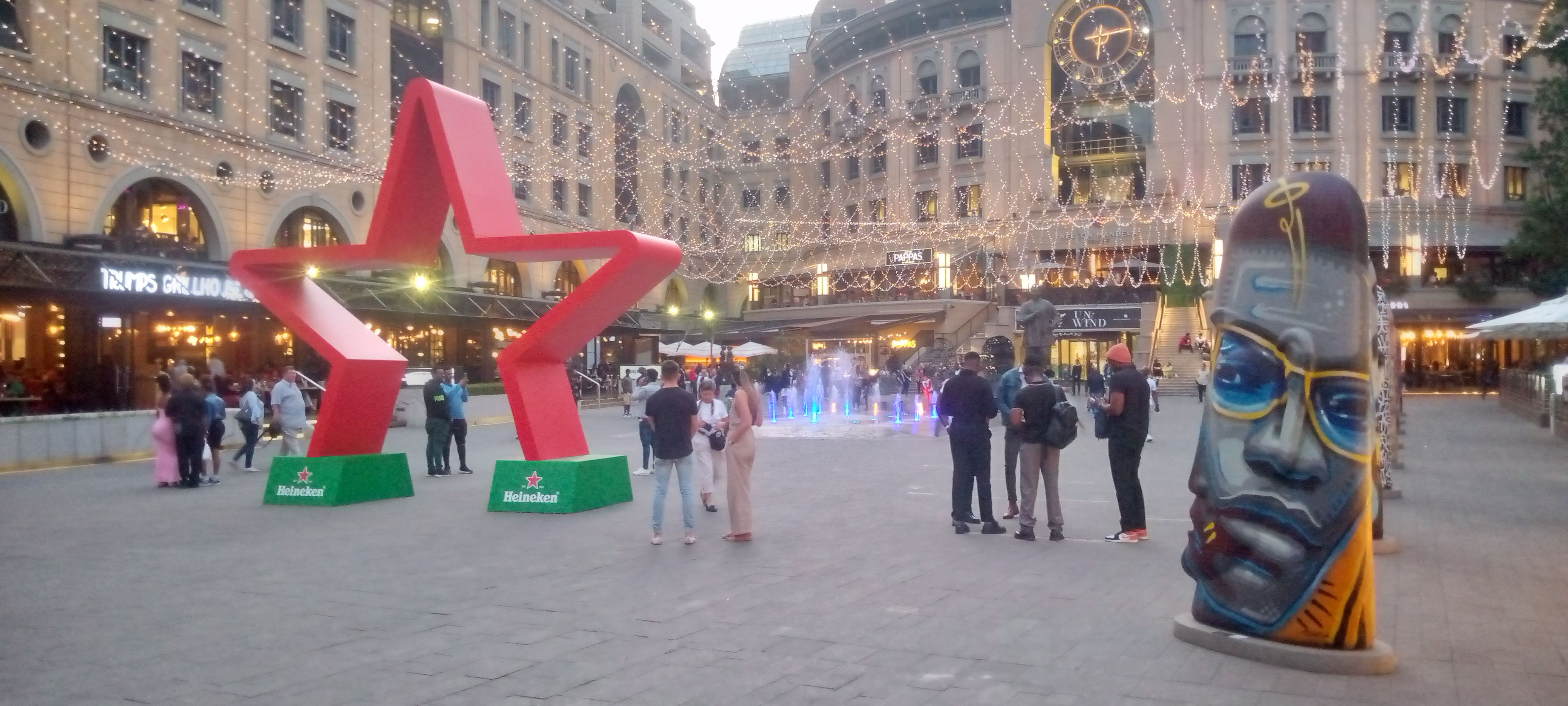
On 4 August 2026 Bank of America promoted Simbah Mutasa to lead investment banking across Africa, widening a remit that previously covered South Africa alone. Mutasa has more than fifteen years in the industry, beginning at Citi in London in technology, media and telecommunications banking, and later serving as regional director for Southern Africa at Norfund, the Norwegian development finance institution.
His reading of the market is about the structure of capital rather than its availability. “The conversation has moved beyond simply raising capital,” he said. “The focus is now on securing capital with the right tenor, flexibility and risk profile… Companies that align their financing strategy with their long-term ambitions will be better placed to move decisively when opportunities arise.”
He also set a condition on the African growth story that is often skipped. “Africa’s opportunity lies in building businesses with genuine regional scale,” he said. “Innovation opens the opportunity, but disciplined expansion and appropriately structured capital will determine who captures it.”
The deals on the record
The bank says it has executed more than US$20 billion of transactions for sub-Saharan African clients since 2015. Recent mandates give a sense of the type of work involved.
It advised on Diageo’s agreed sale of its 65 percent holding in East African Breweries, together with a 53.7 percent stake in the Kenyan spirits business UDV Kenya, to Japan’s Asahi Group Holdings for US$2.3 billion, a price implying an enterprise value of about US$4.8 billion for the brewer. That sale was agreed in December 2025 and has not completed: it is caught in the Kenyan courts, where a petition halted it again in July 2026. The bank also acted as joint financial adviser on Africa Data Centres’ strategic partnership with Stanlib, and as transaction sponsor on Valterra Platinum’s demerger from Anglo American and its secondary listing in London, both completed in mid-2025.
The bank is also working on outbound business. In May 2026 FirstRand, one of Africa’s largest banking groups, appointed Bank of America alongside its own Rand Merchant Bank to advise on the sale of its British subsidiary Aldermore. FirstRand is retreating from the United Kingdom after raising its provision for motor-finance mis-selling redress by GBP 510 million to GBP 750 million, roughly US$690 million and US$1.0 billion respectively, once Britain’s Financial Conduct Authority finalised its redress scheme in March.
Where the competition sits
South African investment banking is competitive and profitable, and Bank of America is not moving into an empty field. Standard Bank, Absa, Investec and Rothschild & Co are all active. Absa in particular has been rebuilding, recruiting Saloshni Pillay from Deutsche Bank and Giles Douglas from Rothschild & Co.
The broader shift is that European banks have retreated from Africa over the past decade while American ones have expanded their corporate and investment banking presence. That matters beyond league tables. Whoever advises on the sale of an African utility, miner or bank helps shape who ends up owning it.
Chinese policy and commercial banks remain strong in mining, rail and power finance, and Gulf lenders and sovereign funds are increasingly active in logistics and ports. American investment banks are positioning as the Western counterpart, able to finance and advise on competing projects, a contest explored in our pillar Africa: The New Scramble.
Technology is where the volume is
The busiest part of the African deal market by number of transactions is technology. African technology companies recorded 67 acquisitions in 2025, a record and a 72 percent increase on the previous year, well above the earlier peak of 40 set in 2022, according to TechCabal Insights.
Financial technology accounted for close to 46 percent of those deals. South Africa, Kenya, Egypt and Nigeria together absorbed about three quarters of the acquired companies. South African startups raised US$933 million during the year, the largest national total on the continent.
These are small transactions by the standards of a global investment bank, but the direction matters. The report describes a shift from distress-driven acquisitions to strategic ones, with well-capitalised companies buying to enter markets, secure regulatory licences and consolidate fragmented value chains. That is the pipeline that eventually produces deals large enough to interest a firm like Bank of America.
What could go wrong
South Africa’s Competition Commission and Competition Tribunal scrutinise mergers in priority sectors including banking, financial services, telecommunications and energy, and regularly attach public-interest conditions covering employment and local ownership. Deal timetables in these sectors are longer than international buyers usually expect.
The macroeconomic backdrop is also thinner than the deal figures imply. The Reserve Bank expects growth of 1.4 percent in 2026, an upgrade from 1.2 percent but still slow, inflation is running above target, and power supply and freight logistics remain unresolved constraints.
Bank of America’s position is that none of this changes the long-run case. Knox’s argument is that volatility moves timing, not strategy. That is a defensible reading, but it is a forecast rather than a result, and the test of it will be what actually closes over the next year.
Frequently Asked Questions
Why is Bank of America focusing on South Africa?
The bank views South Africa as the continent’s deepest and most liquid capital market, home to companies with a record of performing across market cycles, and uses it as the base for a wider Africa strategy.
How active is the African M&A market in 2026?
Announced M&A across sub-Saharan Africa reached US$50 billion in the first half of 2026, more than four times the level a year earlier, according to LSEG Deals Intelligence. Announced value is volatile and can be skewed by a single large transaction.
Which recent deals has Bank of America worked on in Africa?
It advised on Diageo’s agreed sale of its East African Breweries holding to Asahi Group Holdings, on Africa Data Centres’ partnership with Stanlib, on Valterra Platinum’s 2025 demerger and London listing, and on FirstRand’s sale of its British subsidiary Aldermore.
Connected Coverage
For more on how global powers are competing for influence over African capital, minerals and infrastructure, read our pillar Africa: The New Scramble.
Sources
- Business Day — Bank of America eyes new M&A wave in South Africa
- Bloomberg — Bank of America taps new Africa, Benelux investment bank leads
- Bloomberg — FirstRand picks BofA, RMB to advise on sale of UK Aldermore unit
- TechCabal Insights — State of Tech in Africa 2025 Year in Review
This article was produced by The Rio Times’ automated newsroom system. How we use AI · Report an error
LatAm Markets: Live Signals → — real-time movers, turnover leaders and FX across Latin America.
The Rio Times · Power Map
See who really holds power in Latin America
Click to open the Power Map →