By The Straits Times | Created at 2026-08-01 21:16:33 | Updated at 2026-08-03 18:01:22
1 day ago
By The Straits Times | Created at 2026-08-01 21:16:33 | Updated at 2026-08-03 18:01:22
1 day ago
BENGALURU – About nine years ago, Sivaranjani Santosh, a paediatrician from Hyderabad, made a decision: She would not let any child or parent in India be misled into buying the wrong products to treat diarrhoea and dehydration.
Little did she know that her clinical conviction would turn into a crusade against what she calls “sugary packaged juices masquerading as life-saving oral rehydration salts (ORS)”.
The self-confessed internet unsavvy doctor’s relentless campaign on social media against fake ORS raised a red flag for consumers and pushed the Indian food regulator to ban non-standard drinks from using the ORS label.
However, the battle is far from over. Misleading advertisements and crafty labelling continue to confuse consumers.
It all began in 2018, when Sivaranjani treated some children with diarrhoea and prescribed ORS for rehydration. But instead of improving, many of them got worse.
How did her patients get so dehydrated despite drinking ORS, a solution specifically made for rehydration?
“I asked parents to bring what they gave their children. To my dismay, I saw that they were giving a tetra pack of juice with the brand name ORSL... It had 11g sugar per 100ml, which is almost 10 times the recommended amount of sugar ORS is supposed to have (1.35g per 100 ml),” she told The Straits Times.
ORS is a mix of a precise ratio of sodium and glucose that can be life-saving for children or adults with heat stress or diarrhoea. Every year, 100,000 children die because of diarrhoea in India, accounting for 13 per cent of all deaths of children. Dehydration and loss of essential salts that come with diarrhoea kill 1,200 children a day worldwide.
The World Health Organization (WHO) recommends that dissolved in a litre of water, ORS must contain 13.5g of glucose, 2.6g of sodium chloride, 2.9g of trisodium citrate dihydrate, and 1.5g of potassium chloride. Altering the WHO-ORS ratio disrupts how the intestines absorb water, which can lead to worsening diarrhoea and cause severe salt imbalances.
The ORSL Sivaranjani saw in 2018, a brand manufactured by Kenvue (formerly part of Johnson & Johnson), was a sweeter energy drink that did not have WHO’s ORS formula at the time. But the similar name had apparently misled some parents to believe it was ORS.
To rehydrate or dehydrate?
India’s massive pharmaceutical industry is among the world’s biggest manufacturers of WHO-compliant ORS. Key Indian producers are FDC Limited (maker of Electral and Enerzal) and Cipla (Prolyte ORS).
But the Indian market is also flooded with electrolyte-filled fruit juices whose names sound similar to ORS. They dominate the shelves of pharmacies, general stores, online grocery delivery apps and even school stores.
“Such electrolyte beverages contain significantly more sugar and some include sucralose, an artificial sweetener. They taste better, but they draw more water from the cells, making dehydration worse,” said Sivaranjani.
ORS is manufactured in ready-to-drink forms too, but customers and pharmacists are often unable to tell them apart from sugary electrolytes.
As ORS can be bought over the counter without a prescription, a few pharmacists ST spoke to in Bengaluru said they gave customers what they asked for: often prominently advertised ready-to-drink electrolytes. Only some cautioned customers about the difference between the energy drinks and medical-grade ORS.
The ORS segment is estimated to be around 10 billion rupees (S$135 million), while the energy drinks segment is about 15 billion rupees. India is one of the top exporters of ORS sachets, to countries such as the Philippines, Pakistan, Namibia and South Africa, but ORSL is not exported.
Tapping wellness market
When asked why manufacturers push non-medical electrolytes over ORS, Dinesh Abrol, former chief scientist at the Council of Scientific and Industrial Research, explained that ORS is listed in the National List of Essential Medicines and is under price control. “Companies find juices combined with ORS formula as a product ready for super profits,” Abrol said.
By selling them as post-workout drinks, vitality boosters or a healthy alternative to sugary carbonated beverages, companies can tap the health, wellness and fitness market, which is more lucrative than that of the modest ORS meant only to treat severe dehydration.
Sivaranjani began warning her patients in 2018 about the difference between juices and ORS. To create wider awareness, she also started posting videos in English and Telugu on Instagram, X and YouTube. In these videos, her eyes flash with conviction behind her spectacles, but her voice is calm and steady.
In multiple videos, she displays various tetra packs. “Dear parents, look closely: this is not ORS, this is not ORS, this is not ORS at all... it has too much sugar that will make your child have more vomiting and diarrhoea,” she says.
Many Indians christened her “that ORS doctor”.
ORS v ‘ORS liquid solution’
When Sivaranjani complained about fake ORS to the Central Drugs Standard Control Organization (CDSCO), she realised how complex drug and food licensing was.
It turned out that the drinks were licensed not by the drug regulator, but the food regulator. The CDSCO licenses medical-grade ORS, while the Food Safety and Standards Authority of India (FSSAI) licenses energy drinks.
She then wrote to the FSSAI.
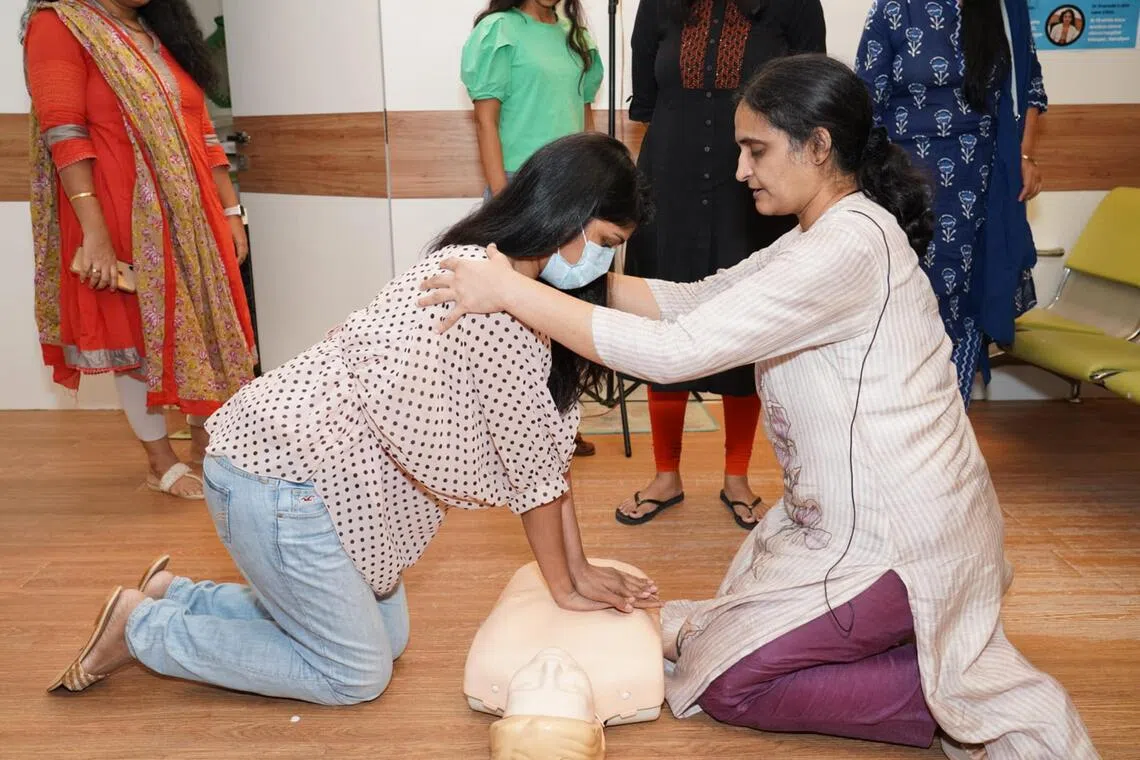
When Sivaranjani complained about fake ORS to the Central Drugs Standard Control Organization (CDSCO), she realised how complex drug and food licensing was.
PHOTO: COURTESY OF SIVARANJANI SANTOSH
“An FSSAI licence only means that something is safe and hygienic to drink, but it still doesn’t mean it is ORS,” she said.
Meanwhile, Rupa Singh, an assistant professor at Jawaharlal Nehru University in Delhi, filed a petition in the Delhi High Court in 2021 after her eight-year-old daughter’s health deteriorated on her being given ORSL, which a local pharmacy had sold to her as an “ORS liquid solution”.
Singh’s petition asked the Ministry of Health to ban them from being marketed and sold near schools as they were “intentionally and deliberately cheating the public at large by fraudulently making them believe their products to be ORS”. She asked for the packets to clearly specify that “its use in diarrhoea would be injurious to health”.
Following Sivaranjani’s campaign, Singh’s court petition and the growing outrage about fake ORS, the FSSAI in April 2022 declared that marketing fruit-based drinks with “names similar to ORS like ORSL, ORSL Rehydrate, Electro Plus ORS, etc” was misleading and potentially harmful. It would be considered “misbranded food” and would face legal action.
But the drinks continued to be sold everywhere.
Frustrated, Sivaranjani filed a public interest litigation in the Telangana High Court in August 2022, challenging administrative inaction.
Long lonely fight
While her case crawled through the judiciary for years, Sivaranjani felt increasingly alone, watching the authorities and even some doctors swing between protecting public health and giving in to the clout of beverage manufacturers.
In February 2024, the FSSAI allowed beverage makers to use the term ORS but with a disclaimer that the product was “NOT an ORS formula as recommended by WHO”.
Sivaranjani was appalled to find ORSL stalls at a major conference organised by the Indian Academy of Pediatrics in January 2025. When she questioned the conflict of interest, the association did not provide a response.
Then, she had a win.
On Oct 15, 2025, the food regulator banned the use of ORS as a stand-alone term, prefix or suffix from all food products, following an avalanche of complaints that the disclaimers – often in tiny font – were barely noticeable, and that the term ORS still visually dominated labels and deceived customers.
“I started crying crazily,” Sivaranjani recalled.
“We have won the battle,” she said in a choked voice in the video she posted soon after the order.
But her joy was short-lived.
Within days, some companies got the court to stay the ban, saying it would incur losses.
But the Delhi High Court eventually upheld the FSSAI ban, saying “the larger public health would outweigh the individual loss to the manufacturer”. Sales of mislabelled stock were no longer allowed.
The FSSAI did not respond to ST’s queries about what violations led to it issuing a ban and how it is ensuring compliance.
Confusion worsens with eRZL
Kenvue told ST that it has since created two differentiated brands for different needs – a new one called eRZL for everyday hydration and the old ORSL brand name whose contents have now been changed to the WHO-recommended ORS formulation to treat diarrhoeal dehydration.
“Our ORSL WHO ORS product range clearly mentions ‘WHO-recommend formula’ and ‘Restores Fluids and Electrolyte lost during Dehydration Due to Diarrhoea’, while the eRZL ranges explicitly declares ‘Ready to Serve Fruit Beverage’ on the front of pack,” said the Kenvue spokesperson in e-mailed responses to ST’s queries.
“For diarrhoea, we strictly recommend patients to consume only WHO ORS products,” the company said.
But doctors and public health advocates say confusion continues to reign.
The National Health Rights Forum, an alliance of Indian healthcare activists, said in a May statement that “there are two products in the market now in the name of eRZL – one being the older stock with high sugars in it, and the newly manufactured stock with sucralose marketed as a daily hydration drink, neither one recommended for children under two years”.
FDC, India’s largest ORS maker, also sued Kenvue, pointing out that eRZL had “phonetic similarities” to its energy drink brand Enerzal. Its own ORS brand is called Electral.
Labels still blur the line between ORS and energy drinks. While some companies add lemon, apple and mint flavours as well as sweeteners to ORS, other companies sell juices combined with the ORS formula.
Available in Singapore?
In response to ST’s queries, Singapore’s Health Promotion Board (HPB) and Health Sciences Authority (HSA) said they have not seen the ORSL and eRZL products in Singapore to date. ORS is regulated as a medicinal product in Singapore.
Based on HSA’s latest checks since being alerted to Kenvue’s ORSL in July, the product is not available on local e-commerce platforms and is sold mainly through overseas platforms.
“If it is found to be non-compliant with Singapore’s medicinal product regulations, HSA will take regulatory action against local sellers and remove the relevant online listings,” said the joint HPB-HSA reply.
Assessing sucralose
In a video in early 2026, Sivaranjani warned that everyday consumption of sucralose in drinks like eRZL was also not healthy.
Kenvue sent her a legal cease-and-desist notice in March, demanding that she remove her post. The company told ST that it has reduced the sugar content in the new eRZL by 87 per cent, with 1.4 times more electrolytes to address hydration needs.
“There is well-established scientific and safety assessment of sucralose as a non-nutritive sweetener… It has a well-established history of safe use within approved acceptable daily intake levels,” Kenvue said.
Sivaranjani resigned from the Indian Academy of Pediatrics in June, citing “lack of institutional support” after receiving the legal notice. But others like the Federation of All India Medical Association and Telangana Senior Resident Doctors Association backed her, condemning the legal notice as an attempt to silence evidence-based medical opinion.
On the days her energy flags, Sivaranjani thinks of the children whose health her obstinate fight has improved, she said. For a burst of hope, she needs only to look at the comments below her videos, brimming with respect and gratitude from millions of ordinary people.