 By GB News (World News) | Created at 2026-10-07 20:55:56 | Updated at 2026-10-07 21:49:24
1 hour ago
By GB News (World News) | Created at 2026-10-07 20:55:56 | Updated at 2026-10-07 21:49:24
1 hour ago
The BBC pays white staff less than ethnic minorities in almost every band, the corporation's "pay gap" report has revealed.
The disparities range from 1.3 per cent to a striking 13.2 per cent in the broadcaster's lowest pay grade, where black, Asian, mixed and other minority ethnic staff received considerably higher median hourly pay.
Only one band - Band F - bucked the trend, with white workers earning a marginal 0.6 per cent more. Senior leaders from an ethnic background earn 5.3 per cent more than white workers.
The data emerges despite the BBC's stated commitment to remuneration that is "fair, clear and competitive," raising fresh questions about how the publicly funded broadcaster determines staff salaries across its workforce.
In Band A, ethnic minority staff earned 13.2 per cent more, while Band C showed a 5.4 per cent difference and Band E stood at 4.3 per cent. Band D recorded a 3.5 per cent disparity, with Band B at 1.3 per cent.
At the most senior level, minority ethnic leaders took home 5.4 per cent more than their white peers on average.
The BBC pays white staff less than ethnic minorities in almost every band, the corporation's 'pay gap' report has revealed

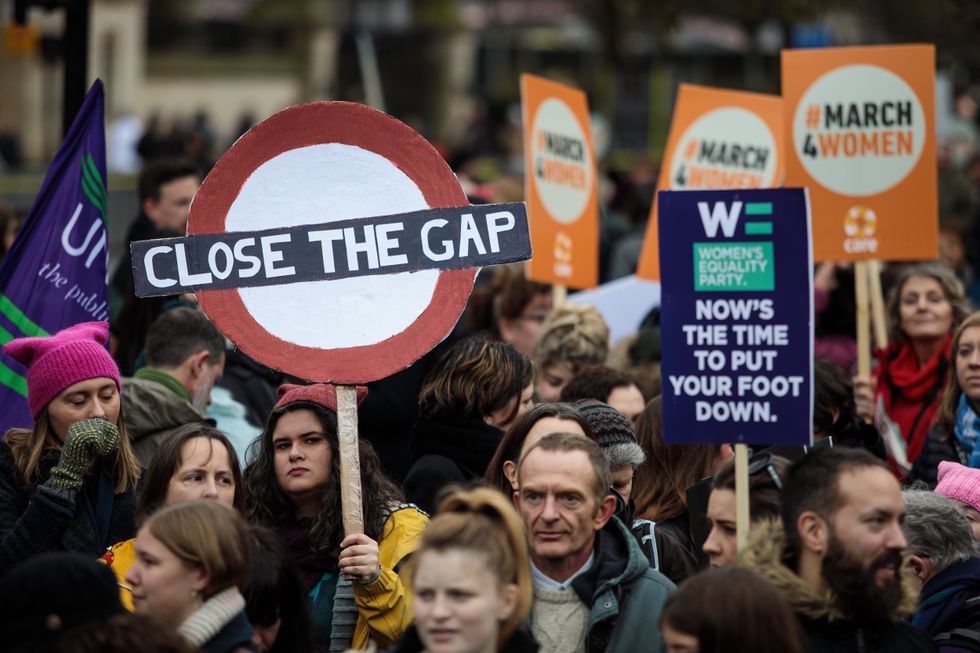
The annual report also detailed that female senior leaders earned 1.4 per cent more than men in equivalent roles - though men slightly topped females in all bands except two.
Disabled managers received 7.5 per cent higher pay than able-bodied colleagues, while the highest-paid LGBTQ+ staff were remunerated 8.8 per cent more than their non-LGBTQ+ counterparts, and earned more in Bands D, E, and F.
The corporation operates several mentoring and career development programmes specifically designed to advance staff from black, Asian and minority ethnic backgrounds.
These initiatives sit within the BBC's broader 50:20:14:25 Diversity, Inclusion and Belonging Strategy, which sets aspirational targets of a 50 per cent gender balance, 20 per cent ethnic minority representation, 14 per cent deaf, disabled or neurodivergent employees, and 25 per cent from working-class origins.
The annual report detailed female senior leaders earned 1.4 per cent more than men in equivalent roles, disabled managers received 7.5 per cent higher pay than able-bodied colleagues, and the highest-paid LGBTQ+ staff were remunerated 8.8 per cent more than their non-LGBTQ+ counterparts
The BBC has maintained these are goals rather than quotas, with no bearing on pay decisions.
A separate review published earlier this year found that while the BBC had made notable strides in on-screen representation, audiences felt diversity was being "shoe-horned" into programming, sometimes producing portrayals that felt contrived rather than authentic.
Earlier this year, the BBC was urged to abandon "tick box" diversity casting in its dramas following a major independent review commissioned by the broadcaster's board.
After various historical casts, such asNathaniel Curtis as Sir Isaac Newton in Doctor Who, they were warned that depicting "an anachronistic historical world in which people of colour are able to rise to the top of society as scientists, artists, courtiers and Lords of the Realm" risks "erasing the past exclusion and oppression of ethnic minorities."
The broadcaster has firmly rejected any suggestion that the pay gaps reflect unequal treatment, maintaining that internal audits have found no evidence of systemic gender-based pay discrimination within the organisation.
The BBC also noted that when measured across the entire workforce, white employees, men, straight staff and able-bodied workers still commanded higher overall average wages. This is because these groups occupy a disproportionately large share of the most senior and best-remunerated positions, which elevates their aggregate figures.
It says that white workers earn 0.7 per cent more than other ethnic groups, and men benefit from 7.6 per cent difference.
However, the corporation acknowledged that ethnic minority staff had moved into higher-paying roles in greater numbers over the past year, producing what it described as the most significant annual shift in its data.
Sir John Whittingdale, the former culture secretary responsible for drafting the BBC's most recent charter in 2016 said the BBC should be paying employees "entirely on the basis of the value and merit they contribute for the job they are doing."
A BBC spokesman said: "The BBC is committed to fair and equal pay for all. We continue to monitor our pay gaps closely and do expect to see small fluctuations year-on-year."