By Russia Today | Created at 2026-08-12 18:25:19 | Updated at 2026-08-12 19:17:20
55 minutes ago
By Russia Today | Created at 2026-08-12 18:25:19 | Updated at 2026-08-12 19:17:20
55 minutes ago
From counterterrorism to trade corridors, Moscow and Islamabad are turning steady contact into a deeper, more durable relationship
By Fatima Sheikh, Counsellor at the Embassy of the Islamic Republic of Pakistan to the Russian Federation
Sometimes trust develops gradually in settings that most people are unaware of, such as a working group, a ministerial handshake, or an agreement made on the fringes of a summit that garners national attention for a single day.
For the better part of a decade, Pakistan and Russia have been developing this kind of trust. In the summer of 2026, there were a number of quiet episodes in quick succession that essentially focused on security, diplomacy, energy, education, and trade, with Afghanistan running through almost all of them as a shared concern.
Work behind the scenes
On June 23, Russian and Pakistani officials gathered in Islamabad for the 12th edition of their Joint Working Group on Countering International Terrorism, led by Russian Deputy Foreign Minister Dmitry Lyubinsky and Pakistan’s additional foreign secretary, Ambassador Khalid Jamali. The discussion focused on regional terrorist threats, with a particular emphasis on those originating in Afghanistan. The 12th such meeting – a number which indicates that the relationship is designed not for headlines, but for continuity, the kind that can withstand changes in government and the overall geopolitical climate. The two parties agreed that further intelligence sharing and international cooperation would be critical.
Let us get the practical logic right: Bilateral channels like this one fill a void that slower, more bureaucratic multilateral organizations like the Shanghai Cooperation Organization (SCO) and the UN cannot cover on their own. Pakistan values Russia’s counterterrorism experience, particularly in urban warfare and counterinsurgency, while Russia is interested in Pakistan’s own operational experience along its western border. It is not a formal alliance, but it benefits both parties.
A few weeks earlier, the two countries’ interior ministries had already been busy. On June 6, Pakistani Interior Minister Mohsin Naqvi met his Russian counterpart, Vladimir Kolokoltsev, on the sidelines of an SCO gathering in Bishkek, signing agreements on curbing illegal immigration, repatriating citizens, and countering narcotics trafficking. It wasn’t bilateral-only: Naqvi held similar meetings that week with the interior ministers of Tajikistan, Uzbekistan, Kyrgyzstan, and Kazakhstan. Pakistan used a regional platform to navigate several bilateral conversations in a few days. One element is worth noting: Participating ministers estimated that approximately 25 terrorist organizations are now functioning in Afghanistan. That single figure explains why Islamabad and Moscow continue to find reasons to communicate more effectively than any communiqué wording about “shared concerns” can.

Common problems, varied approach
There is undoubtedly a shared concern for both nations. Nearly every issue on this bilateral agenda includes Afghanistan, although Pakistan and Russia approach it in different ways. Islamabad’s main worry is groups that it claims operate from Afghan territory against targets in Pakistan, primarily the Balochistan Liberation Army and the Tehreek-e-Taliban Pakistan (TTP), which Pakistan firmly believes the Taliban authorities are harboring. This is denied by Kabul, which views the issue as an internal one in Pakistan. The Islamic State – Khorasan Province (ISKP), which has claimed assaults far beyond Afghanistan’s borders, even inside Russia, is Moscow’s top concern.
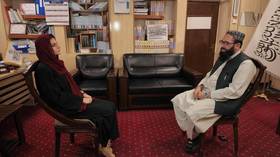
Where the two countries converge is on engagement rather than isolation as the way to manage that risk. In April 2025, Russia removed the Taliban from its list of designated terrorist organizations, and in July 2025 it went further, becoming the first country to formally recognize the Taliban administration as Afghanistan’s government. This was a historically loaded step, given that the Soviet Union fought and lost a nine-year war there against the mujahedin forebears of today’s Taliban. Moscow’s own explanation leaned on both security and economics: continued cooperation on counterterrorism and counter-narcotics, alongside stated interest in energy, transport, agriculture, and infrastructure projects inside Afghanistan. That recognition was formalized further in January 2026, when Russian President Vladimir Putin accepted the credentials of the Taliban government’s ambassador in Moscow.
The Shanghai spirit
Here comes the question as to why the SCO is important. None of this happens in isolation. Pakistan joined the SCO as a full member in 2017, and the group has become one of the more useful platforms on which Islamabad and Moscow meet as equals. They are two states with overlapping headaches: porous borders, extremism that ignores maps, and narcotics routes that have outlived several governments on both ends. Pakistan’s interior minister has repeatedly invoked the “Shanghai spirit”: mutual trust, equality, and respect for sovereignty as the most suitable or perhaps the only framework for shared security challenges.
Kyrgyzstan has held the SCO’s rotating chairmanship since the Tianjin summit in September 2025, with a year focused on long-term stability, including a proposed International Center for Combating Organized Crime in Bishkek. The 2026 SCO Heads of State Summit will be held there from August 31 to September 1. Pakistan is set to assume the chairmanship immediately afterward. Pakistani Deputy Prime Minister and Foreign Minister Ishaq Dar has said Pakistan will use its chairmanship year to emphasize economic ties, connectivity, and regional security, ahead of hosting the next Council of Heads of State summit in Islamabad in 2027, which will be Pakistan’s first time hosting the organization’s flagship leader-level gathering.
Economy and trade: Still a work in progress
The economic relationship between Russia and Pakistan is still finding its footing and both governments now talk about that gap openly. In June, they agreed to work toward a Program of Economic Cooperation running through 2030, aimed at expanding trade and investment and clearing longstanding barriers to bilateral business. Pakistan’s energy minister described the relationship as having moved from Soviet-era ‘unfriendly country’ status to that of a ‘trusted friend’ across trade, energy, defense, and technology, pointing to four recent meetings between Prime Minister Shehbaz Sharif and President Putin as evidence of sustained high-level attention. A Russia-Pakistan Readmission Agreement signed in Bishkek is also expected to ease visa procedures for business travel.
Connectivity is a specific focus: Pakistan has agreed to explore joining Russia’s International North-South Transport Corridor, a roughly 7,200-km sea, rail, and road network linking India, Iran, Azerbaijan, Russia, and Central Asia, with Gwadar Port floated as a possible link point in Pakistan, complementing rather than competing with Chinese-backed infrastructure in the country.
Slow and steady progress
It would be easy to see all of this as background noise – working groups, sidebar signings, chairmanship handovers, and pipeline negotiations that have run for over a decade. But the pattern holds together. Pakistan and Russia have built a security relationship with real institutional depth, anchored in shared (even if not identical) worries about Afghanistan; a diplomatic calendar that gives Pakistan a bigger regional platform through 2027; and an economic relationship that both sides now describe candidly as underdeveloped and in need of exactly the kind of patient, unglamorous work on trade corridors, pipelines, and payment mechanisms that rarely makes the front page but is usually what determines whether a partnership becomes durable rather than merely symbolic.
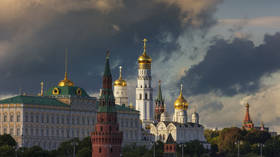
Pakistan and Russia have come a long way from a relationship shaped largely by history to one sustained by regular dialogue and practical cooperation. Today, the engagement extends well beyond political exchanges to include security, trade, energy, education, and cultural contacts. Progress has been gradual, but that is what has given the relationship greater depth and resilience. As both countries continue to engage with realism and mutual respect, the real measure of success will not be the number of agreements signed, but the steady implementation of shared initiatives and the stronger institutional and people-to-people links they leave behind.
Not every diplomatic story needs a dramatic turn to be worth telling. Sometimes the story is simply that two neighbors who once had little to say to each other now have a standing appointment across several tracks at once and keep it, year after year, one number, one agreement, one pipeline at a time.
The statements, views and opinions expressed in this column are solely those of the author and do not necessarily represent those of RT.