By The Rio Times | Created at 2026-08-09 19:11:35 | Updated at 2026-08-09 22:55:10
3 hours ago
By The Rio Times | Created at 2026-08-09 19:11:35 | Updated at 2026-08-09 22:55:10
3 hours ago
Digital Infrastructure
Key Facts
—The cable. Bifrost is a trans-Pacific submarine cable system backed by Meta, Telin, and Keppel.
—The landing. The Rosarito branch has reached Playas de Rosarito in Baja California, Mexico.
—The route. The system links Singapore, Indonesia, the Philippines, Guam, the U.S. West Coast, and Mexico.
—The branch length. The Rosarito branch spans roughly 311 kilometres from the main trunk, according to an FCC filing.
—The significance. It is Mexico’s newest direct fibre-optic link to key Asian markets and the United States.
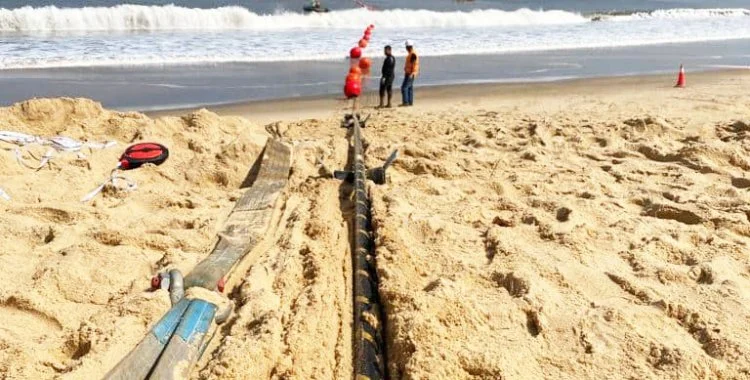
The Bifrost submarine cable has reached its landing point in Rosarito, Baja California, cementing Mexico’s role in a vast trans-Pacific digital corridor that connects Southeast Asia to North America.
One-stop reference
Company Intelligence
Every listed company in Latin America — financials, ownership and structure for 1,450+ companies across 26 exchanges, in one place.
A new digital gateway on Mexico’s Pacific coast
The cable landing station is being built in Playas de Rosarito, a coastal city just south of the U.S. border. The Rosarito branch extends from the main Bifrost trunk, giving Mexico a dedicated spur on one of the world’s newest trans-Pacific systems.
An FCC filing describes the branch as roughly 311 kilometres long. Industry databases sometimes cite a longer figure of about 1,147 kilometres, which reflects different ways of measuring the associated route and segment details.
The landing marks the first time Bifrost touches Mexican soil. It turns Rosarito into a quiet but critical node in the global internet’s physical backbone.
Who is behind the Bifrost submarine cable
The Bifrost system is a consortium project led by Meta, the parent company of Facebook and Instagram, alongside Telin, the international arm of Indonesia’s Telkom Group, and Keppel, a Singapore-based infrastructure firm. Meta’s involvement signals the cable’s strategic purpose: carrying enormous volumes of data for its platforms across the Pacific.
For Meta, owning capacity on a private submarine cable means it does not have to lease bandwidth from other providers. That translates into lower long-term costs and greater control over the speed and reliability of its services in fast-growing markets.
Telin and Keppel bring regional expertise and existing infrastructure relationships. Together the three partners have built a system designed to meet surging demand for cloud services, video streaming, and enterprise connectivity across the Asia-Pacific and the Americas.
The full route: Singapore to the U.S. West Coast, with a Mexican branch
Bifrost’s main trunk stretches from Singapore through Indonesia, the Philippines, and Guam before reaching the U.S. West Coast.
The Rosarito branch splits off from that trunk and lands in Baja California.
This geography matters. It gives Mexico a direct fibre-optic path to some of the world’s most dynamic digital economies without routing through intermediate countries.
For users in Mexico, the practical effect is lower latency on connections to Asia. For businesses, it means more resilient infrastructure and an alternative to older cables that have served the region for years.
Why Rosarito was chosen
Playas de Rosarito sits on a relatively quiet stretch of Pacific coastline with easy access to both the ocean and existing terrestrial networks. The city is close to Tijuana and the U.S. border, making it a natural handoff point for data heading north into California.
Baja California has attracted several submarine cable landings in recent years. Its combination of stable geography, available land, and proximity to major U.S. data hubs makes it an increasingly popular alternative to landing directly on the more crowded and expensive California coast.
The new cable landing station will connect to terrestrial fibre routes that carry traffic onward to Mexican cities and across the border. That cross-border link is a key part of the value proposition for the whole system.
What the Bifrost submarine cable means for Mexico’s digital economy
Every new submarine cable landing adds capacity and competition to a country’s internet market. More capacity tends to push down wholesale bandwidth prices over time, which can lower costs for internet service providers and, eventually, for consumers and businesses.
For Mexico’s growing tech sector, the Bifrost cable offers a faster lane to Asian cloud providers and platforms. That is especially relevant for companies working in fintech, media streaming, and software development, where milliseconds of delay can affect user experience.
The cable also strengthens Mexico’s position as a nearshoring destination. Companies that move manufacturing or operations to Mexico often cite reliable digital infrastructure as a deciding factor, and Bifrost adds another layer of redundancy to the country’s international connectivity.
The bigger picture for Latin American connectivity
Latin America has seen a wave of submarine cable investments in recent years. New systems are landing in Brazil, Chile, Colombia, and now Mexico, driven by rising data consumption and the expansion of cloud services from Amazon, Microsoft, and Google.
Bifrost is unusual because it connects Latin America directly to Asia without passing through the United States as an intermediary on the main trunk. The Rosarito branch does tie into U.S. networks, but the system’s architecture gives Mexico a more direct relationship with Asian hubs than many older cables allowed.
For investors watching Latin American infrastructure, submarine cables are a quiet but essential asset class. They generate long-term, contract-based revenue and benefit from the relentless growth in global data traffic, which shows no sign of slowing.
What to watch next
The Rosarito landing is a milestone, but the cable still needs to be fully integrated with terrestrial networks and tested end-to-end before it carries live traffic. Commercial service dates have not been publicly confirmed in the available filings.
Once operational, the Bifrost system will compete with other trans-Pacific cables including the Asia-America Gateway and newer systems still under construction. The real test will be whether it delivers the lower latency and higher reliability that its backers have promised.
For Mexico, the landing reinforces a trend that has been building for a decade: the country is no longer a digital branch office of its northern neighbour but a landing point in its own right, with direct links to the world’s fastest-growing economies.
Frequently Asked Questions
What is the Bifrost submarine cable?
Bifrost is a trans-Pacific submarine fibre-optic cable system backed by Meta, Telin, and Keppel. It connects Singapore, Indonesia, the Philippines, Guam, the U.S.
West Coast, and Mexico through a dedicated branch to Rosarito, Baja California.
Where does the Bifrost cable land in Mexico?
The cable lands in Playas de Rosarito, a coastal city in Baja California just south of the U.S. border. A cable landing station is being built there to connect the submarine cable to terrestrial fibre networks.
Why is the Rosarito landing important for Mexico?
The landing gives Mexico a direct fibre-optic link to major Asian digital markets and the United States. It adds capacity, improves connection speeds, and strengthens the country’s position as a growing hub for technology investment and nearshoring.