By The Rio Times | Created at 2026-08-20 06:11:36 | Updated at 2026-08-20 06:35:18
39 minutes ago
By The Rio Times | Created at 2026-08-20 06:11:36 | Updated at 2026-08-20 06:35:18
39 minutes ago
Bolivia · Economy
Key Facts
- —The debt YPFB owes international fuel suppliers around US$800 million, its president Sebastian Daroca said on 19 August 2026.
- —The weekly bill The company needs about US$90 million a week, or US$360 million a month, to buy petrol and diesel abroad.
- —The squeeze Fuel and lubricant imports fell 31% by volume in the first half of 2026, to about 920,000 tonnes from 1.33 million tonnes.
- —The IMF A US$1.9 billion Extended Fund Facility was agreed at staff level on 29 July, yet it still needs board and congressional approval, and nothing has been paid out.
- —The pumps Since 17 August, large diesel buyers pay Bs 18 a litre, about US$1.55, while ordinary drivers still pay Bs 9.80.
The state oil company says it needs US$90 million every week to keep the pumps supplied. While fuel imports have already fallen by nearly a third.
One-stop reference
Company Intelligence
Every listed company in Latin America — financials, ownership and structure for 1,450+ companies across 26 exchanges, in one place.
Bolivia fuel debt now has a hard number attached to it. The state oil company YPFB owes international suppliers around US$800 million, its president told reporters this week.
That bill is coming due while the country’s US$1.9 billion IMF programme sits unapproved and unpaid.
What the Bolivia Fuel Debt Actually Is
Sebastian Daroca, who runs the state energy company YPFB, put the figure at roughly US$800 million on 19 August. He described it as a deuda flotante, or floating debt, rather than a conventional loan.
The distinction matters, because YPFB buys fuel abroad on supplier credit lines that let it defer payment for up to 120 days. In short, the cargo arrives first and the invoice lands months later.
Still, a gap that large is not simply a timing quirk. In fact, the Bolivia fuel debt is roughly a quarter of the country’s entire stock of net international reserves.
Why US$90 Million a Week Matters
Daroca said YPFB needs about US$90 million every week to cover national demand for petrol and diesel. That works out at roughly US$360 million a month, or about US$12 million a day.
Compare that with what the central bank actually holds. Net international reserves stood at US$3,632 million on 31 July 2026.
And around 85% of that was gold rather than spendable foreign currency. So the arithmetic is tight.
Bolivia’s monthly fuel bill is close to a tenth of the reserves it reports. And most of those reserves cannot be handed to a trader in Houston or Singapore.
Fuel Imports Have Fallen by Nearly a Third
Bolivia imported around 920,000 tonnes of fuels and lubricants between January and June 2026, down from 1.33 million tonnes a year earlier. That is a fall of 31% by volume, according to trade body IBCE using official statistics.
The value fell far less, from US$1,357 million to US$1,203 million, a drop of about 11%. In other words, the country paid nearly as much for a lot less fuel.
Broken down by product, petrol imports fell 38.6% and diesel imports fell 29.6% over the same six months. Meanwhile the queues at service stations did not go away.
Where the Cash Is Coming From Right Now
Daroca said a new decree lets the Treasury send money straight to YPFB to buy fuel. He told Unitel that the injections began about three weeks earlier and now cover the full volume the country needs.
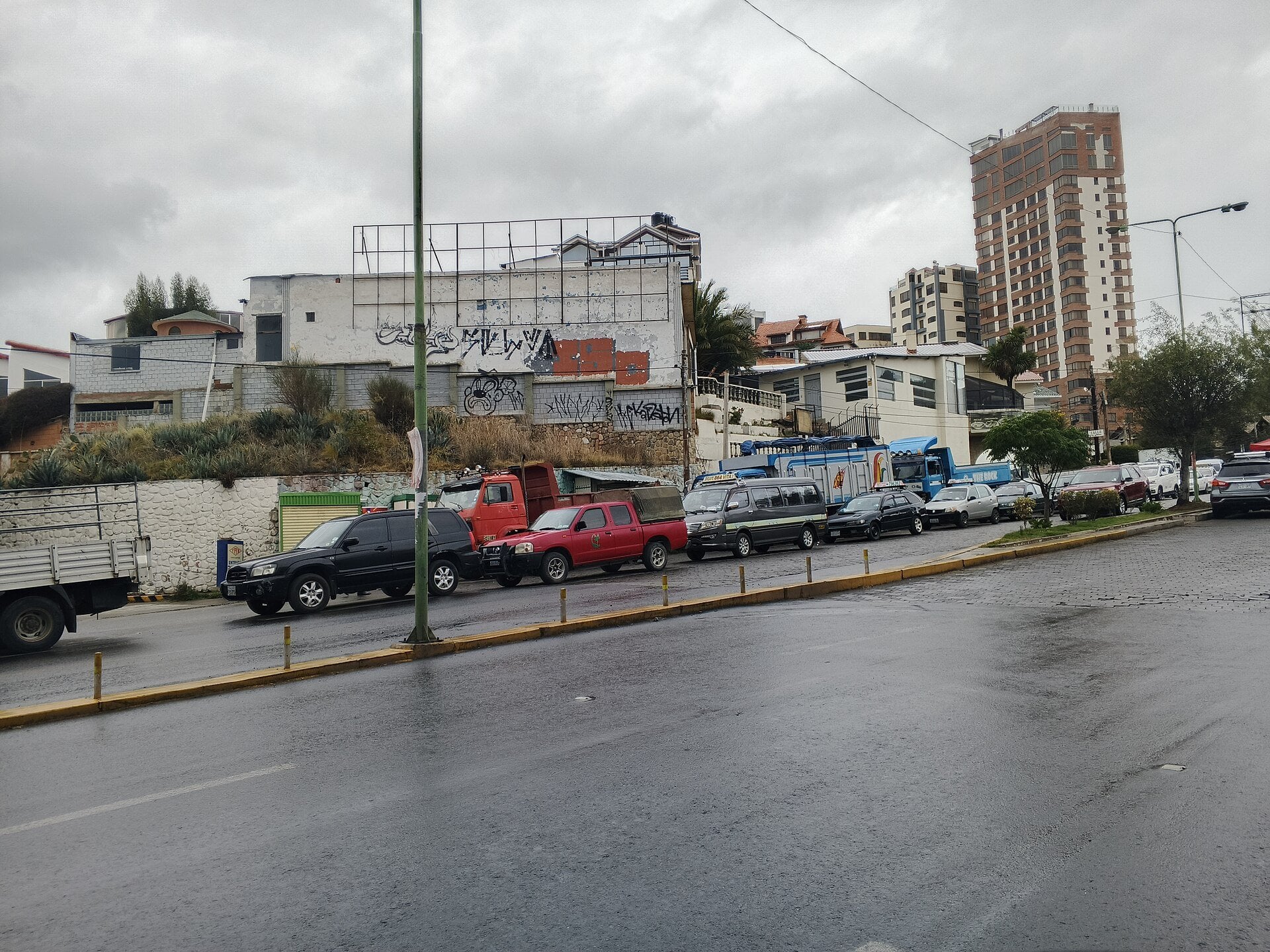
He also said diesel and petrol had been programmed, bought and delivered to the market in quantities sufficient for all demand. That claim sat awkwardly beside the lines still forming outside pumps in Santa Cruz and La Paz.
The company itself is under official intervention. Hydrocarbons Minister Marcelo Blanco said YPFB was intervened on 5 August for restructuring, citing corruption networks tied to fuel diversion and smuggling.
The IMF Money Has Not Arrived Yet
On 29 July 2026 the IMF and Bolivian officials announced a staff-level agreement on a 36-month Extended Fund Facility. It is worth about US$1.9 billion, equal to SDR 1,369 million, or 570% of Bolivia’s quota at the Fund.
A staff-level agreement is a handshake, not a transfer. Before any cash moves, the IMF Executive Board must approve it and Bolivia’s Congress must sign off.
And neither had happened as of 20 August. Reuters reported on 11 August that the programme remained pending on both counts.
As a result, the amount disbursed so far is zero.
What the US$5 Billion Figure Really Means
The larger US$5 billion number that circulates alongside the IMF deal is not a Bolivian rescue package. It is the Fund’s own estimate of the broader financing the programme could catalyse over its life.
That envelope would include lending from the World Bank, the Inter-American Development Bank and other partners. No lender-by-lender breakdown has been published, and none of it is committed until the IMF programme is live.
Economy Minister Jose Gabriel Espinoza told Reuters in July that Bolivia had cut its external financing expectations to about US$5 billion. Down from roughly US$9 billion previously.
That is a lowered forecast rather than a new pot of money.
Two Prices for the Same Litre of Diesel
Supreme Decree 5676, signed on 16 August and presented the next day. Created an initial reference price of Bs 18 a litre including VAT.
At the mid-August official rate of about Bs 11.58 per US dollar, that is roughly US$1.55. Ordinary motorists and transport operators filling their own tanks still pay Bs 9.80, or about US$0.85.
YPFB issued a clarification on 19 August after confusion about who fell into which category. The thresholds are set by monthly volume.
Direct users buy 120 to 5,000 litres a month, direct clients 5,000 to 19,999 litres, and large consumers 20,000 litres or more.
The Backlash From Farmers and Miners
Sugarcane growers rejected the Bs 18 price and declared themselves in a state of mobilisation on 18 August. Producers in San Julian announced marches and floated indefinite road blockades unless the decree is scrapped.
Cooperative miners’ federation Fencomin called the increase abysmal and went into emergency session. Business chambers CAINCO and CAO had already warned on 14 August that shortages needed an urgent government answer.
Santa Cruz, the farming engine of the economy, is now exploring importing fuel for its own use. That idea runs into a constitutional wall, since YPFB holds a near-monopoly over the hydrocarbons chain.
The Wider Squeeze on Bolivia’s Books
Natural gas, once the country’s cash machine, earned US$498.1 million in export revenue in the first half of 2026. That is down 12.9% year on year and less than half the level of 2023.
The currency regime changed in June, when the government moved to a single flexible exchange rate. By mid-August the official rate had settled near Bs 11.58, with the informal market quoting slightly below it.
Consumer prices actually fell 2.79% in July, which pulled twelve-month inflation down to 4.93%, according to the statistics institute INE. Even so, households have not felt much relief at the pump or the checkout.
What Happens Next
Two votes decide whether the money starts moving. Bolivia’s Congress must ratify the arrangement, and the IMF board must then approve it.
And President Rodrigo Paz commands only a fragile coalition. Until then YPFB keeps buying fuel on credit and leaning on the Treasury.
Because the decree fixes prices only until January, another pricing fight is already on the calendar. For drivers, farmers and miners, the practical question is simpler.
Whether the fuel shows up next week has more to do with a 120-day payment clock than with anything signed in Washington.
Frequently Asked Questions
What is the Bolivia fuel debt and how big is it?
It is around US$800 million owed to international fuel suppliers, according to YPFB president Sebastian Daroca on 19 August 2026. He calls it a floating debt, because supplier credit lines allow payment to be deferred for up to 120 days.
Has Bolivia received any IMF money?
No. The US$1.9 billion Extended Fund Facility was agreed at staff level on 29 July 2026. It still needs approval from the IMF Executive Board and from Bolivia’s Congress before any money is disbursed.
Who pays Bs 18 a litre for diesel and who pays Bs 9.80?
Drivers and transport operators filling vehicle tanks keep the Bs 9.80 price, about US$0.85. Direct users, direct clients and large consumers buying in bulk pay the Bs 18 reference price, about US$1.55.
Why did fuel imports fall 31%?
The fall covers volume of fuels and lubricants in January to June 2026 against the same months of 2025. Bolivia simply bought less, because dollars were scarce and payments to suppliers were being stretched.
Sources: El Deber; IBCE via eju.tv and La Patria; International Monetary Fund; Reuters; La Razon; INE; Banco Central de Bolivia.