By The Rio Times | Created at 2026-08-19 20:41:27 | Updated at 2026-08-19 21:44:10
1 hour ago
By The Rio Times | Created at 2026-08-19 20:41:27 | Updated at 2026-08-19 21:44:10
1 hour ago
Chile · Politics
Key Facts
- —The bill Kast filed eight constitutional changes in the Senate on Monday, 17 August 2026, under Chile’s fastest legislative track.
- —The flashpoint a new state of exception the president could declare for up to 120 days, renewable once.
- —Boric on 19 August the former president called it ‘a limitation of liberties not seen before’ in Chilean democracy.
- —Matthei the right’s 2025 presidential candidate said on 18 August that anyone expecting a constitutional fix is ‘completely wrong’.
- —The maths a four-sevenths quorum means 89 of 155 deputies and 29 of 50 senators, and the government is short in the Senate.
- —Elsewhere a trade deal with Trinidad and Tobago cleared a committee on 18 August, promising duty-free salmon and trout.
Chile’s homicide count has fallen for three years running, which is why critics keep asking why emergency powers are needed now.
One-stop reference
Company Intelligence
Every listed company in Latin America — financials, ownership and structure for 1,450+ companies across 26 exchanges, in one place.
The Kast security reform has now united two politicians who agree on almost nothing else. Former president Gabriel Boric and veteran right-winger Evelyn Matthei both rejected it this week.
Days after the government sent it to Chile’s Senate. Their objection is the same: the bill would hand one person extraordinary powers.
What Boric Said, and Where
Gabriel Boric spoke on Wednesday, 19 August 2026, at the launch of a book by his former finance minister, Mario Marcel. He governed Chile until 11 March 2026, when José Antonio Kast took over.
Boric said he hoped for opposition that was ‘frank, respectful, but open, clear and firm’. The reform, he argued.
‘seeks to install a state of siege of 240 days with the exclusive authority of the President of the Republic’. Then came the line that travelled.
It amounted to ‘a limitation of liberties not seen before, unprecedented in Chilean democracy’, he said, according to El País and BioBioChile. In fact, that phrase belongs to Boric alone.
Matthei made a separate and rather different case a day earlier.
Matthei Attacks From the Right, Not the Left
Evelyn Matthei is not an opposition leader in the usual sense. She belongs to the UDI, the traditional Chilean right.
And ran as the Chile Vamos candidate in the 2025 election that Kast eventually won. Speaking to Radio Pauta on Tuesday, 18 August, she was blunt.
‘If anyone thinks that changing the constitution will end the security problems in Chile, they are completely wrong,’ she said. She went further on the emergency powers themselves.
‘Having a 120-day state of exception, where on top of that the president can do almost whatever he wants. What would happen if this were in the wrong hands.
However, her doubts matter more than a left-wing complaint would. Because she sits on the government’s own side of the spectrum, her words give wavering coalition senators cover.
What the Kast Security Reform Actually Contains
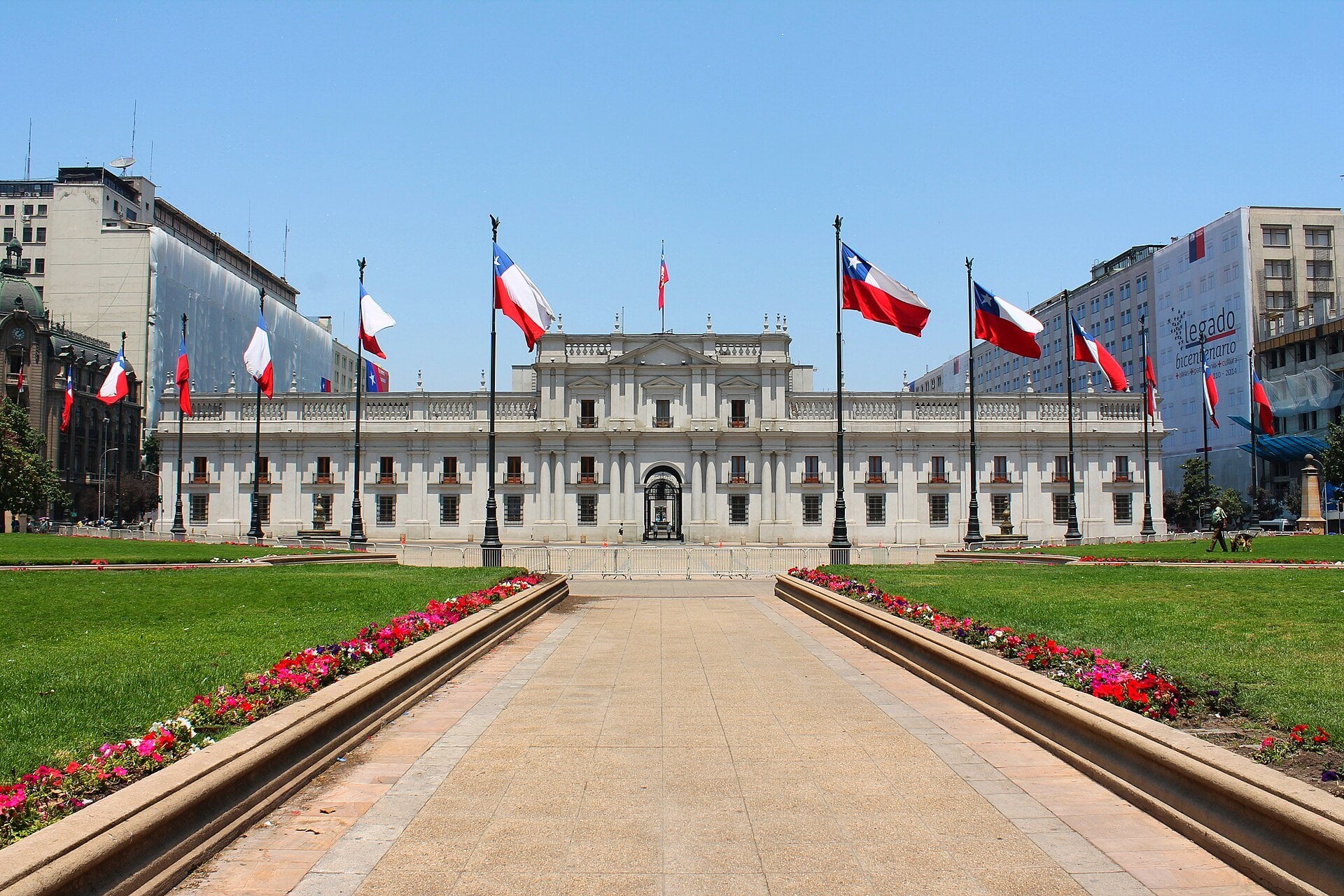
The reform is one piece of a package the government calls ACOT, the Agenda Against Organised Crime and Terrorism. Kast announced it in a national address on 5 August and signed the constitutional text at La Moneda on 10 August.
It went to the Senate on Monday, 17 August, with ‘suma urgencia’ — the fastest track Chilean procedure allows. The text carries eight changes to the constitution.
It does not create a new security ministry. That already exists, and Martín Arrau has run it since Kast took office.
Instead the reform writes public security into the constitution as a duty of the state. It also creates an official register of criminal and terrorist organisations.
Separate prison regimes for their leaders, and a route to seize and destroy criminal assets.
The 240-Day Question
Meanwhile, the centrepiece is a brand new state of exception, separate from the four Chile already has. A president could declare it when public security faces a grave and imminent threat, or has already been badly damaged.
It would run for up to 120 days. Under the reading published by El País and BioBioChile, the president could renew it once for the same period without asking Congress.
Which is where the 240-day figure comes from. Emol reads the text differently and says extensions follow the normal rules requiring congressional consent.
That ambiguity is itself part of the argument. Inside a declared zone the president could suspend or restrict personal liberty, movement and assembly.
He could also restrict association, intercept documents and communications, and requisition property, with a general officer placed in command.
Why the Government Says Chile Needs It
Kast’s case is that ordinary law has run out of room. In his August address he promised ‘a constitutional reform that enshrines, without ambiguity.
That protecting the security of people is a duty of the state’. Arrau, the security minister, has made the sharper argument.
‘We have to demystify the idea that the constitution is untouchable,’ he told CNN Chile on 17 August. ‘It can be touched intelligently and in a limited way.
He describes the new powers as deliberately narrow. They are meant for ‘deep, temporary interventions with accountability’ in pockets of territory where gangs operate and the state struggles to enter.
Arrau also insists the tool is a police one rather than a military one. Armed forces support, he says, would be for very specific tasks.
The Crime Numbers Both Sides Use
Chile is safer than the headlines suggest, and safer than it was. Official figures show 1,209 homicide victims in 2024, a rate near 6.1 per 100,000.
Falling to 1,091 in 2025, a rate near 5.4. That was a drop of roughly 11.5% and the third consecutive annual decline.
After the 17 August police committee, the security ministry reported homicide victims down another 17.4% so far in 2026. Supporters read that as proof the strategy works and should be deepened.
Critics read the same data as proof that emergency powers are unnecessary. Even so, fear has not fallen as fast as the body count.
Officials point to more than 200,000 violent robberies in 2025 and to international gangs now operating inside the country.
The Vote Maths Is Tight
A constitutional change in Chile needs four-sevenths of sitting members in both chambers. In practice that means 89 of 155 deputies and 29 of 50 senators.
BioBioChile counted the votes on 19 August and made it uncomfortable reading for La Moneda. The government has about 67 deputies and 23 senators, reaching roughly 26 in the Senate even with sympathetic independents.
Doubts run through the coalition itself. UDI president Guillermo Ramírez initially said his party could not back the reform.
And senators from Renovación Nacional and the Partido Nacional Libertario have voiced reservations. Still, the government won a public boost this week.
Senator María José Gatica of Renovación Nacional said on 18 August the plan had her support because ‘we need every tool to confront organised crime’.
Lawyers Are Split, and Loudly
Mauricio Duce, a criminal justice scholar, told the Associated Press on 19 August that the proposed regime ‘is right at the line. And probably crosses it, of what is admissible in a democratic system’.
Constitutional lawyer Jorge Correa Sutil made a milder criticism on 7 August. Writing security into article one is ‘completely redundant’, he told Cooperativa, because the duty is already there.
Others object to a clause restricting state benefits, including health and education access. For up to 15 years after a sentence is served.
Academic Verónica Undurraga called the draft ‘deeply worrying’. Supporters answer that constitutions are meant to be amended once reality changes.
The dispute is less about crime than about how much power one office should hold.
A Caribbean Trade Deal Moves a Step Closer
While the security fight ran, Chile’s trade agenda took a quieter step. On 18 August the foreign affairs committee of the Chamber of Deputies approved the partial scope agreement with Trinidad and Tobago.
This is a bilateral deal with a single country, not a pact with a Caribbean bloc. Trinidad and Tobago belongs to CARICOM, and the trade agency SUBREI calls it Chile’s first trade agreement with a CARICOM member.
Salmon and trout are the headline winners. Along with grapes, apples, pears, apricots and nuts.
They would enter duty-free from the day the deal takes effect, replacing tariffs that can reach 40%. The traffic runs both ways.
Ammonia and liquefied natural gas from Trinidad and Tobago. Where it is Chile’s main supplier, would drop from a 6% tariff to zero.
What Happens Next
The agreement was signed back in April 2025, after negotiations that ran from 2021 to 2024. Trinidad and Tobago has already ratified it, so Chile’s Congress is the last step before it enters into force.
Slower items are phased in. Frozen berries, prunes and some wood products reach zero in year four, while peaches, kiwis.
Fresh berries and wine take nine years, and olive oil gets a reduced 5% rate. Back on security, the Senate now starts committee work under a compressed timetable.
Because three committees are involved, the government’s hoped-for two to three months looks ambitious. Kast is negotiating from a modest position.
Cadem put his approval at 41% on 16 August, while Criteria the same day had him at 35% with 55% disapproving.
Frequently Asked Questions
Is José Antonio Kast the president or the president-elect?
He is the sitting president. Kast won the runoff on 14 December 2025 and was sworn in on 11 March 2026, succeeding Gabriel Boric.
Who said the reform would bring ‘a limitation of liberties not seen before’?
Gabriel Boric, on 19 August 2026, at a book launch for former finance minister Mario Marcel. Evelyn Matthei made separate criticisms a day earlier.
Does the Kast security reform create a new security ministry?
No. Chile’s security ministry already exists and is run by Martín Arrau. The reform changes the constitution instead, adding a new state of exception and other tools.
Did Chile sign a trade deal with a Caribbean bloc?
Not with a bloc. Chile signed a bilateral partial scope agreement with Trinidad and Tobago in April 2025.
Sources: El País Chile; BioBioChile; Emol; La Tercera; El Mostrador; Cooperativa; Associated Press; SUBREI.