By The Rio Times | Created at 2026-08-02 23:44:54 | Updated at 2026-08-03 09:54:58
10 hours ago
By The Rio Times | Created at 2026-08-02 23:44:54 | Updated at 2026-08-03 09:54:58
10 hours ago
TOURISM · SANTA CATARINA, 2 AUGUST 2026
Key Facts
—Location — Bravura Park sits on the BR-101 in Tijucas, between Balneário Camboriú and Florianópolis in Santa Catarina.
—Investment — Developers put the outlay at about R$100 million (about US$20 million).
—Scale — The complex covers roughly 150,000 square metres.
—Claim — It is billed as Brazil’s and Latin America’s first military theme park.
—Collection — Organisers cite more than 5,000 pieces drawn from 130 conflicts, described as the largest military collection in Latin America.
—Attractions — Listed experiences include war-tank rides, an airboat, a curved zip-line, airsoft and immersive scenarios.
—Pre-opening — A limited pre-launch began on 22 July 2026 on selected dates into August; general ticket pricing has not been published.
A new military theme park has opened for a limited pre-launch on the coast of Santa Catarina, and its developers describe it as the first of its kind in Brazil and across Latin America.
One-stop reference
Company Intelligence
Every listed company in Latin America — financials, ownership and structure for 1,450+ companies across 26 exchanges, in one place.
What Bravura Park sets out to be
Bravura Park is a large leisure complex on Brazil’s southern coast that pairs a substantial collection of military hardware with rides and interactive attractions. The operators present it as a place for history and entertainment rather than a memorial, and much of their pitch rests on the scale of the objects on display. It opened its gates only for a restricted preview in the closing days of July 2026, with a wider public launch expected to follow.
The venue arrives in a part of Santa Catarina already geared to tourism. The coast between Florianópolis and Balneário Camboriú draws heavy summer crowds, and the operators of a year-round attraction of this size are betting on families and travellers looking for something to do beyond the beach. Positioning the park as the first of its kind in Brazil, and in Latin America, is central to that strategy.
Brazil has military museums and open-air displays, but the company argues that fusing a large collection with rides and immersive elements is new for the country. That combination, rather than any single exhibit, is what it presents as the draw. Whether the formula holds up will become clearer once the park moves from a capped preview to continuous daily operation.
For now, the operators have released headline figures and a list of attractions while keeping several commercial details in reserve. The most conspicuous gap is a confirmed price of admission for the full season, which had not been published while the preview ran.
Where it sits and what it cost
The site is in Tijucas, a town on the BR-101, the highway that threads together Santa Catarina’s main coastal cities. That places it within easy reach of Balneário Camboriú, one of Brazil’s best-known beach resorts and famous for its wall of high-rise towers, and of Florianópolis, the state capital, both of which pull in domestic and foreign visitors through the summer.
Developers put the total investment at about R$100 million (about US$20 million) and say the complex spreads across roughly 150,000 square metres. That footprint leaves room for large vehicles to be displayed and, in some cases, driven, alongside indoor exhibition halls and the space that rides demand.
The choice of a major highway is deliberate. Traffic between the coastal resorts is heavy in season, and the park is placed to capture passing day-trippers as well as visitors making a dedicated trip. Easy access from the BR-101 also simplifies coach tours and school groups, two audiences that large attractions rely on.
Santa Catarina’s tourism authorities have promoted the state as more than a beach destination in recent years, and a weather-independent attraction fits that pitch. A rainy day on the coast still leaves visitors looking for somewhere to go, and an indoor-and-outdoor complex of this scale is designed to absorb them.
The collection at the centre
The heart of the park is the collection. Organisers say it holds more than 5,000 pieces spanning 130 conflicts, a range they describe as the largest military assemblage in Latin America. The objects run from small arms, uniforms and documents to armoured vehicles and aircraft, assembled over years of acquisition.
That scale is the park’s headline claim, and it is also the hardest for outsiders to verify. The company has not published a full catalogue or detailed the provenance of every item, so the description as the largest in Latin America rests for now on the operator’s own account rather than an independent assessment.
How the material is presented will shape how the venue is judged. A collection of this size can support serious historical interpretation, but it can also be reduced to spectacle. The balance the park strikes between explanation and display is likely to feature prominently in early reviews once it is fully open.
The park frames the collection as its cultural backbone, and entry to the exhibition halls is meant to sit alongside the rides rather than compete with them. For visitors more interested in history than adrenaline, that static display may prove the most lasting part of a trip, provided the labelling and context match the scale of the objects.
Rides, airsoft and immersive scenarios
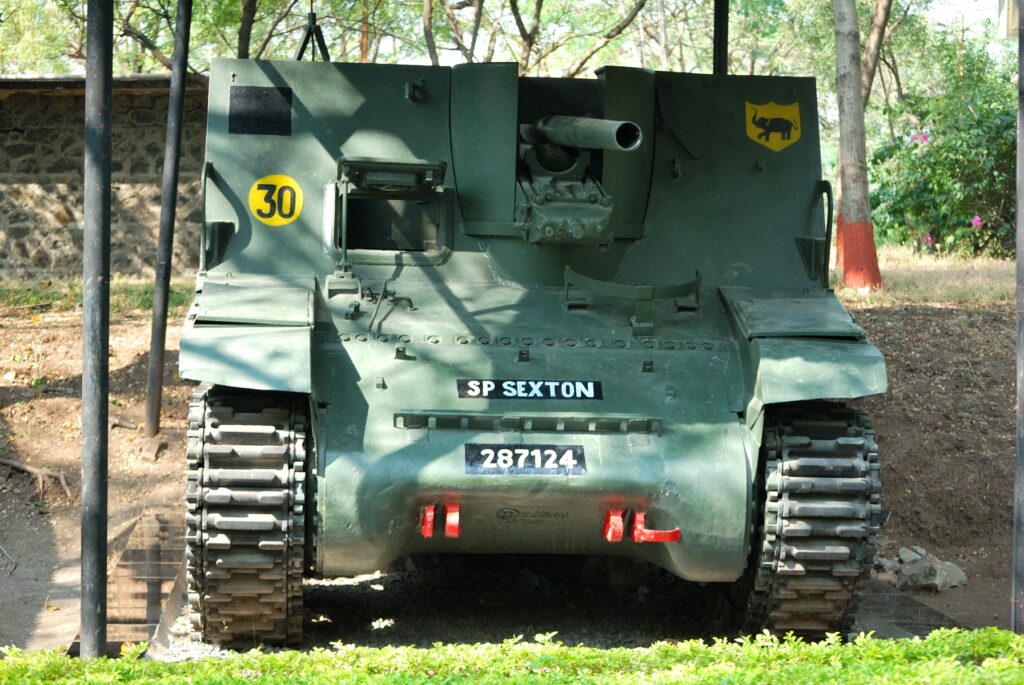
Around the collection sit the attractions that earn the park its theme-park billing. The headline experiences include rides aboard war tanks and armoured vehicles, an airboat, a curved zip-line, airsoft activities and a set of immersive scenarios designed to place visitors inside recreated settings.
The tank rides have drawn the most attention in early coverage, offering a form of access to heavy vehicles that few venues provide. Airsoft and the immersive scenarios lean towards participation, inviting guests to do more than look, which is part of how the park sets itself apart from a conventional museum.
Attractions of this kind raise obvious questions about safety and supervision. Running rides on tracked and wheeled vehicles, and hosting airsoft sessions, requires trained staff and clear rules, and a capped preview is a chance to test those systems before larger crowds arrive.
Presenting weapons and warfare as entertainment invites scrutiny over tone. Reporting on the park does not require endorsing it, and the venue’s handling of context, especially for younger visitors, is likely to be a recurring point of discussion as it opens more widely.
How the pre-opening has been run
The pre-launch began on 22 July 2026 and ran on selected dates into early August rather than opening continuously. The company capped daily numbers during this phase, limiting attendance to a few hundred visitors on each operating day and using the preview to fine-tune logistics and staffing.
That staggered approach is common for large attractions. It lets operators test crowd flow, safety and service before committing to daily opening, and it manages expectations while final elements of the build are completed. It also generates early word of mouth without the pressure of full capacity.
Local and regional media covered the preview closely, with early reports focusing on the tank rides and the size of the collection. The company has used the phase to gather feedback, and the response during these dates will inform how, and when, it scales up to a permanent schedule.
Capacity limits also shape the experience. With attendance held to a few hundred a day, queues stay short and staff can watch numbers closely, but that comfort will be harder to sustain once the park opens to the wider public. Managing the shift from an intimate preview to a busy attraction is among the operator’s main tasks before a full launch.
Tickets, tourism and open questions
The clearest unanswered question is price. As of the preview period, general admission pricing for full operation had not been published, and prospective visitors were told to check official channels for updates. Readers should not assume a figure until the operator sets one, and any number circulating informally should be treated with caution.
For Santa Catarina’s tourism sector, the park adds a distinctive, weather-independent draw to a coast dominated by beaches. Whether it becomes a fixture will depend on pricing, its safety record and how families respond to a military theme once the novelty of the preview fades. Its first full season, not its preview, will be the real test.
The venue also lands amid a broader debate about how history and conflict are packaged for leisure, a conversation that is not unique to Brazil. How Bravura Park navigates that question, while managing crowds, safety and pricing, will determine whether it settles into the region’s tourism map or remains a curiosity.
Visitor essentials
Where: Tijucas, Santa Catarina, on the BR-101 between Balneário Camboriú and Florianópolis.
Size: About 150,000 square metres of indoor and outdoor space.
Investment: Around R$100 million (about US$20 million).
Collection: More than 5,000 pieces from 130 conflicts.
Status: Limited pre-launch from 22 July 2026 on selected dates into August.
Standard admission pricing had not been published at the time of writing; confirm dates and prices with the operator.
This is reporting; confirm details with official sources before acting.
Frequently Asked Questions
Where is Bravura Park?
It is in Tijucas, Santa Catarina, on the BR-101 highway between Balneário Camboriú and Florianópolis in southern Brazil.
What does it claim to be?
The developers bill it as the first military theme park in Brazil and Latin America, anchored by what they call the region’s largest military collection.
How big is the collection?
Organisers say it holds more than 5,000 pieces drawn from 130 conflicts, ranging from small items to vehicles and aircraft.
How much did it cost to build?
The reported investment is about R$100 million (about US$20 million), across a site of roughly 150,000 square metres.
How much is a ticket?
General admission pricing for full operation had not been published at the time of writing, so visitors should check the operator’s official channels.
Related reading
- Santa Catarina’s summer tourism boom
- How Brazil’s museums rethink showing history
- Travelling the BR-101 coast in Santa Catarina
This article was produced by The Rio Times’ automated newsroom system. How we use AI · Report an error
The Rio Times · Power Map
See who really holds power in Latin America
Click to open the Power Map →