By The Rio Times | Created at 2026-10-06 18:32:05 | Updated at 2026-10-06 20:06:07
2 hours ago
By The Rio Times | Created at 2026-10-06 18:32:05 | Updated at 2026-10-06 20:06:07
2 hours ago

BRAZIL · ELECTIONS 2026
Runoff · Sunday, 25 October
Flávio Bolsonaro vs Lula: what happens next
First-round results, how the runoff works, the key dates and who backs whom, in one guide.
Key Facts
- —The country Brazil, with 158.7 million registered voters, holds a presidential runoff between Flávio Bolsonaro and President Lula on Sunday 25 October.
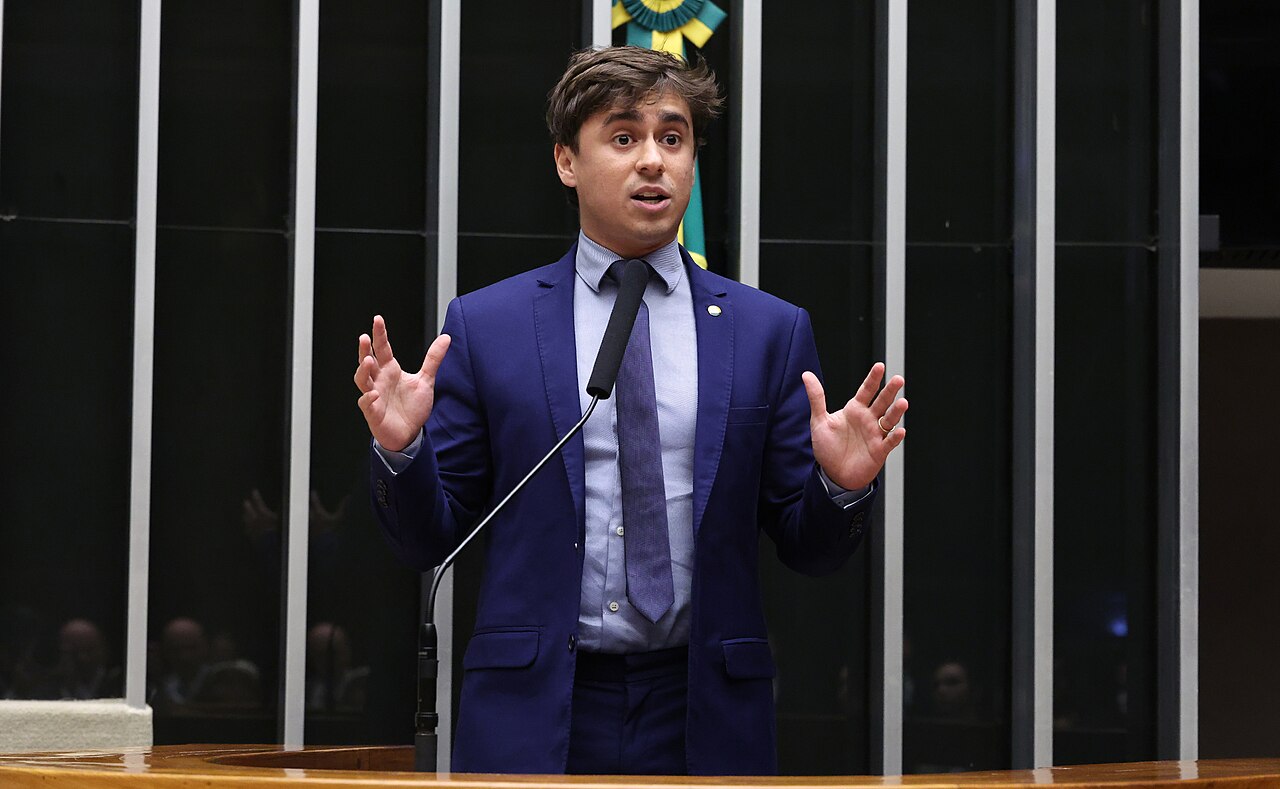
- —What happened On Monday 5 October, deputy Nikolas Ferreira vowed a congressional inquiry into Brazil pollsters after most final polls had Lula ahead.
- —The numbers Flávio Bolsonaro won 47.03% of valid votes and Lula 45.16%, while Datafolha’s final poll had Lula ahead by 45% to 42%.
- —Who is pushing Ferreira, of the conservative Liberal Party (PL), won 3,119,318 votes in Minas Gerais, more than any other candidate for the Chamber.
- —Prediction markets Polymarket gives Flávio Bolsonaro an 84% chance of winning the 25 October runoff (6 October, 1:34 p.m. ET). Polymarket puts Flávio Bolsonaro’s chance of winning at 84% and Kalshi at 86% (Lula: 16% and 14%), as of 6 October, 2:00 pm ET; prices are bets, not polls.
- —Still open No inquiry request has been filed yet; Ferreira says it will come next year, and it needs 171 of 513 deputies to sign.
Brazil pollsters are under fire after most final surveys showed President Lula ahead, while Flávio Bolsonaro won Sunday’s first round by 1.87 points. On Monday 5 October, Nikolas Ferreira, the most-voted candidate for Brazil’s lower house, promised a parliamentary inquiry into the polling firms.
For Americans, the miss echoes 2016 and 2020, when US polls underrated Donald Trump. It also raises questions for investors and bettors about the surveys that will track the 25 October runoff.
How Far the Final Polls Missed
The Superior Electoral Court (TSE), which runs Brazil’s elections, counted 56,104,503 votes for Flávio, or 47.03% of valid votes. He is a senator for Rio de Janeiro from the conservative Liberal Party (PL) and a son of former president Jair Bolsonaro.
Lula, of the left-wing Workers’ Party (PT) chaired by Edinho Silva, took 53,879,538 votes, or 45.16%.
Of six major Brazil pollsters that published final surveys, only Gerp showed Flávio ahead, by 46% to 44%, Gazeta do Povo found. Gerp paid for its own survey of 2,400 voters.
PoderData had Lula ahead by 45% to 43%, Datafolha by 45% to 42% and Quaest by 46% to 45%. The newspaper counted these three leads as statistical ties within the margin of error.
The MDA institute, polling for the National Transport Confederation (CNT), a transport-industry body, had Lula at 47.8% and Flávio at 42.1%. AtlasIntel, which interviewed 4,945 voters, had Lula ahead by 47% to 44.1%.
Measured on the gap between the two men, Datafolha missed by about 4.9 points and Quaest by about 2.9. Gerp came closest, off by about 0.1 points.
Datafolha’s final survey, commissioned by the newspaper Folha de S.Paulo and the Globo media group, interviewed 4,006 voters on 3 October. The final poll figures had pointed to a near tie with Lula in front.
Follow this story
Get an email when there’s news on Brazil Elections 2026
Free. One email a day at most, and only when there is news. This also signs you up to our weekday newsletter, The LatAm Brief. Nothing arrives until you click the confirmation link, and you can stop either with one click. Privacy policy.
Who Nikolas Ferreira Is and What He Wants
Nikolas Ferreira, 30, is a federal deputy for Minas Gerais from the Liberal Party (PL), the conservative party chaired by Valdemar Costa Neto. On Sunday he was re-elected with 3,119,318 votes, more than any other Chamber candidate, TSE data show.
“In Minas, Datafolha gave Lula a 5-point lead. Flávio finished 5 points ahead of Lula,” he wrote on X on Monday, Estado de Minas reported.
“I promised and I will fight for it: we will hold the inquiry into the polling institutes next year,” he added.
In Minas Gerais, home to 16.4 million voters, Flávio won 48.24% to Lula’s 43.33%, the TSE count shows. That is a lead of 4.91 points in the state.
A parliamentary inquiry commission, or CPI, has investigative powers like those of judicial authorities and can send its findings to prosecutors. Under Article 58 of Brazil’s Constitution, it needs the signatures of one third of the Chamber, or 171 of 513 deputies.
It must also target a specific fact and run for a fixed period. “Next year” means the new Chamber elected on Sunday, whose members take office from 1 February 2027.
How the Pollsters Answered
Among Brazil pollsters, Quaest’s director, the political scientist Felipe Nunes, defended his firm in a thread on X on Monday evening, Brasil 247 reported. “Anyone who followed the Brazilian election through the trends in Quaest’s polls had few surprises,” he wrote.
He said Quaest’s eve-of-vote poll caught a strong “useful vote on the right” gathering behind Flávio. He called Rio de Janeiro “the most atypical and frustrating case” of the election.
In Rio, final AtlasIntel and Datafolha polls had Eduardo Paes about 8 to 9 points ahead for governor, Gazeta do Povo reported. Paes belongs to the Social Democratic Party (PSD), the centre-right party led by Gilberto Kassab.
Instead Douglas Ruas of the PL led by 49.27% to 42.76%, and the two meet in a runoff. Nunes suggested that thousands of undecided voters moved en masse to Ruas.
Flávio said many institutes “had us behind”, while his campaign’s own tracking polls showed him in front, according to Gazeta do Povo.
Why Americans Have Seen This Before
The pressure on Brazil pollsters will feel familiar to Americans. In 2016, national polls got Hillary Clinton’s popular-vote margin about right, but polls in a handful of key states underrated Trump.
That is the finding of the American Association for Public Opinion Research (AAPOR), the US pollsters’ professional body.
In 2020, AAPOR found the largest national polling error in 40 years. National polls in the final two weeks overstated Joe Biden’s margin over Trump by 3.9 points on average.
Datafolha’s miss on the margin, about 4.9 points, was in the same range, and it also ran against the conservative candidate.
AAPOR could not pin down a cause. It said it was not unreasonable to suspect that Trump’s strongest supporters were the least likely to answer polls.
What Prediction Markets Say
Bettors on Polymarket gave Flávio Bolsonaro an 84.2% chance of winning the runoff at 1:34 p.m. ET on Tuesday 6 October. Lula stood at 15.5%.
About US$174 million has been bet on the main market, with US$1.3 million traded in the previous 24 hours. Flávio’s price rose 1.7 points over that day.
Prediction markets · who wins the runoff
Implied chance of winning Brazil’s presidency on 25 October, from traders’ prices.
Polymarket
Flávio Bolsonaro 84.2% · Lula 15.5% (US$174 million traded)
Kalshi (regulated in the US by the CFTC)
Flávio Bolsonaro 86% · Lula 14%
As of 6 October, 2:00 pm ET (19:00 Lisbon), updated every 20 minutes. Prices are bets, not polls, and can move fast.
Why we show this: prediction markets turn real-money bets into a live probability that moves within minutes of the news, which is why investors, campaigns and newsrooms in the United States now follow them closely. We show them next to polls and official results, never instead of them.
What It Means for You
For US investors in Brazilian stocks, bonds or the real, polls are one of the few public guides to the 25 October runoff. After Sunday, a single survey is a weak signal, and the trend across several firms is a safer read.
By law, Brazil pollsters must register every published election poll with the electoral courts at least five days before release. The filing names who paid for the survey and how it was done.
For travellers and expats in Brazil, nothing changes in daily life. Ferreira’s planned inquiry would come only after the new Congress takes office in 2027.
What Is Not Known
Ferreira has not yet filed a request, and it is unclear whether 171 deputies of the new Chamber will sign one.
It is not known what changes, if any, the polling firms will make for the runoff surveys. Nor is it clear whether the pattern will repeat on 25 October, with only two names on the ballot.
More: Brazil news in English, every day from The Rio Times.
Frequently Asked Questions
What is a CPI in Brazil?
A CPI is a parliamentary inquiry commission with investigative powers like those of judicial authorities. In the Chamber it needs 171 of 513 deputies to sign, a specific subject and a fixed period.
How wrong were Brazil pollsters in the first round?
Five of six major Brazil pollsters had Lula numerically ahead in their final surveys, but Flávio Bolsonaro won 47.03% to 45.16%. Datafolha missed the gap by about 4.9 points, while Gerp came closest.
Who is Nikolas Ferreira?
He is a 30-year-old federal deputy for Minas Gerais from the conservative Liberal Party (PL). He won 3,119,318 votes on 4 October, more than any other candidate for the Chamber of Deputies.
When is Brazil’s presidential runoff?
The runoff is on Sunday 25 October 2026, between Flávio Bolsonaro of the PL and President Lula of the Workers’ Party (PT). Polymarket bettors gave Flávio an 84.2% chance on 6 October.
Sources: Superior Electoral Court (TSE), official presidential result, first round, Brazil, 5 October 2026; TSE, presidential result, first round, Minas Gerais, 5 October 2026; TSE, federal deputy result, Minas Gerais, 5 October 2026; TSE, governor result, first round, Rio de Janeiro, 4 October 2026; Chamber of Deputies open data, Deputy Nikolas Ferreira, accessed 6 October 2026; Federal Senate open data, Senator Flávio Bolsonaro, accessed 6 October 2026; Constitution of Brazil, Articles 57 and 58 (Planalto), accessed 6 October 2026; Law 9,504 of 1997, Article 33, election polls (Planalto), accessed 6 October 2026; TSE, registered political parties, accessed 6 October 2026; Gazeta do Povo, Discrepância entre pesquisas e urnas reforça pressão sobre institutos; Nikolas quer CPI, 5 October 2026; Gazeta do Povo, Só uma pesquisa apontava Flávio numericamente à frente de Lula, 5 October 2026; Estado de Minas, Nikolas promete CPI dos institutos de pesquisa, 5 October 2026; Brasil 247, Felipe Nunes on Quaest’s first-round polls, 5 October 2026; Revista Fórum, final first-round polls, 3 October 2026; AAPOR, Task Force on 2020 Pre-Election Polling, executive summary, accessed 6 October 2026.
Editorial responsibility: Matthias Camenzind, Editor-in-Chief · Editorial standards · Report an error
The Rio Times · Power Map
See who really holds power in Latin America
Click to open the Power Map →