By The Rio Times | Created at 2026-06-15 08:06:37 | Updated at 2026-06-15 14:11:29
6 hours ago
By The Rio Times | Created at 2026-06-15 08:06:37 | Updated at 2026-06-15 14:11:29
6 hours ago
Brazil · Culture
Key Facts
—The show. “O Brasil de Portinari” opened on June 9 at the National Museum of China in Beijing.
—The artist. Cândido Portinari is widely regarded as Brazil’s greatest modern painter.
—A first. It is the first major exhibition of a Brazilian artist anywhere in Asia.
—The scale. Around fifty original works are on display until October, across four themed sections.
—The audience. The museum draws more than twenty thousand visitors a day, with millions expected to see the show.
—The context. It anchors a Brazil-China Cultural Year launched by the two governments.
Cândido Portinari, the painter who gave modern Brazil much of its visual identity, has finally arrived in Asia, in a landmark Beijing show that doubles as cultural diplomacy.
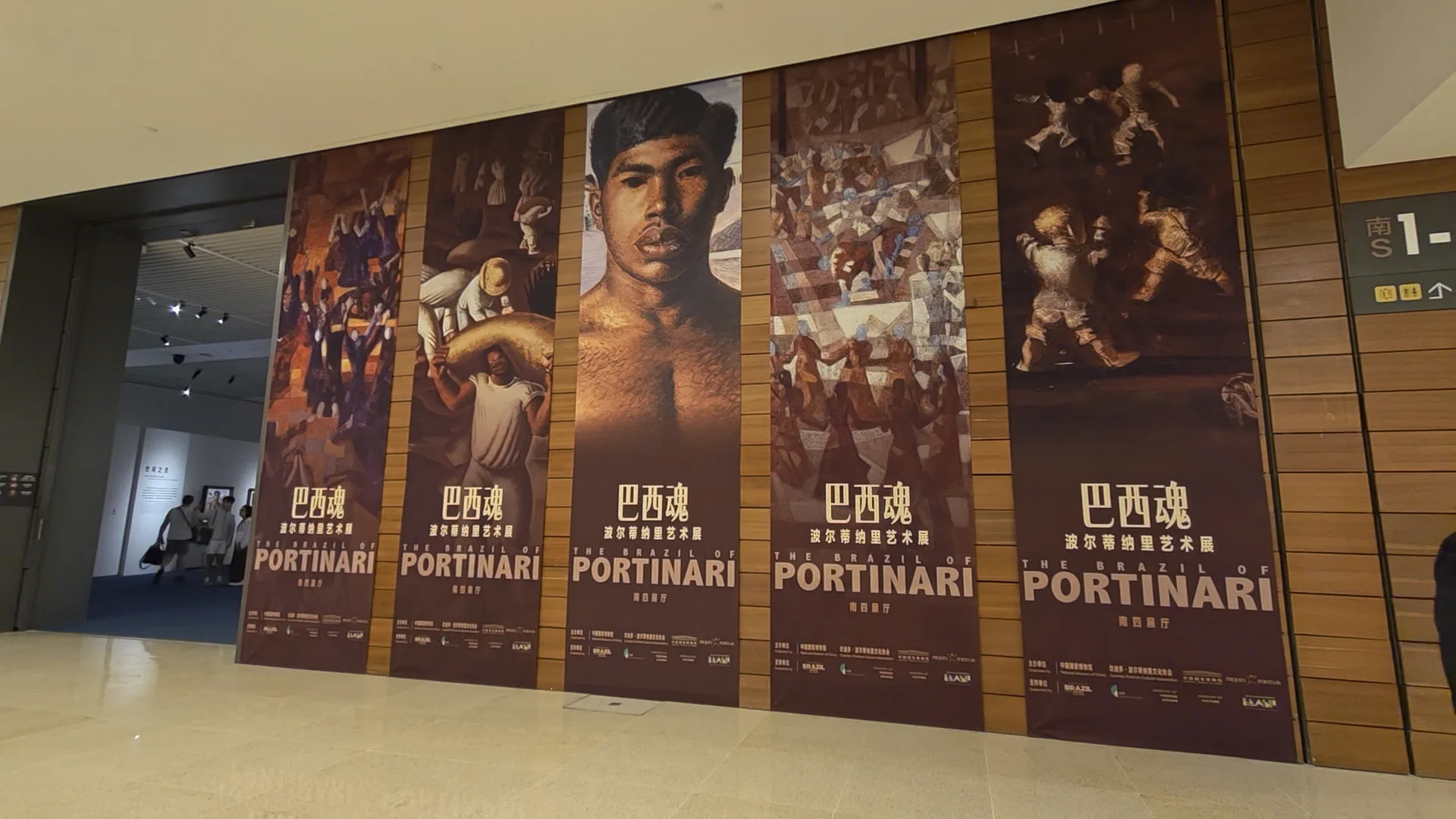
One of the most visited museums on earth has just opened its doors to Brazil. On June 9, the National Museum of China, on Beijing’s Tiananmen Square, unveiled a major exhibition of paintings by Cândido Portinari.
For a reader abroad, Portinari is to Brazilian painting roughly what a national poet is to a language. He is widely seen as the country’s greatest modern artist.
The show, titled “O Brasil de Portinari”, or “Portinari’s Brazil”, brings around fifty of his original works to Beijing. It runs until October and is arranged across four themed sections.
It is being billed as a genuine first. Organisers describe it as the first major exhibition of any Brazilian artist anywhere in Asia.
Who Portinari was and why he matters
Portinari was born in 1903 in Brodowski, a small town in the coffee country of São Paulo state. The son of Italian immigrants, he rose from modest beginnings to international fame.
His paintings put ordinary Brazilians at the centre of the frame. Farm workers, migrants and the rural poor fill his canvases, often rendered with monumental, almost heroic weight.
The Beijing selection reflects those themes directly. Its sections trace the Brazilian landscape, its people, social inequality and the texture of everyday life.
According to the artist’s son, who helps run the foundation that preserves his work, Portinari’s reach abroad comes from a simple quality. He turned very local Brazilian experiences into themes that feel universal.
His standing at home is hard to overstate. His paintings hang in Brazil’s most important museums, and his murals have travelled far beyond the country’s borders.
Perhaps his most famous works are two vast panels on war and peace. They were painted for the United Nations headquarters in New York, where they still hang today.
Why the show is about more than art
The exhibition is the centrepiece of a wider initiative. Brazil and China have declared a joint Cultural Year for 2026, a programme of exchanges meant to deepen ties between the two countries.
That programme has political weight behind it. It was set in motion by the governments of Presidents Lula and Xi Jinping, and follows the fiftieth anniversary of diplomatic relations between the two nations.
The economic backdrop is hard to ignore. China is Brazil’s largest trading partner, the dominant buyer of its soybeans, iron ore and beef, which gives cultural gestures like this one an extra layer of meaning.
Brazil’s culture ministry and the state oil company Petrobras helped fund the show. It was made possible through Brazil’s main cultural-incentive law, which channels tax money into the arts.
A vast new audience
The choice of venue guarantees enormous exposure. The National Museum of China receives more than twenty thousand visitors a day, and organisers expect millions to pass through during the run.
For Brazilian art, that is a rare scale of attention. Few exhibitions of the country’s painters have ever reached so large a foreign public at once.
More is planned to follow. A separate show devoted to the architect Lina Bo Bardi is due to open in Shanghai later in the year, extending Brazil’s cultural push across China.
For a foreign reader, the takeaway is twofold. It is both a chance to discover a major painter and a glimpse of how culture is used to cement a powerful economic friendship.
The timing is no accident. As trade and diplomacy between Brasília and Beijing grow ever closer, a show like this lets each side present the relationship as something warmer than mere commerce.
Frequently Asked Questions
What is the Portinari exhibition in China?
It is a major show called “O Brasil de Portinari” at the National Museum of China in Beijing, featuring around fifty original works. It opened on June 9 and runs until October.
Who was Cândido Portinari?
He was a Brazilian painter, born in 1903, widely regarded as the country’s greatest modern artist. His work often depicts ordinary Brazilians, including farm workers and the rural poor.
Why is the exhibition significant?
It is described as the first major exhibition of a Brazilian artist anywhere in Asia. It also anchors a Brazil-China Cultural Year launched by the two governments to deepen their ties.
The Rio Times · Power Map
See who really holds power in Latin America
Click to open the Power Map →