By The Rio Times | Created at 2026-08-11 16:31:47 | Updated at 2026-08-19 06:38:24
1 week ago
By The Rio Times | Created at 2026-08-11 16:31:47 | Updated at 2026-08-19 06:38:24
1 week ago
Brazil · Economy
Key Facts
- Monthly rise Brazil’s IPCA rose 0.07% in July, down from 0.16% in June.
- Annual rate The 12-month IPCA hit 4.44%, down from 4.64% in June and back inside the 1.5%–4.5% target band.
- Year-to-date Inflation accumulated 3.44% in the first seven months of 2026.
- Main driver Housing costs rose 0.99%, led by residential electricity, while food and beverages fell 0.67%.
- Food drops Tomatoes fell 29.09%, potatoes 19.59%, and carrots 14.41% in July.
- Market view The monthly print came in slightly above consensus near 0.03%, with services inflation still sticky.
- Selic signal The data supports holding rates or only cautious easing, not aggressive cuts.
Brazil’s July IPCA inflation finally slipped back inside the central bank’s target range, but sticky services prices mean the Selic won’t be falling fast.
If you live in Brazil, earn reais, or have money parked in local investments, you just got a small piece of relief. Brazil’s July IPCA inflation rose just 0.07% in the month, taking the 12-month rate to 4.44% and pulling it back inside the central bank’s official target band of 3% ± 1.5 percentage points (a range of 1.5% to 4.5%) for the first time since April. It’s not a victory lap, though. The monthly figure came in slightly hotter than many analysts expected, and services inflation remains stubbornly high. That means the central bank’s Selic rate, which has been sitting at elevated levels to fight price pressure, is unlikely to drop sharply anytime soon. For anyone earning in reais or holding Brazilian assets, this is a “good but not great” signal, and the path forward is still full of caution.
One-stop reference
Company Intelligence
Every listed company in Latin America — financials, ownership and structure for 1,450+ companies across 26 exchanges, in one place.
What the IBGE Numbers Actually Say
The Brazilian Institute of Geography and Statistics (IBGE) reported that the IPCA rose 0.07% in July, a clear slowdown from June’s 0.16% monthly increase. That brought the 12-month accumulated rate down to 4.44% from 4.64% in June, and the year-to-date figure to 3.44%. For the first time since April, the annual rate sits within the central bank’s tolerance band, which runs from 1.5% to 4.5% around a 3% center. That’s a meaningful milestone, because for the previous two months, inflation had been poking above the ceiling, which put pressure on policymakers to keep rates high.
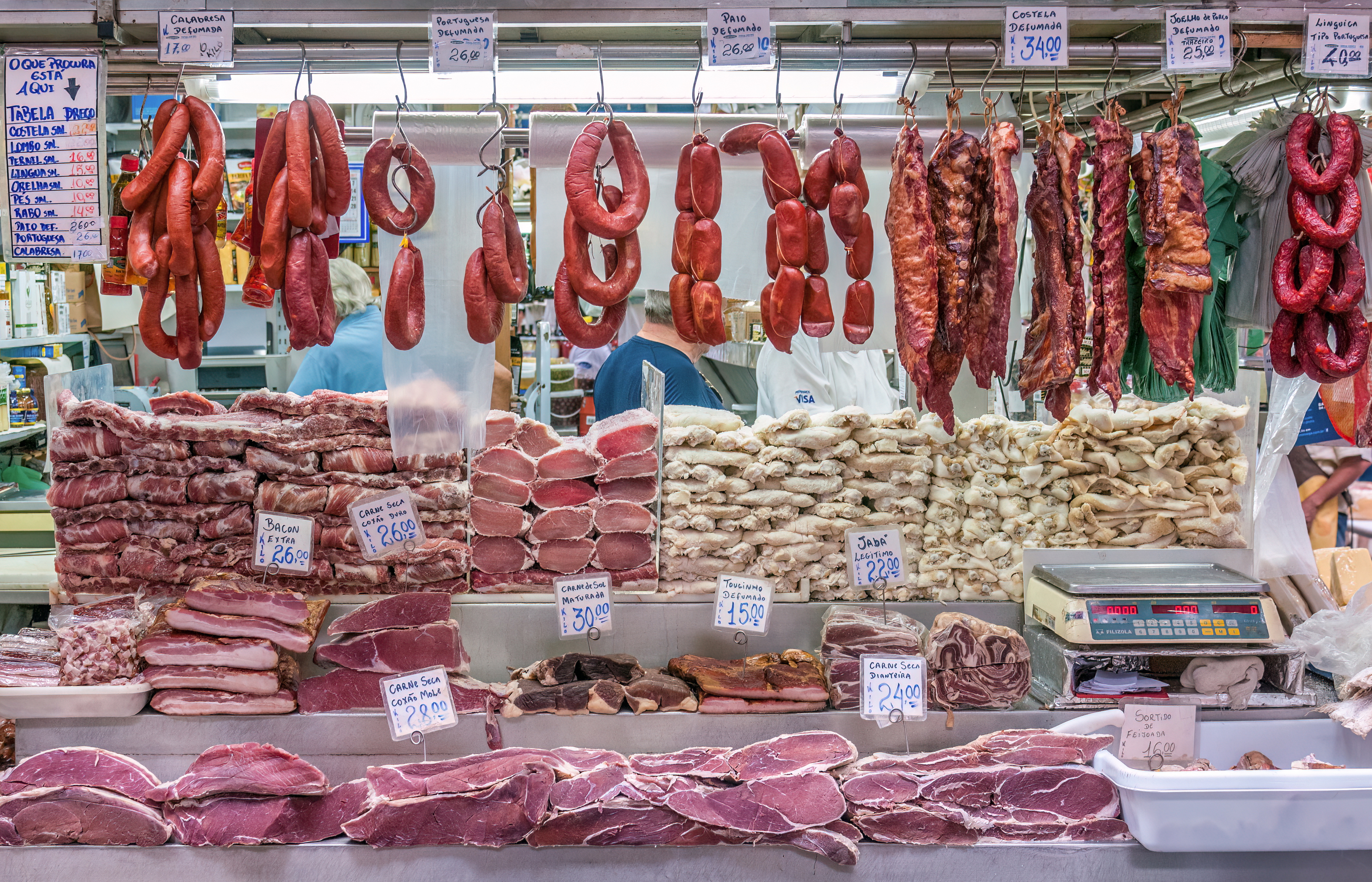
The breakdown matters more than the headline. Housing costs rose 0.99% in July, driven almost entirely by residential electricity, which is a volatile component that often swings with seasonal tariffs and weather. That was the main force pushing the index up. On the other side, food and beverages fell 0.67%, providing a strong counterweight. IBGE highlighted sharp drops in tomatoes, down 29.09%, potatoes down 19.59%, and carrots down 14.41%. Those declines offset increases in long-life milk and fruits. So the July story is really one of food deflation masking a still-firm core of services and housing costs.
Live Market IntelligenceBrazil — Live Market BoardInside: market breadth, the sector heatmap, currencies & rates, the Latin America scoreboard and the full instrument board.Rio Times · Live Market Intelligence
Brazil — Live Market Board
B3 · São Paulo
Aug 11, 2026 · 13:29
Ibovespa · benchmark
168,912.52
-1.90%
L 168,814day rangeH 172,386
+24.57% over 12 months
Market breadth · 15 names
7% advancing
1 ▲ advancing14 declining ▼
Currencies, rates & key inputs
Sector heatmap · average move today
Mining
-1.74%
VALE3, CSNA3, GGBR4
Consumer Staples
-1.83%
ABEV3
Consumer Disc.
-1.97%
AZZA3
Energy
-2.09%
PETR4, PRIO3
Industrials
-2.19%
WEGE3, RENT3
Financials
-2.27%
ITUB4, BBDC4, BBAS3, B3SA3
Latin America scoreboard
IndexLastTodayStrength
IbovespaBrazil
168,912.52
-1.90%
S&P/BMV IPCMexico
66,438.58
-0.75%
S&P IPSAChile
11,083.99
-1.64%
S&P MERVALArgentina
3,158,939
+1.18%
MSCI COLCAPColombia
2,427.14
+2.30%
BVL S&P PerúPeru
59,693.55
-0.09%
Full instrument board
| IBOV | 168,912.52 | -1.90% | +24.57% | 172,179.93 | 172,386 | 168,814 | — |
| USD/BRL | 5.16 | +1.05% | -4.94% | 5.11 | 5.17 | 5.10 | — |
| SELIC | 14.00% | — | — | — | — | — | |
| PETR4 | 41.60 | -1.49% | +35.45% | 42.23 | 42.50 | 41.46 | 13,353,600 |
| VALE3 | 75.45 | +2.10% | +36.26% | 73.90 | 76.70 | 75.25 | 8,325,500 |
| ITUB4 | 39.48 | -2.33% | +9.05% | 40.42 | 40.55 | 39.42 | 8,686,200 |
| BBDC4 | 16.87 | -1.80% | +6.29% | 17.18 | 17.25 | 16.85 | 13,869,600 |
| BBAS3 | 19.57 | -2.30% | +2.46% | 20.03 | 20.11 | 19.56 | 4,916,700 |
| B3SA3 | 14.28 | -2.66% | +11.99% | 14.67 | 14.75 | 14.24 | 12,288,900 |
| ABEV3 | 14.99 | -1.83% | +21.93% | 15.27 | 15.30 | 14.97 | 11,685,100 |
| WEGE3 | 47.18 | -0.94% | +26.68% | 47.63 | 47.94 | 47.10 | 1,471,800 |
| PRIO3 | 59.60 | -2.68% | +52.19% | 61.24 | 61.73 | 59.45 | 2,240,500 |
| SUZB3 | 40.72 | -1.38% | -24.61% | 41.29 | 41.50 | 40.59 | 1,351,700 |
| RENT3 | 35.05 | -3.44% | +1.36% | 36.30 | 36.53 | 34.89 | 6,116,700 |
| AZZA3 | 16.42 | -1.97% | -50.70% | 16.75 | 16.95 | 16.40 | 528,200 |
| CSNA3 | 4.30 | -3.59% | -40.63% | 4.46 | 4.58 | 4.30 | 7,802,300 |
| GGBR4 | 24.31 | -3.72% | +48.75% | 25.25 | 25.01 | 24.27 | 4,630,300 |
| ENEV3 | 24.64 | -2.69% | +77.43% | 25.32 | 25.39 | 24.62 | 1,676,000 |
Largest moves today
GGBR4
24.31
-3.72%
CSNA3
4.30
-3.59%
RENT3
35.05
-3.44%
ENEV3
24.64
-2.69%
PRIO3
59.60
-2.68%
B3SA3
14.28
-2.66%
ITUB4
39.48
-2.33%
BBAS3
19.57
-2.30%
The session read
The Ibovespa eased 1.90%, with breadth negative — 1 of 15 names higher. Materials led, while Utilities lagged.
From The Rio Times
Related coverage · 11 Aug 2026
Mexico Markets: IPC & the Peso — August 11, 2026
Read →
Why Brazil’s July IPCA Inflation Matters for the Selic
The central bank’s target is a 3% center, but its real job is to keep inflation inside the 1.5% to 4.5% band. With the 12-month rate now at 4.44%, the bank is technically back in compliance. That gives policymakers a bit more breathing room. The bank had already cut the Selic to 14% on August 5, and softer inflation supports gradual easing rather than any return to rate hikes. But the market’s initial reaction was mixed. The headline was close to expectations, but several polls had centered on a 0.03% monthly rise and a 4.40% annual rate, so the actual print was slightly above those forecasts. Reuters noted that the result was seen as returning inflation to the target range, but also that the monthly figure came in a bit hotter than expected.
That detail is the key for the Selic. Services inflation — restaurant meals, personal care, recreation — stays sticky, and it responds slowly to rate changes. While it is elevated, the bank will be wary of cutting too fast: it can hold, and perhaps trim once or twice more if food keeps falling, but aggressive easing is off the table.
What This Means for Your Money in Reais
If you earn a salary in reais, a 4.44% annual inflation rate means your purchasing power is still eroding, but at a slower pace than a few months ago. For savings accounts, Treasury bonds, or fixed-income funds that track the Selic, the current high rate is actually good news, because your nominal returns are still well above inflation. The real yield, that is, what you earn after inflation, remains positive and attractive compared to many other countries. But if you are holding cash or low-yield accounts, inflation is still eating away at it, and the recent slowdown does not change that immediately.
For investors it is more nuanced. Being back in the band lowers the risk of the bank slamming the brakes harder, which would hurt bonds and equities. But sticky services inflation keeps the Selic high for a while, capping stock gains and keeping borrowing costs up, while a strong real rewards foreign capital yet pinches exporters. For expats living in Brazil, the takeaway is simple: your cost of living is still rising, just more slowly.
The Outlook: Cautious Optimism, Not a Green Light
The next few months will hinge on two things: food prices and services inflation. Food has been a wildcard, and the sharp drops in vegetables in July may not repeat. If food prices stabilize or even rise again, the annual rate could climb back toward the ceiling. On the other hand, if the harvest season brings more declines, inflation could drift toward the center of the band. Services inflation, however, is the stubborn part. It tends to react slowly to monetary policy, and as long as the labor market remains tight, it will keep the central bank on edge.
Most analysts expect the central bank to hold the Selic at its current level for the next few meetings, with maybe a small cut toward the end of the year if the data cooperates. The central bank itself will be watching the 12-month rate closely, and any sign that it is moving back above 4.5% will trigger a hawkish response. For now, the July IPCA is a positive development, but it is not a reason to celebrate. It is a reason to keep your expectations in check and your portfolio diversified. Brazil’s July IPCA inflation is back in the band, but the road ahead is still bumpy.
Frequently Asked Questions
What is the IPCA and why does it matter?
The IPCA is Brazil’s official consumer price index, calculated by IBGE. It measures the cost of a basket of goods and services for households earning up to 40 minimum wages. It is the index the central bank uses to set its inflation target and, therefore, the Selic interest rate. If you live in Brazil or invest in reais, the IPCA directly affects your cost of living and the returns on local fixed-income investments.
Is 4.44% inflation good or bad for Brazil?
It is a moderate improvement. The rate is back inside the central bank’s target band of 1.5% to 4.5%, which is a positive signal. But it is still closer to the upper limit than the center, and services inflation remains sticky. So, it is a good result compared to the past few months, but not a sign that inflation is fully under control.
Will the central bank cut the Selic rate soon?
Probably not aggressively. The July data supports holding the rate steady or making only very cautious cuts later in the year. The central bank is worried about sticky services inflation and wants to see more consistent evidence that inflation is moving toward the 3% center before easing significantly. Market expectations point to caution rather than a rapid easing cycle.
Sources: IBGE; Banco Central do Brasil; Valor Económico; Reuters market poll.