By The Rio Times | Created at 2026-07-20 11:26:29 | Updated at 2026-08-04 18:26:12
2 weeks ago
By The Rio Times | Created at 2026-07-20 11:26:29 | Updated at 2026-08-04 18:26:12
2 weeks ago
Brazil · Companies
Key Facts
—The number. Rumo, Brazil’s largest rail-freight operator, moved 23.8 billion TKU in the second quarter, up from 21.8 billion a year earlier.
—The driver. Grain, especially soybeans (more than 4 billion TKU in June alone), led the volumes.
—The beat. The result topped BTG Pactual’s estimate of about 23 billion TKU.
—The market. RAIL3 shares rose about 2.7% on the operational update.
—The context. It follows a turnaround quarter in which Rumo swung back to profit.
One of Brazil’s quiet industrial workhorses just posted a record. Rumo, the country’s biggest rail-freight company, hauled more cargo than ever in the second quarter, and investors liked what they saw.
The company moved 23.8 billion TKU in the quarter, above the 21.8 billion of a year earlier, according to its operational figures, and the shares rose.
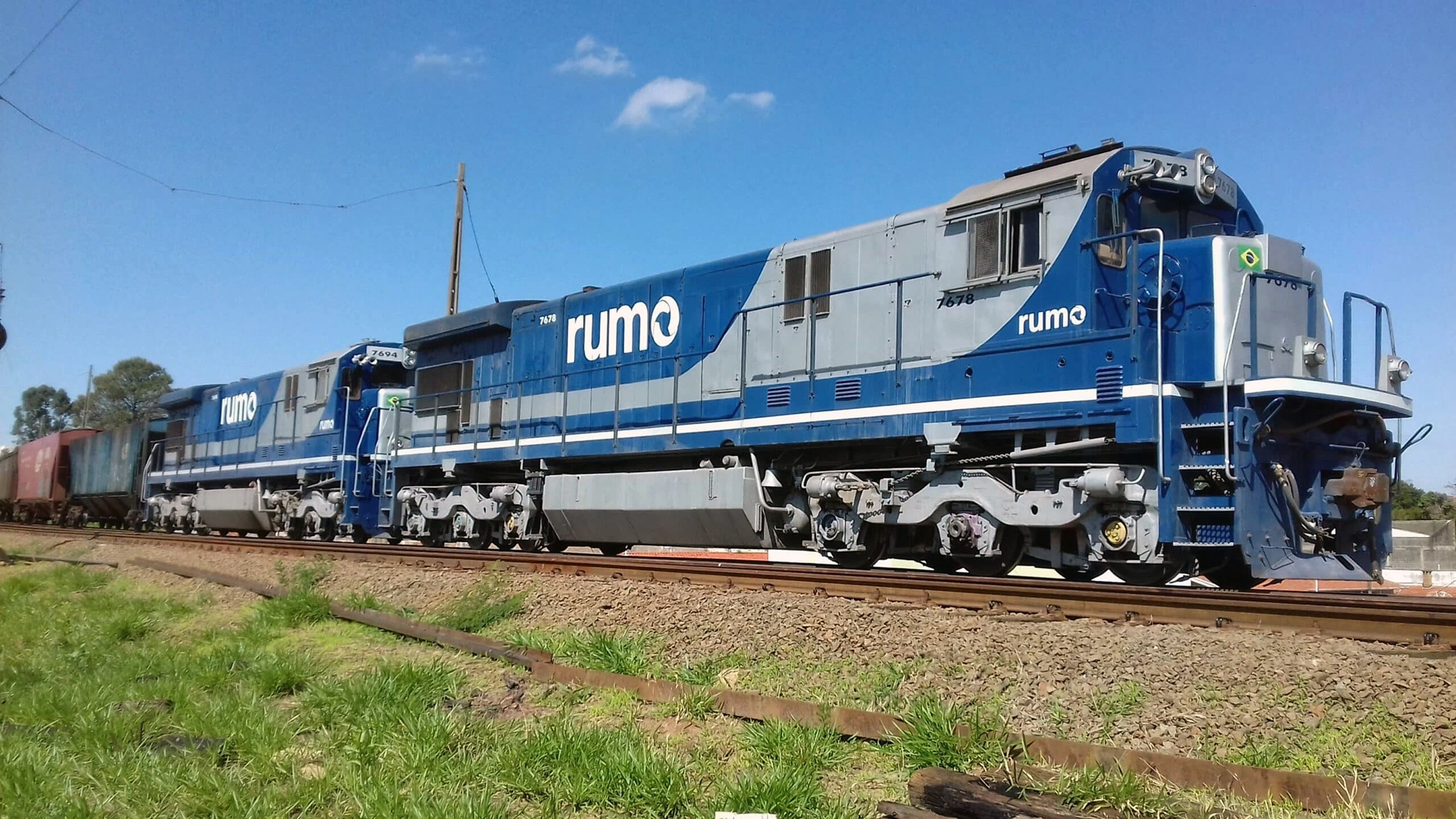
A record built on grain
The number that matters is 23.8 billion TKU — tonne-kilometres useful, the standard rail measure of moving one tonne of cargo one kilometre. That was up from 21.8 billion in the same quarter of 2025 and above the roughly 23 billion that BTG Pactual analysts had expected. In June alone Rumo moved 7.98 billion TKU, with agricultural goods dominating and soybeans accounting for more than 4 billion.
In plain terms, Rumo’s trains carried more of Brazil’s harvest, further, than ever before — a direct read on a bumper grain crop making its way to export terminals.
Why the shares moved
Investors treated the operational preview as a sign of strong execution, and RAIL3 shares rose about 2.7%. The volumes land on top of a turnaround: Rumo had already swung back to profit earlier in the year, and rising traffic supports the case that the recovery has momentum.
The timing also matters. Rumo is part of the wider Cosan group, which has been under financial strain, and a run of strong operational data helps separate the railway’s own performance from the troubles of its parent. For a stock that had been buffeted by contagion worries, a clean record on volumes is a welcome change of subject.
Live Company IntelligenceRumo S.A — the full investor dossierInside: live share price, market cap, three-year financials, valuation, ESG and peer benchmarks — plus the latest Rio Times coverage.R
◆ Live Company Intelligence
Rumo
SA: RAIL3RAIL3IndustrialsRailroads8,255 employees
Valuation & profitability
Market cap$25.42B
Revenue (TTM)$14.16B
P / E ratio24.5
Profit margin7.3%
Return on equity7.3%
Price & risk
52-wk low
$12.1652-wk high
$17.33
Beta (volatility)-0.11
200-day average$15.23
Revenue trend · 6y
20202025
Latest $13.85B
Ownership
Institutions78.9%
Shares outstanding1.86B
Dividend
Yield0.8%
Payout ratio9.4%
Fwd. annual$0.11
What Rumo does. Rumo S.A., through its subsidiaries, engages in the rail logistics operation. The company operates through North Operations, South Operations, and Container Operations segments. The North Operations segment is involved in the railway, highway, and transshipment operations. The South Operations segment comprises of rail and transhipment operations in the area of Rumo Malha…
The bigger picture
Brazil’s farm boom only pays off if the crop can reach a port, and that is where Rumo sits — its network funnels grain from the interior toward terminals, above all at Santos. Record volumes are therefore a barometer for the whole grain-export chain, not just one company’s quarter, and a useful signal for anyone tracking how much of the harvest is actually moving.
Rumo does not have the field to itself. Rival corridors to the north, the so-called Arco Norte, have been pulling more grain toward Amazon-basin ports, and the competition to move Brazil’s ever-larger harvests is intensifying. Holding a volume record in that environment is a sign Rumo is defending its position rather than ceding ground.
What to watch next
The operational figures are a preview; the full quarterly results, with revenue, costs and margins, will show whether the record volumes translated into stronger profit or were partly offset by tariffs, fuel and investment spending. Investors will also watch how much of the second-half harvest Rumo can lock in, and whether port bottlenecks at Santos ease or bite. For a company whose fortunes track the country’s farm exports so closely, the next few months will test whether this record is a peak or a new baseline.
Rumo has also been investing heavily to expand capacity, pushing lines deeper into the grain belt of Mato Grosso and upgrading terminals in a multi-year build-out designed to capture more of every harvest. Whether that spending pays off depends on volumes holding up at exactly the levels seen this quarter, which is why a single record carries weight well beyond one line in an earnings report.
Frequently Asked Questions
How much did Rumo move?
23.8 billion TKU in the second quarter, up from 21.8 billion a year earlier and above analysts’ roughly 23 billion estimate.
What is TKU?
Tonne-kilometres useful — one tonne of cargo carried one kilometre, the standard way rail volumes are measured.
Why did the stock rise?
The record volume beat expectations and signaled strong execution; RAIL3 gained about 2.7%.