By Reduxx | Created at 2026-07-29 17:55:54 | Updated at 2026-07-29 18:56:55
1 hour ago
By Reduxx | Created at 2026-07-29 17:55:54 | Updated at 2026-07-29 18:56:55
1 hour ago
A women’s rights advocate and PhD researcher in Brazil was subject to an investigation over her social media posts after trans activists at her University reported her for advocating against the medical transitioning of children. Celina Lazzari had her research suspended by the Federal University of Santa Catarina in Florianópolis for her social media posts despite having an outstanding academic track record.
Lazzari is the co-founder of MATRIA Brazil, an independent volunteer-based charity that focuses on advocating for the rights of women and children. The group offers legal and institutional support to women facing persecution, discrimination, or violence for defending their sexual rights and child protection. They also work in the fight against practices such as prostitution, pornography, surrogacy and other forms of female and child exploitation.
Lazzari had completed both her Bachelor’s and Master’s degrees at the Federal University of Santa Catarina (UFSC), earning exceptional grades and academic praise. She chose to continue her studies at the same university, pursuing a PhD in Social Work. Her research, titled The Listening Practices of Social Workers in Childhood and Gender Issues, had been approved by the university’s Human Research Ethics Committee (CEPSH), and Lazzari had successfully passed her doctoral qualification examination in November 2024.
“My doctoral research sought to understand how social workers respond to children and adolescents presenting with gender-related issues,” Lazzari tells Reduxx. “I exclusively interviewed professionals who were already dealing with these situations in their day-to-day practice. The aim was to examine how these professionals listen to, support, and assess such cases, the criteria they use in their decision-making, and the challenges they encounter.”
Lazzari says her research found that there was often a “tendency to identify children as transgender prematurely, that affirmative gender theories exert a strong influence on this process, and that gender-related behaviors, preferences, and stereotypes are frequently interpreted as indicators of a transgender identity.”
But Lazzari’s academic journey would come to a screeching halt in March of 2025 after other graduate students began to focus on her out-of-class advocacy.
Lazzari became the subject of criticism in a WhatsApp group of approximately 90 current and former graduate students. According to court documents reviewed by Reduxx, participants in the group accused her of transphobia, criticized her public statements concerning gender ideology, and discussed filing complaints with university authorities and professional regulatory bodies because of her views.
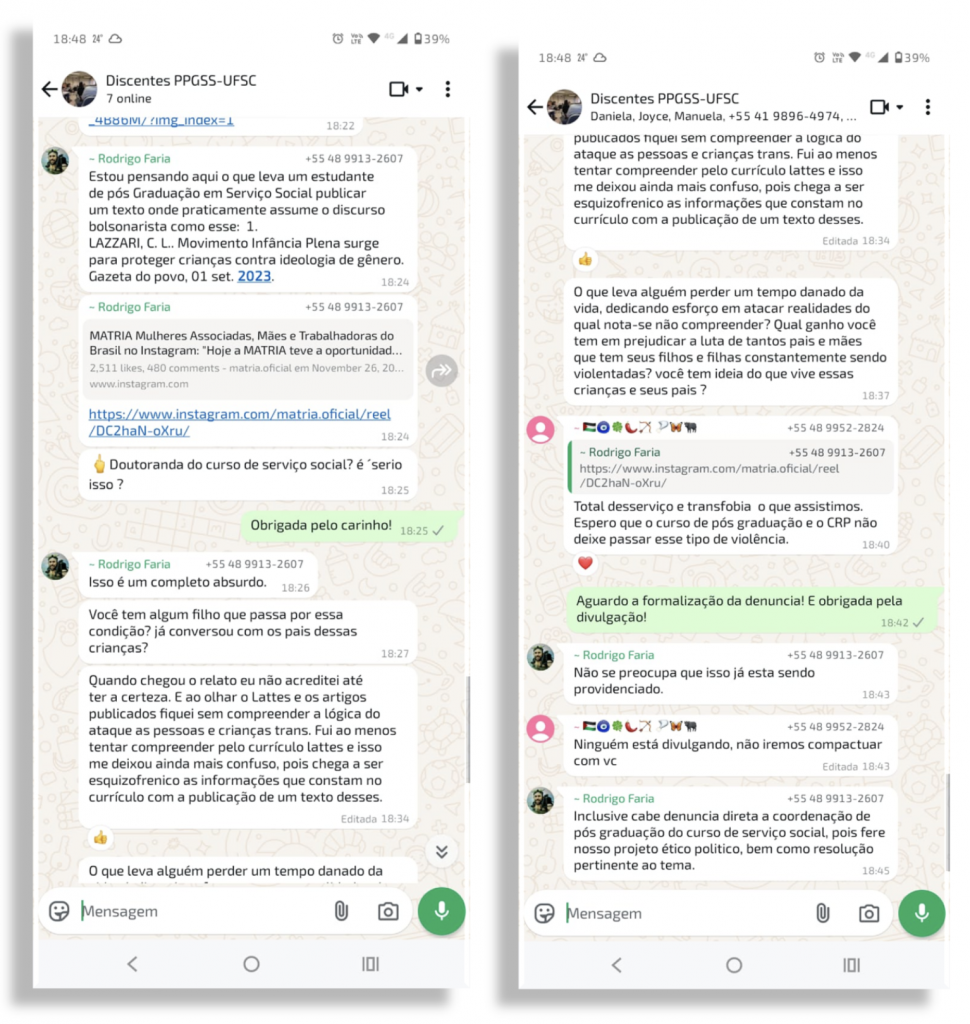 Screenshots from the graduate student WhatsApp group in which students condemn Lazzari for her pro-woman activism.
Lazzari responded by filing a police report, arguing that the online discussion amounted to coordinated harassment and included accusations that could expose her to criminal and professional consequences. She also informed the graduate program of the incident the following day and offered to clarify any concerns.
Two months later, Lazzari says she hadn’t heard anything from any University department regarding any complaints that had been filed against her, and she initially believed the controversy in the WhatsApp group chat had died down.
On May 30, 2025, the Human Research Ethics Committee approved her doctoral project, concluding that it satisfied the ethical and methodological requirements governing human-subject research, and Lazzari was able to confidently proceed with her studies.
Unbeknownst to Lazzari, however, the complaints about her gender critical beliefs had reached UFSC through a complaint submitted to the university’s Ombudsman’s Office.
While it is impossible to know who ultimately filed the complaint, one student in particular, Rodrigo Faria Pereira, had previously compared Lazzari to the far-right former president of Brazil, Jair Bolsonaro. In the graduate student WhatsApp group, Perieira called Lazzari “schizophrenic,” posted links to MATRIA social media posts, and directly threatened to file a complaint with the graduate program.
Pereira’s academic research is focused on health policies for the trans population, and he is a member of the university’s Center for Studies and Research on Social Work and Gender Relations.
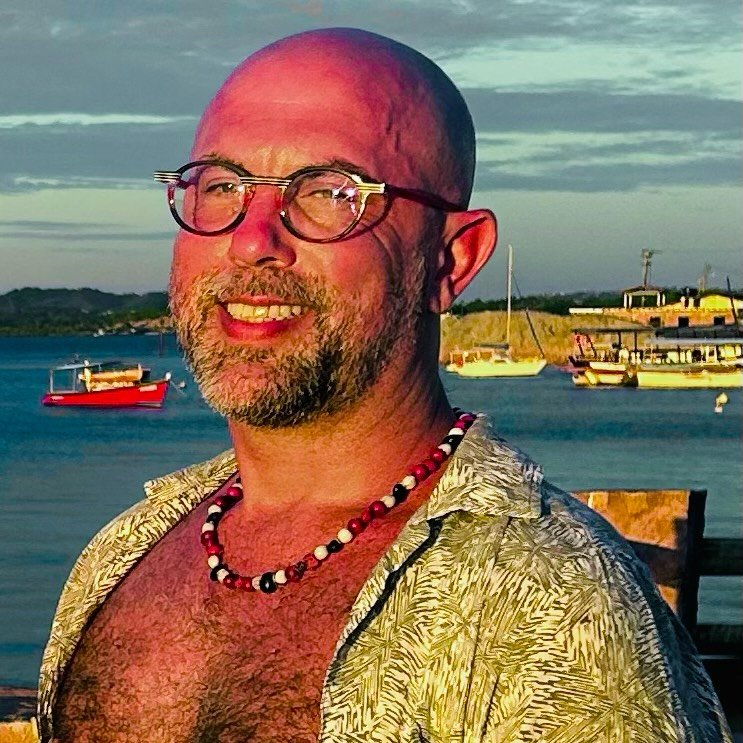 Rodrigo Faria Pereira. Photo Source: Instagram
The Graduate Program had quietly investigated Lazzari, but ultimately determined that it lacked jurisdiction because the allegations were related to her statements outside the university rather than her academic work. It closed the matter without disciplinary action
Despite that decision, the Human Research Ethics Committee, which had previously approved Lazzari’s research, initiated its own review.
In December of 2025, the committee ordered the immediate suspension of Lazzari’s research and demanded extensive documentation, including signed participant consent forms, audio recordings of confidential interviews, publications, and social media material. Lazzari was given just two days to produce the requested materials, some of which would have violated research confidentiality agreements and Brazil’s General Data Protection Law (LGPD).
Lazzari says she wasn’t initially provided with the full complaint against her or the technical opinion on which the committee relied. After she submitted a formal response in March of 2026, the university suspended her research the same day she finally received the complete complaint. She contends that this sequence denied her a meaningful opportunity to defend herself before the decision was made.
In March of 2026, Lazzari filed a Writ of Mandamus in Brazil’s Federal Court, arguing that the university had violated her constitutional rights to due process, adversarial proceedings, academic freedom, and protection of confidential research data.
The trial court ruled partially in her favor, finding that the suspension and several of the committee’s demands were unlawful and that the university had to allow her doctoral research to resume. UFSC appealed that decision, but on July 1, the Federal Public Prosecutor’s Office recommended that the appeal be dismissed and that the lower court’s ruling remain in effect.
Lazzari has now successfully defended her thesis, but the trauma of her experience and uncertainty over her future is lingering.
“I went through these proceedings, publicly disclosed what had happened, sought judicial protection, and was able to finish my PhD. But this does not represent only a victory. I emerge from this as a woman who has been marked within academia,” Lazzari told Reduxx.
𝐁𝐫𝐚𝐳𝐢𝐥𝐢𝐚𝐧 𝐫𝐞𝐬𝐞𝐚𝐫𝐜𝐡𝐞𝐫 𝐟𝐨𝐫𝐜𝐞𝐝 𝐭𝐨 𝐠𝐨 𝐭𝐨 𝐜𝐨𝐮𝐫𝐭 𝐭𝐨 𝐜𝐨𝐦𝐩𝐥𝐞𝐭𝐞 𝐡𝐞𝐫 𝐏𝐡𝐃 𝐚𝐟𝐭𝐞𝐫 𝐮𝐧𝐢𝐯𝐞𝐫𝐬𝐢𝐭𝐲 𝐬𝐮𝐬𝐩𝐞𝐧𝐝𝐞𝐝 𝐡𝐞𝐫 𝐫𝐞𝐬𝐞𝐚𝐫𝐜𝐡 𝐨𝐯𝐞𝐫 𝐡𝐞𝐫 𝐩𝐮𝐛𝐥𝐢𝐜 𝐚𝐝𝐯𝐨𝐜𝐚𝐜𝐲.
Celina Lazzari was awarded a PhD in Social… pic.twitter.com/O3MLbMochu
“I was subjected to extensive public exposure, profound institutional strain, and the creation of a perception that collaborating with me may entail conflict, complaints, or retaliation. This creates concrete obstacles to my ability to pursue new research in the future,” she explains.
Lazzari emphasizes that her research nor the quality of her academic work was ever the issue, and her completed thesis was “highly praised” by both her supervisor and committee. But despite her academic success, she believes the investigation and controversy may have marred her future prospects.
“I know that other professors and researchers may hesitate to work with me in the future—not because they question my competence or the value of my research, but because they understand that they, too, may face consequences simply for being associated with my name. They may be challenged, pressured, or accused merely for participating in a research project with me,” Lazzari explains.
“This is one of the most damaging consequences of this kind of persecution. Even when a researcher manages to withstand the pressure and ultimately prevails, the informal punishment remains,” she continues. “I was able to defend my dissertation and to have my academic freedom reaffirmed by the courts, but I paid a very high price. And that price will continue to shape my professional and academic career for years to come.”
Clarice Saadi, Lazzari’s colleague and co-director at MATRIA Brazil, called the treatment she had been subjected to “appalling,” and noted that no other Brazilian organization had stepped up to support her.
“The climate in Brazil is one of intense hostility toward any woman who says men cannot turn female. This hostility extends far beyond debate on social media: it’s present within public institutions, universities, professional settings, and even the justice system, all of which have increasingly incorporated the concept of ‘gender identity,'” Saadi says.
“At MATRIA, we support many researchers who have been silenced, pressured, or discouraged from conducting studies that critically examine issues related to the sex-based rights or trans ideology. Some have been warned to change their research topics, abandon certain hypotheses, or avoid conclusions that might generate institutional conflict,” Saadi continues, adding that censorship does not always rely on formal methods.
“More often, suppression occurs through warnings, intimidation, subtle threats, extraordinary demands, or the creation of an environment in which the researcher understands that she may face serious consequences if she proceeds. These consequences may include public attacks, indirect accusations, or other forms of professional retaliation. As a result, self-censorship takes hold. Research projects are never initiated, important questions are left unasked, and findings are never published,” she says.
“Celina’s experience is not an isolated case. It’s simply one example of a broader and institutionalized problem in Brazil: hostility toward women who refuse to comply with rules imposed by men.”
Reduxx is your source of pro-woman, pro-child safeguarding news and commentary. We’re 100% independent! Support our mission by making a donation.

Anna is the Co-Founder and Editor-in-Chief at Reduxx, with a journalistic focus on covering crime, child predators, and women's rights. She currently spends her time between Canada and Türkiye, enjoys Opera, and memes in her spare time.