By The Rio Times | Created at 2026-08-19 07:15:03 | Updated at 2026-08-19 07:22:41
16 minutes ago
By The Rio Times | Created at 2026-08-19 07:15:03 | Updated at 2026-08-19 07:22:41
16 minutes ago
Burundi · FINTECH
Key Facts
—Not a new member: Burundi already joined the East African Payment System back in 2020, but its banks were never actually switched on. The Bank of the Republic of Burundi now aims to finish that technical work by December 2026.
—Upgrades at home: Burundi has moved its Real-Time Gross Settlement system to the ISO 20022 messaging standard and launched BurundiPay, a national instant payment platform, on 23 April 2026.
—Who is live today: Only four of the East African Community’s eight member states are actually running on the East African Payment System – Kenya, Tanzania, Uganda and Rwanda.
—Currency shift: The East African Payment System settles transactions in local East African Community currencies, reducing reliance on the US dollar and euro.
—Regional platform: The East African Payment System went live between Kenya, Tanzania and Uganda on Monday, 25 November 2013, and was officially launched in Nairobi on 16 May 2014. Rwanda connected in December 2015.
—Long delays: The African Development Bank’s original project plan had Burundi’s system linked to the East African Payment System by 2016. The deadline has slipped again and again since.
Burundi has been a paid-up member of the East African Payment System (EAPS) since 2020 – it just was never plugged in. Its central bank now says the wiring will be finished by December 2026. EAPS is the cross-border network that lets banks in the East African Community (EAC) pay each other in their own currencies, within seconds, instead of routing money through banks in New York or London. For Burundi, that should mean faster and cheaper trade with Kenya, Tanzania, Uganda and Rwanda, and far less need for US dollars or euros in the middle.
One-stop reference
Company Intelligence
Every listed company in Latin America — financials, ownership and structure for 1,450+ companies across 26 exchanges, in one place.
What the December 2026 East African Payment System target means
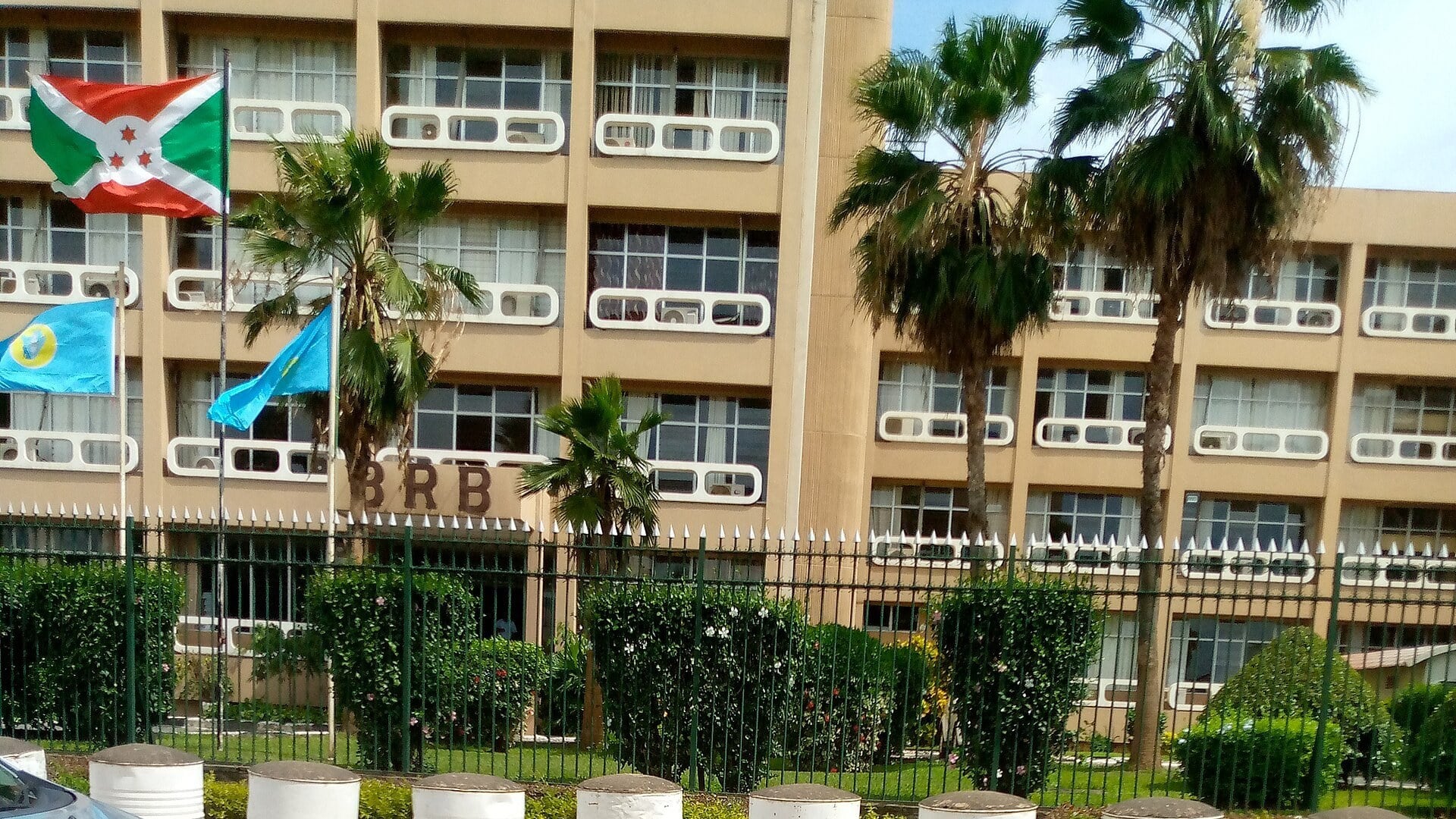
The news came at the 29th Ordinary Meeting of the East African Community’s Monetary Affairs Committee, which gathered the region’s central bank governors in Kampala, Uganda, and wrapped up on Friday, 24 July 2026. There, the Bank of the Republic of Burundi (BRB) said it had modernised its Real-Time Gross Settlement (RTGS) system – the plumbing banks use to move large sums – and moved it onto the ISO 20022 messaging standard. The BRB also pointed to BurundiPay, its new national instant payment platform, which Governor Edouard Normand Bigendako formally launched in Bujumbura on 23 April 2026.
Deputy Governor Irene Kabura, speaking on behalf of the BRB governor, told the meeting that “integration into the EAPS is targeted for completion by December 2026, marking a significant milestone in Burundi’s contribution to regional payment-system harmonisation.” It is the firmest date the central bank has yet put on its East African Payment System link-up.
For businesses and banks, December 2026 is the date when payments to and from Burundi should finally run on the same rails as Kenya, Tanzania, Uganda and Rwanda – in real time, in local money. That would replace the slower, pricier route through correspondent banks in US dollars or euros.
How the East African Payment System actually works
EAPS is the EAC’s regional high-value payment platform, designed and operated by EAC central banks through the Monetary Affairs Committee. It went live between Kenya, Tanzania and Uganda on Monday, 25 November 2013, and was officially launched by the governors in Nairobi on 16 May 2014. Rwanda finished its own connection in December 2015, and no other member state has come online since.
The system interlinks national RTGS platforms and uses the SWIFT messaging network for secure, real-time, gross settlement. Each central bank holds accounts in the other members’ money – Kenyan, Tanzanian and Ugandan shillings, Rwandan and Burundian francs, and South Sudanese pounds – and those accounts are what the payments settle against.
Settlements are conducted in local EAC currencies, eliminating the need for hard currencies like the US dollar or euro for intra-regional transactions. EAPS primarily serves large-value, wholesale interbank payments rather than retail or low-value transactions.
By integrating Burundi’s RTGS into EAPS, the BRB is plugging the Burundian banking system directly into this regional settlement grid. Burundian banks should be able to clear high-value payments in neighbouring currencies in real time, rather than routing them via offshore intermediaries.
Live Company IntelligenceBurundi to Complete East African Payment System Link by December 2026 — the full investor dossierInside: live share price, peer benchmarks and the latest Rio Times coverage on the company.Rio Times · Live Ticker Intelligence
to Complete East African Payment System by December 2026
LINK · Latin American market listing
Share price · live
R$8.77
▼ -0.06% today
From The Rio Times
Latest coverage · 15 Apr 2026
Ecuador Economy 2026: GDP, Oil Crisis and Noboa Reforms
Read →
Burundi’s domestic payment modernisation drive
The December 2026 target sits on top of real work at home. The EAC’s Cross-Border Payment System Masterplan, published in March 2025, noted that the East African Payment System still linked only four of the bloc’s eight member states, and laid out a plan to widen it. Burundi was one of the countries left outside.
By mid-2026, the BRB was reporting that its RTGS had moved to ISO 20022, the global messaging standard EAPS runs on. The central bank also launched BurundiPay on Thursday, 23 April 2026 – a national platform that lets banks, microfinance institutions and payment companies send money to one another instantly. It made Burundi the 22nd African country with a live instant payment system.
The slow pace is well documented. A United Nations Capital Development Fund assessment of Burundi’s payment infrastructure, published in April 2025, recorded that the country joined EAPS in 2020 but had still not finished the RTGS integration needed to go live as of October 2022 – a gap of more than two years.
The work is not only technical. Much of it has been paid for through the African Development Bank’s regional EAC Payment and Settlement Systems Integration Project, which funded Burundi’s RTGS and securities depository and the module that connects them to EAPS. Lenders have also pressed for legal, regulatory and staffing reforms across Burundi’s financial sector.
Money, power and the regional financial architecture
EAPS is one of the core building blocks of EAC monetary integration. The International Monetary Fund has described the East African Cross-Border Payment System as a concrete operational step towards monetary, financial and economic integration, complementing convergence in economic policy and the bloc’s target of a single East African currency by 2031.
The platform gives central banks direct visibility and control over cross-border flows. It also creates shared technical standards and infrastructure, anchoring cooperation and reducing the bargaining power of offshore correspondent banks over regional trade flows.
Burundi’s entry therefore has strategic significance. It helps avoid the creation of a weak link or missing node in the EAC grid and supports the narrative that even the least-developed member states are being brought onto the same financial rails.
Burundi sits at the intersection of multiple regional blocs. Alongside EAPS, it is working to integrate with the Regional Payment and Settlement System of the Common Market for Eastern and Southern Africa, balancing ties between the EAC and a wider grouping that includes Egypt and Ethiopia. This broader contest over African financial infrastructure is a theme we track in Africa: The New Scramble.
What changes for businesses and investors
For companies operating across East Africa, Burundi’s full EAPS integration has practical implications. Firms trading between Burundi and EAC partners will be able to settle invoices directly in regional currencies, avoiding double conversion from local currency to US dollars and back, along with associated spreads and fees.
Real-time gross settlement reduces settlement risk and improves cash-flow predictability, especially for high-value goods, government contracts and cross-border supply chains. Regional small and medium enterprises and corporates can more easily integrate Burundian suppliers, customers and subsidiaries into their financial operations.
Commercial banks in Kenya, Tanzania and Uganda were on EAPS soon after launch, and Rwanda’s followed in December 2015. Burundi’s banks are smaller and less digitised than their regional peers. A live connection should sharpen competition, because it becomes far easier for the big regional banking groups to sell cross-border payment services that include Burundi.
The track record is one of missed deadlines: the African Development Bank’s plan had all five founding EAC members on EAPS by 2016, Burundi signed up in 2020, and it was still not live in 2022. Treat December 2026 as a policy target rather than a guaranteed switch-on date – though this time the hardware is already built and running.
The great-power angle: who controls the rails
EAPS is explicitly designed to reduce reliance on hard currencies for intra-African trade. African Development Bank and EAC documents underline that EAPS uses local currencies of partner states, eliminating the need for dollars or euros in regional payments and reducing the cost of doing business.
By connecting RTGS systems directly, EAPS limits the role of global correspondent banks, which are predominantly Western, in regional transactions. Burundi’s full integration expands the zone where trade flows can bypass the dollar and euro in settlement, even if underlying contracts or pricing may remain partially dollar-linked.
The bloc is building outwards too. At the same Kampala meeting in July 2026, governors said work had formally begun on the Cross-Border Payment System Masterplan, which targets high transaction costs, slow settlement and patchy interoperability, and points towards a regional switch linking national retail payment systems. At the same time, the choice of ISO 20022 and SWIFT plants the EAC firmly inside global standards set by Western and multilateral bodies, even as it tries to loosen its dependence on Western currencies.
The main power axis here is less about overt geopolitical alignment and more about who writes the rules and standards. Through EAPS, the EAC central banks and regional bodies assert their own rule-making authority, supported by African Development Bank, World Bank and IMF funding and technical assistance.
Frequently Asked Questions
Is Burundi already a member of the East African Payment System?
Yes. Burundi joined the East African Payment System in 2020, but its banks are still not live on it. The Bank of the Republic of Burundi aims to complete the technical integration by December 2026.
What is BurundiPay?
BurundiPay is Burundi’s national instant payment platform, launched by the Bank of the Republic of Burundi on 23 April 2026 for real-time transfers inside the country.
Does the East African Payment System use US dollars?
No, the East African Payment System settles transactions in local East African Community currencies, reducing reliance on the US dollar and euro for intra-regional trade.
Sources
This article was produced by The Rio Times’ automated newsroom system. How we use AI · Report an error
LatAm Markets: Live Signals → — real-time movers, turnover leaders and FX across Latin America.
The Rio Times · Power Map
See who really holds power in Latin America
Click to open the Power Map →