By The Rio Times | Created at 2026-10-10 14:51:34 | Updated at 2026-10-10 15:45:29
2 hours ago
By The Rio Times | Created at 2026-10-10 14:51:34 | Updated at 2026-10-10 15:45:29
2 hours ago
CAMEROON · GEOPOLITICS
Key Facts
- —The country Cameroon is a Central African state on the Gulf of Guinea, with ports at Douala and Kribi and a currency shared through the CEMAC union.
- —Who decides President Paul Biya, 93, has ruled since 1982. The Constitutional Council declared him winner of the October 2025 election with 53.66 percent.
- —The United States A health deal worth nearly US$400 million through 2030, about US$7 billion of possible US business, and a deal to receive third-country deportees.
- —China China held 64.9 percent of Cameroon’s bilateral debt in March 2026, and Exim Bank of China financed 75 percent of Kribi port’s second terminal.
- —Russia A defence cooperation pact signed in 2022, and a 2026 row after Moscow reported 16 Cameroonians killed while fighting in its army.
- —Everyone else France and the EU hold history and trade ties; Gulf, Turkish and Indian partners bring loans, flights and trade. Cameroon is not in BRICS.
- —Still open Who succeeds Biya, whether Cameroon pays a US$616 million iron ore award claimed by Sundance Resources, and which US deals reach financing.
Cameroon geopolitics matters to Americans because Washington, Beijing and Moscow all court this Central African state of ports, oil and minerals. China is its largest bilateral lender, US firms eye about US$7 billion of deals, and Russia signed a defence pact in 2022.
Behind them stand France, the European Union, Gulf lenders, Turkey and India, all dealing with a 93-year-old president.
Why Cameroon Matters to the Big Powers
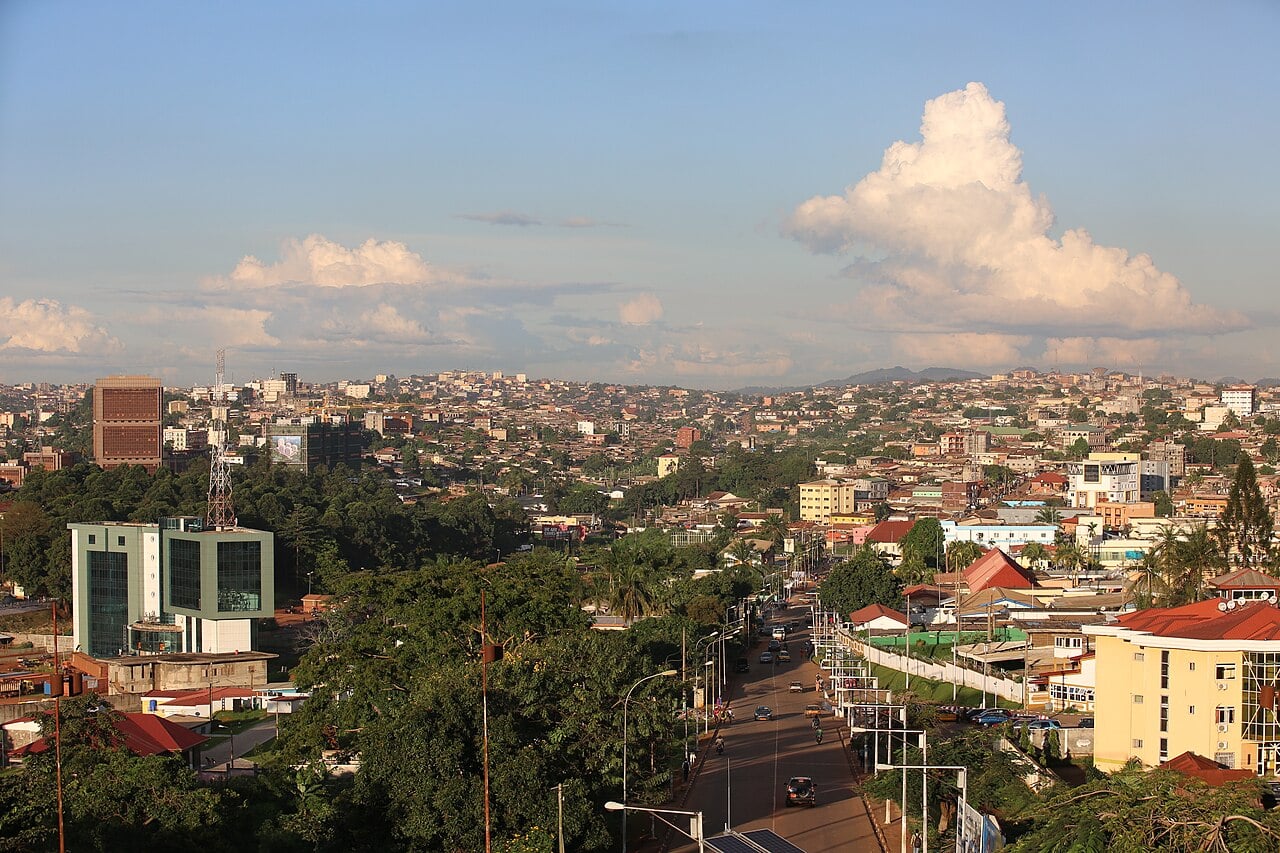
Cameroon sits on the Gulf of Guinea, where West Africa meets Central Africa. Its ports, oil, cocoa and untapped minerals explain most of Cameroon geopolitics.
Power sits with one man. Paul Biya, born on 13 February 1933, has been president since 6 November 1982, according to the presidency.
On 27 October 2025 the Constitutional Council, which certifies national elections, declared him the winner with 53.66 percent of the vote. His main challenger, former minister Issa Tchiroma Bakary, was credited with 35.19 percent, Business in Cameroon reported.
Diplomacy runs through the presidency and the Ministry of External Relations, led by Lejeune Mbella Mbella. He delivered Cameroon’s address to the UN General Assembly on 26 September 2026 in Biya’s place, the UN debate record shows.
Joseph Dion Ngute is prime minister and head of government, as his office confirmed in September 2026. The Cameroon country guide covers domestic politics, and the neighbours explainer covers the region.
Cameroon belongs to CEMAC, the Central African economic and monetary community, and uses its CFA franc. In October 2026 that franc traded at about 585 to the US dollar; more country coverage sits on the Cameroon page.
The United States: Health Money, Deportees and a US$7 Billion Pitch
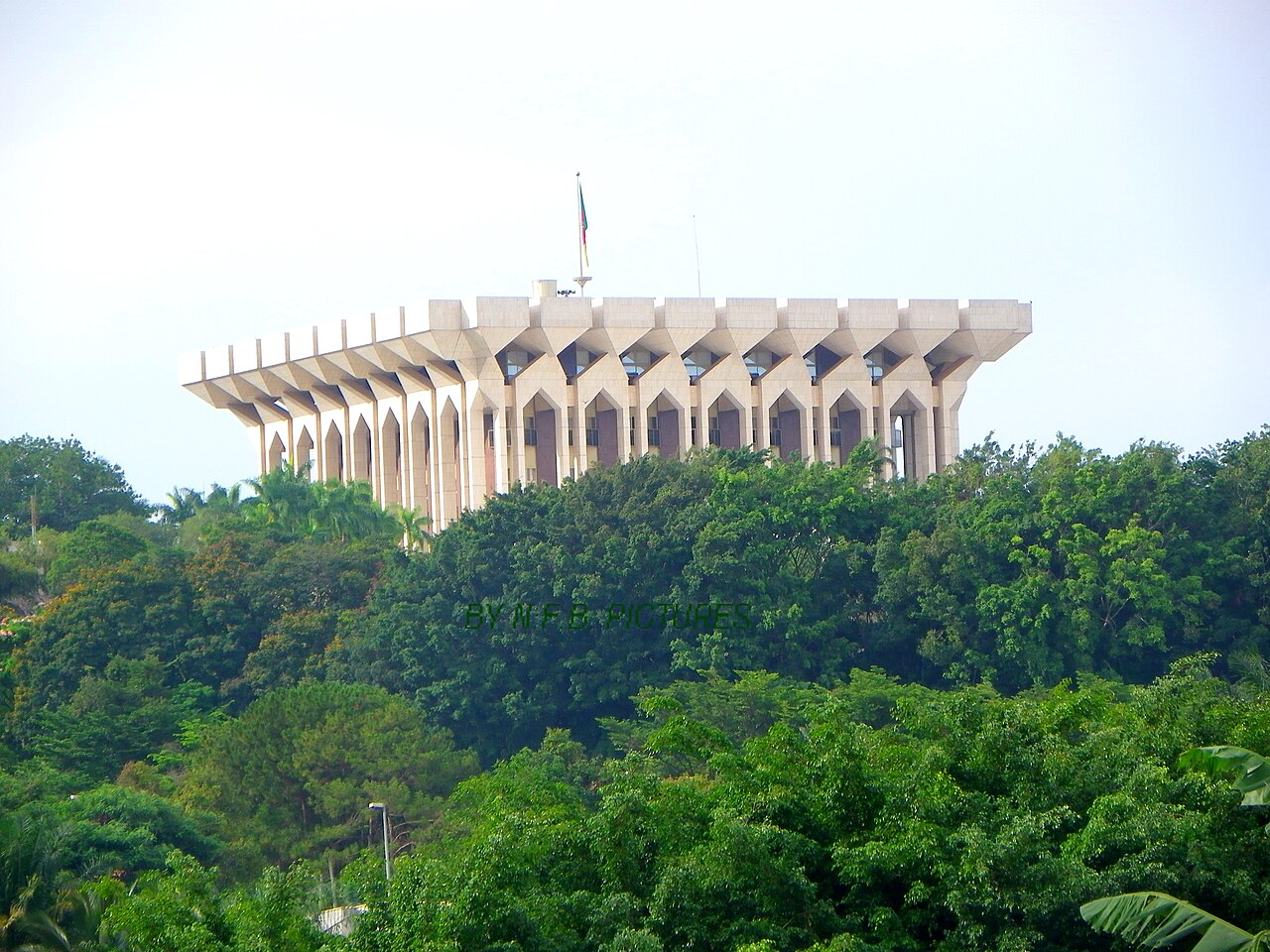
Washington calls Cameroon “of vital strategic importance”, citing counterterrorism, migration and disease control. That line comes from remarks by the US chargé d’affaires published on 1 October 2026.
The occasion was a five-year health agreement. The United States aims to provide nearly US$400 million through 2030, alongside US$450 million from Cameroon’s government.
It builds on a memorandum signed in December 2025 and puts the America First Global Health Strategy into practice. The embassy says US health aid over two decades topped US$1.1 billion.
On 27 August 2026 the first US-Cameroon economic and commercial dialogue met in Yaoundé. The US Embassy listed about US$7 billion of American opportunities “at various stages of development”.
Migration and Travel Rules
Migration is the harder edge. According to Human Rights Watch, Cameroon agreed in December 2025 to accept people the United States deports from other countries.
By September 2026, 46 such deportees had arrived on five flights and were held in government-run facilities in Yaoundé, the group reported.
Washington ended Temporary Protected Status for Cameroonians on 4 August 2025, according to the Federal Register. The State Department rates Cameroon Level 2, “exercise increased caution”, and says not to travel to three regions.
The project list from the dialogue is broken down in this report on the US$7 billion pitch.
- Grand Eweng: a proposed US$3.5 billion, 1,040-megawatt hydropower plant on the Sanaga River, pursued by New York investor Hydromine.
- Rutile: a US$500 million project by Connecticut’s Tronox and Australia’s Lion Rock.
- Nkamouna: talks by Washington-based ARM on a cobalt, nickel and manganese project, starting near US$85 million.
- Douala: a proposed US$2 billion airport and a US$75 million data centre with its own power plant.
China: The Port Builder and Largest Bilateral Lender
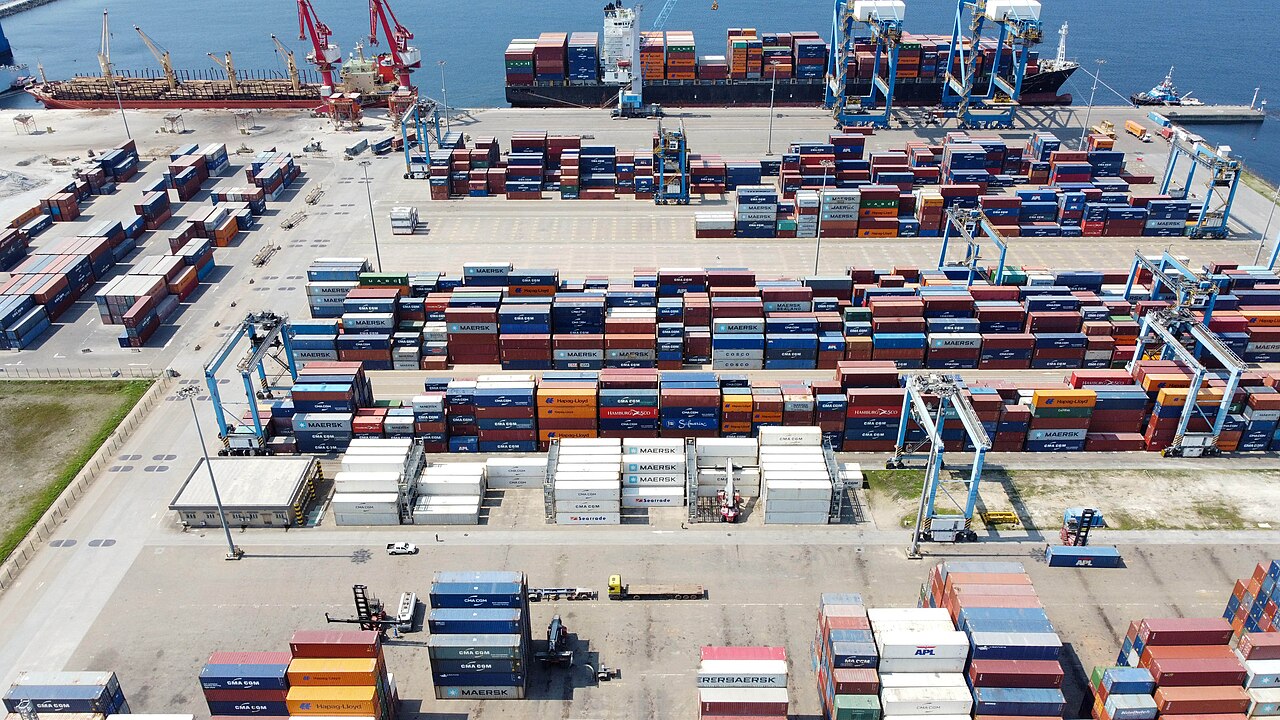
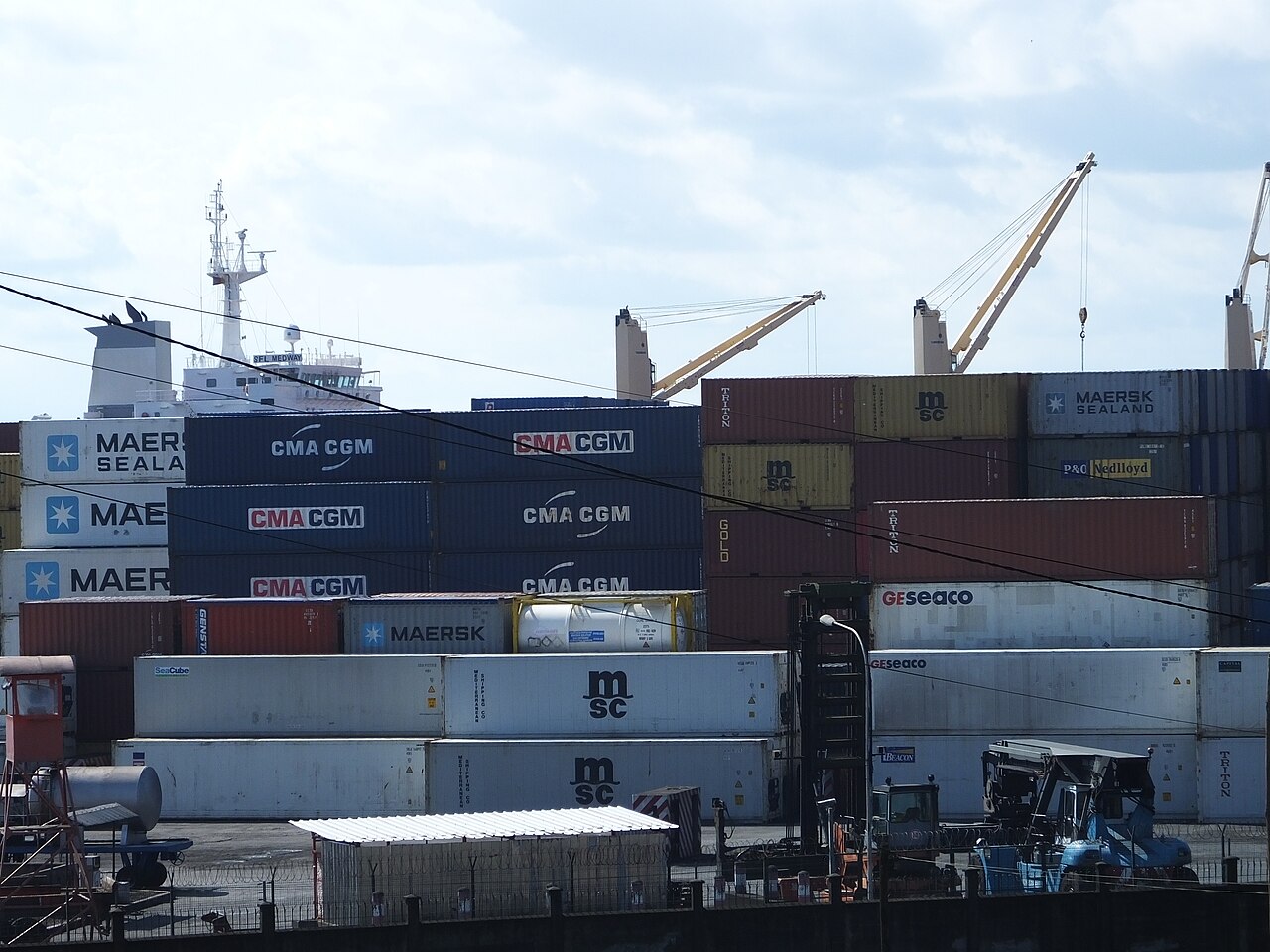
China’s footprint is made of concrete and steel. China Harbour Engineering Company handed Kribi’s second container terminal to the port authority on 21 February 2025, Investir au Cameroun reported.
The terminal cost about CFA400 billion (about US$683 million), with 75 percent financed by Exim Bank of China. It is run by KCT, a venture of Africa Global Logistics, the Chinese builder and France’s CMA CGM.
Debt follows the concrete. Exim Bank of China alone held CFA1,560 billion (about US$2.67 billion) of Cameroon’s debt at the end of March 2026.
China as a whole held 64.9 percent of bilateral debt, or 16.9 percent of all external debt. The figures come from the CAA, the state debt agency, cited by Investir au Cameroun.
In the first quarter of 2026 alone, Cameroon paid the Chinese bank CFA121.8 billion (about US$208 million).
Trade with China passed CFA1,600 billion (about US$2.7 billion) in 2024, according to the national statistics institute cited by Investir au Cameroun. The two governments initialled a trade framework agreement in Yaoundé on 10 December 2025.
Beijing is also opening its market. China’s zero-tariff treatment for 53 African partners took effect on 1 May 2026, Shanghai’s city government reports.
What China gets is work for its builders, a market for its goods and steady loan repayments. That gives Beijing more financial weight in Cameroon geopolitics than any other single government.
Russia: A Defence Pact and a Recruitment Row
In April 2022, weeks after Russia invaded Ukraine, Cameroon’s defence minister signed a military cooperation agreement in Moscow, Africanews reported. The reported terms cover defence exchanges, joint training and counterterrorism.
Recruitment has since become the more sensitive Russian file in Cameroon geopolitics.
At the United Nations, Cameroon cast no vote on the 2 March 2022 resolution on Russia’s aggression against Ukraine. The text passed 141 to 5, the UN voting record shows.
The relationship turned awkward in 2026. A Russian embassy note dated 5 March 2026 listed 16 Cameroonian contract soldiers killed while serving Russia, StopBlaBlaCam reported.
Mbella Mbella summoned Russia’s ambassador, Georgy Todua, on 7 April 2026 to voice “vive préoccupation” (deep concern), 237online reported. A citizens’ group, Ramenez Nos Fils (Bring Back Our Sons), says it is in contact with about ten families.
For Yaoundé, the pact adds a security partner without closing doors in Washington or Paris.
France and the European Union: History, Debt and Trade
France was the colonial power in most of Cameroon, and that past still shapes the relationship.
President Emmanuel Macron wrote to Biya on 30 July 2025, in a letter made public on 12 August. He acknowledged that a war had taken place in Cameroon, Journal du Cameroun reported.
Macron wrote that colonial authorities and the French army used “repressive violence” there. He drew on a joint French-Cameroonian commission on 1945 to 1971 that reported in January 2025, France’s foreign ministry says.
France remains Cameroon’s second-largest bilateral creditor. It held 25.8 percent of bilateral debt in March 2026, behind China, according to the same debt agency figures.
Trade is the European Union’s main lever in Cameroon geopolitics. Cameroon ratified an Economic Partnership Agreement with the EU in July 2014.
Under it, all Cameroonian goods enter the EU free of duties and quotas, the European Commission says. In return Cameroon is removing duties on 80 percent of EU exports over 15 years.
The Commission says EU trade with Cameroon has grown 43 percent since the deal started in 2014. Cocoa and cocoa products make up 62 percent of Cameroon’s exports to the EU.
Cameroon also accounts for 29 percent of the EU’s trade with Central Africa, the Commission says.
The Gulf, Turkey and India: The Quieter Partners
In Cameroon geopolitics, one Gulf-linked channel is a multilateral lender. The Jeddah-based Islamic Development Bank approved €212.35 million (about US$238 million) for the Douala-Bafoussam road on 19 May 2025.
According to the economy ministry, cited by Investir au Cameroun, the bank’s active portfolio in Cameroon neared US$1 billion in June 2026. A presidential decree of 2 October 2026 authorised an instalment-sale financing agreement for the same road.
The United Arab Emirates enters Cameroon geopolitics through ports. In February 2026 Abu Dhabi’s port operator AD Ports Group joined a 30-year Douala dry bulk terminal concession, the company says.
Its share of the first phase is about AED320 million (about US$87 million). The terminal is designed to handle around 4 million tonnes a year.
Turkey has built a steady presence since Biya’s March 2013 visit, the first by a Cameroonian president, according to Türkiye’s foreign ministry. The ministry says Turkish Airlines flies to Yaoundé every day and the Turkish Maarif Foundation runs schools in Cameroon.
Two-way trade with Turkey was almost US$205 million in 2019, the ministry says. Turkish firms also sit in KOGT, which plans a CFA50 billion (about US$85 million) farm terminal at Kribi, Business in Cameroon reported.
India is a sizeable trade partner. Two-way trade reached US$1.24 billion in 2023-24, and India was the third-largest buyer of Cameroonian goods, says India’s foreign ministry.
India opened a resident High Commission in Yaoundé in 2019. Its Exim Bank lent US$93.5 million for 225-kilovolt power lines, handed over in November 2022.
Other regional powers are courting Yaoundé too. Egypt’s offer on dams and power is set out in this water and energy report.
BRICS, the UN and the Minerals Race
Cameroon is not part of BRICS, whose 11 members include Egypt and Ethiopia, according to an Indian government backgrounder of September 2026. Its 10 partner countries include Nigeria and Uganda.
Yaoundé has raised its profile in global bodies. Philemon Yang, a former Cameroonian prime minister, presided over the 79th UN General Assembly.
Yaoundé also hosted the 14th World Trade Organization ministerial conference from 26 to 30 March 2026, the WTO says. Cameroon’s trade minister chaired it.
In its 2026 UN address, Cameroon backed the African Union’s call for better African representation on the Security Council. It argued that development finance “must not be regarded as charity”.
Minerals are where the contest turns concrete. A presidential decree of 17 August 2022 gave the Mbalam iron ore permit to Cameroon Mining Company, Investir au Cameroun reported.
The earlier developer, Sundance Resources, says an arbitration tribunal ordered Cameroon to pay it US$616 million. It announced the award, made under International Chamber of Commerce rules, on 26 July 2026.
Because the arbitration sat in Paris, any bid by Cameroon to annul the award goes to the Paris Court of Appeal. The outcome is a test case for mining investors across Cameroon geopolitics.
Bauxite is the second test. Australia’s Canyon Resources has advanced about CFA4.4 billion (about US$7.5 million) to repair the railway serving its Minim-Martap mine.
In August 2026 Canyon dropped its fourth-quarter target for a first bauxite shipment, citing financing and port questions, Investir au Cameroun reported.
Debt frames every deal. The International Monetary Fund projects 3.3 percent growth and public debt of 39.6 percent of GDP in 2026.
The Fund still rates Cameroon at high risk of debt distress.
What It Means for US Readers
For US companies, Cameroon is an open contest. Washington is offering commercial dialogue and health money where China already holds the largest bilateral loan book.
For investors, the Mbalam award and the IMF’s debt warning are the numbers to watch before backing Cameroonian projects.
For Cameroonians in the United States, the end of Temporary Protected Status in 2025 removed a shield against deportation. Cameroon also now receives third-country deportees from the United States.
For travellers, the State Department’s Level 2 advisory still says not to travel to the North-West, South-West and Far North regions.
Taken together, Cameroon geopolitics rewards patience. Every major power is betting on the state machinery around Biya, not on any single deal.
What Is Not Known
The precise terms of the 2022 Russian defence pact are known only from press reports. How many Cameroonians serve in Russia’s army is also unknown; the 16 deaths are only those Moscow has notified.
It is not clear whether Cameroon will pay the US$616 million Mbalam award that Sundance reports, or challenge it. Nor is it clear which of the US projects listed in August 2026 will reach financing.
Who would succeed Biya, now 93, remains the largest unknown in Cameroon geopolitics. Each foreign partner’s standing could shift with the next president.
Frequently Asked Questions
Who runs Cameroon’s foreign policy in 2026?
In Cameroon geopolitics, President Paul Biya, in power since 6 November 1982, sets the line. Lejeune Mbella Mbella is minister of external relations, and Joseph Dion Ngute is prime minister.
Is Cameroon closer to China or the United States?
In money terms, China: it held 64.9 percent of Cameroon’s bilateral debt in March 2026. The United States offers health aid and about US$7 billion of possible business, and Yaoundé works with both.
What is Cameroon’s agreement with Russia?
Cameroon signed a military cooperation agreement in Moscow in April 2022, reportedly covering training and defence exchanges. In April 2026 Yaoundé summoned Russia’s ambassador after Moscow reported 16 Cameroonians killed in its army.
Is Cameroon a member of BRICS?
No. India’s government listed 11 BRICS members and 10 partner countries in September 2026, and Cameroon is not among them. Several BRICS members, including China, India, Russia and the UAE, already work closely with Yaoundé.
Do Cameroonians still have Temporary Protected Status in the United States?
No. The Department of Homeland Security ended TPS for Cameroon with effect from 4 August 2025, according to the Federal Register notice of 4 June 2025.
Why does Cameroon geopolitics matter to investors?
Cameroon geopolitics decides who builds ports, dams and mines there. Investors watch the US$616 million Mbalam award announced by Sundance Resources, the IMF’s high debt-distress rating and Biya’s succession.
Sources: Presidency of the Republic of Cameroon, biography of Paul Biya, accessed 10 October 2026; Presidency of Cameroon, Decree No. 2026/320, 2 October 2026; Office of the Prime Minister of Cameroon, accessed 10 October 2026; US Embassy Yaoundé, remarks at the SOAG health agreement signing, 1 October 2026; US Embassy Yaoundé, US-Cameroon economic and commercial dialogue, 28 August 2026; Federal Register, termination of TPS for Cameroon, 4 June 2025; US State Department, Cameroon travel advisory, 15 May 2026; Human Rights Watch, US expulsions of third-country nationals to Africa, 8 October 2026; UN General Assembly recorded vote, A/ES-11/L.1, 2 March 2022; UN, President of the 79th General Assembly, accessed 10 October 2026; WTO, 14th Ministerial Conference, March 2026; IMF, 2026 Article IV consultation with Cameroon, 30 March 2026; European Commission, EU trade relations with Central Africa, accessed 10 October 2026; Ministry of Foreign Affairs of Türkiye, relations with Cameroon, accessed 10 October 2026; Ministry of External Affairs of India, India-Cameroon bilateral brief, February 2025; Press Information Bureau of India, BRICS backgrounder, 10 September 2026; Shanghai Municipal Government, zero-tariff policy for African goods, 7 July 2026; Investir au Cameroun, Kribi second container terminal, 24 February 2025; Investir au Cameroun, Mbalam arbitration award, 27 July 2026; StopBlaBlaCam, Cameroonians enrolled in the Russian army, 26 August 2026; Journal du Cameroun, Macron letter on the war in Cameroon, 13 August 2025; Journal du Cameroun, Cameroon at the 81st UN General Assembly, 28 September 2026; Investir au Cameroun, Exim Bank of China and Cameroon’s bilateral debt (CAA data), 25 May 2026; United Nations, General Debate of the 81st session, Cameroon, 26 September 2026; Office of the Prime Minister of Cameroon, Islamic Development Bank Group Day, 14 September 2026; AD Ports Group, 30-year Douala dry bulk terminal concession, 12 February 2026; French Ministry for Europe and Foreign Affairs, France-Cameroon joint commission, 5 February 2025; 237online, Yaoundé summons Russia’s ambassador, 9 April 2026; Islamic Development Bank, offices, accessed 10 October 2026.
Editorial responsibility: Matthias Camenzind, Editor-in-Chief · Editorial standards · Report an error