 By The Rio Times | Created at 2026-10-19 13:11:24 | Updated at 2026-10-19 14:12:46
1 hour ago
CANADA · ANALYSIS
Key Facts
- —What is happening Statistics Canada was due to publish September inflation on 19 October 2026, after August headline CPI came in at 3.0% year over year.
- —Why it matters The Bank of Canada must decide whether energy-driven inflation justifies holding rates at 2.25% or shifting to a more hawkish stance.
- —The numbers Headline CPI was 3.0% year over year in August 2026, while CPI excluding gasoline was 2.4%, according to Statistics Canada.
- —Who is who Tiff Macklem, Governor of the Bank of Canada, leads the Governing Council that sets the overnight rate target.
- —What to watch The Bank of Canada announces its rate decision and Monetary Policy Report on 28 October 2026.
- —What it means for you US investors in Canadian bonds and energy assets should watch whether the Bank signals a prolonged hold or opens the door to rate hikes, as either path will move the Canadian dollar.
Canada’s inflation rate is putting the Bank of Canada under pressure before its 28 October rate decision. For US investors holding Canadian bonds or energy exposure, the composition of that inflation—not just the headline number—will determine whether the Canadian dollar strengthens or weakens.
Canada runs one of the world’s most energy-intensive advanced economies, and its central bank now faces a classic dilemma: headline inflation above target while underlying price pressures remain closer to 2%. This analysis explains what the September CPI release means for the Bank of Canada’s 28 October call, the Canadian dollar, and US investors, drawing on the USA-Canada Intelligence Brief.
What the CPI Measures and the Latest Reading
Statistics Canada’s Consumer Price Index tracks the change over time in prices paid by Canadian consumers for a representative basket of goods and services. The basket includes shelter, food, transportation, household operations, health and personal care, recreation, education, clothing, and alcohol and tobacco products.
The all-items CPI is a weighted average, meaning categories with larger household expenditure shares have a greater influence on the index.
As of August 2026, the latest official figures show headline CPI at 3.0% year over year, unchanged from July.
That would mark a second consecutive month above the Bank’s 2% target midpoint and the highest reading in the current cycle.
The distinction between headline and underlying inflation is critical.
Follow this story
Get an email when there’s news on Bank of Canada
Free. One email a day at most, and only when there is news. This also signs you up to our weekday newsletter, The LatAm Brief. Nothing arrives until you click the confirmation link, and you can stop either with one click. Privacy policy.
Energy Prices Are Driving the Policy Problem
Energy has become the central complication for Canadian monetary policy. In August 2026, gasoline prices were 22.8% higher year over year, although that was slower than the 25.7% increase in July.
Gasoline’s annual increase was large enough to keep headline inflation near 3%, even while several non-energy categories showed more moderate pressure.
The Statistics Canada release said the gasoline increase was slowing, which restrained the all-items CPI. At the same time, higher travel-tour prices and rent added upward pressure.
This distinction matters for the Bank of Canada. A gasoline shock initially raises the price level directly, but it becomes a more serious monetary-policy problem if it changes inflation expectations, encourages businesses to pass higher transport costs into prices, raises wage demands, or causes consumers to expect permanently higher inflation.
The August data did not yet demonstrate a broad energy-price pass-through. The Bank’s policy discussion has emphasised that underlying measures remained close to 2% in the preceding period.

The Bank of Canada’s Path and the 28 October Date
The Bank of Canada’s next scheduled interest-rate announcement is 28 October 2026, accompanied by a Monetary Policy Report. The Bank makes eight scheduled rate announcements each year, while the Monetary Policy Report sets out its base-case outlook for inflation and growth and its assessment of risks.
The latest policy information in the available record points to a prolonged hold. The overnight-rate target was 2.25%.
The 2.25% overnight rate was described as the lower end of the Bank’s estimated neutral range of 2.25% to 3.25%. That creates a policy tension: a headline CPI reading above target could delay any future easing, but raising rates to counter a supply-driven oil shock risks weakening already-sensitive interest-rate sectors without necessarily reducing global energy prices.
Tiff Macklem, Governor of the Bank of Canada, leads the Governing Council that makes the overnight-rate decision. The Bank’s July 2026 projection had inflation easing to about 2.5% in the second half of 2026, reaching the 2% target by early 2027.
The most plausible outcome is a hold at 2.25%, provided the September acceleration is concentrated in gasoline and other energy components and core inflation remains near 2%. The August CPI report itself did not show convincing evidence that energy inflation had spread broadly through the consumer basket.
More Hawkish Possibility
A stronger-than-expected September reading could make the Bank’s language more hawkish even without an immediate hike. The Bank might emphasise that inflation risks have increased, remove language suggesting that policy is sufficiently restrictive, or signal that rates could rise if energy inflation spreads.
A hike becomes more plausible if the data show broad-based monthly momentum rather than a one-off energy increase. Particularly important would be persistent gains in services, shelter and measures of core inflation.
Dovish Possibility
A rate cut would become more likely if September’s headline acceleration proved temporary while labour-market and growth data deteriorated. However, cutting while headline inflation is above 3% would carry a communications cost: it could convince markets that the Bank is willing to tolerate an extended overshoot.
The October meeting also matters because it includes a Monetary Policy Report. The Bank can update its inflation and growth projections, explain the energy shock and recalibrate guidance even if it leaves the rate unchanged.
The Canadian Dollar and US Investor Exposure
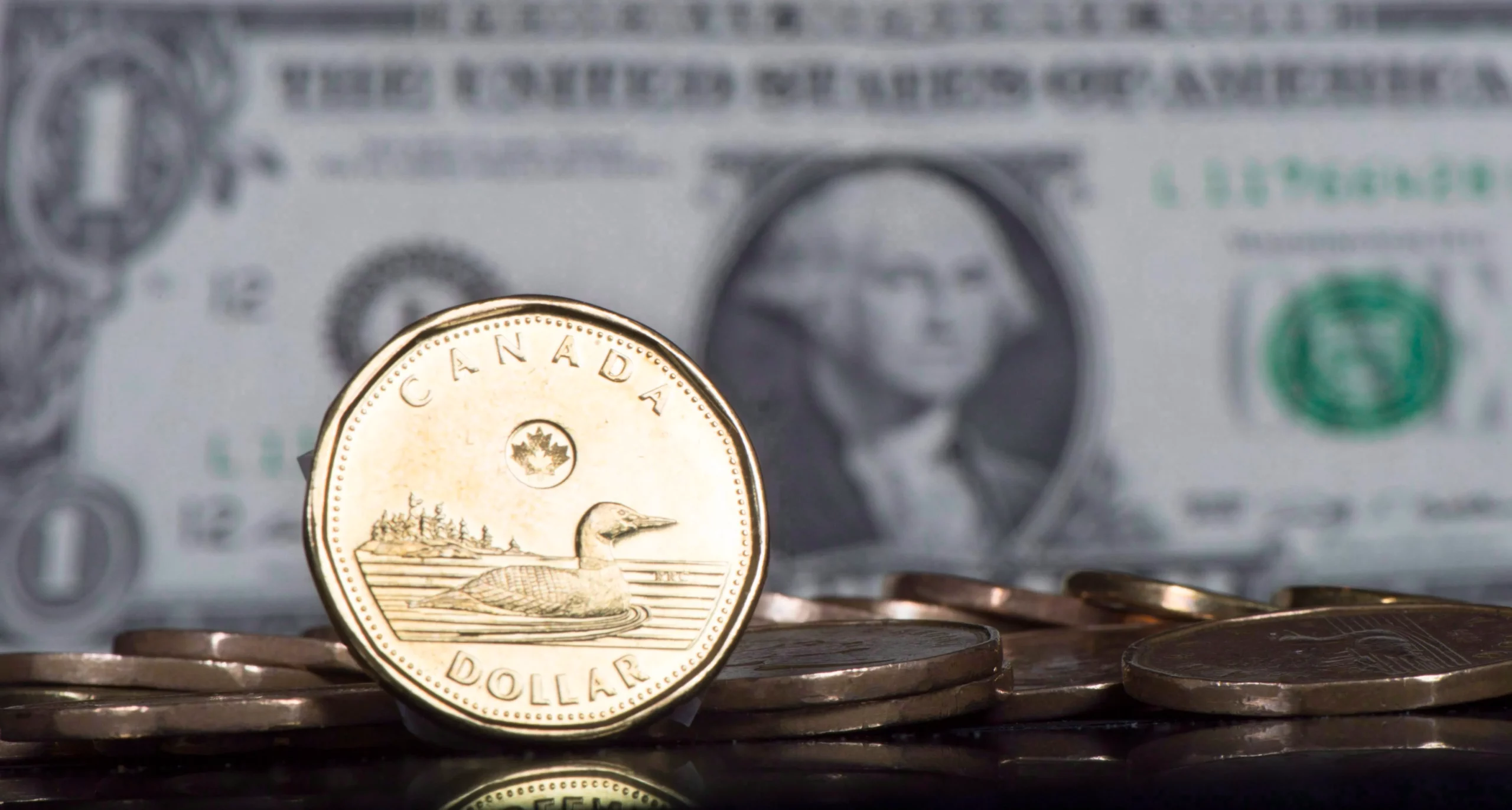
The Canadian dollar is likely to respond to the interaction of inflation, interest-rate expectations and oil prices—not to the CPI headline alone. A higher September CPI could support the Canadian dollar if traders interpret it as increasing the probability of a Bank of Canada hike or reducing the probability of a cut.
But the same inflation number could weaken the currency if markets view it as a negative supply shock. In that case, oil prices rise because of geopolitical or supply risks, Canadian inflation rises because fuel and transport costs increase, and the economy faces weaker real household purchasing power.
For Canada, oil can partly offset the negative economic impact through export revenues and the trade balance. That makes the Canadian dollar unusually sensitive to crude prices, yet the relationship is not automatic: a global risk-off episode, a stronger US dollar or concerns about Canadian growth can overwhelm the support from higher oil.
For US investors, the practical question is whether the October announcement changes the expected Canada–US interest-rate differential. A hold accompanied by hawkish guidance could support the Canadian dollar against the US dollar, while a hold accompanied by concern about weak growth could leave the currency under pressure.
US Investors in Canadian Bonds
Canadian government bonds face two opposing forces. Higher inflation and a more hawkish Bank of Canada generally push Canadian yields higher, producing mark-to-market losses for existing bondholders but potentially improving returns for new buyers.
Conversely, if investors conclude that energy inflation is temporary and Canadian growth is weakening, longer-term yields could fall even while headline CPI remains elevated. Bond investors should distinguish between nominal bonds, which are vulnerable to higher inflation expectations and rising yields, and real-return bonds, whose principal and interest are linked to Canada’s CPI and may benefit from persistent realised inflation.
Currency risk is equally important for US-based investors. A Canadian bond can gain in local-currency terms while producing a weaker US-dollar return if the Canadian dollar depreciates.
US Investors in Canadian Energy
Higher oil prices can improve Canadian energy-company revenues, cash flow and government royalties. They can also support the Canadian dollar and reduce credit stress in parts of the energy sector.
The risks are substantial. A geopolitical oil spike can raise operating, transport and input costs, while higher domestic fuel prices can reduce Canadian consumer demand. Pipeline, export-capacity and regulatory constraints can prevent producers from receiving the full global benchmark price.
For US investors, Canadian energy exposure is therefore a combined oil-price, Canadian-dollar and policy trade—not simply a bet on crude.

USMCA Review and Trade Uncertainty
The inflation story also intersects with the United States–Mexico–Canada Agreement review. Canada’s inflation and interest-rate outlook cannot be separated entirely from trade uncertainty because the United States is Canada’s dominant trading partner and cross-border supply chains are deeply integrated.
A contentious USMCA review could affect Canadian exports and business investment, the Canadian dollar, energy and manufactured-goods supply chains, and inflation through tariffs or border frictions. Trade restrictions can be inflationary by raising import costs while simultaneously damaging demand.
That combination would make the Bank’s task harder: tightening policy could restrain inflation but worsen investment and employment, while easing could support growth but risk further currency weakness and imported inflation.
For US investors, the relevant risk is not only whether an agreement is renewed. It is whether uncertainty delays capital expenditure, changes sourcing decisions or raises the cost of moving energy, autos, agricultural products and industrial inputs across the border.
What It Means for You
If you hold Canadian bonds, the 28 October decision will shape your near-term returns. A hawkish hold could push yields higher and create mark-to-market losses on existing positions, while a dovish tone could support bond prices but weaken the Canadian dollar.
If you are exposed to Canadian energy equities, the inflation data matters less than the oil-price path and the Bank’s interpretation of it. A supply-driven oil spike that forces the Bank to stay restrictive could compress valuations even as revenues rise.
For US investors with unhedged Canadian dollar exposure, the currency risk is material. A stronger Canadian dollar would boost US-dollar returns on Canadian assets, while a weaker one would erode them.
The practical takeaway is to watch the composition of September’s CPI, not just the headline number. If energy accounts for most of the overshoot, the Bank is likely to hold and wait; if services and shelter accelerate, the risk of a more hawkish shift rises.
What Is Not Known
It is not yet known whether energy inflation has begun to pass through into services, rent, wages and broader core measures. A single month does not establish a trend.
The Bank’s July 2026 projection had inflation easing to about 2.5% in the second half of 2026, reaching the 2% target by early 2027, but October commentary indicated that the updated forecast could be materially higher because of energy prices.
The trajectory of oil prices remains uncertain. A further surge would first lift headline CPI and could then feed into food, air travel, logistics and other energy-intensive services, but the timing and magnitude are unknowable in advance.
What to Watch
The next confirmed event is the Bank of Canada’s interest-rate announcement and Monetary Policy Report on 28 October 2026. That will provide the Bank’s updated inflation and growth outlook and its assessment of risks.
US investors should also monitor the USMCA review timeline, as trade uncertainty could affect Canadian growth, the Canadian dollar and the Bank’s policy path.
Frequently Asked Questions
What is Canada’s inflation rate in 2026?
Canada’s annual inflation rate was 3.0% in August 2026, unchanged from July, according to Statistics Canada.
When is the Bank of Canada’s next rate decision?
The Bank of Canada’s next interest-rate announcement is scheduled for 28 October 2026, accompanied by a Monetary Policy Report.
What is the Bank of Canada’s current interest rate?
The Bank of Canada’s overnight-rate target was 2.25% as of September 2, 2026.
Why is energy driving Canadian inflation?
Gasoline prices were 22.8% higher year over year in August 2026, according to Statistics Canada. These energy increases kept headline inflation near 3%.
Will the Bank of Canada raise rates on 28 October?
The most plausible outcome is a hold at 2.25%, provided the September acceleration is concentrated in energy and core inflation remains near 2%. A hike becomes more plausible if the data show broad-based monthly momentum in services, shelter and core measures.
How does Canadian inflation affect the Canadian dollar?
A higher CPI reading could support the Canadian dollar if traders see it as increasing the probability of a Bank of Canada hike. But if markets view it as a negative supply shock, the currency could weaken despite higher oil prices.
What does Canadian inflation mean for US investors?
US investors in Canadian bonds face mark-to-market losses if higher inflation pushes yields up, while energy investors face a combined oil-price, Canadian-dollar and policy trade. Currency hedging can materially change the US-dollar return on Canadian assets.