 By The Epoch Times | Created at 2026-07-30 09:26:57 | Updated at 2026-07-30 10:41:29
1 hour ago
By The Epoch Times | Created at 2026-07-30 09:26:57 | Updated at 2026-07-30 10:41:29
1 hour ago
Chinese-brand cars are sitting at Canadian ports, waiting to be unloaded. The first dealerships of BYD, Geely, and Chery are set to open this fall in Vancouver, Toronto, and Montréal, with more to follow by the end of the year. And not one of those cars can legally be sold in the United States.
That gap—vehicles landing at America’s doorstep that can’t be sold across the border—is the center of a quiet contest now unfolding on the northern frontier. The United States has walled out Chinese cars with a 100 percent tariff and a national security rule that bars China-owned automakers from the U.S. market even if they build their cars on American soil.
But Canada has moved the other way. In January, it agreed to let in a rising number of Chinese electric vehicles at a tariff of only 6.1 percent, breaking ranks with Washington.
A former senior Canadian official and several auto industry analysts told The Epoch Times that Canada’s move matters to Americans for three main reasons: It hands Beijing a foothold on the continent; it threatens U.S. factory jobs even if no Chinese car is ever sold south of the border; and it puts Chinese-made “computers on wheels” on roads a short drive from the United States, with none of the safeguards Washington has imposed to prevent surveillance of Americans.
“China plays the long game, and they’re just getting their foot in the door, and forcing their foot in a little bit farther with every one of these demands,” said Margaret McCuaig-Johnston, who spent 37 years in senior posts across Canada’s federal government. She is now a senior fellow at the University of Ottawa and sits on the advisory board of the China Strategic Risks Institute. She has testified three times before the Canadian Parliament on the trade deal.
Canada, she told The Epoch Times, is being set up to be for North America what Brazil became for South America: the entry point.
“That’s what the Chinese objective is,” she said.
The deal followed economic pressure from Beijing, which had hit Canadian canola with punishing tariffs before Ottawa dropped its 100 percent EV duty. It was the third time, McCuaig-Johnston pointed out, that China has bent Canadian policy this way.
‘A Beachhead’
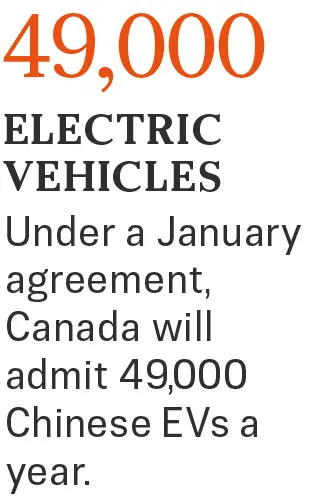
On paper, Canada is a strange place to stake so much. Under the January agreement, Ottawa will admit 49,000 Chinese-made EVs a year at a 6.1 percent tariff, increasing to 70,000 vehicles within five years—a fraction of a market that buys roughly 1.85 million new vehicles annually.
“With just 70,000 units being allocated, imports from China will only hold 3.6 percent of the market combined. That’s roughly what Subaru or Mazda sell by themselves,” said Sam Fiorani, vice president of global vehicle forecasting at AutoForecast Solutions, a Pennsylvania-based firm that forecasts vehicle production worldwide.
Chinese-made cars don’t reach Canada only under Chinese brands. The Tesla Model 3 sold in Canada is now built in Shanghai, and Geely—the Chinese group behind Sweden’s Volvo and Britain’s Lotus—makes some of those brands’ cars in China, too.
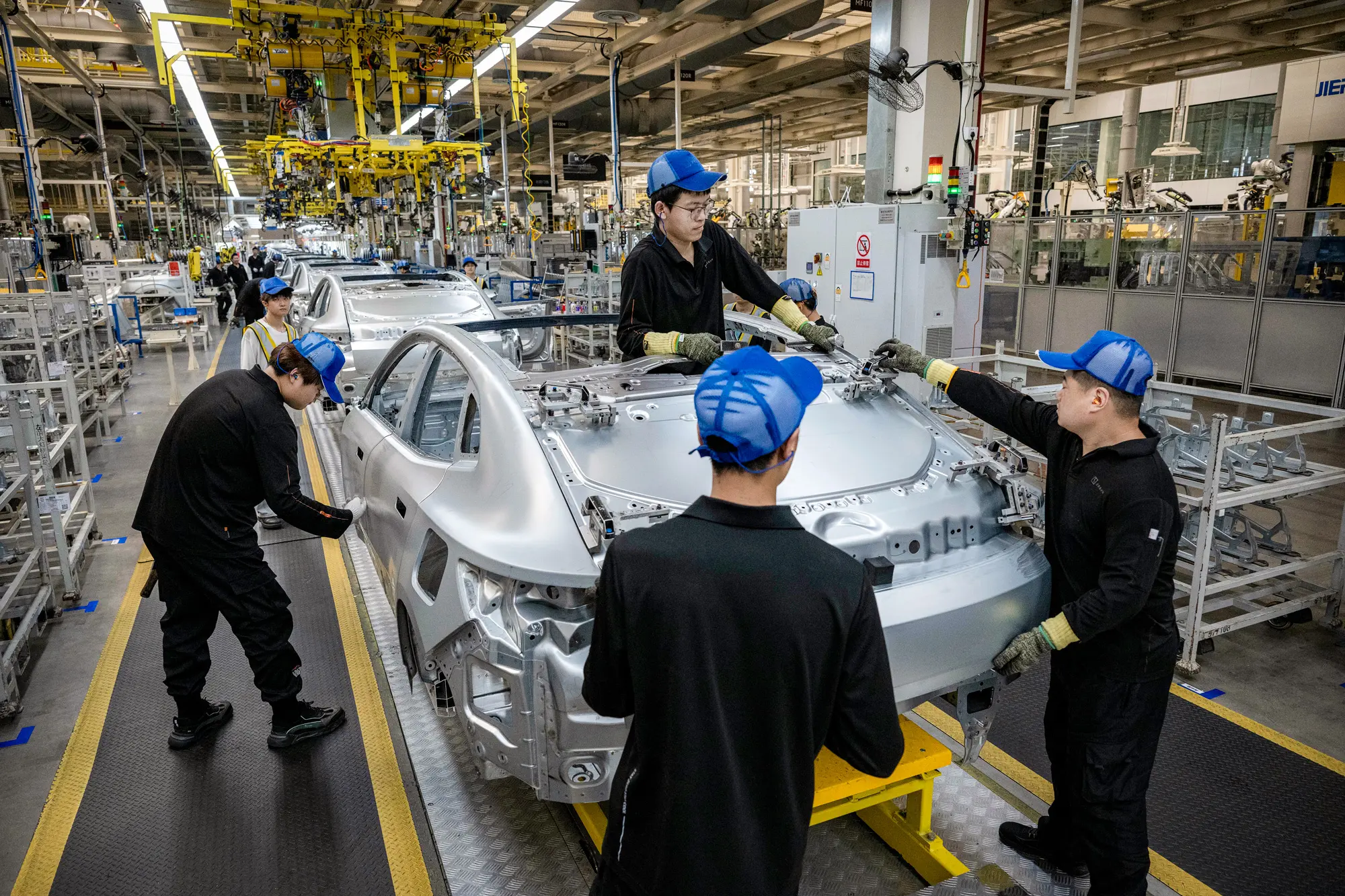
Workers assemble a car frame on the production line for electric vehicle maker Zeekr at its factory in Ningbo, China, on May 29, 2025. Canada is allowing a rising number of Chinese-made electric vehicles in at a tariff of 6.1 percent, down from 100 percent. Kevin Frayer/Getty Images
All of them count against the same quota, and “once existing brands like Volvo, Nissan, and Tesla take their share, the remaining volume will be tiny,” Fiorani told The Epoch Times.
For a mainstream brand to turn a profit in Canada, he added, it would need to sell more than 20,000 vehicles a year—beyond what the quota allows for any single company.
So the math works only if Canada is a step toward something bigger.
“In order for this to be a profitable venture, automakers will need to expand to the U.S. or set up production operations in Canada,” Fiorani said.
Farid Ahmad has a close view of the Canadian rollout. His Ontario-based dealership advisory business is helping Chinese automakers find and secure store locations across Canada, starting with the three biggest cities.

“They’re going to be very strategic, and they’re going to start with three markets—Vancouver, Toronto, and Montréal—and that’s where their focus lies in opening their first round of dealerships,” Ahmad told The Epoch Times.
He expects the first stores to open in the third quarter, and several more before year’s end. “Right now, it’s a trickle; it’s not an avalanche,” he said.
The bigger draw, Ahmad said, is simply the size of the North American market—nearly 20 million new vehicles a year, about 16.5 million of them in the United States.
But he was blunt about the endgame. Chinese carmakers, he said, “would love to [see] the borders open up,” and they are willing to wait.
“The Chinese are very, very patient. They don’t think in months or years; they think in decades and centuries,” he said.
McCuaig-Johnston put the same point more sharply, calling Canada a “beachhead” and a release valve for the flood of cars China’s factories can’t sell at home.
The Cost for the US
The most immediate cost to the United States, analysts told The Epoch Times, doesn’t require a single Chinese car to cross the border. It comes from what those cars displace in Canada—a market largely supplied by American plants.
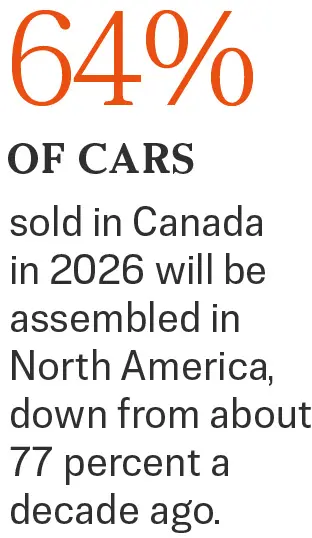
“This year, 64 percent of vehicles sold in Canada will be assembled in North America, down from about 77 percent a decade ago,” Fiorani said, and U.S.-built vehicles still make up a large share of that.
“Roughly 10 percent of U.S. production goes to Canada.”
Every point of Canadian market share that Chinese brands take chips away at the share held by American-made vehicles, Fiorani noted.
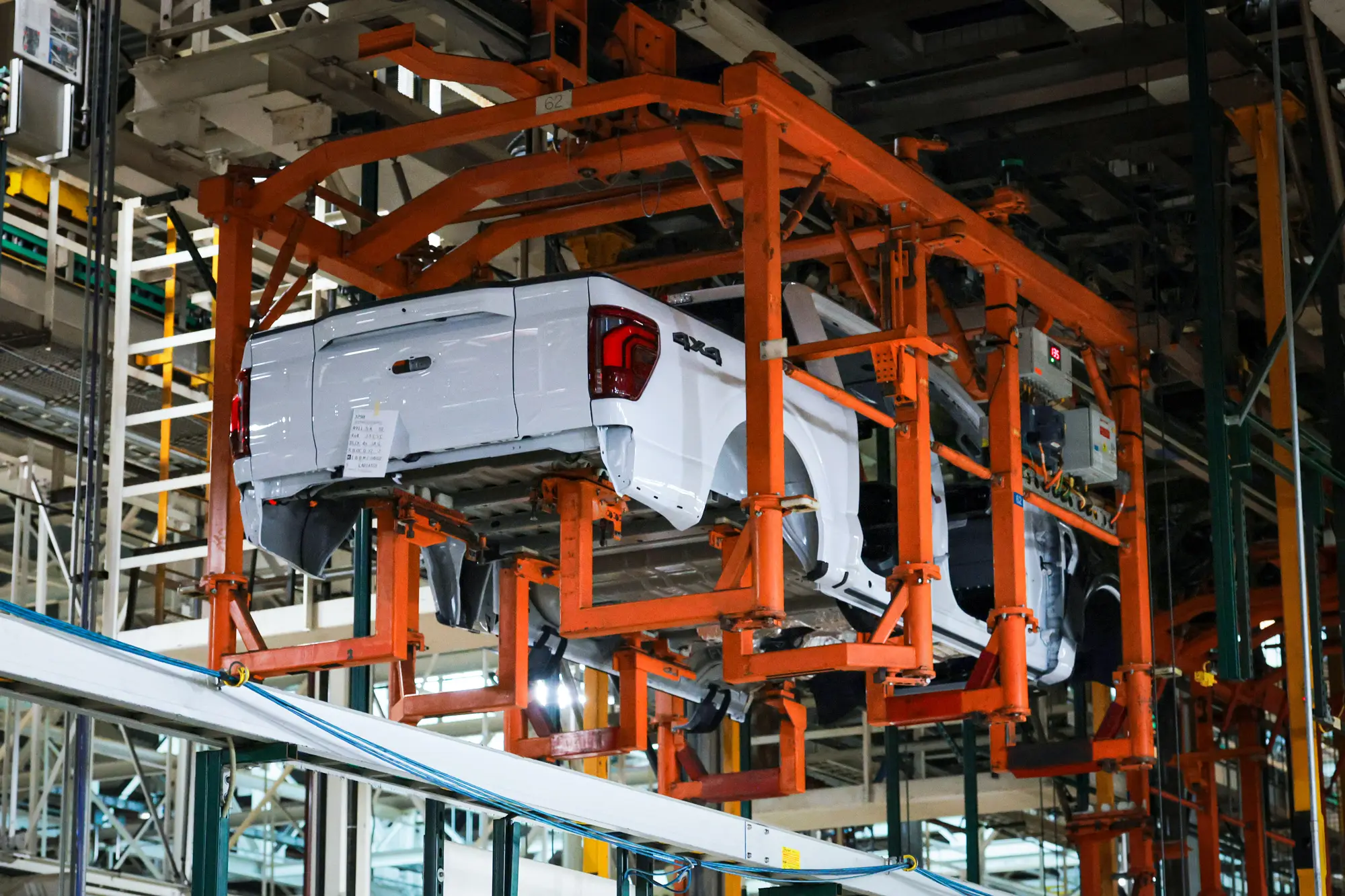
The body of a Ford F-150 truck moves along the assembly line before the arrival of President Donald Trump at the Ford River Rouge complex in Dearborn, Mich., on Jan. 13, 2026. Chinese cars threaten American factory jobs even if no Chinese cars are sold south of the Canadian border, industry experts say. Anna Moneymaker/Getty Images
But the larger fear in Washington is that China is already routing goods into the United States indirectly through both of its neighbors. Scott Paul, president of the Alliance for American Manufacturing, a group backed by domestic manufacturers and the United Steelworkers union, said trade numbers with Mexico show that suspicion is well-founded.
“We have noted that the U.S. trade deficit with Mexico rose from roughly $63 billion in 2016 to more than $171 billion in 2024, even as the bilateral deficit with China narrowed, suggesting production is being rerouted rather than fully reshored,” Paul told The Epoch Times.
He pointed to a specific shift in auto parts. “Chinese auto parts exports to the United States fell by 17 percent between 2017 and 2023, while auto parts imports from Mexico increased by 20 percent over the same period,” he said.
Chinese carmakers hold roughly one-fifth of the Mexican market, and BYD and Geely are among the finalists to buy a Nissan–Mercedes-Benz plant in Aguascalientes, a factory with the capacity to build 230,000 vehicles a year. BYD and Geely have stayed in the bidding despite a new barrier; Mexico, under U.S. pressure, now charges duties of up to 50 percent on cars imported from countries it has no trade deal with, China included.
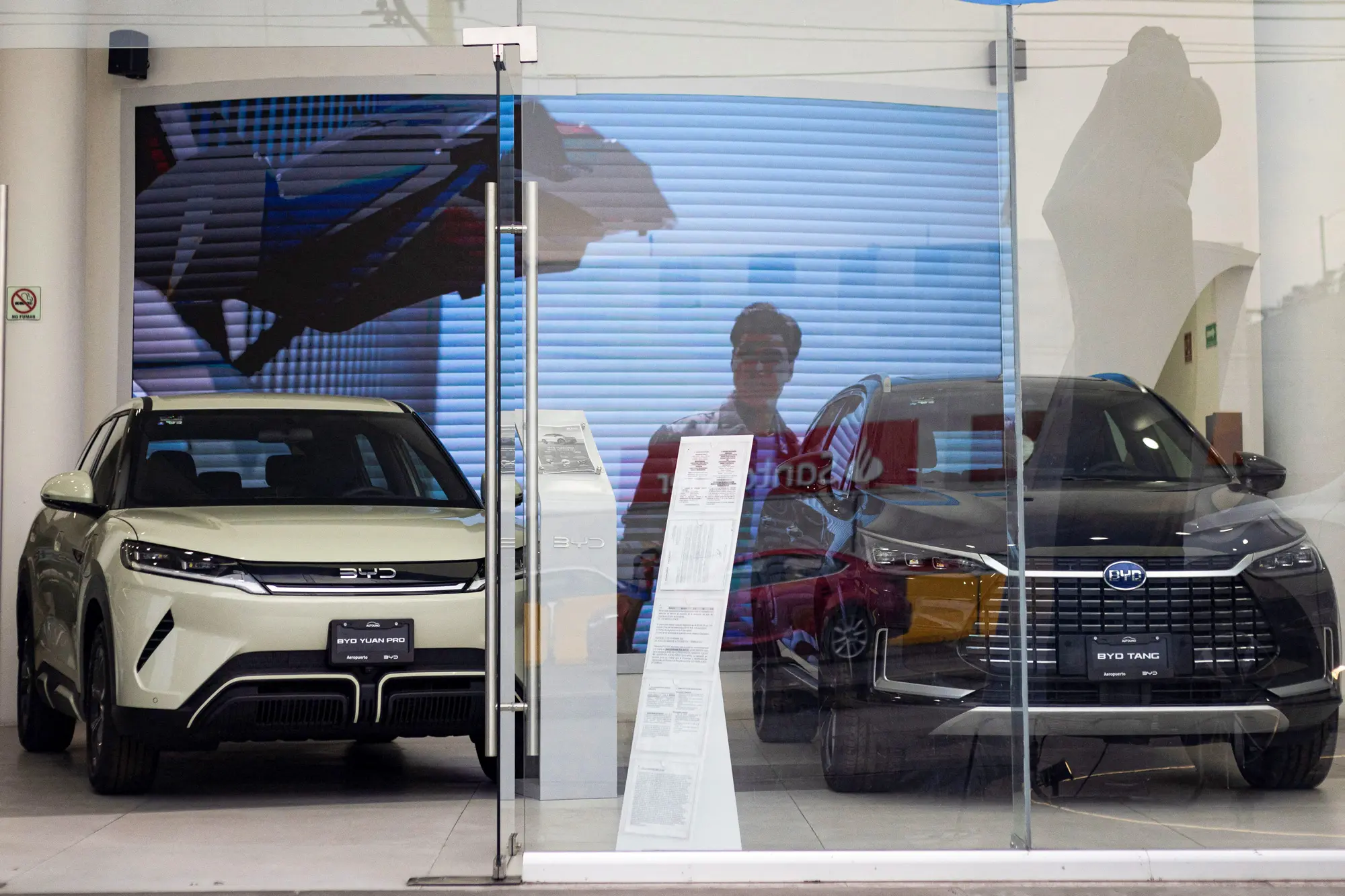
Cars from the Chinese electric car brand BYD are displayed in a store in Mexico City on March 3, 2025. BYD is among the finalists to buy a Nissan–Mercedes-Benz plant in Aguascalientes, Mexico, which has a production capacity of 230,000 vehicles a year. Quetzalli Nicte-Ha/Reuters
Paul said Canada’s quota compounds the problem, as it “creates incentives for Chinese automakers to establish broader supply chain, distribution, and production footprints within North America—precisely the type of policy divergence that could weaken USMCA’s ability to strengthen regional manufacturing.”
USMCA, the United States–Mexico–Canada Agreement that replaced NAFTA, lets goods cross all three borders tariff-free if enough of their content is made in North America.
The Alliance for American Manufacturing wants those rules rewritten to cover the entire production chain, “from raw materials and components to final assembly,” because, in Paul’s words, “China-owned or state-backed companies should not be able to obtain USMCA benefits by locating assembly operations in Mexico or Canada.”
Computers on Wheels
The hardest wall keeping Chinese cars out of the United States isn’t tariffs, which could be lowered by a future deal overnight. Rather, it’s a security rule that would be far more difficult to unwind.
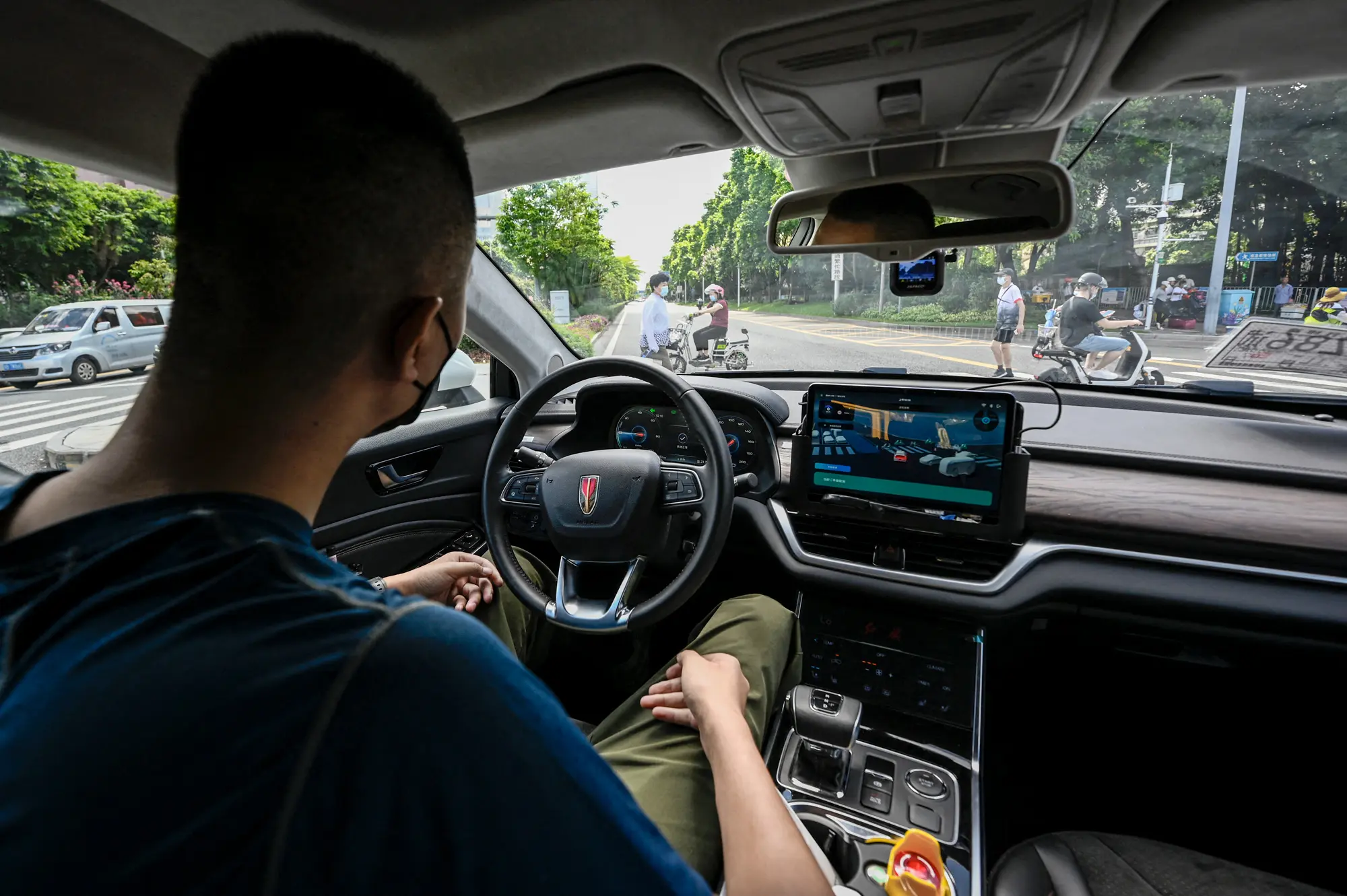
A robotaxi developed by Baidu Apollo stops as people cross a street in Shenzhen, in China's southern Guangdong Province, on July 10, 2022. Chinese-made vehicles include software from the Chinese technology company, which collects data from the vehicles and transmits it back to China. Jade Gao/AFP via Getty Images
A U.S. Commerce Department regulation finalized in January 2025 bars vehicles containing Chinese-made connectivity software, beginning with the 2027 model year, and Chinese-made connectivity hardware, from 2030. Crucially, it also bars automakers owned or controlled by China from selling internet-connected cars in the United States at all—even if those cars are assembled on American soil—starting with the 2027 model year.
When announcing the rule, then-Commerce Secretary Gina Raimondo said modern cars “aren’t just steel on wheels—they’re computers.”
The rule already has teeth. In June, the Commerce Department refused to authorize Polestar—a Swedish brand majority-owned by China’s Geely—to sell 2027-model-year vehicles in the United States, effectively pushing it out of the market. Polestar’s flagship sport utility vehicle is built not in China but in Charleston, South Carolina; it was barred anyway because of the company’s ownership.
Canada attached no such conditions to its quota, and McCuaig-Johnston said that is where the danger lies. The cars arriving now, she said, carry security risks that Ottawa has not addressed.
There is no requirement for the car companies to store their data in Canada or replace their Chinese-made software—which is what poses the real risk, she said.
Connected cars, she noted, are rolling sensors. “These cars have microphones, so they hear what you’re saying, as well as the data from your phone, because it has access while your phone is charging,” she said.
Even when switched off, she said, a car plugged in to charge continues transferring data.
Responsibility for the agreement sits with Innovation, Science and Economic Development Canada. McCuaig-Johnston said that officials at the federal department are privately alarmed but “stuck with this agreement, which seems to have been negotiated out of the prime minister’s office.”
For lawmakers in Washington who have spent two years building the wall, Canada’s move has opened the kind of gap they want sealed shut.
A spokesperson for the House Select Committee on the Chinese Communist Party, chaired by Rep. John Moolenaar (R-Mich.), told The Epoch Times that the fix is to write the commerce rule into statute so a future president can’t trade it away.
“The bipartisan Connected Vehicles Security Act needs to become law, because unlike department rules, the law guarantees the policy won’t change from one president to the next,” the spokesperson said.
The concern is bipartisan: Rep. Haley Stevens and Sen. Elissa Slotkin, both Michigan Democrats, have introduced companion bills to bar Chinese connected vehicles from the United States.
Sen. Bernie Moreno, a Republican from Ohio, told The Epoch Times that “Chinese cars would be a cancer to the American market, as these CCP-subsidized predators are rapidly dominating global markets as Western governments are too weak to fight back.”
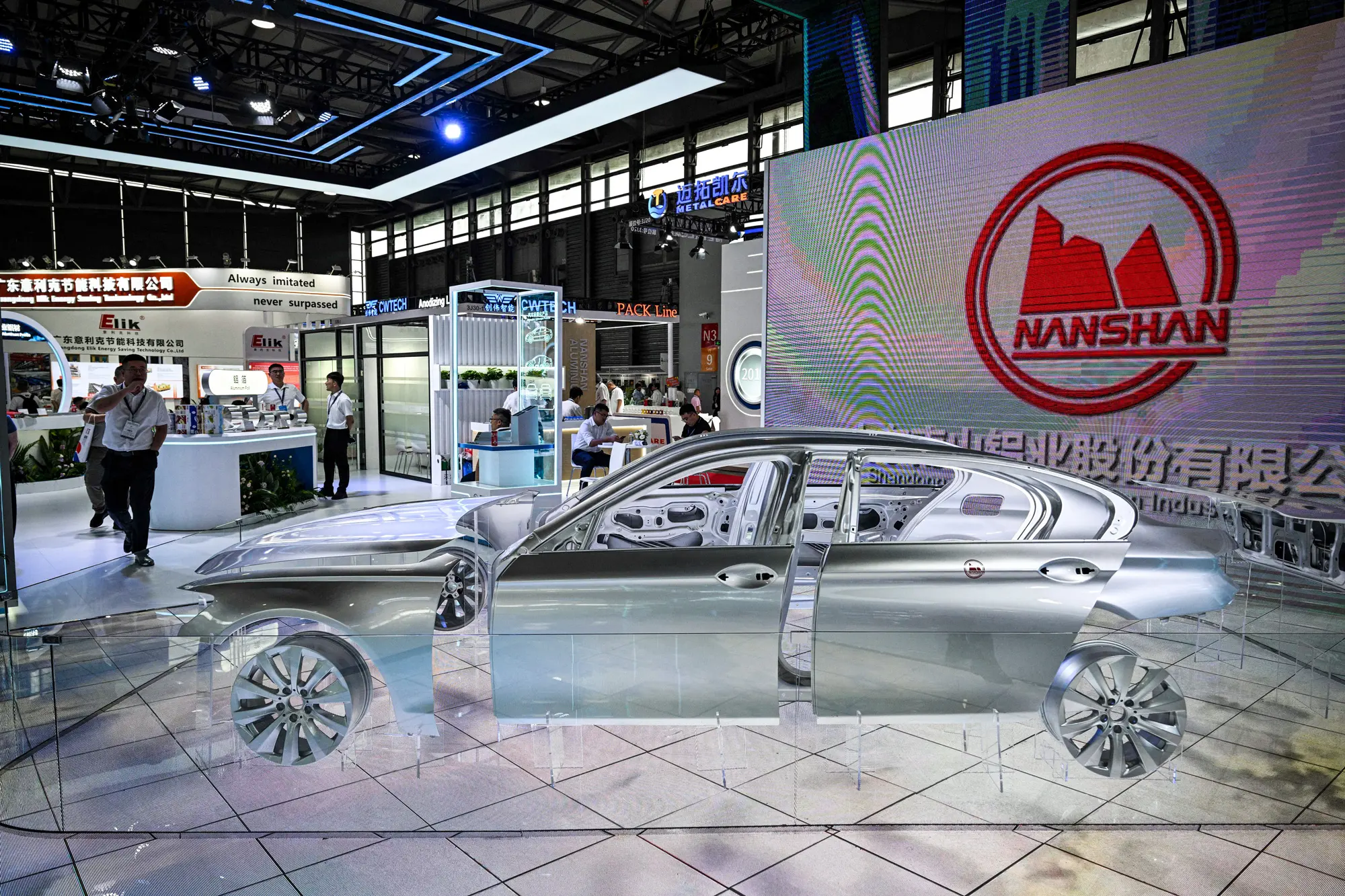
Aluminum car parts displayed during the Aluminum China 2025 Trade Fair in Shanghai, on July 10, 2025. Much of the aluminum in Chinese EVs originates in China's Xinjiang region, where the metal is processed by detained Uyghurs. Hector Retamal/AFP via Getty Images
Aluminum From Xinjiang
Beyond data, McCuaig-Johnston said the cars carry a second problem Canada has largely ignored: forced labor.
Much of the aluminum in Chinese EVs, she said, originates in Xinjiang, where the metal is processed by detained Uyghurs. She described unpaid workers laboring “around the clock, basically seven days a week, with no days off at all, under armed surveillance so they can’t escape.”
A 2024 Human Rights Watch report concluded that major automakers—including General Motors, Toyota, Volkswagen, and Tesla—failed to guard against the risk that aluminum made with Uyghur forced labor would enter their supply chains. Three of them—GM, Toyota, and Volkswagen—operate in China through joint ventures with Chinese firms; Tesla, which builds cars at its own Shanghai plant, is the exception.
Canada is poorly equipped to catch any of it, McCuaig-Johnston said. Its forced-labor import ban has stopped only two shipments since taking effect in 2020—a load of textiles in 2024 and one of frozen seafood in 2025—while U.S. authorities have intercepted tens of thousands.
The Canadian customs notice governing Chinese EV imports, she added, does not even mention the country’s forced labor law.
That weakness drew pressure from Washington. In March, the Office of the U.S. Trade Representative opened a Section 301 investigation into whether 60 economies, Canada among them, were failing to enforce bans on goods made with forced labor.
After hearings and more than 2,100 public comments, the agency imposed on July 23 an additional 10 percent duty on Canadian goods, though those that qualify under USMCA are exempt.
The Way Around the Wall
For all the barriers, the analysts agreed that Chinese automakers have a plausible path into the United States over the next decade—and it runs through American factory jobs.
“Without further barriers to entry, these automakers could have vehicles on sale in the U.S. early in the next decade,” Fiorani said.
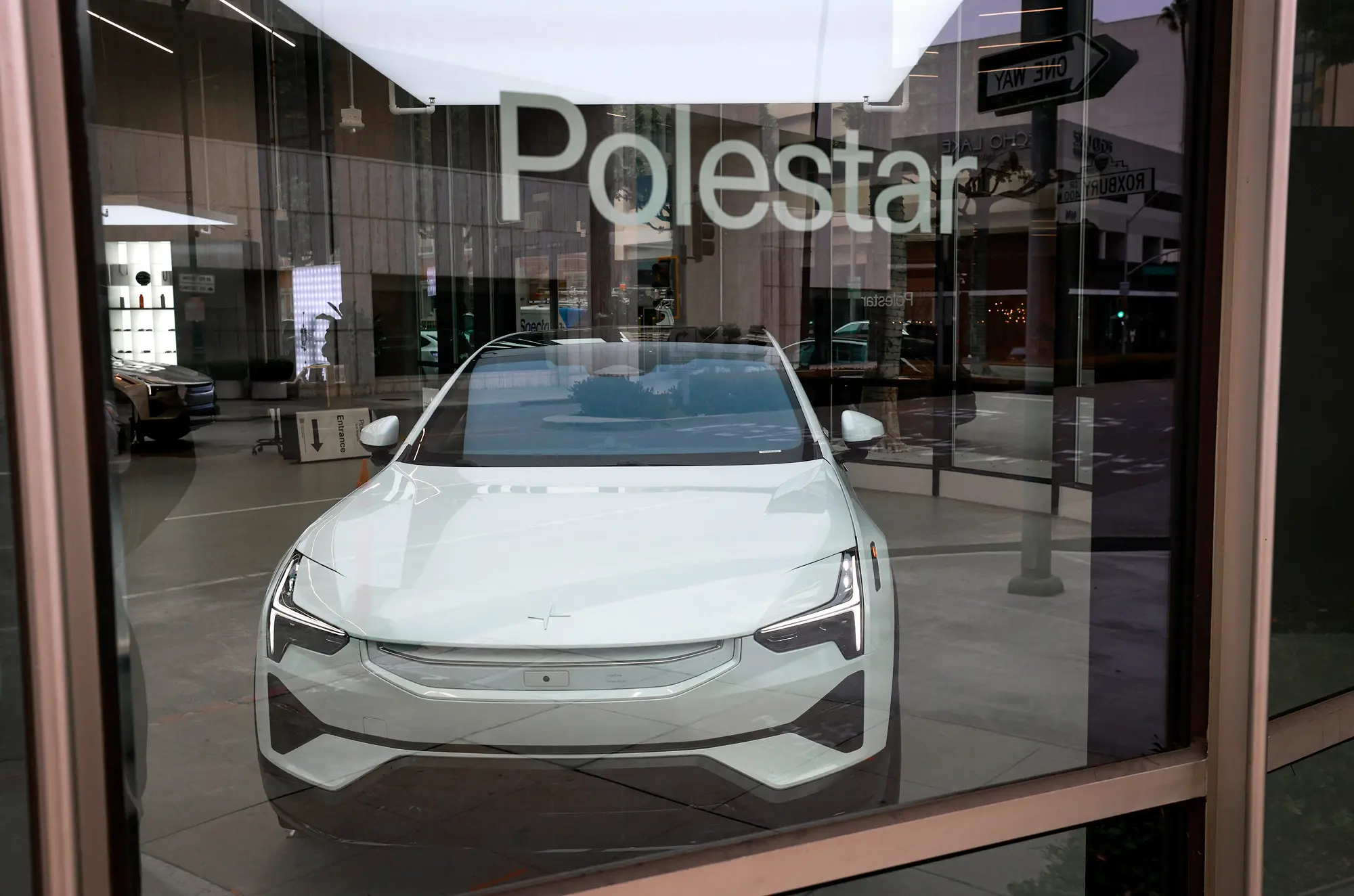
A Polestar car displayed in a Polestar dealership showroom in Beverly Hills, Calif., on June 26, 2026. The electric car maker will be barred from selling new vehicles in the United States starting with the 2027 model year after the Commerce Department cited national security concerns under new connected-vehicle regulations. Justin Sullivan/Getty Images
The likely route, Fiorani and Ahmad said, is to build plants in North America and dare Washington to keep the cars out once local jobs are on the line.
Fiorani pointed to the fight over TikTok as a preview of how the politics could bend.
“Politicians could be swayed by the promise of automotive jobs in their districts if local factories are established,“ he said. ”It would not be easy, as can be seen through the treatment of Polestar, but more local jobs can encourage changes in broad legislation.”
Lei Xing, a longtime China-auto analyst and former chief editor of China Automotive Review, told The Epoch Times that local production is the deal’s real long-term aim.
Joint ventures with Canadian partners such as auto-parts giant Magna are “actually one of the goals of the Canada–China EV deal,” and Chinese automakers expect they will “eventually have to produce locally according to local requirements,” he said.
He expects the U.S. market to open “at the turn of this decade, post-President Trump,” and predicted even a federal ban would struggle to hold.
“The states will probably fight for it,” he said, “even if there is a federal blockade.”
Ahmad made the same argument from the dealers’ side.
He put it plainly, saying, “If a manufacturer can guarantee more jobs and they can bring those factories over here, that would certainly put them in a very good position to expand across North America.”
But McCuaig-Johnston cautioned that the promised jobs may be a mirage. Chinese automakers, she said, tend to build “highly automated plants” that assemble imported “knock-down kits”—vehicle components manufactured in one country and sent to another for final assembly—rather than manufacturing cars from scratch.
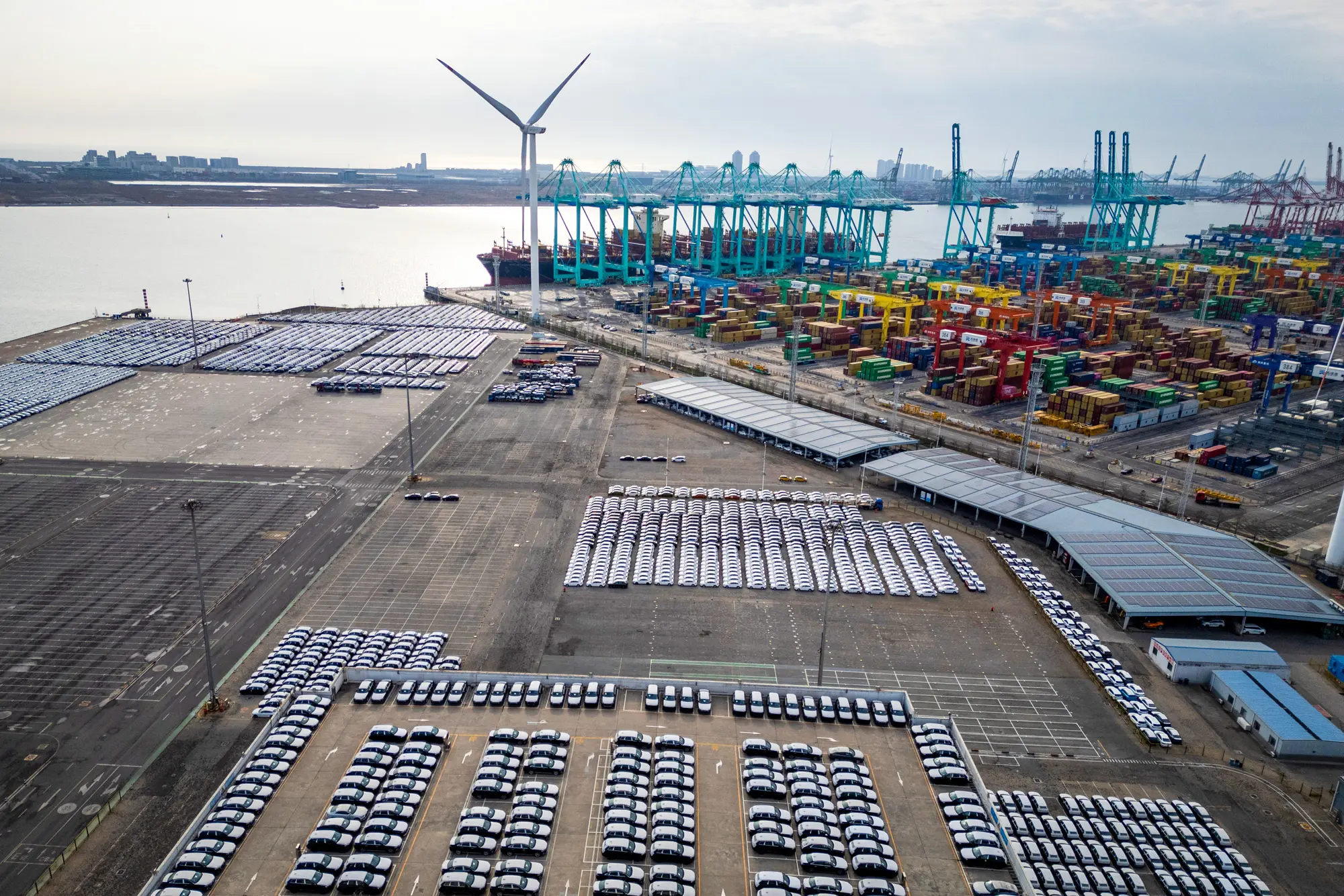
Vehicles await loading onto a ship for export in Tianjin, China, on March 30, 2026. Lintao Zhang/Getty Images
That, she said, is “not what [Ontario] Premier [Doug] Ford keeps talking about, which is the need for good, high-paying union jobs.”
Letting Chinese automakers build on U.S. soil “makes no sense from an economic or national security perspective,” Paul said. “The threat would be existential.”
At the Border
For now, while Chinese-made cars can’t be sold in the United States, nothing stops a Canadian owner from driving one across the border. Legislation introduced in June by the two Michigan lawmakers would close that gap, barring Chinese-brand vehicles from entering the country at all—even for a day trip.
McCuaig-Johnston said Canadian buyers should assume that door will be shut.
“If you’re going to buy a Chinese EV,” she said, “don’t plan to take your kids to Disneyland.”
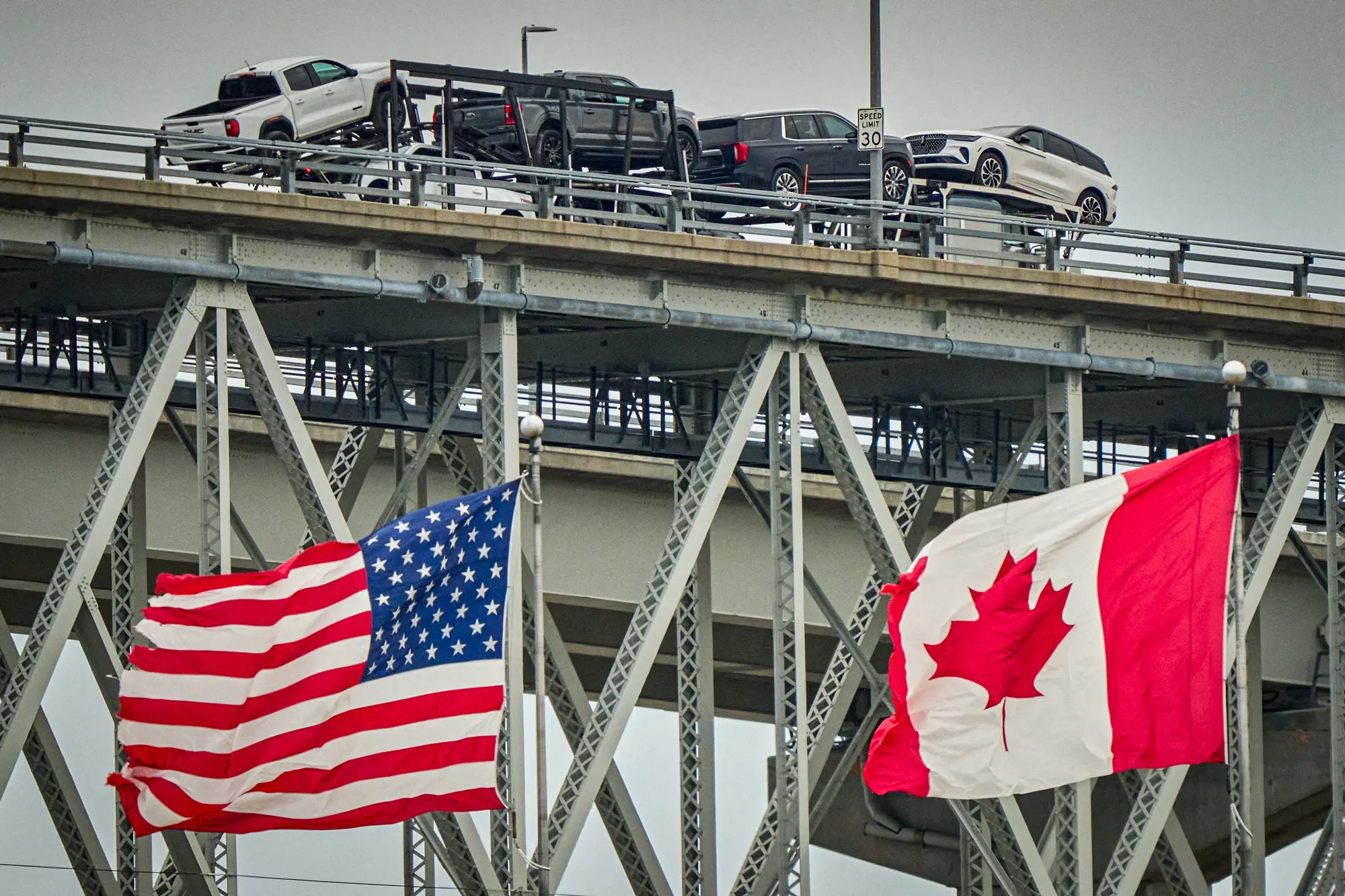
A truck with vehicles crosses the Blue Water Bridge border crossing into the United States from Sarnia, Canada, on April 3, 2025. Washington has signaled that it will turn back Chinese-made vehicles trying to enter from Canada. Geoff Robins/AFP via Getty Images
On July 1, the United States declined to renew USMCA in its current form, keeping it alive under annual review rather than locking in another 16 years. U.S. Trade Representative Jamieson Greer has repeatedly tied the review to Beijing, telling Congress that tightening rules on origin and shoring up “economic security” are priorities so that China cannot reach the U.S. market through North America. He also warned in an interview that Canada should not become a “backdoor” for subsidized Chinese autos.
Ahmad said American dealers are already watching the northern experiment closely. Some are afraid the cars will “decimate” the market, while others are eager to be first in line if the border ever opens, he said. He expects the pressure to build as Canada’s quota climbs toward the end of the decade.
Beijing, both Ahmad and McCuaig-Johnston said, is content to wait. The cars are parked at the border, the wall is holding, and China has planted its flag one country to the north—betting, as it has before, that patience and a foot in the door will eventually do the rest.