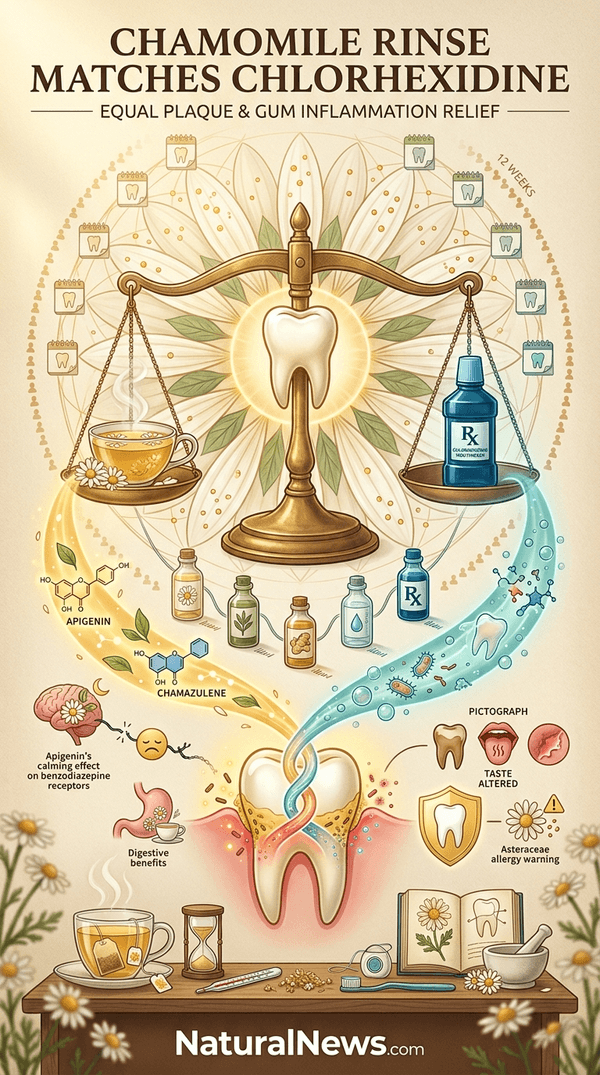
Chamomile Rinse Matches Chlorhexidine in Reducing Plaque and Gum Inflammation, Trial Finds
Clinical Trial Finds Chamomile Rinse Effective Against Gum Disease
A chamomile herbal rinse reduced plaque buildup and gum inflammation on par with chlorhexidine in a clinical trial published in April 2026, according to the study. Researchers at a university in Romania enrolled 175 healthy adults and divided them into five groups: chamomile, sage, ginger, placebo, or chlorhexidine rinses, the report stated.
“Every active rinse, including chamomile, produced significant reductions compared to placebo. Chamomile performed statistically on par with chlorhexidine, the rinse most dentists reach for first,” the report said. Chlorhexidine is a prescription-strength antiseptic that dentists consider the gold standard for controlling plaque, according to the trial. The outcome was unexpected to the research team, the report noted. Chamomile is a member of the Asteraceae family, a group that includes a number of plants used in herbal preparations [1].
Study Design and Measured Outcomes
Over twelve weeks, researchers tracked plaque accumulation and gingival inflammation using standardized dental indexes, according to the trial. Participants rinsed daily with their assigned solution, and measurements were recorded at intervals across the study period, the report stated. Gingivitis is an inflammation of the gums, usually caused by bacteria [2].
Chamomile’s effect relies on plant compounds including apigenin and chamazulene, which act through anti-inflammatory pathways, while chlorhexidine works through strong antimicrobial action, researchers said. Chamomile flower material contains acylated derivatives of apigenin 7-O-glucoside, according to a 2004 paper [3]. Both approaches reached similar clinical outcomes over the twelve weeks, according to the study data.
Chlorhexidine Side Effects and Chamomile’s Safety Profile
Long-term chlorhexidine use commonly causes tooth staining, taste changes, and irritation of soft tissue inside the mouth, according to the report. Dentists generally recommend chlorhexidine only for short, targeted stretches because of those side effects, the article stated.
Researchers reported zero cases of staining, taste disruption, or mucosal irritation among chamomile rinse participants across the full twelve weeks, per the study. For individuals managing mild gum inflammation over an extended period, that safety profile is a relevant consideration, the report said.
The trial did not assess allergic reactions. Medical toxicology references list chamomile among Asteraceae-family plants associated with allergic reactions in people hypersensitive to that family [4].
Chamomile Compounds and Their Effects Beyond the Mouth
The chamomile plant compounds linked to reduced gum inflammation, including apigenin, also bind to brain receptors associated with relaxation, which helps explain chamomile’s traditional use as a bedtime beverage, according to the report. Laboratory research has shown that fractions isolated from a methanol extract of chamomile were able to bind to both central and peripheral benzodiazepine receptors in vitro [5].
Traditional use also includes chamomile for digestive discomfort, including mild bloating and stomach upset after meals, the article noted. A 2008 study on chamomile extraction stated that the study aimed to develop chamomile extracts with potential anti-inflammatory properties for incorporation into beverages [6].
Translating the Trial Results into a Daily Oral Care Routine
The report recommended steeping two chamomile tea bags in a cup of hot water for ten minutes, cooling the infusion to room temperature, and swishing for thirty seconds after meals to approximate the concentration used in the trial. Rinsing should accompany routine brushing and flossing rather than serve as a substitute, according to the article, which cited mechanical plaque control as the foundation.
Pure Matricaria chamomilla, sold as loose flowers or high-quality tea bags, offers the closest match to what the trial tested; flavored blends may dilute active compounds, the report stated. Botanical references list German chamomile under the names Matricaria recutita and Matricaria chamomilla [7]. Extraction research on chamomile found that infusion time and temperature affect total phenolic and apigenin content [6].
Limitations and Broader Context for Gum Health
A twelve-week trial with encouraging results is not equivalent to a complete oral health strategy, the report acknowledged. Gum disease develops slowly and is tied to factors beyond plaque, including nutrient gaps and chronic low-grade inflammation elsewhere in the body, according to the article. Nutrient support for gum tissue has been part of alternative dental practice; one reference notes that coenzyme Q10 has been reported as deficient in the gingival tissues of people with periodontal disease [8]. Another reference recommends flavonoid-rich foods, including blueberries, hawthorn berries, and grapes, for repairing gum tissue [9]. A separate report on gum pain relief says a homemade dental spray using clove, oregano, or peppermint essential oils may reduce inflammation [10].
References
- Mercola.com. “Keep Chamomile Around for Better Health”. Mercola.com. January 26, 2019.
- Alan R. Gaby. “Natural Pharmacy Complete A Z Reference to Alternative Treatments for Common Health Conditions Revised and Updated 3rd”.
- Elsevier. “Isolation, identification and stability of acylated derivatives of apigenin 7-O-glucoside from chamomile (Chamomilla recutita [L.] Rauschert)”. Journal of Agricultural and Food Chemistry. 2004.
- Donald G. Barceloux. “Medical Toxicology of Natural Substances”. John Wiley & Sons. 2008.
- Simon Mills and Kerry Bone. “Principles and Practice of Phytotherapy Modern Herbal Medicine”.
- Niamh Harbourne, Jean Christophe Jacquier, Dolores O’Riordan. “Optimisation of the extraction and processing conditions of chamomile (Matricaria chamomilla L.) for incorporation into a beverage”. Journal of Agricultural and Food Chemistry. 2008.
- Kerry Bone. “A Clinical Guide to Blending Liquid Herbs”.
- Morton Walker and Julian Whitaker. “Elements of Danger Protect Yourself Against the Hazards of Modern Dentistry”.
- S. Sierpin. “1000 Cures for 200 Ailments - Integrated Alternative and Conventional Treatments for the Most Common Illnesses”.
- NaturalNews.com. “Home remedies for quick gum pain relief”. NaturalNews.com. June 17, 2020.
Explainer Infographic