By The Rio Times | Created at 2026-06-25 11:01:48 | Updated at 2026-06-25 12:11:29
1 hour ago
By The Rio Times | Created at 2026-06-25 11:01:48 | Updated at 2026-06-25 12:11:29
1 hour ago
Economy
Key Facts
—The package. Producers back four regulatory changes inside President José Antonio Kast’s national recovery bill, now entering Congress.
—The prize. The Consejo del Salmón estimates the changes could add $260m to $520m a year in exports, with output rising 4% to 8%.
—No new sea. The gains would come from “micro-relocations” inside existing concessions, not from opening new maritime areas.
—Stuck permits. Roughly 30% of farms between Los Lagos and Magallanes are caught in permitting delays, the fisheries regulator says.
—Why it matters. Salmon is Chile’s second-largest export after copper, employing about 86,000 people in the country’s south.
—The catch. An indigenous coastal-rights law and slow approvals still shadow any expansion, especially in Magallanes.
Chile salmon farmers say they can grow exports by hundreds of millions of dollars a year without claiming a single new patch of ocean — if Congress will only let them rearrange the space they already hold.
The promise sits inside a package of regulatory changes that the industry has folded into President José Antonio Kast’s National Reconstruction and Economic and Social Development plan, the sweeping recovery bill the conservative leader signed in April. The bill is now heading into Congress.
The numbers attached to it are striking for a change that costs the state almost nothing. The Consejo del Salmón, the trade body for the largest producers, published an analysis in mid-June estimating that four targeted measures could lift the sector’s output by between 4% and 8% — an extra US$260 million to US$520 million a year in exports.
How small moves promise big money
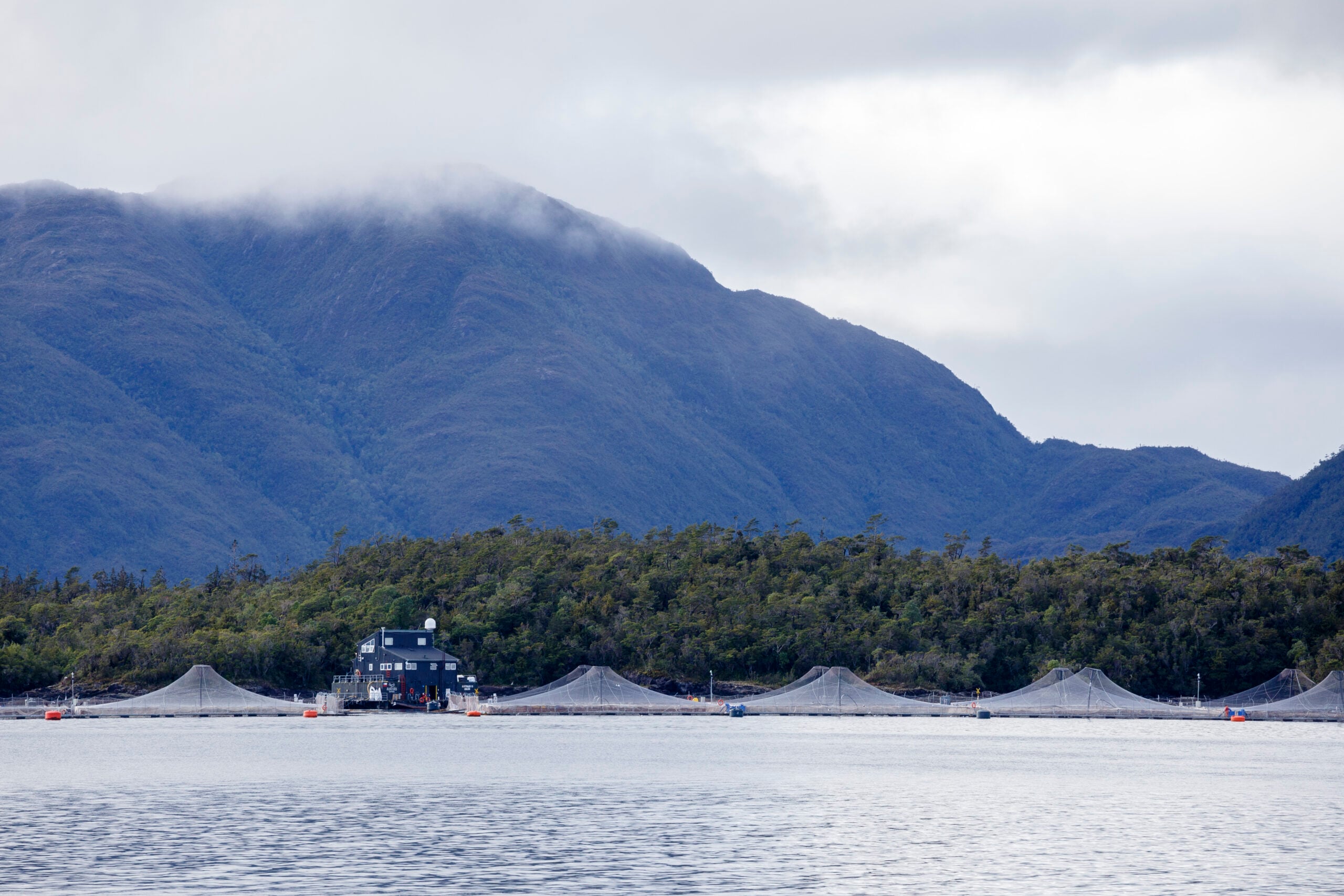
The centerpiece is an idea the industry calls “micro-relocations.” Rather than handing companies fresh maritime territory, the measure would let them shift a fish farm a short distance inside a concession they already control, to dodge a sandbar, improve water flow, or lower disease risk.
Chile’s fisheries authority groups salmon concessions into sanitary clusters across the southern regions of Los Lagos, Aysén and Magallanes, a framework set out in a Subpesca resolution updated in January 2026. Within that grid, even tiny relocations currently trigger long approval chains, and the bill would route them through a faster, simplified procedure backed by georeferenced mapping and oversight from the national fisheries service.
The other three measures share the same logic of clearing administrative drag rather than expanding the footprint. They would speed environmental reports, quicken studies of natural shellfish banks, and replace some grounds for cancelling a concession with a graduated licence fee.
According to the trade press coverage of the signed bill, the relocation tool is not a new legal invention. A near-identical mechanism was created in 2019 for mussel farmers, and the industry argues that extending it to salmon is a tested, low-controversy fix.
Why Chile salmon growth has stalled
The urgency is real, because salmon is Chile’s biggest export after copper and the southern regions where it is farmed lean heavily on the industry — in some of them it accounts for more than 30% of the local economy. Yet a decade of tighter rules has flattened the sector’s growth.
The fisheries undersecretary, Osvaldo Urrutia, told Congress in April that around three in ten farms between Los Lagos and Magallanes are tangled in delayed permits and stalled relocation requests. He blamed a fragmented, overlapping approval system that drags investment out for years.
That backdrop helps explain why a record export year still leaves producers frustrated. The bottleneck is not demand or biology but paperwork, and the Kast bill is the industry’s clearest shot in years at loosening it.
The coastal-rights shadow
The optimism comes with a large asterisk. A law granting indigenous communities rights over stretches of coastline, known locally as the Lafkenche law, overlaps with waters the industry wants to use, and pending claims can freeze areas for years.
Nowhere is the tension sharper than in Magallanes, the far-southern region the industry sees as its last frontier for expansion. Local authorities and producers have spent recent weeks trying to reconcile growth plans with the coastal-rights process, and the outcome there will shape how much of the promised upside actually materializes.
For a government whose 2026 growth forecast already looks ambitious after a first-quarter contraction, a cheap, fast win in a major export sector is tempting. Whether Congress delivers it — and whether the coastal-rights fight lets it stick — is the open question for investors watching Chile’s south.
Frequently Asked Questions
What is the Chile salmon reform actually changing?
It is a set of four administrative measures bundled into President Kast’s recovery bill. The headline change lets producers make small “micro-relocations” of farms inside concessions they already hold, while three others speed environmental reviews, shellfish-bank studies, and concession renewals.
How much could the changes be worth?
The Consejo del Salmón trade body estimates the package could raise sector output by 4% to 8%, which it translates into an additional US$260 million to US$520 million in exports each year, plus several thousand new jobs across the southern regions.
What could stop the salmon export gains from happening?
Two things. The bill still has to pass a fractious Congress, and an indigenous coastal-rights law overlaps with waters the industry wants to use, with pending claims able to freeze areas for years — a particular obstacle in the southern Magallanes region.
The Rio Times · Power Map
See who really holds power in Latin America
Click to open the Power Map →