By The Rio Times | Created at 2026-09-03 18:21:31 | Updated at 2026-09-03 19:38:03
2 hours ago
By The Rio Times | Created at 2026-09-03 18:21:31 | Updated at 2026-09-03 19:38:03
2 hours ago
Chile · ECONOMY
Key Facts
- —What happened Chile’s central bank survey shows traders expect the key rate at 4.5% for two years.
- —How big The policy rate is 4.5%, held since December 2025.
- —The catch The bank has not committed to two years; it’s only a market expectation.
- —Who it hits Borrowers and businesses face stable loan costs for now.
- —What comes next No change is expected at the September 8 meeting.
Market operators in Chile expect the central bank to keep its benchmark interest rate unchanged for the next two years. The forecast comes from the bank’s own survey of financial operators.
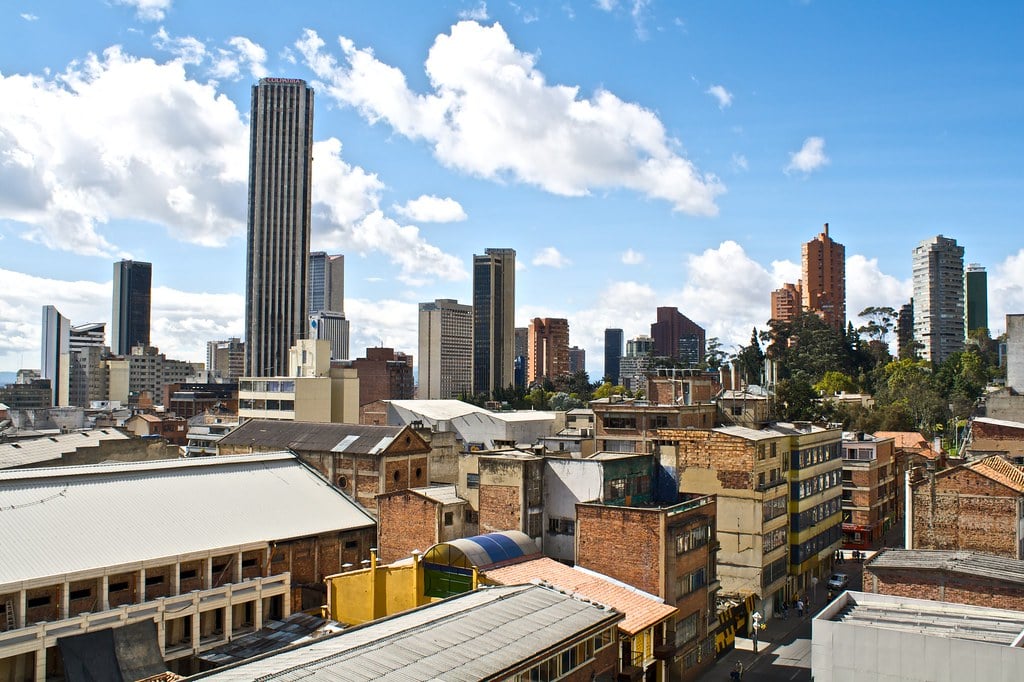
 Santiago’s financial district, with the Andes behind. Traders expect the key rate to stay at 4.5 percent. (Photo: The Rio Times archive.)
One-stop reference
Company Intelligence
Every listed company in Latin America — financials, ownership and structure for 1,450+ companies across 26 exchanges, in one place.
Chile’s key rate is expected to stay at 4.5% for the next two years, according to a central bank survey. The forecast comes from financial operators polled by the Banco Central de Chile.
Survey Shows Long Hold
On September 3, 2026, Chile’s central bank published its survey of financial operators. The operators projected that the key rate would remain at 4.5% for a 24-month horizon.
Reuters reported the same day that traders expect the central bank to hold its benchmark rate for two years. The survey is called the Encuesta de Operadores Financieros.
Current Policy Rate
The TPM is the interest rate the central bank charges on short-term loans to commercial banks. It influences borrowing costs for consumers and businesses throughout Chile.
The TPM has been at 4.5% since December 2025. The central bank’s board unanimously decided to hold it at that level again in late July 2026.
No Change Expected at Next Meeting
The survey also showed that operators do not expect any change at the upcoming monetary policy meeting on September 8, 2026. This is consistent with the central bank’s own signals.
Financial operators, not the central bank, expect the rate to stay this way for a good while. The central bank itself says it will decide meeting by meeting, citing an uncertain macroeconomic environment.
Inflation Forecasts
Operators in the survey forecast annual inflation of 3.3% over the next 12 months. That is below the central bank’s 3% target but not at it.
The central bank’s own forecast, from its June 2026 Monetary Policy Report, sees headline inflation closing 2026 at about 4.2%. It expects inflation to return to the 3% target in the second quarter of 2027.
Growth Outlook
The same report revised down Chile’s GDP growth forecast for 2026 to a range of 1.0% to 1.75%. This reflects a weak first quarter, hit by lower copper ore grades and weaker farming and tourism activity.
The central bank has acknowledged that the economy has grown less than expected. This weak growth is one reason why the bank is cautious about cutting rates.
Why the Rate Stays Put
The central bank has kept the TPM at 4.5% since December 2025. It has emphasized that the macroeconomic environment faces an unusual degree of uncertainty.
Geopolitical risks, such as the Middle East conflict, add to that uncertainty. The bank prefers to wait for clearer signs before changing rates.
What This Means for Borrowers
For people with mortgages or business loans, a stable key rate means their borrowing costs are unlikely to change soon. Banks often adjust their own rates based on the central bank’s policy rate.
If the key rate stays at 4.5% for two years, loan rates may remain relatively steady. That could help households and companies plan their finances.
Survey Details
The survey of financial operators is a regular poll conducted by the central bank. It asks banks, brokers, and other financial institutions about their expectations for the economy.
The results are used by the central bank as one input for its policy decisions. They also give the public a view of what market participants think will happen.
Market Reaction
The news of the expected long hold was reported by La Tercera’s Pulso section and Reuters. It did not cause major market movements, as the expectation was already widespread.
The Chilean peso and local bonds showed little change after the survey was published. Investors had already priced in a prolonged hold.
Central Bank’s Stance
In its July meeting, the central bank’s board chose to keep the TPM at 4.5% for the fifth consecutive time. It noted that the macroeconomic scenario remains subject to greater uncertainty than usual.
The bank has signaled that it will not rush to cut rates. It wants to see more evidence that inflation is under control.
Potential Future Moves
Some economists expect a possible 25-point cut late in 2026 or early 2027. But the survey suggests that most operators see no change for two years.
The central bank has not committed to any specific path. Its decisions will depend on how inflation and growth evolve.
Inflation Data
Chile’s annual inflation in July 2026 stood at 3.5%. That is within the central bank’s tolerance range but above its 3% target.
Inflation has stayed above the bank’s 3% target for months. The bank is watching for clearer signs it is coming down before it changes rates.
Economic Context
Chile’s economy has been growing slowly, with GDP growth forecast at only 1.0% to 1.75% for 2026. High fuel prices and weak consumer confidence have added to the challenges.
The central bank faces a delicate balance between supporting growth and controlling inflation. Keeping rates steady is its current approach.
What to Watch
The next monetary policy meeting is on September 8, 2026. No change is expected, but the bank’s statement will be watched for any new signals.
Investors will also monitor upcoming inflation data and economic activity reports. These could influence the central bank’s decisions later this year.
Understanding the Key Rate
The TPM is Chile’s main interest rate, set by the Banco Central de Chile. It influences borrowing costs for banks and consumers.
A 4.5% rate means the central bank charges commercial banks 4.5% interest on short-term loans.
This rate affects mortgages, car loans, and business credit. High rates make borrowing costlier, slowing spending and inflation.
The central bank has kept it at 4.5% since December 2025, per La Tercera.
Survey Process and Participants
The Encuesta de Operadores Financieros is a regular survey by the Banco Central de Chile. It asks financial operators, such as traders and analysts, about their expectations for the economy.
The survey is conducted before each monetary policy meeting.
The results are published and help the central bank gauge market sentiment. On September 3, 2026, La Tercera reported that operators expected no change at the September 8 meeting.
The survey also projected a 0.3% monthly CPI increase for September, as noted in the same report.
Recent Economic Data
Chile’s economy shows mixed signals. The Imacec activity index fell 1.5% year-on-year in July 2026, per El Clarín on September 1, 2026.
This points to weak activity, and the central bank forecasts 2026 GDP growth at only 1.0% to 1.75%.
Inflation has been above the 3% target. July 2026 annual inflation was 3.5%, as reported by El Clarín on September 1, 2026.
The central bank expects inflation to close 2026 at about 4.2%. It will return to 3% only in Q2 2027, per the June IPoM.
Central Bank’s Communication
The central bank signaled caution in its July 2026 meeting. It noted ‘a degree of uncertainty greater than usual,’ as reported by La Tercera on August 28, 2026.
This suggests wariness of geopolitical risks and economic volatility.
The bank has flagged inflation worries and prefers to move cautiously. This communication aids market understanding, but it does not commit to a specific future path.
Frequently Asked Questions
What is Chile’s key rate?
Chile’s key rate, or TPM, is the interest rate the central bank charges on short-term loans to commercial banks. It influences borrowing costs across the economy.
Why is the key rate expected to stay at 4.5%?
The central bank’s survey of financial operators shows they expect no change for two years. This is based on inflation forecasts around 3.3% and weak growth.
When is the next central bank meeting?
The next monetary policy meeting is on September 8, 2026. The survey suggests no change will be made at that meeting.
Will the central bank cut rates soon?
The central bank itself has not promised this. But most operators in its own survey expect no cut for two years, though some economists see a possible small cut in late 2026 or early 2027.
Sources: La Tercera; Reuters; Diario Estrategia; El Clarín.