By The Rio Times | Created at 2026-09-05 17:11:16 | Updated at 2026-09-05 19:44:11
2 hours ago
By The Rio Times | Created at 2026-09-05 17:11:16 | Updated at 2026-09-05 19:44:11
2 hours ago
Geopolitics · Latin America
—The stakes. The US and China are contesting supply chains, critical minerals, telecoms and port control across Latin America in 2026.
—The infrastructure. China’s Chancay port in Peru now moves about 200,000 TEU in the first half of 2026, up 71 percent year-on-year.
—The rules. Peru’s courts restored state oversight of Chancay in July 2026, but COSCO has appealed to the Constitutional Court.
—The pressure. Washington is pairing tariff threats with nearshoring incentives to pull Mexico, Brazil and South American exports away from China.
—The investor read. Port, lithium and telecom assets are becoming geopolitical bets, not just commercial plays.
Latin America is no longer a neutral commodity supplier. By September 2026, Chinese-built ports, lithium projects and telecom networks have made the region a direct arena for US-China competition, while Washington answers with tariffs and a push to bring supply chains closer to home.
One-stop reference
Company Intelligence
Every listed company in Latin America — financials, ownership and structure for 1,450+ companies across 26 exchanges, in one place.
Chancay Port Becomes China’s Pacific Gateway
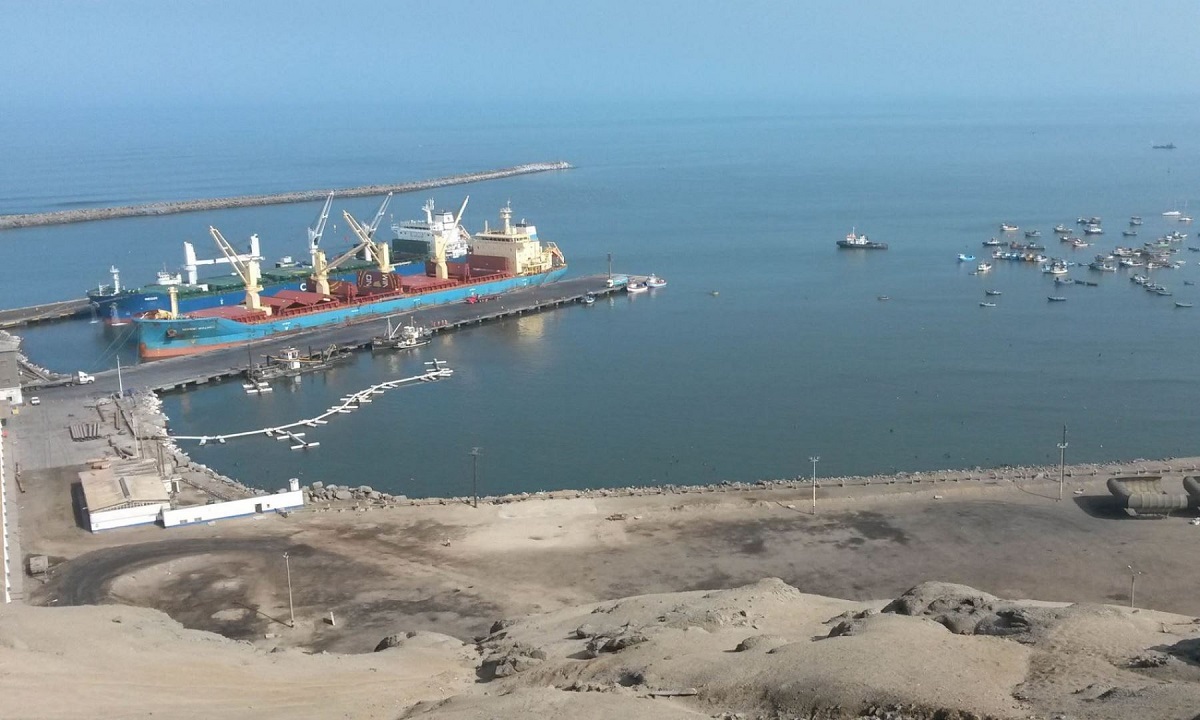
The Port of Chancay sits roughly 80 km north of Lima on Peru’s Pacific coast. It is part of China’s Belt and Road Initiative in Latin America.
The facility is developed and operated by Cosco Shipping Ports Chancay Perú S.A., a joint venture controlled 60 percent by Chinese state-owned COSCO Shipping Ports. Peruvian mining company Volcan Compañía Minera holds the remaining 40 percent.
Total investment is commonly reported around US$3.5 billion to US$3.6 billion, while the first phase cost about US$1.3 billion. The project envisages 15 docks and a large industrial-logistics complex.
The first phase was finished by late 2024 and formally inaugurated on 14 November 2024 by Chinese President Xi Jinping and Peruvian President Dina Boluarte via video link. Commercial operations began in June 2025 after Peruvian government approval.
Trade Routes That Circumvent North America
Chancay is designed as a transshipment hub for exports from Chile, Ecuador, Colombia and Brazil to Shanghai and other Asian destinations. Analysts say it creates direct routes that bypass US and Mexican ports and the Panama Canal.
Travel time between Peru and China has been shortened to about 23 days, cutting logistics costs by roughly 20 percent. Conventional routes via Mexican or US ports or the Panama Canal took 35 to 45 days.
By the first half of 2026 Chancay handled about 200,000 TEU, up 71 percent year-on-year, plus 987,000 tonnes of bulk and general cargo. It had become Peru’s second container port with about 10 percent of national container movement.
As of mid-2026 the port operated three trans-Pacific trunk routes and five regional feeder services along South America’s west coast. COSCO Shipping Lines also launched the CHX3 feeder service linking Paita, Chancay and Caldera in Costa Rica.
Peru Reasserts Oversight of China’s Flagship Port
A Lima constitutional court ruled in February 2026 that transport regulator Ositrán must refrain from supervising or sanctioning Chancay operations, but Lima’s Second Constitutional Chamber overturned that decision on 1 July 2026 and restored the regulator’s authority in full. COSCO took the dispute to Peru’s Constitutional Court, which admitted the appeal on 24 July 2026 and has yet to rule, leaving Ositrán as the port’s regulator in the meantime. COSCO had argued the port was financed entirely with private capital.
The US State Department publicly warned that China’s control of Chancay threatens Peru’s sovereignty, calling Chinese owners predatory. Washington criticised legal moves that limited local oversight.
In July 2026 the Second Constitutional Chamber of the Superior Court of Lima overturned the earlier ruling and restored Ositrán’s powers to inspect and sanction the port. That decision reasserted Peruvian state oversight.
COSCO appealed to Peru’s Constitutional Court in late July 2026, leaving the port’s regulatory status provisional. The high court ruling will shape how much control Lima can exercise over Chinese-operated infrastructure.
China’s Wider Footprint in Latin American Infrastructure
Between 2000 and 2023 China financed ten port-related projects in Latin America worth about US$791 million, according to AidData. Chancay alone doubles that, bringing commitments to more than US$1.7 billion.
Analysis by the Center for Strategic and International Studies indicates that if expanded to its projected 3.5 million TEU capacity, Chancay would become the third-largest port in Latin America and the Caribbean. It would also be the largest port in the region fully controlled by a PRC state-owned enterprise.
Chinese capital is also moving into lithium, telecoms and energy assets across South America. These sectors form part of a broader strategy to secure critical minerals and digital connectivity for Chinese supply chains.
Investors now face assets where commercial returns are tied to Beijing’s strategic goals. That raises both opportunity and regulatory risk in countries balancing US and Chinese interests.
Washington’s Tariff Pressure and Nearshoring Push
The current US administration is pairing tariff pressure with incentives to move production closer to the United States. Mexico and Brazil are central to that nearshoring push, especially for manufactured goods and agricultural exports.
Washington has used tariff threats to discourage Latin American governments from deepening Chinese infrastructure and technology ties. The State Department’s criticism of Chancay is one visible example.
Nearshoring is drawing investment into northern Mexico, where factories can serve US markets quickly. However, Chinese suppliers are also entering Mexico, complicating Washington’s goal of decoupling supply chains.
For foreign investors, US tariff pressure creates a premium on assets that can serve the American market without Chinese components. The same pressure penalises projects linked to PRC state-owned enterprises.
Mexico Positions Itself Between the Two Powers
Mexico remains the key manufacturing bridge into the US market under the USMCA trade agreement. Its proximity makes it the natural home for nearshoring investment.
Yet Chinese companies have expanded their presence in Mexican industrial parks to maintain access to US consumers. That gives Mexico bargaining power but also places it between Washington’s tariff enforcement and Beijing’s capital.
US officials have pressed Mexican counterparts to screen Chinese investments in ports, telecoms and electric vehicles. Mexico’s response will determine whether it keeps its privileged US market access.
Investors in Mexican assets must assess exposure to US tariff rulings and rules of origin. A plant that relies on Chinese inputs could lose its cost advantage quickly.
Brazil Weighs Commodity Exports Against Industrial Policy
Brazil is South America’s largest economy and a major exporter of soybeans, iron ore and oil. Chinese demand has long absorbed a large share of those shipments.
Chancay offers Brazilian soybean exporters a faster Pacific route to China, reducing reliance on Atlantic ports and the Panama Canal. That shifts logistics economics for agribusiness in Brazil’s interior.
At the same time Brazil wants to rebuild domestic industry and avoid becoming only a raw materials supplier to China. That creates tension between commodity interests and industrial policy goals.
Foreign investors in Brazilian logistics, agribusiness and manufacturing need to track how Brasília balances Beijing’s demand with Washington’s pressure to limit Chinese strategic assets.
Lithium and Critical Minerals Become Geopolitical Assets
South America’s lithium triangle spans parts of Argentina, Bolivia and Chile and holds large shares of global reserves. Chinese companies have secured stakes in several lithium projects to feed battery supply chains.
Washington is encouraging Latin American governments to keep critical mineral supply open to US and allied companies. It often frames Chinese control as a risk to energy security.
The contest over lithium mirrors the broader US-China struggle for control of strategic resources. Mining contracts now carry political weight beyond their commercial terms.
For investors, lithium assets in Latin America carry higher strategic value but also greater regulatory scrutiny. Joint ventures with Chinese firms may face delays or opposition from US-aligned policymakers.
Telecoms and Digital Infrastructure Mirror Port Battles
Chinese telecom equipment and digital infrastructure have expanded across Latin America over the past two decades. Washington has urged allies to exclude Chinese vendors from 5G networks and government systems.
The disputes over Chancay’s oversight are a template for telecom and data infrastructure. Sovereignty concerns can reverse legal exemptions previously granted to Chinese operators.
Latin American governments are under simultaneous pressure to modernise digital networks and to reassure Washington on security. That makes telecom licensing a key front in the rivalry.
Investors in Latin American telecoms must price in the risk of sudden regulatory changes affecting equipment suppliers and operating permits. The geopolitical dimension is now unavoidable.
Investment Implications of a Divided Hemisphere
The US-China contest is splitting Latin American assets into two categories: those integrated with North American supply chains and those tied to Chinese demand and finance.
Chancay-linked logistics, lithium ventures and Chinese telecom projects offer growth but carry sovereign and regulatory risk. US-facing nearshoring assets offer stability but face tariff and rules-of-origin pressure.
Portfolio investors should monitor legal disputes such as the Chancay Constitutional Court case for signals on how far Peru can regulate Chinese investors. The outcome will influence similar cases across the region.
Direct investors need local legal and political intelligence before committing to infrastructure or mining projects. The regional map is being redrawn by tariffs, court rulings and port economics, not just market forces.
The Rio Times · Power Map
See who really holds power in Latin America
Click to open the Power Map →