By South China Morning Post | Created at 2026-06-18 13:10:44 | Updated at 2026-06-18 15:31:32
2 hours ago
By South China Morning Post | Created at 2026-06-18 13:10:44 | Updated at 2026-06-18 15:31:32
2 hours ago
The megaproject is set to boost trade links with Southeast Asia and connect inland provinces to global shipping routes
Published: 9:00pm, 18 Jun 2026
Trials are under way in China to roll out autonomous navigation and other smart shipping solutions to slash logistics costs ahead of the opening of the
landmark Pinglu Canal, which will link its landlocked southwestern regions to Southeast Asia to spur trade and connectivity.
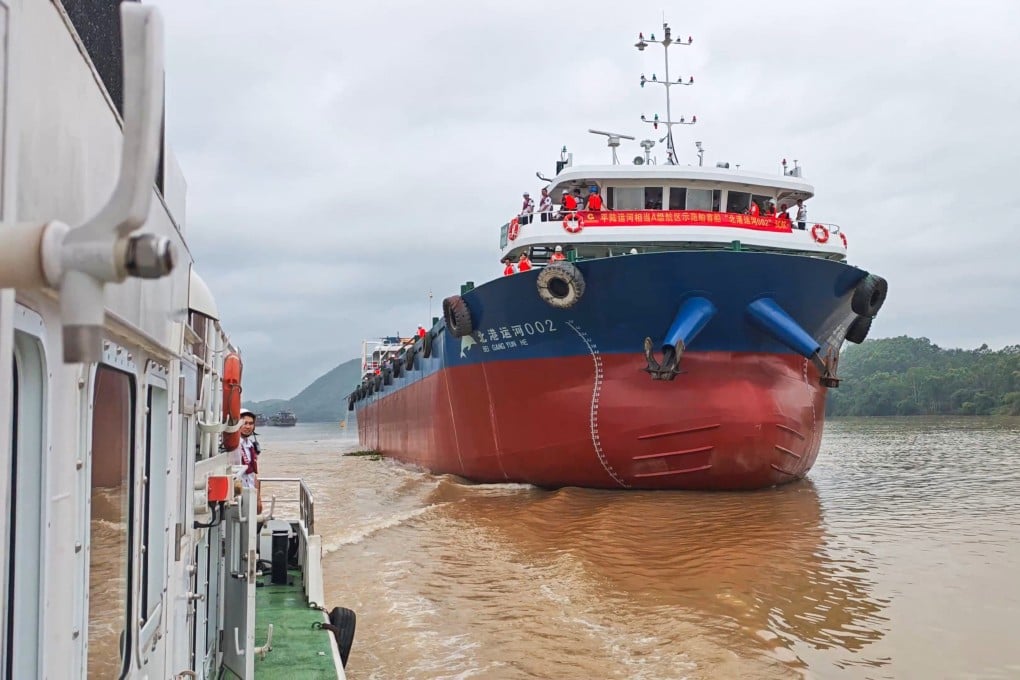
Intelligent barges and other vessels have been tested on the artificial waterway in the Guangxi Zhuang autonomous region since Wednesday, as part of preparations for the commissioning of the roughly US$10 billion megaproject connecting the strategically located region to the Gulf of Tonkin between China and Vietnam.
Integrating a range of intelligent systems and powered by liquefied natural gas, the vessels could send real-time navigation and hydrographic data from multi-sensor and camera systems to relay information to other ships, state broadcaster CCTV reported, citing Guangxi authorities.
Guangxi’s marine and shipping authority said trials were proceeding smoothly. During the tests, autonomous barges aided by high-precision sensors, radars and communication networks also carried out automated mooring, it added.
The vessels are tailor-made to haul containers and other bulk cargo, maximising the canal’s shipping capacity while cutting costs and navigation time. Pinglu’s massive main lock – 300 metres long, 34 metres wide and 8 metres deep – would be able to accommodate six such ships simultaneously, according to the CCTV report.
More ships are expected to be delivered by August, including vessels capable of cruising along both the canal and on the high seas of the Gulf of Tonkin – known in China as the Beibu Gulf – ahead of the canal’s planned test run in September.