By The Rio Times | Created at 2026-06-14 08:11:37 | Updated at 2026-06-14 22:32:56
14 hours ago
By The Rio Times | Created at 2026-06-14 08:11:37 | Updated at 2026-06-14 22:32:56
14 hours ago
Brazil · Trade
Key Facts
—The new signal. China returned or held about 20 ships of Brazilian soybeans in March over quality complaints.
—Why it matters. It is the first concrete sign of a longer-term plan by Beijing to lean less on imported food.
—The exposure. China takes close to a third of Brazil’s farm exports and most of its soybeans.
—The plan. China new five-year plan, running 2026 to 2030, prizes food self-sufficiency and home-grown supply.
—The estimate. One consultancy sees Chinese soy imports falling about a quarter by 2030.
—The money at stake. Analysts put tens of billions of dollars a year in Brazilian farm sales to China at risk over time.
A run of rejected cargoes has turned a distant policy worry into a present one: the question hanging over China soybean imports is no longer whether Beijing will buy less from Brazil one day, but whether that day has already started.
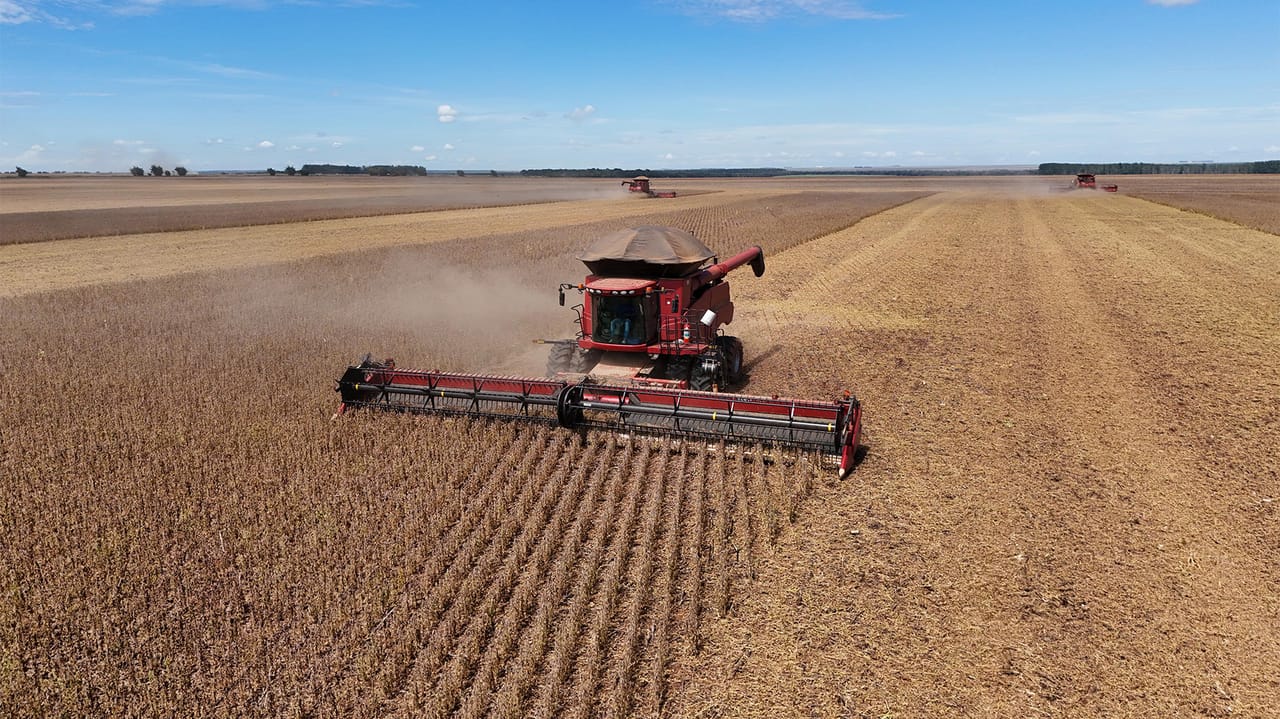 (Photo internet reproduction)
From warning to reality
For months, Beijing’s drive to grow more of its own food has been treated in Brazil as a slow-moving risk, real but years away. A recent episode has made it feel a good deal closer.
In March, China returned or held back around twenty ships carrying Brazilian soybeans, citing problems such as impurities, pests and prohibited weed seeds. Exporters treated the case as a one-off, but the timing made it impossible to ignore.
The worry is what the episode hints at. Tighter inspections are exactly the kind of lever a buyer can pull when it wants to slow purchases without announcing a policy, and they showed how quickly Chinese rules can interrupt the flow of Brazilian cargoes.
What the plan behind China soybean imports actually says
The backdrop is China’s new five-year plan, which runs from 2026 to 2030 and puts food security near the top of the agenda. It pushes the country to grow more at home, modernise its farms and rely less on foreign supply.
Beijing is blending several tools at once: higher domestic output, a wider set of suppliers, better seeds and new protein sources that lean less on imported grain for animal feed. Some of those efforts are already visible in Chinese research labs and fields.
None of this is expected to happen overnight. Analysts see a gradual decline rather than a sudden cut-off, with one consultancy estimating Chinese soybean imports could fall by about a quarter by the end of the decade.
Some forecasts go further. One major investment bank has argued that China’s dependence on imported soybeans could fall dramatically over the next decade as home production and efficiency improve.
There is an irony in the timing. Brazil became China’s favourite supplier in the first place because a trade war with the United States pushed Beijing away from American beans and toward South America.
That same dependence now cuts the other way. Having concentrated so much of its harvest on one buyer, Brazil is unusually exposed if that buyer decides to buy less.
Why Brazil is so exposed
Brazil has spent years making itself the indispensable supplier to the world’s largest food importer. That success is now also its vulnerability.
China takes close to a third of all Brazilian farm exports and the bulk of its soybeans. When a single customer is that large, any shift in its appetite lands directly on Brazil’s trade accounts.
One estimate puts tens of billions of dollars a year in Brazilian farm sales to China at risk over time, with soybeans the most exposed product of all. Beef is the next most vulnerable link in the chain.
What to watch from here
The sensible reading is caution, not alarm. Five-year plans set direction more than precise outcomes, and China’s own limits on farmland and fresh water make full self-sufficiency a tall order.
But treating Beijing’s stated intentions as mere words has been a costly mistake for exporters before. The smart move for Brazil is to read the ship returns as a first tremor and to push harder on diversifying who it sells to.
That means courting buyers across the Middle East, South and Southeast Asia, and Europe, and investing in the logistics that make Brazilian grain competitive far from its traditional Chinese market. None of that is quick, which is why the early warning matters.
For investors watching from London or Frankfurt, the signal is about concentration risk. A farm-export machine built around one giant buyer is powerful in good years and fragile the moment that buyer changes its mind.
Frequently Asked Questions
What happened with the Brazilian soybean ships?
In March, China returned or held about twenty vessels carrying Brazilian soybeans, citing impurities, pests and banned weed seeds. Exporters called it a one-off, but many saw it as an early sign of tougher Chinese buying.
How much do China soybean imports matter to Brazil?
A great deal. China takes close to a third of Brazil’s farm exports and most of its soybeans, so any drop in Chinese demand hits Brazil’s trade accounts hard.
Is China about to stop buying Brazilian soy?
No. Analysts expect a gradual decline rather than a sudden halt, but the long-term trend points toward lower Chinese demand as Beijing grows more of its own food.
The Rio Times · Power Map
See who really holds power in Latin America
Click to open the Power Map →