By The Rio Times | Created at 2026-08-02 21:41:33 | Updated at 2026-08-02 23:14:16
1 hour ago
By The Rio Times | Created at 2026-08-02 21:41:33 | Updated at 2026-08-02 23:14:16
1 hour ago
Defense · Bogotá, 2 August 2026
Key Facts
—Order — President Gustavo Petro directed the Fuerza Aeroespacial Colombiana (FAC) to finalise the purchase of two Embraer C-390/KC-390 Millennium transports.
—Fleet audit — A government transition (empalme) report found 310 of about 620 military and police aircraft non-operational — roughly half.
—Military — Of about 510 military aircraft, 227 were listed as operational.
—Police — Of about 110 police aircraft, 83 were operational.
—Supplier — The C-390 is built by Brazil’s Embraer, positioning Colombia to buy Brazilian airlift.
—Price — No contract value has been confirmed; official terms were not public as of early August 2026.
—Rivals — The Embraer was weighed against the Lockheed Martin C-130J and the Airbus A400M, per Infodefensa and Infobae.
Colombia’s KC-390 purchase would put two of Embraer’s Millennium transports into an air force that, by its own government’s audit, is flying with roughly half of its aircraft grounded. President Gustavo Petro has ordered the Fuerza Aeroespacial Colombiana to close the deal for the Brazilian jets, a big-ticket airlift bet placed against a fleet in visible disrepair.
Petro’s order to the air force
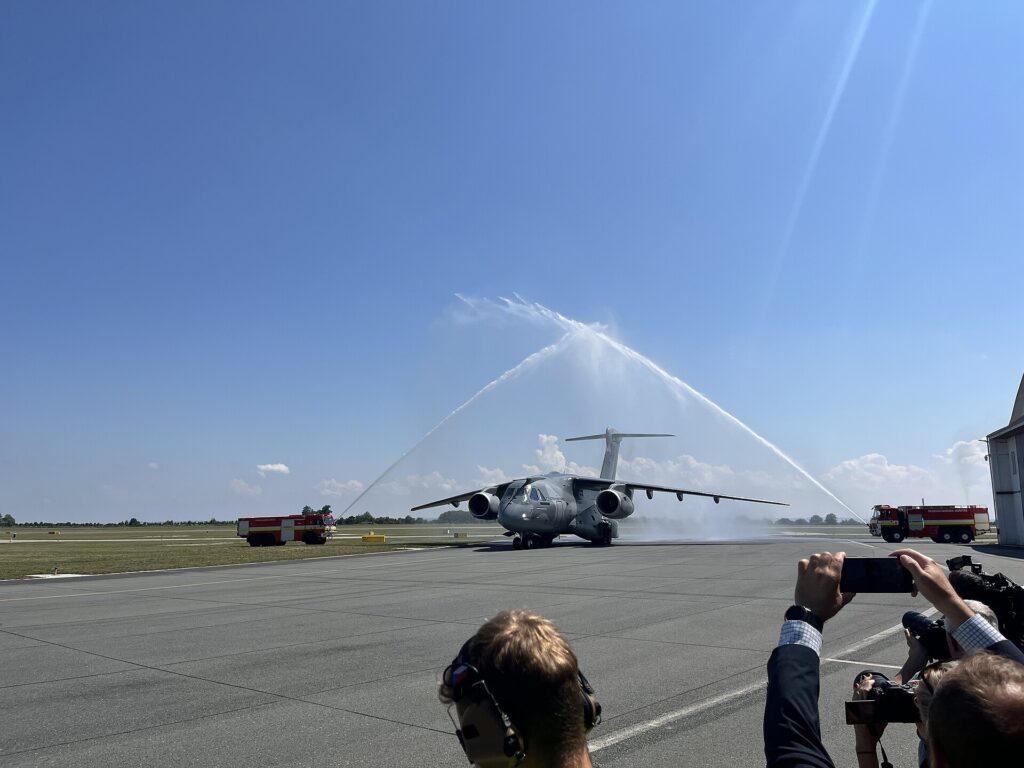
President Gustavo Petro has instructed the Fuerza Aeroespacial Colombiana (FAC) to finalise the acquisition of two Embraer C-390 Millennium transport aircraft, according to reporting by Infodefensa and Infobae. The C-390 is designated KC-390 in its aerial-refuelling configuration.
The instruction is notable for its timing. It came as a presidential directive rather than the conclusion of a completed technical competition, with the air force still weighing the Embraer against rival platforms when the order to proceed was issued.
For Colombia, the choice signals a lean toward Brazilian industry for a core military capability. It also ties a marquee defence purchase directly to the president, making the deal as much a political statement as a procurement decision.
The directive also lands amid a broader debate about how Colombia equips its forces and where it buys. Sourcing airlift from Brazil, rather than from traditional United States or European suppliers, fits a foreign policy that has stressed regional ties, and it gives the choice a symbolic weight beyond the two airframes involved.
A half-grounded fleet
The backdrop is a fleet in poor shape. A government transition report, or empalme, prepared as one administration hands over to the next, found that 310 of about 620 military and police aircraft were non-operational — close to half the combined total.
Broken down, the audit listed roughly 510 military aircraft with 227 operational, and about 110 police aircraft with 83 operational. In both services, the share of aircraft actually available for missions fell short of what commanders would consider healthy.
That is the context for an airlift purchase. Colombia relies on military transport for logistics, disaster relief and operations across difficult terrain, and an ageing fleet of C-130 Hercules has become harder and costlier to keep flying.
Readiness figures like these are not unusual for air forces running old airframes on tight maintenance budgets, but the scale is stark. When roughly half of a combined fleet cannot fly, the shortfall bites into everyday tasks — moving troops and cargo, reaching remote regions and responding to floods or landslides — long before it touches any combat role.
Live Company IntelligenceEmbraer SA ADR — the full investor dossierInside: live share price, market cap, three-year financials, valuation, ESG and peer benchmarks — plus the latest Rio Times coverage.E
◆ Live Company Intelligence
Embraer
NYSE: ERJEMBJ3IndustrialsAerospace & Defense20,923 employees
$12.33B
Market cap
Analyst target $68.50
Wall Street view
3.9Moderate Buy/ 5
10 Buy3 Hold1 Sell
Avg. price target $68.50 · +30% vs 200-day
Valuation & profitability
Market cap$12.33B
Revenue (TTM)$39.80B
P / E ratio37.7
Profit margin5.4%
Return on equity11.3%
Price & risk
52-wk low
$53.9752-wk high
$66.87
Beta (volatility)0.92
200-day average$52.79
Revenue trend · 6y
20192024
Latest $6.39B
Ownership
Institutions46.0%
Shares outstanding183M
Top holderGQG Partners LLC
Institutional holders5+ funds
Dividend
Yield0.1%
Payout ratio31.0%
Fwd. annual$0.05
What Embraer does. Embraer S.A., together with its subsidiaries, designs, develops, manufactures, and sells aircraft and systems worldwide. It operates through Commercial Aviation; Defense & Security; Executive Aviation; Services & Support; and Other segments. The Commercial Aviation segment develops, produces, and sells commercial jets. Its Defense & Security segment develops and produces military aircraft and…
Why the KC-390
The C-390 Millennium is a modern, twin-turbofan tactical transport. Embraer lists a payload of about 26 tonnes and a cruise speed near Mach 0.80, figures that put it above older turboprop transports on speed and comparable on load, while offering aerial-refuelling capability in the KC-390 variant.
For the FAC, the aircraft is positioned as a successor to its C-130 Hercules fleet, promising newer systems and, in principle, better availability than airframes that have been in service for decades. The jet is already operated by Brazil and by several European air forces.
The aircraft’s appeal is partly logistical. A newer type with strong manufacturer support can, in theory, spend more time available and less time grounded for parts, which is exactly the problem Colombia is trying to solve. Whether two aircraft materially change fleet readiness, though, is a separate question from which type is best.
Choosing the Embraer also deepens defence ties within South America. It routes a significant purchase to a regional manufacturer rather than to North American or European suppliers, aligning Colombia’s airlift with Brazil’s aerospace industry.
What is not yet settled
Crucially, no contract value has been confirmed. As of early August 2026 the official price and financing terms were not public, and reporting has been careful not to attach a figure to a deal that has been ordered but not disclosed in full.
The absence of a public price is the single biggest gap. Without it, the deal cannot be judged on value for money, and comparisons with the rejected alternatives stay incomplete. Responsible coverage therefore treats the purchase as a firm intention rather than a finished transaction.
There is also process to resolve. Because the directive to proceed preceded the completion of the FAC’s technical evaluation — which had been comparing the C-390 with the Lockheed Martin C-130J and the Airbus A400M — the purchase invites scrutiny over how the selection was reached.
Some analysts have additionally noted that the aircraft incorporates foreign subsystems, a point of commentary given the president’s past statements on equipment sourcing. Until a contract is signed and published, the two-aircraft order remains a stated intention rather than a closed deal.
A Brazilian bet, and the regional context
The order fits a broader pattern of Embraer selling the C-390 across and beyond the region. The type is in service with Brazil and with European operators including Portugal and Hungary, and the manufacturer has pursued additional buyers in Latin America.
Embraer has worked to cast the C-390 as the natural replacement for the hundreds of C-130s reaching the end of their service lives worldwide. Each new customer strengthens that pitch, and a sale in Colombia would give the manufacturer another reference operator in its own region.
A Colombian purchase would add another regional customer and reinforce the C-390’s standing as a Western alternative to the C-130 in the medium-airlift class. For Bogotá, buying from a neighbour also carries diplomatic weight at a time of shifting alignments.
The move should be read alongside Colombia’s wider defence and fiscal debates. Re-equipping a depleted fleet is expensive, and the government must balance capability against budget pressures that run through its broader security and spending agenda.
What comes next
The immediate steps are contractual: converting a presidential directive into a signed agreement with confirmed terms, price and delivery timeline. Until that happens, the two KC-390s are a decision announced rather than aircraft on order.
Observers will watch for the contract value, any offset or industrial-participation arrangements, and how quickly deliveries could begin. They will also watch whether two aircraft is a first tranche or the whole of Colombia’s near-term airlift renewal.
There is also a domestic dimension. Big defence purchases in Colombia draw scrutiny from Congress and the public over cost, transparency and priorities, especially when essential services compete for the same budget. How the government explains the deal may matter as much as the aircraft it buys.
Either way, the episode captures a hard choice facing many air forces in the region: how to modernise a grounded fleet with limited funds. Colombia’s answer, for now, is to bet on Brazilian airlift.
For a government that has made military reform a talking point, delivering even two modern transports would be a visible sign of progress; failing to close the deal cleanly would be an equally visible setback.
The deal in numbers
Aircraft: two Embraer C-390/KC-390 Millennium transports.
Directive: ordered by President Gustavo Petro to the FAC.
Fleet audit: 310 of about 620 military and police aircraft non-operational.
Military: about 510 aircraft, 227 operational.
Police: about 110 aircraft, 83 operational.
Price: no confirmed contract value as of 2 August 2026.
Figures reflect the government transition (empalme) report and press coverage by Infodefensa and Infobae as of 2 August 2026.
This is reporting, not investment advice. Confirm current figures with official sources before acting.
Frequently Asked Questions
What did President Petro order?
President Gustavo Petro directed the Fuerza Aeroespacial Colombiana (FAC) to finalise the purchase of two Embraer C-390 Millennium transport aircraft, known as the KC-390 in the aerial-refuelling configuration. The instruction, reported by Infodefensa and Infobae, came as a presidential directive rather than the conclusion of a completed technical competition. It positions Colombia to buy Brazilian-built airlift to help replace an ageing fleet, though a signed contract with confirmed terms had not been made public as of early August 2026.
How bad is Colombia’s aircraft fleet problem?
A government transition report, or empalme, found that 310 of about 620 military and police aircraft were non-operational, close to half the combined total. Within that, roughly 510 military aircraft included 227 operational, and about 110 police aircraft included 83 operational. The figures point to a serious readiness shortfall across logistics, transport and support roles, and they form the backdrop to the airlift purchase, which is aimed at replacing worn C-130 Hercules transports.
What is the Embraer KC-390?
The Embraer C-390 Millennium, designated KC-390 when configured for aerial refuelling, is a modern twin-turbofan military transport. Embraer lists a payload of about 26 tonnes and a cruise speed near Mach 0.80. It is designed as a faster, newer alternative to older turboprop transports such as the C-130 Hercules, and it is already operated by Brazil and by several European air forces. Colombia has evaluated it against the Lockheed Martin C-130J and the Airbus A400M.
How much will the two aircraft cost?
No contract value has been confirmed. As of early August 2026, the official price and financing terms for Colombia’s two-aircraft order had not been disclosed, and responsible reporting has avoided attaching a figure to a deal that has been ordered but not finalised. Costs for military transports depend on configuration, support packages and any industrial offsets. Until a contract is signed and published, any specific price should be treated as speculation rather than confirmed fact.
Why choose Brazil’s Embraer?
Selecting the C-390 routes a major purchase to a South American manufacturer and deepens defence ties within the region. The aircraft offers modern systems and is pitched as a successor to Colombia’s ageing C-130 fleet, with better speed and, in principle, higher availability. Politically, buying from a neighbour carries diplomatic weight. The decision has also drawn scrutiny, however, because the order to proceed preceded the completion of the air force’s own technical evaluation of competing aircraft.
Related reading
- Colombia’s military modernisation under Petro
- Embraer’s C-390 Millennium: the C-130 challenger
- Brazil’s defence exports across Latin America
- How ageing fleets strain the region’s air forces
This article was produced by The Rio Times’ automated newsroom system. How we use AI · Report an error
The Rio Times · Power Map
See who really holds power in Latin America
Click to open the Power Map →