 By The Epoch Times | Created at 2026-08-19 18:28:13 | Updated at 2026-08-19 18:35:35
18 minutes ago
By The Epoch Times | Created at 2026-08-19 18:28:13 | Updated at 2026-08-19 18:35:35
18 minutes ago
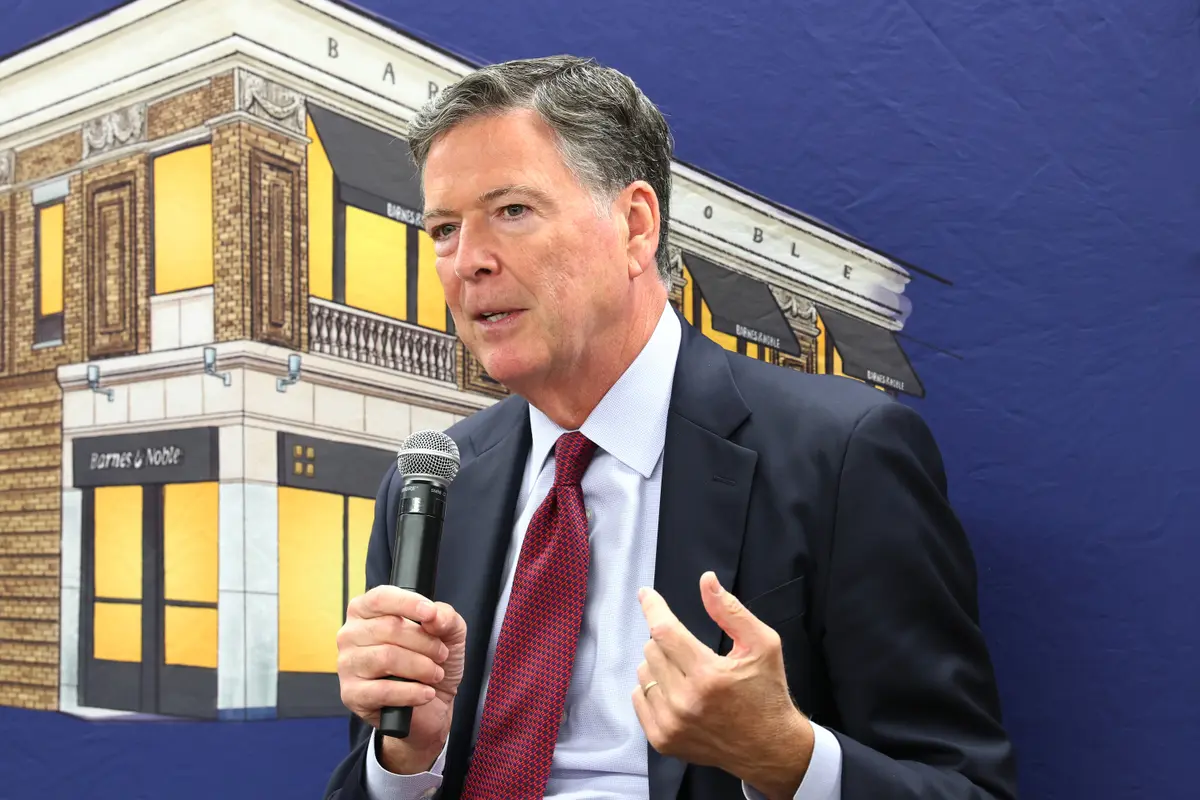
Author James Comey, former FBI Director, speaks at Barnes & Noble Upper West Side on May 19, 2025 in New York City. Michael M. Santiago/Getty Images
The U.S. Department of Justice (DOJ) defended the ongoing prosecution of former FBI Director James Comey in a new court filing on Aug. 18, saying “an objective viewer” could interpret his social media post as threatening the president.
The DOJ has denied that Comey is being prosecuted for his political views and said in the new filing that “there is no serious dispute” that a post of seashells arranged to read “86 47” that he made last year could be understood as a threat against President Donald Trump.
Comey is charged with two federal felony counts of threatening the life of the president and transmitting a threat.
Comey was charged after he posted a photograph on Instagram in May 2025 showing seashells arranged to read “86 47.”
To “86” is to remove or get rid of someone, and the term has been used in some contexts as a euphemism for killing someone.
The number 47 has been interpreted to refer to Trump, who is the 47th president.
Comey said he found the seashells arranged on a beach and snapped a photo of them.
He said he assumed the shells were intended as a political message and that he was making a political statement in opposition to Trump when he posted online.
Comey subsequently deleted the post, saying he did not know at the time that “86” was associated with violence.
Comey filed multiple motions challenging the indictment on various legal grounds, arguing in one that this is an example of a vindictive and selective prosecution.
He also filed a motion demanding access to grand jury materials and to suppress evidence.
A vindictive prosecution is a due process violation that takes place when prosecutors file or escalate criminal charges against a defendant primarily to punish or retaliate against them for exercising a legal or constitutional right.
A selective prosecution claim alleges a violation of equal protection principles when the government charges a person based on protected characteristics such as race, religion, or the exercise of First Amendment rights.
Prosecutors said in a new filing that the Instagram post was part of an effort they allege was calculated to generate publicity for Comey’s novel about a social media personality whose words inspire his fans to attack his foes.
The novel, “FDR Drive,” has been described as a work in which a federal prosecutor is “trying to take down Samuel Buchanan, a far-right media personality with a popular podcast,” according to the filing.
“There is no serious dispute that an objective viewer of Comey’s post could read it to mean ‘Kill President Trump,’” the DOJ said in the brief.
U.S. Attorney W. Ellis Boyle said in a separate affidavit that he was not pressured to charge Comey and relied on his own independent judgment when deciding to move forward with the indictment.
He said the grand jury approved the indictment on April 28 and that he “had no communication with [then-Acting Attorney General Todd Blanche] about this case until the day before the grand jury returned a true bill indicting Defendant, notifying him of the potential that a grand jury might indict Defendant as required by the Justice Manual.”
“My involvement in matters concerning Defendant James Comey is limited to this prosecution. I was not involved in the investigation or prosecution of Defendant in the Eastern District of Virginia. Neither was any member of the current prosecution team,” Boyle added.
The court has ordered Comey’s legal team to reply to the government’s filings by Sept. 1.
If U.S. District Judge Louise W. Flanagan allows the case to proceed, Comey is expected to be arraigned on Sept. 30, with a trial to begin on Oct. 21.