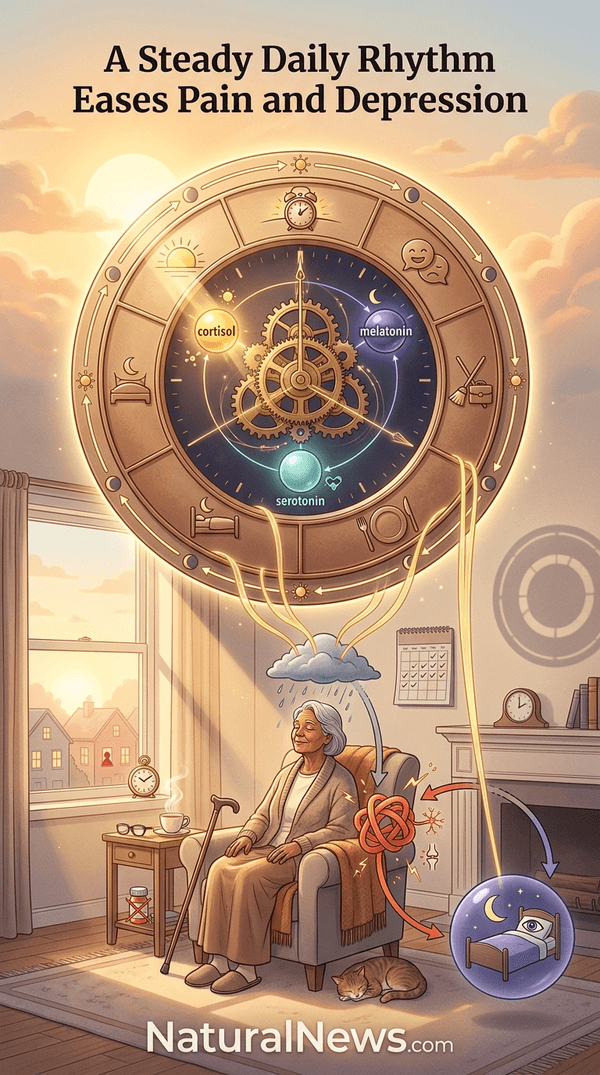
According to the Centers for Disease Control and Prevention, nearly one in four U.S. adults -- about 60 million people -- live with some form of chronic pain. A study from the University of Missouri, published in the Journal of Behavioral Medicine, reports that older adults with regular daily routines had lower average pain levels and fewer depressive symptoms.
“Regardless of sleep quality, those who reported having a regular daily routine had lower levels of physical pain and less depression compared to those without a daily routine,” study author Eunjin Tracy, an assistant professor in the College of Education and Human Development at the University of Missouri, said in the report.
Study Methods and Participants
Researchers surveyed 67 older adults with an average age of 68, including 37 participants with insomnia. For seven consecutive days, participants recorded when they got out of bed, had their first social interaction, began work or housework, ate dinner, and went to bed, according to the study. A routine counted as regular if it occurred within 45 minutes of the person’s average time, the report stated. Scores ranged from 0 for “very irregular routines” to 7 for “extremely regular routines.” Participants also completed surveys on pain intensity and depressive symptoms.
Sleep problems and pain frequently overlap. According to the book “Basic Geriatric Nursing,” “Pain, whether it is chronic or acute, interrupts or prevents sleep” [1].
Findings on Pain and Depression
For each one-point increase in the routine regularity score, average pain scores improved by six percent over the study period, the researchers reported. Each one-point increase in routine social interactions was associated with a 0.7-point decrease in depressive symptom score, which included low interest, hopelessness, fatigue, and difficulty concentrating.
Participants with more consistent routines tended to have fewer symptoms of depression, according to Tracy. Previous research has also connected depression to chronic pain outcomes; a 2005 review published in Chiropractic & Osteopathy concluded that “the incidence of depression predicts chronicity in pain syndromes” [2].
Circadian Rhythm and Pain
The study’s authors said regular daily schedules may regulate the body’s internal clock -- the circadian rhythm -- and boost hormones including cortisol, melatonin, and serotonin. According to the report, when the circadian rhythm is well regulated, the body functions well, but when it is disrupted, the body does not function as well.
Maintaining a regular schedule aligns with broader guidance on sleep hygiene. “Natural sunlight helps set your circadian rhythm and promote regular sleep and wake times,” according to the book “4 Weeks to Maximum Immunity” [3]. “Sleep is almost as important as breathing for your health. Sleep restores energy to the body, particularly to the brain and nervous system,” according to the book “7 Golden Keys to Unlock Lifelong Vitality” [4]. The study also noted that insomnia has been shown to increase pain sensitivity and lead to inflammation that raises chronic pain risk.
Sleep plays a vital role in overall health and empowers the body to recover from the stressors of the past day, according to an article on sleep disorder medications [5].
Limitations and Need for Further Research
Study limitations included a small sample size and reliance on self-reported data, which can be subject to bias, according to the authors. The study did not establish causation, and the researchers indicated further work is needed to assess how routine consistency may influence pain over longer periods.
The findings add to research on non-drug approaches to pain management. A large Norwegian study involving more than 11,000 adults found that walking for approximately 100 minutes per day can significantly reduce the risk of developing chronic lower back pain, according to a report on the research [6]. Another report noted that “even gentle, low-intensity exercise is good for you” [7].
References
- Gloria Wold. "Basic geriatric nursing".
- "Are chronic low back pain outcomes improved with co-management of concurrent depression?". Chiropractic & Osteopathy. 2005.
- "4 weeks to maximum immunity disease-proof your body".
- "7 Golden Keys to Unlock Lifelong Vitality".
- Mercola.com. "Sleep Disorder Pill Increases Risk of Overdos...". Mercola.com. December 22, 2022.
- NaturalNews.com. "The daily walk A simple prescription for a nation in pain". NaturalNews.com. September 10, 2025.
- Mercola.com. "Can Pupils Indicate How Light Exercise Impact...". Mercola.com. October 19, 2023.
Explainer Infographic