By Kotaku | Created at 2026-09-18 13:04:02 | Updated at 2026-09-18 20:50:50
7 hours ago
By Kotaku | Created at 2026-09-18 13:04:02 | Updated at 2026-09-18 20:50:50
7 hours ago
It’s high time we officially bestow upon the folks at Remedy Entertainment the esteemed title of Video Game Sequel Mavens, not only for their technical chops but for how willing they are to completely upend their own established design frameworks in pursuit of something genuinely, productively new. Alan Wake was an arcadey shooting gallery while Alan Wake II took a more methodical survival-horror approach; Control was (more or less) a third-person shooter Metroidvania, and now, seven years later, we have Control Resonant, a twitchy melee action RPG more in the vein of the always-relevant Devil May Cry.
I welcome the change, but this foray into, to use the colloquial term, “character action”—one of the most mechanically involved genres in the medium, built (at its best) around a harmonious blend of careful pattern recognition, precise awareness of space, and rapid-fire input execution—initially surprised me. Remedy does bold, affecting work—very few studios producing games on this scale are as creatively driven. But I’ve always viewed its games more as plot delivery mechanisms than as self-sustaining achievements of design.
-
Back of the box quote:
"None of this is fictional, Tribeca is just like that."
-
Type of game:
Fast-paced, semi-open world 3D action RPG
-
Liked:
Responsive, tense combat, varied encounter design and build variety, compelling blend of art direction and level design.
-
Disliked:
Hit-or-miss dialogue, some overwrought plot beats, occasionally mindless traversal and questing.
-
Developer:
Remedy Entertainment
-
Release date:
September 24, 2026
-
Platforms:
PS5 (Played), Xbox Series X/S, PC
-
Played:
35 hours
Alan Wake II is a very competently made Resident Evil-like, with plenty of meaty combat and inspired level geometry, but I somehow doubt these things would stand out as much if they weren’t attached to one of the most delirious, virtuosic stories ever told in a video game. By that same token, Control’s moment-to-moment gameplay is rhythmic and corporeally satisfying, but a bit homogenous once you pop the hood. I’m okay with this: the games aim exactly as high as they mean to, and, approached on their own terms, fulfill their mechanical and narrative promises exceptionally well.
Control Resonant can thus be taken as a pivotal moment for the studio, the first time its signature formal ambitions have been married with a design this rigorous and uncompromising (for player and developer alike). I’m very happy to report that they’ve stuck the landing: this is, without a doubt, the most demanding, most video-game-per-square-inch video game Remedy has ever made. Imperfect, but relentlessly, characteristically interesting.
 Remedy Entertainment
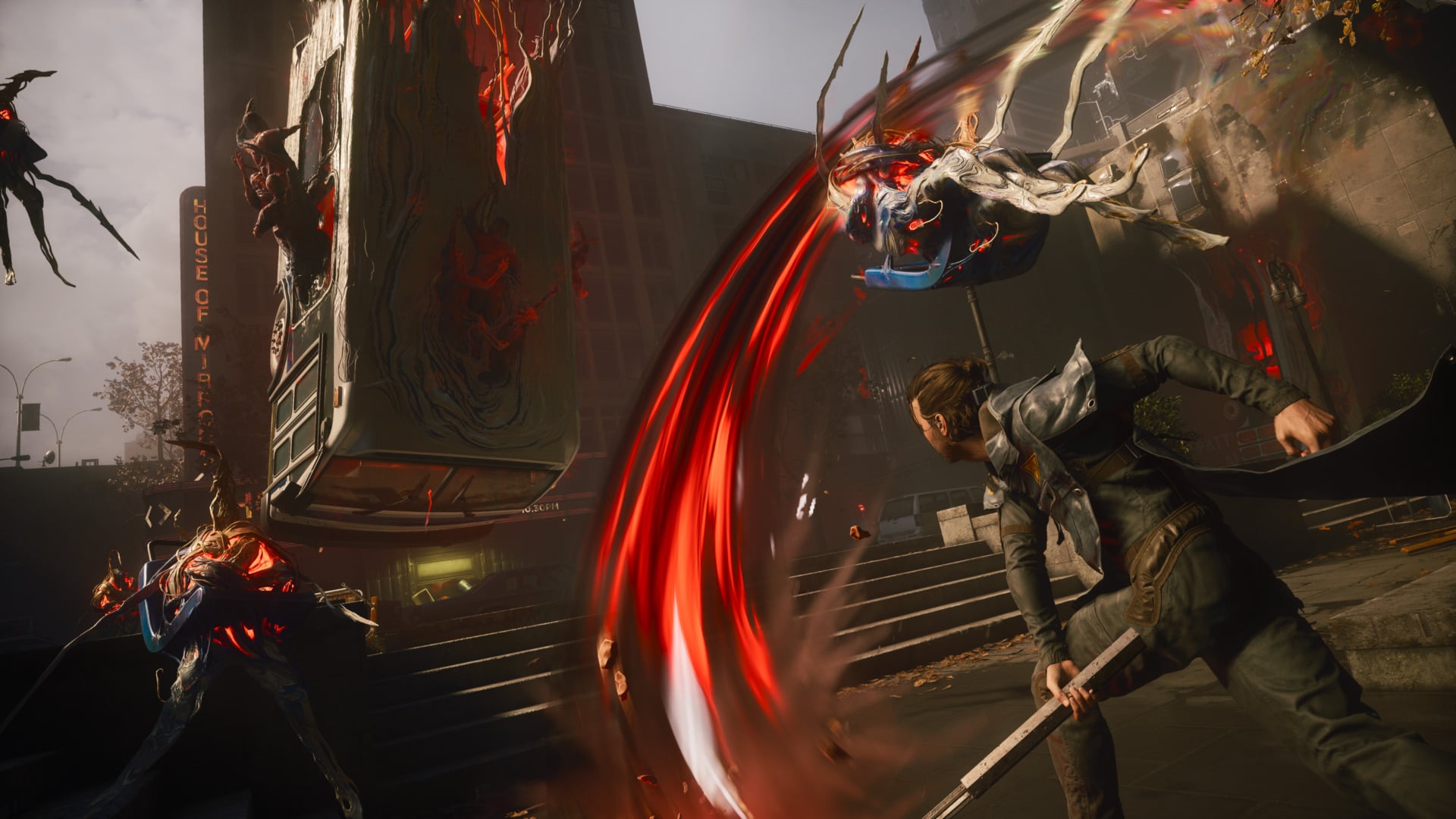
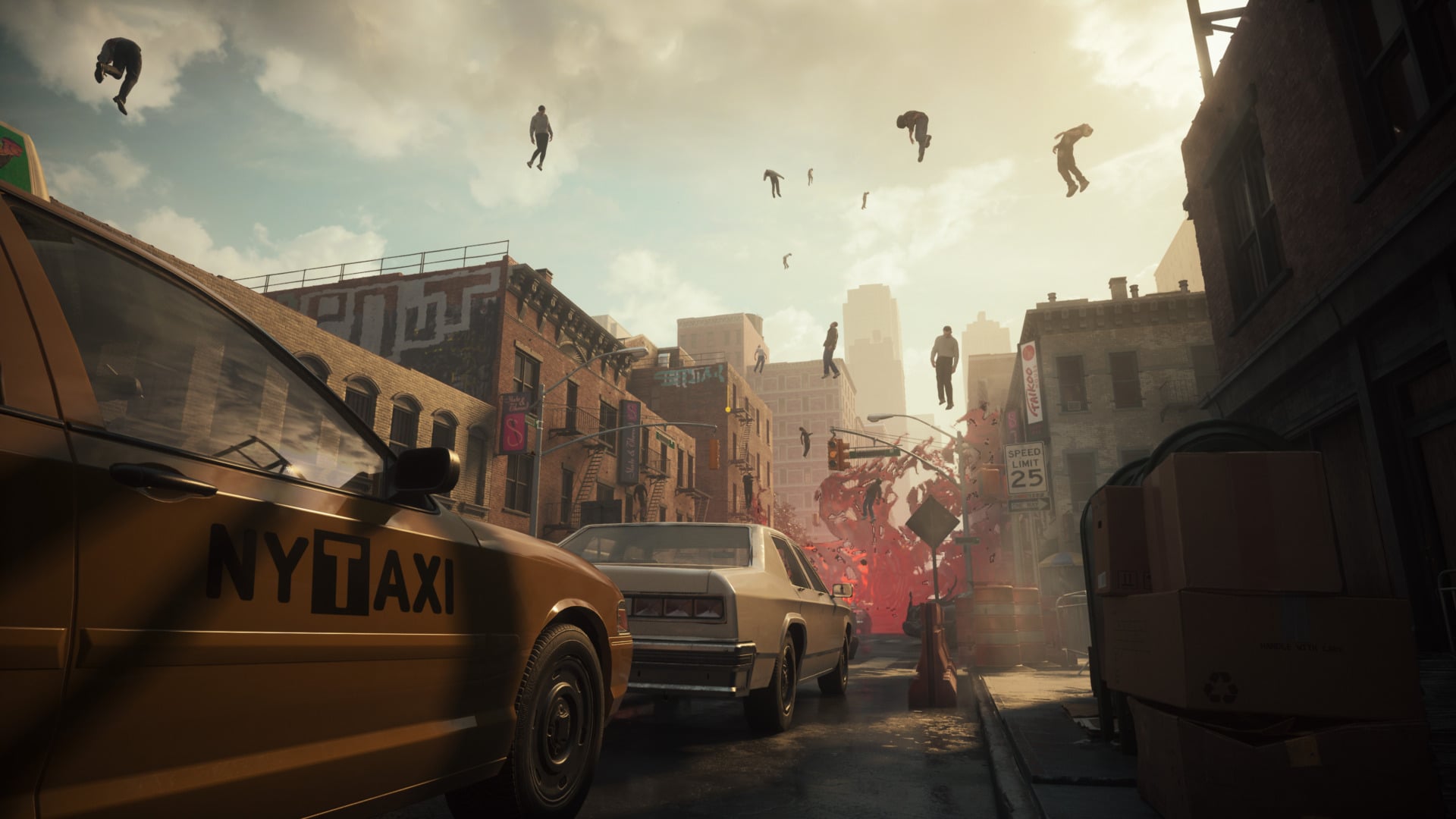
Set seven years after Control, Control Resonant sees Dylan Faden—beleaguered sibling of Control protagonist Jesse Faden—escaping his confines in the Oldest House, a monolithic, federally sanctioned paranormal research hub overseen by entities beyond mortal ken. The Hiss, extradimensional nasties that previously laid siege to the Oldest House in Control, have spilled into the streets of New York City, and it’s up to Dylan to smack them around with what is essentially a supernaturally empowered shiv.
I could describe the highs and lows of this story in detail, rattle off a list of every impactful character moment, every sequence that brought me close to tears. But I won’t, and not just because Remedy’s press kit explicitly instructed me not to. As with all of the studio’s projects, the full weight of Control Resonant can only be felt by playing it: everything worth caring about here is worth caring about because it’s reinforced by design, by your abilities and limitations as an active participant, your understanding of and engagement with space, light, and sound. Statements like this may seem obvious or nondescript for a medium that is, famously, interactive, and I won’t pretend that Remedy is reinventing any wheels. But Control Resonant stands out in a sea of blockbuster releases whose storytelling instincts range from atrophied to nonexistent. Its narrative is built from the ground up for playability by designers concerned with, above all else, why video games should be video games.
One detail that does warrant mention, even obliquely, is a lack of deference to the “Remedyverse,” the fictional setting containing the worlds of both Alan Wake and Control. These games have been alluding to one another since 2019 (with Alan Wake’s 2021 remaster even linking it retroactively to Control), and while those allusions have remained largely unobtrusive, I nevertheless went into Control Resonant with a twinge of concern that its core emotional keystone—the relationship between Dylan and Jesse Faden—could potentially be eclipsed by a snowballing, self-referential morass of Lore.
 Remedy Entertainment
Thankfully, these fears were unfounded. Resonant’s identity is singular, completely unbeholden to any ideas—even ones from its predecessor—that don’t align with its vision. Between this and Alan Wake II, a game predicated in large part on the malleability of its own fiction, it’s clear that Remedy has few reservations about reinterpreting the contours of its canon depending on the needs of any given project—fitting for a body of work about the difficulties of classifying and circumscribing the ineffable. While I’d love to eventually see the studio put out something entirely new again, decoupled from Alan Wake and Control and the Remedyverse in general, I remain impressed by how many original, surprising concepts the team is able to wring out of these worlds.
Of course, originality on its own does not good writing make, and Control Resonant is not without its foibles. Dialogue is a bit hit-or-miss, something that could also be said of Control—there’s a tendency here, endemic as well to much modern TV, to mistake snarky, too-clever-by-half banter for genuine characterization. More generally, with how obviously some of Resonant’s themes are telegraphed, I was left on more than one occasion with a faint impression of white elephantism, of a game so assured of the legitimacy and gravitas of its ideas that it sometimes struggles to actualize them elegantly. These are forgivable snags in what is, altogether, a thoughtful, effective story, though I would say on the whole that Control Resonant’s writing is a few shades weaker than the design girding it. Better that, at least, than the other way around.
Every Remedy game, all the way back to Max Payne, has been about managing space from a distance. Control saw Jesse Faden slowly unspooling an illicit government project entirely unknown and strange to her—in gameplay, even as her abilities grow, she remains cautious, at a remove, playing the role of detective even in the middle of a brawl. Control Resonant, which is, more or less, a prison break story, is about managing space up close. Dylan Faden’s cause is impassioned and personal. He fights enemies that had wrested his autonomy from him in the past, at the behest of an organization wresting his autonomy from him now. (For years, I’ve thought it would be a good bit to write a piece about Control that includes the line “In many ways, it’s a game about control.” Ticking that one off the bucket list now.) His approach is direct, reckless, unyielding. Gameplay revolves around pushing against the outer limits of how many times you can hit your opponent before they’re able to hit you back.
Combat in Control Resonant is split between a primary weapon, a secondary weapon, and a variety of psychokinetic “combat abilities.” Each is mapped to a button (or in the case of combat abilities, up to three shoulder buttons), and bespoke combo routes do not exist outside of those buttons. Primary weapon: square, square, square, etc. until you reach your combo finisher. Secondary weapon: triangle, triangle, triangle, etc. Combat abilities: hit the shoulder buttons whenever you want (assuming you have enough meter, which fills with successful weapon attacks). Aerial and grounded attacks are practically identical. You will not perform an Izuna Drop by executing a series of inputs in a precise order, nor will a style meter fill up proportional to the complexity of your combo. What you see is what you get, and it falls on the player to build their own routes, synthesizing these movesets as the encounter demands.
 Remedy Entertainment
It’s easy to imagine the Control Resonant team sitting down early in development and making a list of things that they value most in action game design. Responsiveness and immediacy were clearly at the top: if you press a button, it does exactly what you think it will, with as much impact as possible. (Worth mentioning here that the game’s sound design is excellent: deep, round, loud, every hit reverberating like a bass drop.) Input complexity, on the other hand—maybe as a direct result of this focus on immediacy—did not make the cut.
This strikes me not as the designers offering a solution to what they perceive as a problem (you don’t make a game like this without at least some reverence for Tomonobu Itagaki), but as them knowing with full confidence what they, specifically, wanted to play. So they made Dylan easy to control and put all their chips on timing, spacing, aggression, enemy design, and situational awareness. Playing Resonant, it quickly became clear to me why director Mikael Kasurinen cited Sekiro: Shadows Die Twice as an inspiration—though Sekiro’s most noteworthy combat feature, the parry, is conspicuously absent here.
Remedy’s decision to omit parry mechanics from Control Resonant indicates to me a level of ball knowledge that, frankly, I was not expecting. Parries have become so ubiquitous in action game design that intentionally foregoing one in 2026 feels nearly as iconoclastic as taking away Mario’s jump, yet here is a combat system that seems fundamentally opposed to anything that involves making the player wait. I’m not a parry hater, but I’ve definitely become a parry skeptic—at their least thoughtful, they can completely eliminate the need to negotiate 3D space, turning what should be a tense, nuanced debate over property lines into a game of slapsies on the playground. Remedy understood this, and chose not to bother.
 Remedy Entertainment
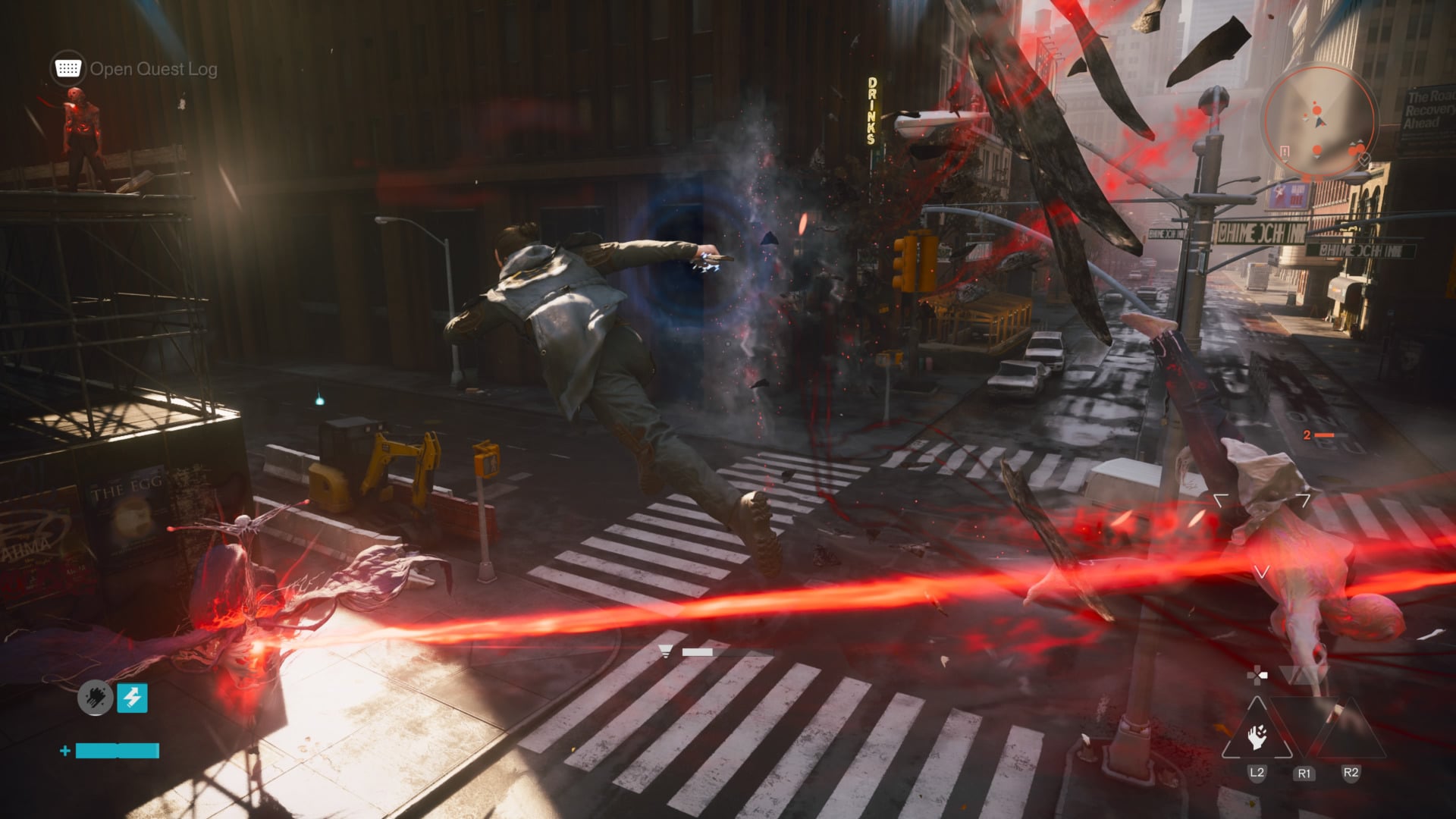
In motion, Control Resonant channels a sensation that I can most succinctly describe as righteous desperation. Much of its challenge derives from a game of chicken between player and opponent, a mad dash to rack up as much damage as possible while hazards besiege you from all sides. In most mandatory encounters, “heavy” enemies—all of which have distinct strengths and weaknesses, encouraging a wide range of builds—must be defeated before you can progress, and the majority of them cannot be stunlocked easily; smaller enemies spawn endlessly but are easy to defeat and can technically be ignored.
This is a brilliant little design wrinkle, and its benefits are twofold: first, the game never forces skirmishes with enemies that don’t pose genuine threats on their own, and second, it promotes constant, high-stakes decision making, with players needing to determine on the fly whether they’d rather go for broke by prioritizing the big guys or pick off small fry for crowd control and/or extra resource gain. Each approach comes with its own set of risks and rewards, and when Control Resonant is firing on all cylinders, every square inch of its arenas (including walls and ceilings) is an active combat zone, Dylan arcing between different targets like a lightning bolt.
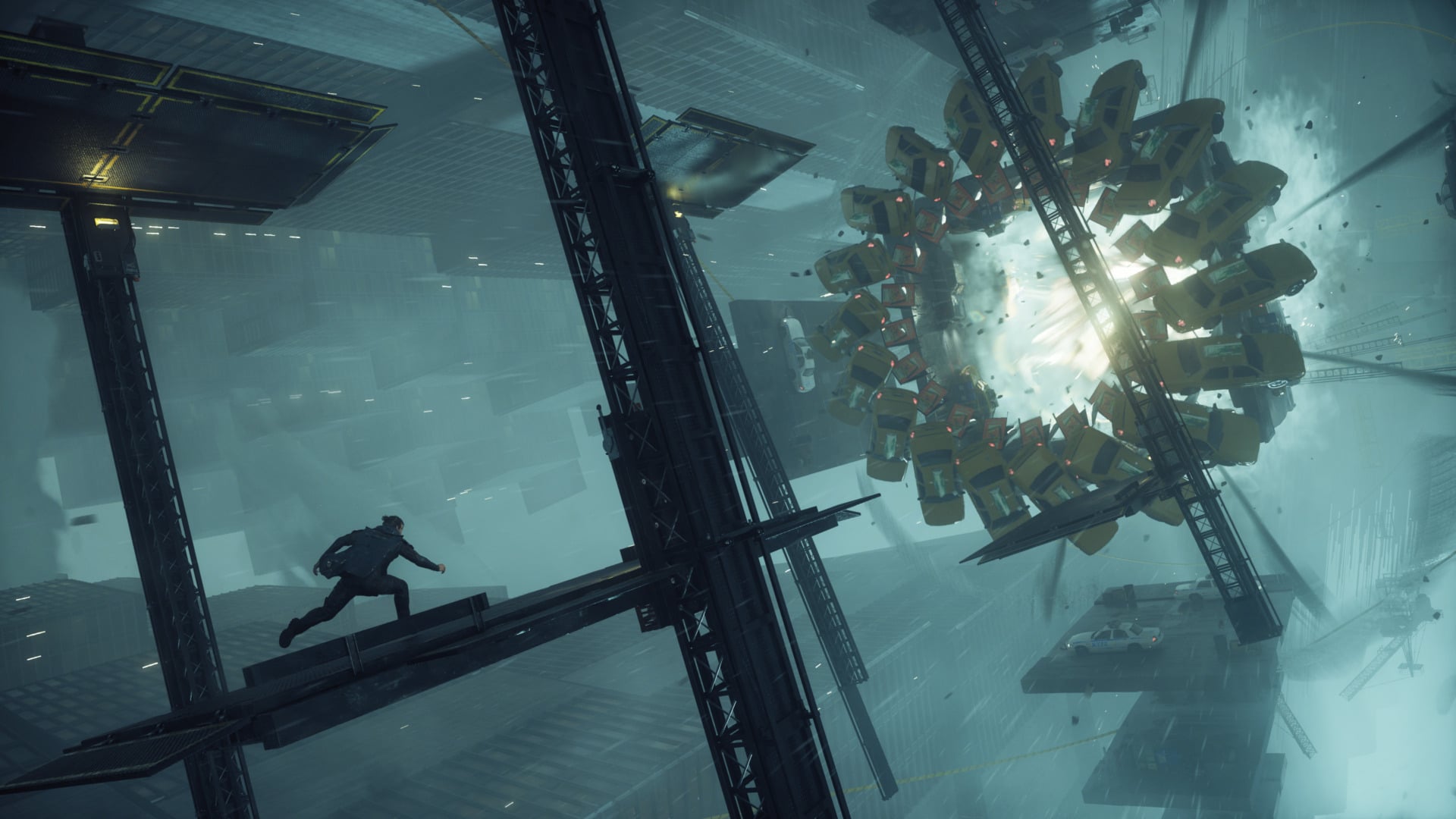
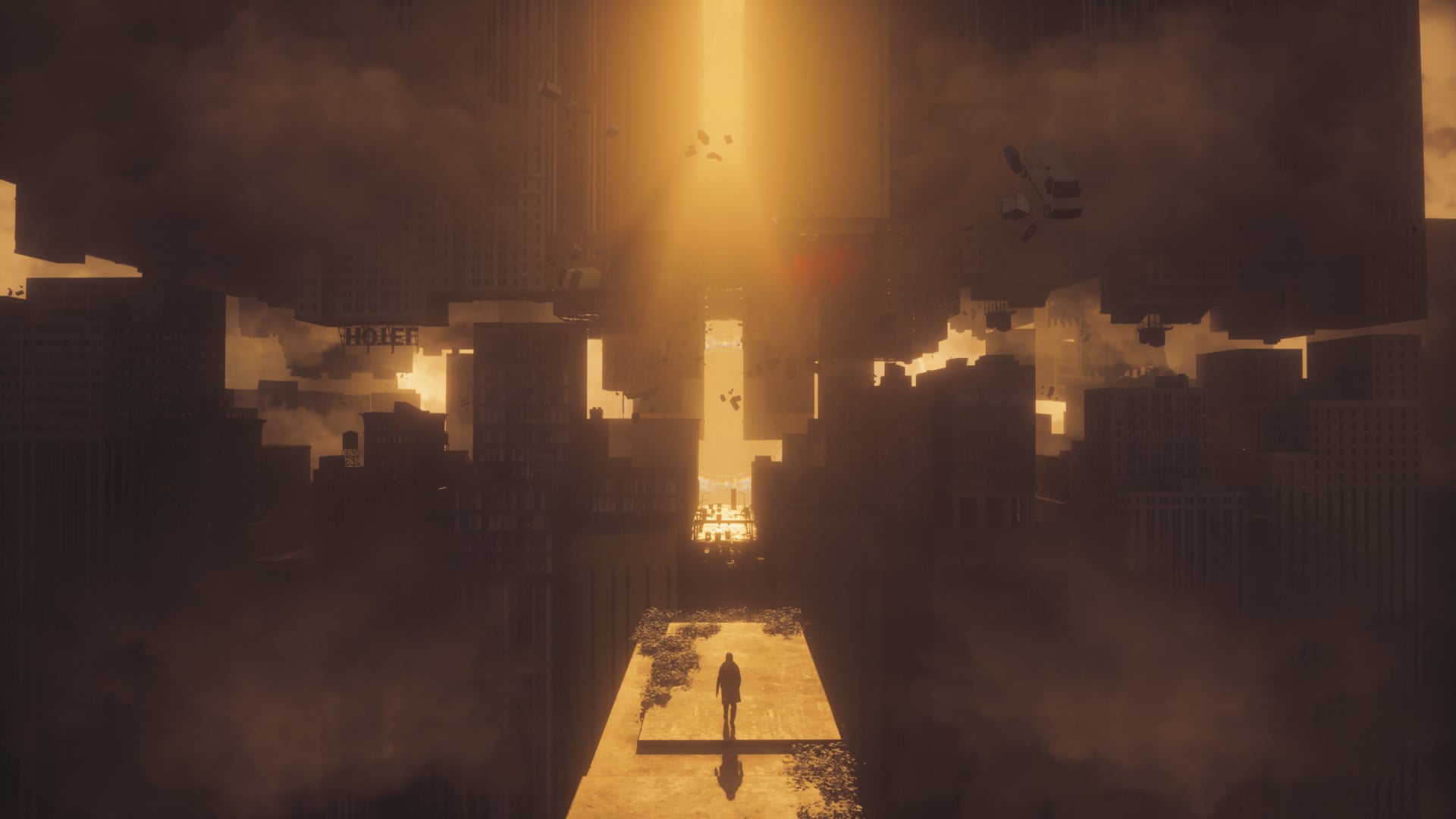
There’s a gratifying synergy in how the game applies movement to both combat and traversal—mastering one puts you well on your way to mastering the other. In contrast to Control, Control Resonant frontloads nearly all of Dylan’s movement abilities into its opening act, giving players access to flight, a double jump, a sprint, and an air dash before they’ve even cleared the first boss. Other abilities, such as long-distance grappling and situational gravity manipulation, come later. (Stray thought: Control Resonant is the only game that’s ever made me think about Super Mario Galaxy and Inland Empire at the exact same time.) These are all indispensable in fights, and the ease with which Dylan can transition between land and air gives encounters—especially those involving hypermobile airborne enemies—an abundant, lavish z-axis. The same can be said for the multi-tiered, contorted facsimile of Manhattan that is Resonant’s overworld.
 Remedy Entertainment
It was surprising to discover that Control Resonant is structured not totally unlike a classic Zelda: its map is split into discrete, themed zones, each with its own set of combat encounters, puzzles (generally ranging in quality from “pretty good” to “who made this?”), platforming challenges, and sinuous “dungeons” burrowing into the shifting depths of the city. Navigating this map is a joy unto itself, given the freedom of Dylan’s movement—clusters of skyscrapers become massive jungle gyms, festooned on all sides with hidden goodies and passageways. Part of me does miss the more deliberate, meticulous design of Control’s Oldest House, and there are times when Resonant’s Manhattan feels less considered, not so much a dense obstacle course with clear, baked-in limitations as an open-air environment to leisurely amble through while chasing quest icons on a minimap. But it never feels totally frictionless, and at its best—particularly in the dungeon areas, though elsewhere, too—the setting acts as a dazzling showcase for the supreme confidence and skill with which Remedy knits together narrative, art, and level design.
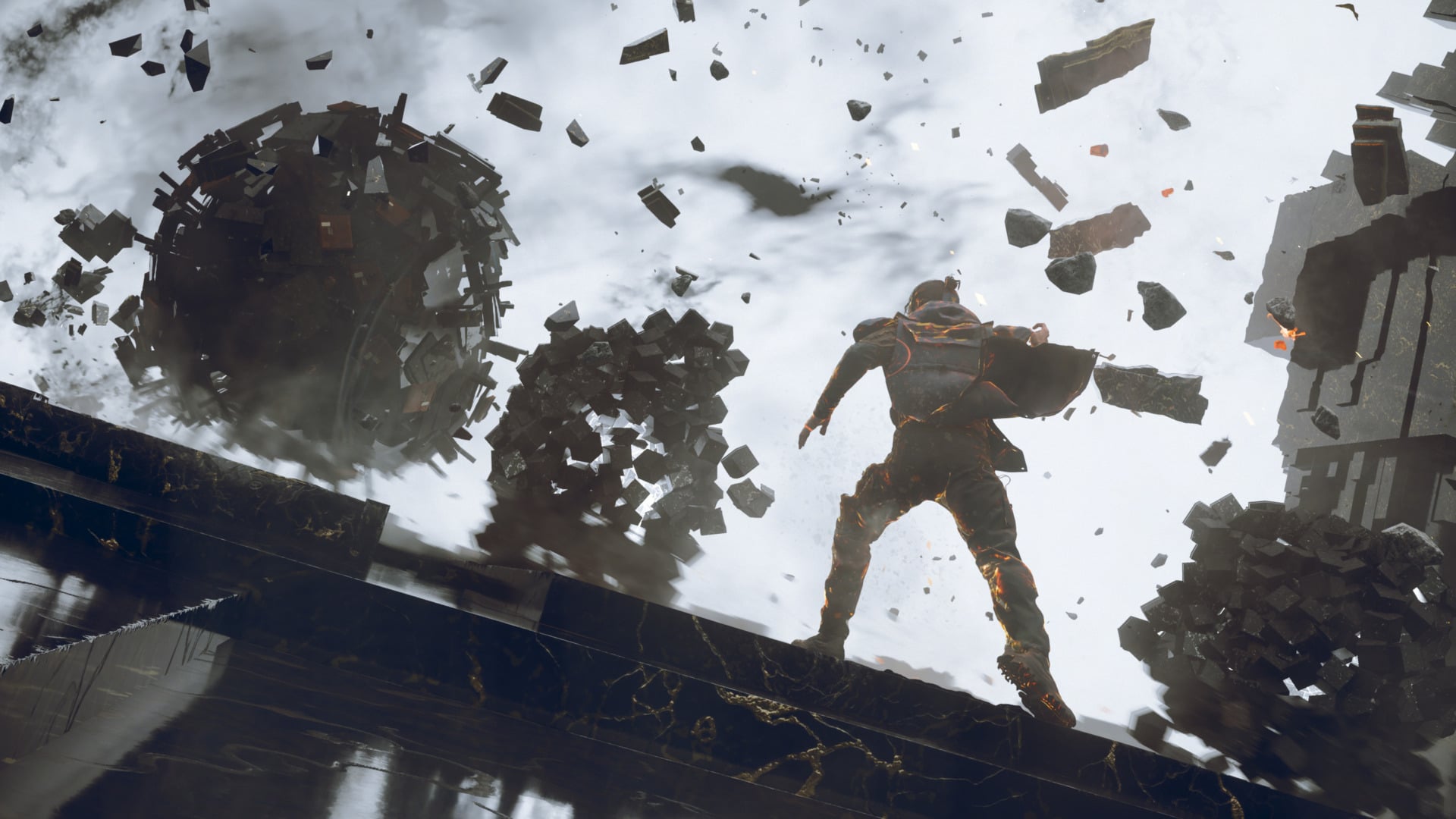
You’ve seen it in trailers: there is another, more opaque antagonistic force afoot in Control Resonant, one that effectively warps spaces and objects into fluctuating, kaleidoscopic recursion art. The game calls this force “The Pattern,” and it’s the basis for the vast majority of its most inventive aesthetic and ludic ideas. From Control onward, Remedy has fully embraced the notion of video games as interactive art exhibits, designing environments under the guiding principle that 3D art and 3D level geometry can be the exact same thing. Resonant represents what is perhaps the most compelling implementation of this ethos yet: The Pattern is a visual and technical marvel, and it’s also an impetus for players to rethink their relationship with spaces that regularly twist and fold back on themselves. There is nothing else that plays quite like this because there is nothing else that looks quite like this—the case for Remedy, once again, is that they understand on a bone-deep level what makes this medium interesting, and pursue their vision with a fervor begotten of generosity. They made Resonant because they want us to understand, too.
I was excited about Control Resonant because I thought I knew what to expect; now I’m excited about Control Resonant because I don’t know what comes next. This is its own beast, unshackled from any self-imposed formal, structural, or narrative obligations. It is what it needs to be, in abundance, and nothing more. We have in Remedy a team of galvanized artists who, against all odds, refuse to repeat themselves—let’s not take that for granted.