By The Straits Times | Created at 2026-08-29 02:56:30 | Updated at 2026-09-19 09:57:25
3 weeks ago
By The Straits Times | Created at 2026-08-29 02:56:30 | Updated at 2026-09-19 09:57:25
3 weeks ago
Sign up now: Get insights on Asia's fast-moving developments
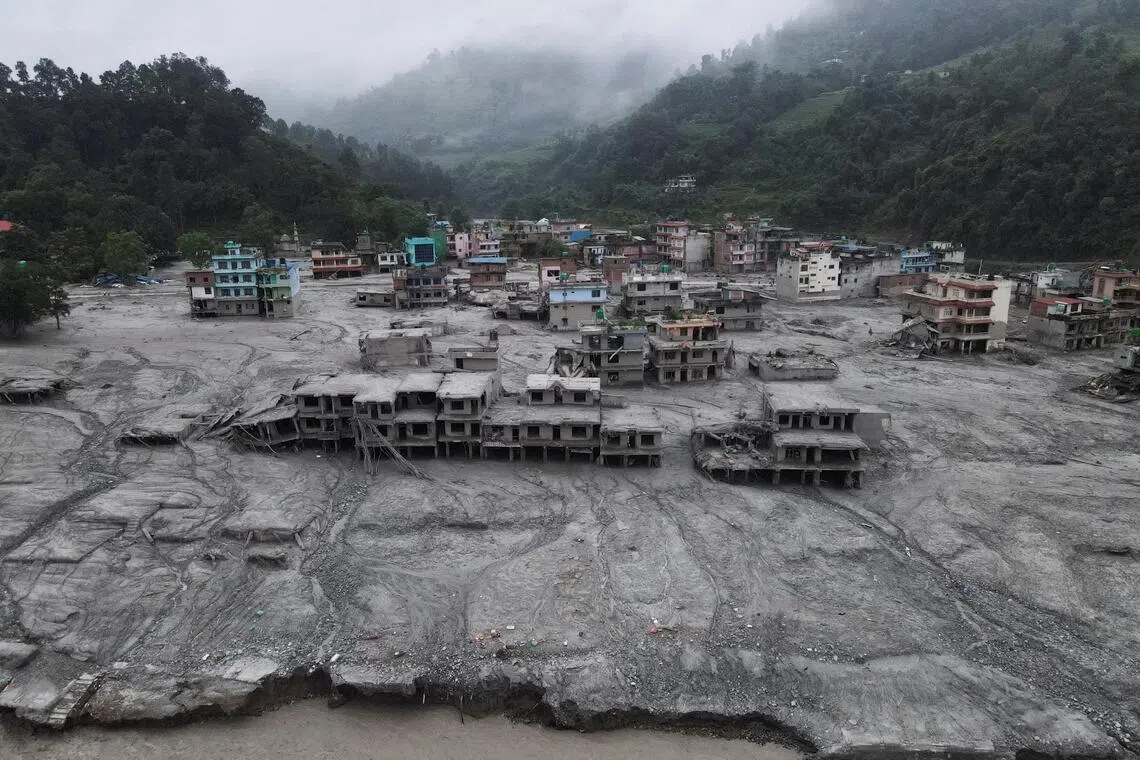
Houses covered in mud after the flash floods and mudslide, at Devighat, Nepal, on Aug 29.
PHOTO: REUTERS
Published Aug 29, 2026, 10:50 AM
Updated Aug 29, 2026, 10:50 AM
- Nepal’s sudden glacier collapse caused fast-moving floods that were hard to predict due to the remote location and lack of intensive monitoring systems.
- Current warning systems focus on slower floods, making them ineffective for sudden disasters like the August 26 flood.
- Experts suggest better risk awareness, clearer evacuation plans, and avoiding flood plains to improve safety against future glacial floods.
It was a wall of water and mud travelling at such speed that it engulfed buildings in seconds. In the wake of the Nepal flood disaster, questions were being asked about whether the deadly torrent could have been predicted or detected quicker to give communities downstream more time to evacuate.
Geologists say they believe the flash floods in Nepal and Tibet were set off by a dual high-altitude landslide and glacial avalanche that unleashed huge volumes of water. Disaster experts say such events are difficult to forecast.