 By GB News (Politics) | Created at 2026-06-15 12:16:36 | Updated at 2026-06-15 15:45:22
4 hours ago
By GB News (Politics) | Created at 2026-06-15 12:16:36 | Updated at 2026-06-15 15:45:22
4 hours ago
From across the Atlantic, the spectacle has been painful to watch.
While the United States and Israel opted to take direct action in late February to confront a growing Iranian threat, Sir Keir Starmer chose equivocation over alliance.
The recently agreed ‘peace deal” between Washington and Tehran has produced mixed reviews, and rightly so.
It has not delivered the end of the regime that many hoped for. Yet, Iran today stands far weaker, more battered and internally strained than it was in February.
The heavy lifting fell to American resolve. Our European partners largely stood aside. But the deepest disappointment was Britain’s hesitation – hardly a surprise under this Labour Government.
The US-UK relationship, vital to trade, intelligence and our shared culture, now limps along on life support. It cannot endure without a better partner in Downing Street.
On February 28, US and Israeli strikes hit key Iranian targets, including those tied to senior leadership.
Supreme Leader Ali Khamenei was killed in the opening phase. Proxies suffered heavy losses, missile and nuclear-related sites were degraded, and the regime’s offensive capacity took a severe blow.
The special relationship was weakened by Sir Keir Starmer's inaction, Lee Cohen writes
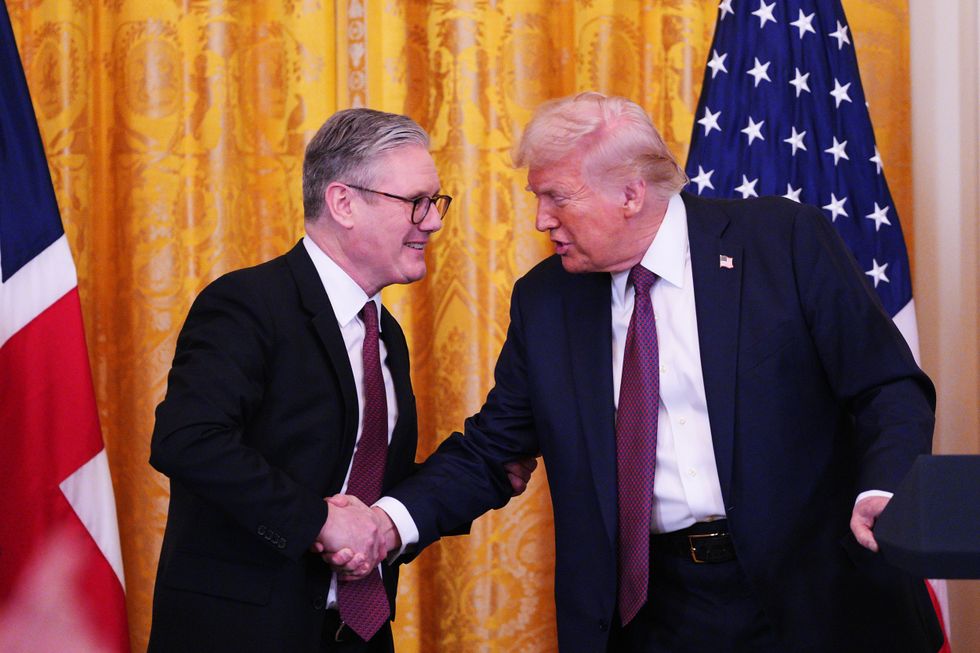
GETTY
Sir Keir's Government responded by stating plainly that Britain “played no role in these strikes".
That was a deliberate choice. While America and Israel confronted a regime that had launched attacks on regional partners and threatened international shipping, the UK prioritised calls for de-escalation and a return to negotiations.
Limited defensive use of British bases was later approved. However, the early public distancing and initial reluctance created immediate friction in Washington.
President Trump’s reported irritation, echoed in transatlantic briefings, was not manufactured. An ally expected to stand closest when it mattered most instead signalled caution from the outset.
Iran has paid a clear price. Its leadership structure was disrupted, thousands of personnel and assets lost, and its ability to threaten its neighbours was sharply reduced.
The Strait of Hormuz, disrupted during the fighting, is now on track to reopen under the new US-Iran framework.
This brings practical relief to energy markets and British consumers. These results stemmed from American and Israeli action, not European diplomacy.
The memorandum — covering ceasefire arrangements, limited sanctions relief, and renewed nuclear talks — reflects that reality. The regime survives under new management, but it is diminished.
The Labour Government, like much of Europe, defaulted to familiar language about international law and the need for calm.
This approach may have avoided short-term entanglement, yet it left Britain with reduced influence over how the crisis ended. When the United States bears the burden alone, the senior partner inevitably questions reliability for future threats. That is the deeper cost.
The contrast with earlier eras is stark. Churchill aligned with Roosevelt against mortal danger without waiting for multilateral approval. Thatcher supported Reagan in confronting Soviet power.
The Special Relationship was built on a shared willingness to act, not merely to comment. Britain’s hesitation here did not stop the conflict; it simply meant America carried more of the weight while British leverage over the outcome shrank.
European allies broadly counselled restraint, with some denying practical support. Britain’s case mattered more because trust and expectations run higher. Intelligence sharing, joint counter-terror operations, and long-term strategy all depend on trust.
When that trust is tested by hesitation in the face of Iranian aggression, the damage is real and lasting.
Britain still benefits from the reopened Strait and reduced regional tension without having committed offensive forces. Yet passive gain comes at the price of diminished standing. Adversaries watch these divisions closely.
A weaker but intact Iranian regime may interpret Western hesitation as encouragement for future rounds.
This strain need not become permanent. The Special Relationship has survived other turbulence in the past.
The British public's instinct and the growing pressure from new parties suggest many recognise what is at stake. Britain retains the institutional memory and capacity to renew old strengths.
From this side of the Atlantic, regard for Britain remains robust. Its people, history and our shared culture still matter deeply to Americans. But regard is no substitute for reliability when dangers mount.
America acted against a real threat and left Iran weaker. The question Britain must now answer is whether it will produce leadership in Downing Street that once again treats the alliance as a vital necessity rather than an optional extra. Until that happens, our partnership remains on life support — too valuable to abandon, yet too weakened to function as it should.