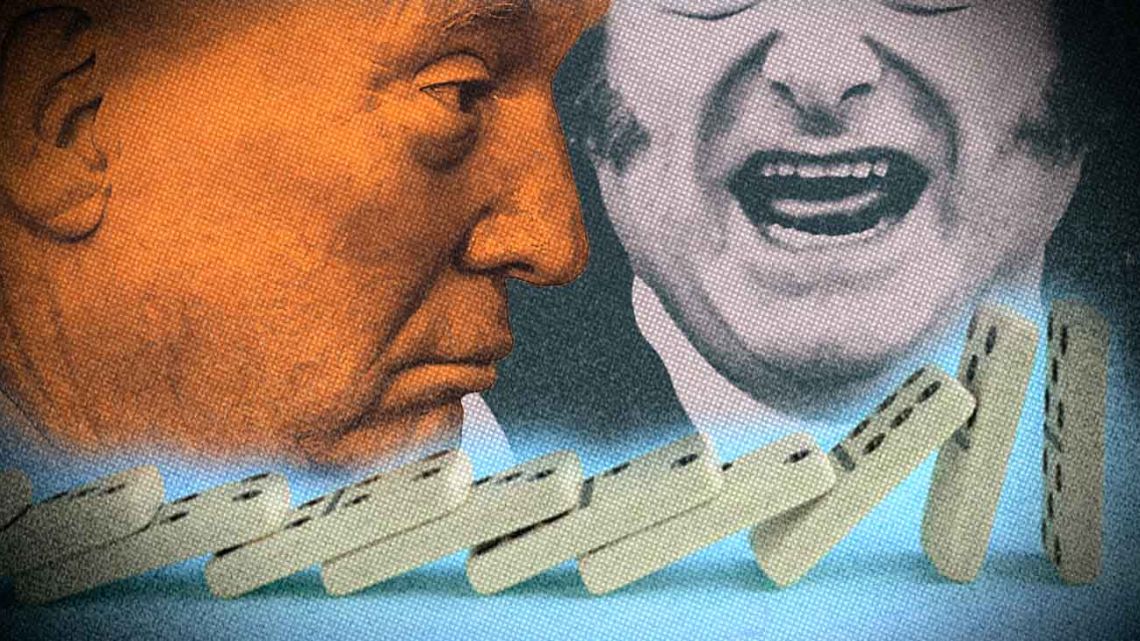
The debate over whether a fiscal surplus suffices for economic take-off has been taking a dangerously new twist in recent months, turning into the question of whether it can be sustained in the first place with the methods used to achieve it. The tight monetary policies applied to starve inflation have led to economic stagnation throughout this year taking a drastic toll of state revenues – the Javier Milei libertarian administration has yet to square the circle of taming inflation without recession.
Even if a booming export-led growth does manage to more than cancel out a slumping consumer-led growth in the big picture, the latter is hitting a revenue collection system centred on indirect levies like IVA value-added tax hard. A key strategy in achieving a fiscal surplus so fast and so consistently has been slashing public service subsidies but their billing has soared so much (a major factor in this winter of discontent) that the ordinary citizen has been forced to choose between paying for their utilities and consumer good extras (subject to a now faltering IVA) – with ignoring the former less of an option than other forms of evasion because the consequence is having electricity or gas cut off. The figures for consumer spending are also made to look worse than they are when only based on supermarkets, due to the explosion of online purchases costing the state a couple of billion dollars – which are not even as clearcut a case of contraband as the remote coves and jungle frontiers of yesteryear. And even less illegal are the imports increasingly cleared by the Milei government in order to force down prices.
A further casualty of the fiscal surplus obsession is infrastructure – the neglect of public works from the very start of the Milei Presidency was further underlined this month with the revelation that Economy Minister Luis Caputo is diverting almost three-quarters of the fiduciary fund for the repair and construction of roads to buttress the Treasury surplus. No wonder provincial governors hitherto allied to Milei are starting to have second thoughts.
Monetary policy seems to be more fundamental than economic for both Milei and Caputo (in many ways reverting to being the finance minister he was during the Mauricio Macri Presidency) but this also presents its conundrums. The Milei government has become almost as addicted as their Kirchnerite predecessors to using a stunted dollar as an anchor against inflation – the current obsession is to prevent the greenback from shooting past the 1,500-peso barrier. Yet their pro-market policies have also created enough confidence to send dollar deposits into record territory and these could be channelled into credits which could lower excessively high interest rates and kickstart a stuttering economy. Yet wary of the possibly inflationary impact of encouraging this demand for dollars, the Central Bank is making no moves in this direction – and far less towards any devaluation to correct peso appreciation.
This year’s economic malaise has been accompanied by political malpractice and social disenchantment. The government’s handling of its private property bill was almost an object lesson of the former – a jumble of disconnected deregulatory reforms mixing apples and oranges with zero explanation for the benefit of public opinion or even Congress allies and carrying the imprudence of proposing the sale of land to foreigners at the height of World Cup ultra-nationalism.
Like the sustainability of the fiscal surplus, public opinion has taken a turn for the worse in recent months. Earlier this year a palpable discontent could be minimised by limiting it to a Buenos Aires obviously disgruntled by deindustrialisation policies disarming its industrial belt (and now also bringing the Tierra del Fuego electronic assembly plants to the point of collapse) but only electing 95 of the 257 deputies and six of the 72 senators between City and Province – thus easily countered by an inland enjoying a revival of regional economies after a Kirchnerism governing almost exclusively for Greater Buenos Aires. Yet recent opinion polls have shown that while almost two-thirds of the country disapproves of current economic policies according to a survey last month, disapproval nears three-quarters in the western mountain provinces at the heart of the mining boom – this might rake in the export dollars but is also a capital-intensive activity which seems to make the rich richer and the poor poorer as well as water scarcer. Disapproval even tops three-quarters among youth – a gigantic part of Milei’s 2023 election victory.
Now is the winter of our discontent made glorious summer by this son of Austria.