By Russia Today | Created at 2026-09-17 23:10:28 | Updated at 2026-10-08 06:15:27
2 weeks ago
By Russia Today | Created at 2026-09-17 23:10:28 | Updated at 2026-10-08 06:15:27
2 weeks ago
Such a status does not exist in the bloc’s treaties and has raised concerns among member states
European Commission President Ursula von der Leyen’s proposal to make Canada the EU’s first ‘associate member’ has raised questions about what such a relationship would mean.
The idea, unveiled during von der Leyen’s State of the Union address earlier this week, has drawn reservations from some EU states.
Canadian Prime Minister Mark Carney has since welcomed the EU’s “ambition,” while stressing that Canada is not seeking full membership in the bloc.
So, what exactly is being proposed – and could it actually happen?
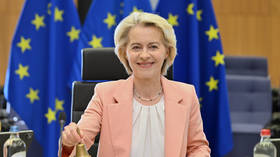
What did von der Leyen propose?
With Carney attending her address in Strasbourg, von der Leyen said the EU and Canada should build what she called an “alliance for the future.”
“We want to bring the relationship with Canada to the highest level possible,” she said, adding that this would cover areas including energy, critical minerals and defense, with the Arctic becoming a “flagship joint project.”
What is ‘associate membership’?
There is currently no status of “associate member” of the EU. The term does not appear in the bloc’s treaties, no country holds such a position, and Brussels has yet to define what rights or obligations it would give Canada.
The European Commission has described the idea as a new form of partnership that would create the closest possible association with a country outside Europe. It remains unclear whether Canada would gain greater access to the EU single market or which EU rules it might have to follow.
”Nobody really knows what it means,” one EU diplomat told Politico. Another said creating an actual associate membership status would require changes to the bloc’s fundamental treaties – something the diplomat described as “impossible” given the current lack of support.
The EU already has close arrangements with non-members: Norway, Iceland and Liechtenstein participate in its single market through the European Economic Area, while Switzerland has a series of bilateral agreements with the bloc. None, however, is formally an EU ‘associate member.’
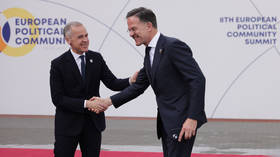
What ties does Canada have with the EU?
The two sides already have extensive economic and security ties. Their Comprehensive Economic and Trade Agreement (CETA) has been provisionally applied since 2017 and removed most tariffs.
They signed a Security and Defense Partnership in 2025, while Canada this year became the first non-European country to join the EU’s SAFE defense program.
Ottawa has sought closer economic ties with Europe as it looks to reduce its heavy dependence on the US following tariff disputes with Washington.
What has been Canada's response?
Carney told the European Parliament on Thursday that Canada “welcomes this ambition,” but stressed that Ottawa is not seeking full EU membership.
“The precise nomenclature for Europe is a question for Europe,” he later said, adding that “what matters is the substance.”
Carney proposed deeper cooperation in critical minerals, energy and defense, along with “seamless” digital trade in non-agricultural goods and services, and greater opportunities for young Canadians and Europeans to work and study across the Atlantic.
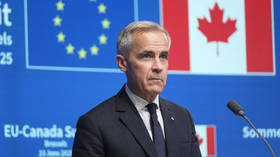
Canada’s ambassador-designate to the EU, Jonathan Wilkinson, said Ottawa had discussed the idea with Brussels beforehand, but cautioned against settling on a label before determining what the relationship would involve.
How have EU capitals received the proposal?
Von der Leyen’s announcement reportedly caught EU capitals by surprise. Unnamed diplomats told Politico that member states had not been asked to sign off on the associate-membership proposal before she unveiled it.
One suggested Canada could receive something resembling the EU’s deep trade arrangements with Ukraine, Moldova and Georgia, adding: “Member states will not agree on anything else.”
Germany has also questioned the proposed label. Government spokesman Stefan Kornelius said the terminology should be reconsidered.
The Financial Times has reported opposition in Berlin to fast-tracking a special status for Canada, including concerns about its implications for other EU partners.
How has Washington reacted?
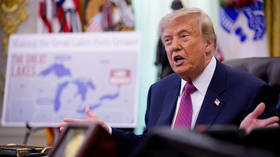
US President Donald Trump has called the idea “laughable” and warned of economic retaliation if he considered it hostile to Washington.
”If it’s a good intention, that’s fine,” Trump said, but warned of “very heavy tariffs” on Europe if he believed otherwise. He also raised the possibility of stopping trade with Europe “on many things.”
Carney responded that “no one is going to dictate” with whom Canada can strike international agreements. He has nevertheless insisted that closer European ties are “not a reaction to something else” and could make Canada a “stronger” US partner.
Why is this happening now?
Canada has been seeking to diversify its trade as relations with its largest trading partner have deteriorated. More than 70% of Canadian merchandise exports still go to the US, leaving Ottawa heavily exposed to changes in American trade policy.
The Arctic is also an area of common interest. Canada is one of eight Arctic states, while only Denmark, Finland and Sweden among EU members have territory in the region. Carney mentioned Canada’s “unique Arctic geography” among the assets it could bring to closer cooperation with Europe.

Just days before von der Leyen’s proposal, European leaders meeting at the European Arctic Summit in Finland called for a stronger EU role in the region. Von der Leyen subsequently named the Arctic as a “flagship joint project” with Canada, without detailing what it would involve.
Could this actually happen?
Canada is not the first country for which an ambiguous status has been discussed. German Chancellor Friedrich Merz floated a similar model for Ukraine earlier this year, but Kiev rejected it in favor of pursuing full EU membership. However, the idea failed to gain broad support within the bloc.
Canada’s proposed status has yet to be defined and would require the backing of EU member states. Brussels and Ottawa are expected to continue talks ahead of the next Canada-EU summit in Montreal on October 29-30.