By The Diplomat | Created at 2026-09-28 16:47:06 | Updated at 2026-09-28 21:00:44
6 hours ago
By The Diplomat | Created at 2026-09-28 16:47:06 | Updated at 2026-09-28 21:00:44
6 hours ago
The summit between U.S. President Donald Trump and Chinese President Xi Jinping achieved one central objective: stabilization. It did not resolve the China-U.S. rivalry but helped contain it, by restoring a more predictable framework for managing tensions over trade, technology, and geopolitics.
Its main concrete outcome was modest: a two-month extension, until January 2027, of the trade truce first agreed after the Trump-Xi meeting in Busan a year ago, when Washington lowered tariffs and Beijing suspended export controls on rare earths and other critical minerals.
The two sides also activated the China-U.S. Boards of Trade and Investment and mutual support for each other’s G20 and APEC presidencies. The message is clear: not genuine rapprochement, but more disciplined management of strategic competition.
Yet the summit’s most consequential exchanges may have taken place behind closed doors over Iran. The public readout was brief, but Trump pressed Xi over Chinese support for Tehran, while both leaders publicly agreed that Iran must not acquire a nuclear weapon.
For the world’s two largest economies, which together account for nearly half of global economic output, de-escalation makes strategic sense, though for different reasons. Both sides would like to use a period of relative stability to buy time to reduce vulnerabilities, strengthen resilience, and recalibrate economic dependencies.
Diplomatically, both leaders are also playing to domestic audiences. Trump is seeking tangible economic gains, from agricultural purchases to aircraft orders, consistent with his long-standing focus on reducing the U.S. trade deficit and addressing structural imbalances that have weakened American manufacturing. Xi, meanwhile, wants to show that Washington is treating China as an equal, while easing the economic pressure Washington has steadily increased toward Chinese companies. For Beijing, stability is economic as well as diplomatic: détente buys time to support a weak domestic economy increasingly reliant on external demand as consumption at home remains subdued.
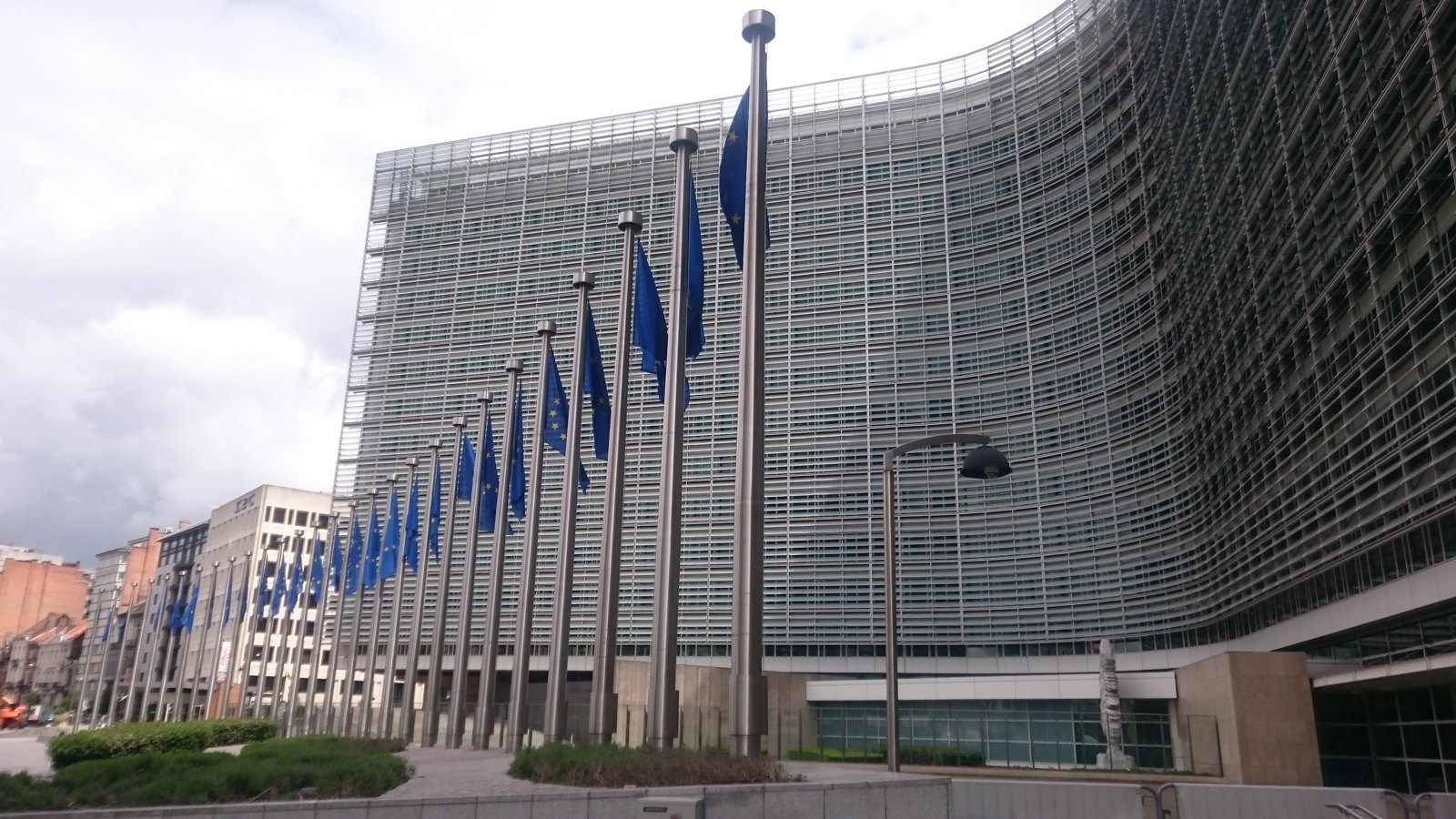
The European Union was another important audience for the summit. Decisions taken in Washington and Beijing increasingly shape European trade, technology, energy, and security.
First, Brussels and major European capitals have a strong interest in stable China-U.S. relations, particularly at a time when instability in the Middle East is generating mounting economic pressures on Europe through higher energy costs, disrupted trade routes, inflationary pressures, and weaker industrial competitiveness.
Second, Europe fears becoming an adjustment variable in the China-U.S. strategic competition. Washington holds technological leverage; Beijing controls minerals and key manufacturing supply chains. Europe remains exposed to both. The question is whether the EU can turn its own economic weight into strategic agency rather than simply absorb the consequences of decisions taken elsewhere.
Consider trade relations. When China-U.S. trade tensions intensify, Chinese goods shut out of the American market are increasingly redirected toward Europe, raising fears of a deeper China shock. The automotive sector is already reshaping European perceptions of China, but the pressure extend well beyond card. The question is how many other industries will follow.
In 2025, the EU increasingly became China’s primary export destination and trade deficit with China reached nearly 360 billion euro, with Chinese exports to Europe almost double the value of EU exports to China. Additional U.S. restrictions on Chinese imports could deepen this imbalance further.
At the same time, any China-U.S. managed trade arrangement that redirects Chinese purchases toward American goods could come at the expense of European exporters. Europe therefore faces pressure in both directions, from trade diversion when tensions rise and from preferential bilateral deals when they ease. On the other side, if China-U.S. relations stabilize, Beijing has less incentive to make concessions to Brussels. Either way, Europe risks becoming the adjustment variable in China-U.S. competition: absorbing displaced Chinese production while bilateral deals between Washington and Beijing are struck largely over its head.
Third, like the United States, the EU remains heavily dependent on China for rare earths, permanent magnets, and critical minerals, essential for Europe’s green, digital, and defense industries. 98 percent of EU demand for rare earth magnets is met by Chinese imports. The Trump-Xi Busan agreement in October 2025 brought relief also to Europe by easing immediate supply pressures. The recent China-U.S. summit produced no major new breakthrough, only an agreement to keep working on shortages and shipment levels.
For Europe, this may preserve some near-term stability, but it does little to reduce the underlying vulnerability. There is still a risk that a bilateral China-U.S. accommodation could improve supply security for American companies without resolving Europe’s exposure. In response, Brussels is increasingly aligning with U.S.-led initiatives, such as Pax Silica, and its own Critical Raw Materials Act to diversify supply chains, though reducing dependence on China will require years of investment, industrial capacity building, and transatlantic coordination.
Fourth, artificial intelligence. The Trump-Xi meeting produced no binding agreement, although the two sides launched an AI dialogue and a channel to manage serious incidents. Disputes over advanced chip exports remain unresolved. Beijing has an interest in buying time to reduce its dependence on U.S. technology, without the added burden of new tariffs and restrictions on Chinese companies.
For the EU, the risk is that the rules of AI race are increasingly shaped in a China-U.S. channel where Brussels has little influence. In the meantime, Europe remains heavily reliant on American processors and cloud providers and Chinese supply chains. The EU produces less than 10 percent of global semiconductors. Brussels is responding with its Technology Sovereignty Package paired with the Chips Act 2.0 and the Cloud and AI Development Act that aim to triple European data center capacity within five to seven years. Both acts are still proposals, however, with binding law months or possibly years away.
Attention will now turn to the next EU-China Summit, which is slated to take place in Beijing on December 7, as Brussels is seeking tangible results from the EU-China Trade and Investment Council. The European Union has considerable leverage of its own, through its market, regulatory power, trade instruments, and industrial base. The question is whether is prepared and unified to use that leverage with China.
That is also why transatlantic coordination matters. Beijing benefits when U.S. and European positions diverge, while Washington has a clear interest in closer European alignment with its economic security approach. Europe’s strategic challenge is to avoid becoming merely the arena in which China-U.S. competition plays out and instead use its own agency to shape the terms of that competition.