By The Rio Times | Created at 2026-08-28 06:31:46 | Updated at 2026-09-27 21:02:29
1 month ago
By The Rio Times | Created at 2026-08-28 06:31:46 | Updated at 2026-09-27 21:02:29
1 month ago
BRAZIL · MARKETS
Key Facts
—What happened: Fitch affirmed Rumo at BB+ on 26 August, removed the negative watch, and set a negative outlook.
—The catch: The outlook follows parent company Cosan, rated BB-, which caps Rumo under Fitch’s own rules.
—Cosan’s relief: Cosan’s own negative watch was lifted on 21 August after asset sales and debt cuts.
—Rumo’s strength: Record first-quarter volumes of 20.2 billion tonne-kilometers and EBITDA of R$1.75 billion (US$339 million).
—The debt picture: Net debt of R$16.9 billion (US$3.28 billion), or 2.1 times EBITDA, with Fitch projecting at most three times Ebitdar through 2028.
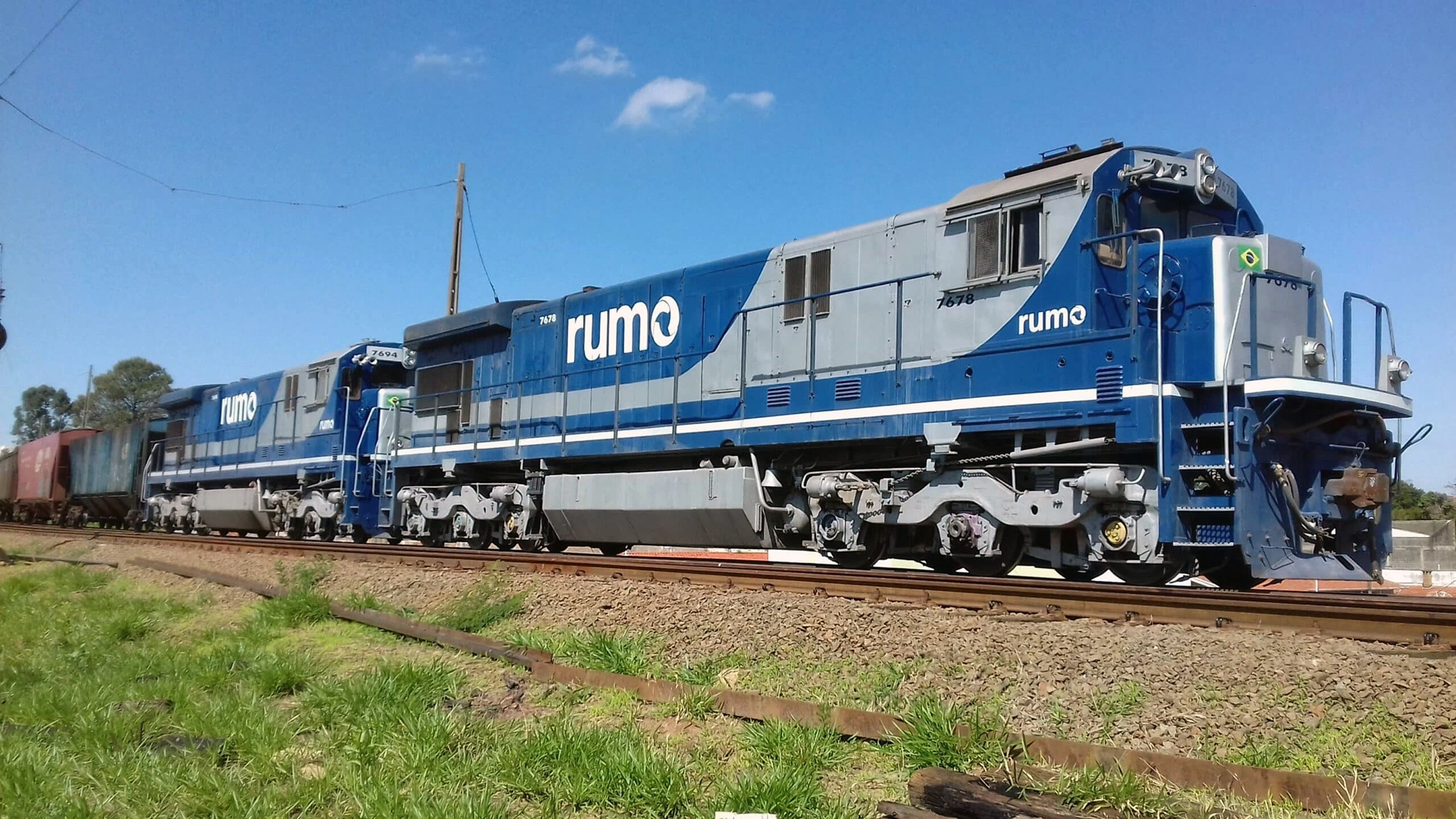
Fitch Ratings kept Rumo, Brazil’s largest railway operator, at BB+ this week but attached a negative outlook. The agency removed its negative watch, yet warned that parent company Cosan still caps the rail firm’s credit.
Why the negative outlook follows Cosan
The decision came on Tuesday 26 August, days after Fitch made the same move on Cosan. The agency affirmed Rumo’s long-term ratings at BB+ and its national rating at AAA(bra), the top grade.
Fitch applies a parent-and-subsidiary methodology to the two companies. Under those rules, Rumo’s rating cannot drift far above Cosan’s BB- grade.
Cosan controls Rumo with about 30 percent of its capital and a majority of board seats. Its own negative watch was lifted on 21 August, after divestments and debt reduction.
The group has been selling holdings, including its logistics arm Compass, to cut a heavy debt load. Its fuels venture Raízen, co-owned with Shell, entered extrajudicial recovery earlier this year.
Shell agreed to inject R$3.5 billion (US$680 million) into Raízen to keep it running. That support steadied Cosan but did not remove the pressure on its credit profile.
Rumo’s own books stay solid
On its own, Rumo looks far stronger than its negative outlook suggests. Fitch praised its solid business position, robust operating cash flow, and strong liquidity.
The agency expects free cash flow to stay negative through 2028 as investment continues. Even so, it projects net debt at or below three times Ebitdar in 2026 to 2028.
Ebitdar is earnings before interest, taxes, depreciation, amortization, and rent. First-quarter results backed that confidence.
Rumo moved a record 20.2 billion useful tonne-kilometers from January to March, up 25 percent from a year earlier. Useful tonne-kilometers measure freight by weight and distance.
Adjusted EBITDA reached R$1.75 billion (US$339 million), up 7 percent year on year. EBITDA is earnings before interest, taxes, depreciation, and amortization.
Net debt stood at R$16.9 billion (US$3.28 billion) at the end of March. That equals 2.1 times adjusted EBITDA, a comfortable level for a capital-intensive railway.
Live Company IntelligenceCosan S.A — the full investor dossierInside: live share price, market cap, three-year financials, valuation, ESG and peer benchmarks — plus the latest Rio Times coverage.C
◆ Live Company Intelligence
Cosan
SA: CSAN3CSAN3EnergyOil & Gas Refining & Marketing
Valuation & profitability
Market capR$14.63B
Revenue (TTM)R$40.08B
Profit margin-22.2%
Return on equity-27.2%
Price & risk
52-wk low
$3.0952-wk high
$8.03
Beta (volatility)0.49
200-day average$4.91
Revenue trend · 6y
20202025
Latest R$40.42B
Ownership
Institutions26.9%
Shares outstanding3.94B
Dividend
No regular dividend — earnings reinvested for growth.
What Cosan does. Cosan S.A. engages in the fuel distribution business. It operates through Raízen, Compass, Moove, Rumo, and Radar segments. The company's Raízen segment engages in the production, marketing, origination, and trading of sugar, as well as ethanol; production and marketing of bioenergy, and solar energy and biogas; trading and resale of electricity; and…
What the negative outlook means
A negative outlook signals that a downgrade is possible within 12 to 24 months. For Rumo, the risk travels downhill from Cosan rather than up from the tracks.
Other agencies have been tougher on the railway. Moody’s cut Rumo to Ba3 in June, and S&P Global rates it BB-, both with a negative view.
Fitch’s national-scale AAA(bra) shows how strongly domestic analysts view Rumo’s standalone strength. The gap with the BB+ global grade is entirely a Cosan story.
The next trigger is how fast Cosan keeps cutting debt. Asset sales and Raízen’s restructuring will decide whether the outlook stabilizes or turns into a downgrade.
Frequently Asked Questions
What did Fitch decide on Rumo?
Fitch affirmed Rumo’s BB+ global rating and its top AAA(bra) national rating on 26 August 2026. It removed the negative watch but set a negative outlook, signaling a possible downgrade within 12 to 24 months.
Why does Cosan weigh on Rumo’s rating?
Cosan controls Rumo and is rated BB-, three notches below its railway. Fitch’s parent-and-subsidiary rules cap Rumo’s rating near its parent’s, so Cosan’s heavy debt keeps Rumo’s outlook negative.
Is Rumo’s business itself in trouble?
No. Rumo posted record first-quarter freight volumes and rising earnings, with net debt of 2.1 times EBITDA. Fitch praised its cash flow, liquidity, and solid business position.
Sources: Valor Econômico, Fitch Ratings, Rumo first-quarter 2026 results, Moody’s and S&P Global. Exchange rate: R$5.1503 per US dollar on 27 August 2026.
This article was produced by The Rio Times’ automated newsroom system. How we use AI · Report an error
LatAm Markets: Live Signals → — real-time movers, turnover leaders and FX across Latin America.
The Rio Times · Power Map
See who really holds power in Latin America
Click to open the Power Map →