By The Rio Times | Created at 2026-09-19 16:41:33 | Updated at 2026-09-19 22:53:21
6 hours ago
By The Rio Times | Created at 2026-09-19 16:41:33 | Updated at 2026-09-19 22:53:21
6 hours ago
VENEZUELA · NEWS
Key Facts
- —What happened Police detained five people on 16 September 2026 after a protest over long power cuts in Barinas.
- —The charges Blocking a public road, public incitement and criminal association, according to the rights group Fundehullan.
- —Their status A court released them on 17 September 2026 but ordered them to report every 20 days.
- —The catch Prosecutors and the court have not published any statement, so details come from Fundehullan and local media.
- —Who it affects Residents of Barinas and other states where blackouts have lasted many hours.
- —What comes next The case stays open, and no trial date has been announced.
Prosecutors charged five people detained after a protest over long blackouts in Barinas state, a local rights group reports.
One-stop reference
Company Intelligence
Every listed company in Latin America — financials, ownership and structure for 1,450+ companies across 26 exchanges, in one place.
Prosecutors have charged five people detained after a Barinas power cut protest in Venezuela, a rights group said on 18 September 2026. They are free, but must report to a court every 20 days.
What happened in Barinas
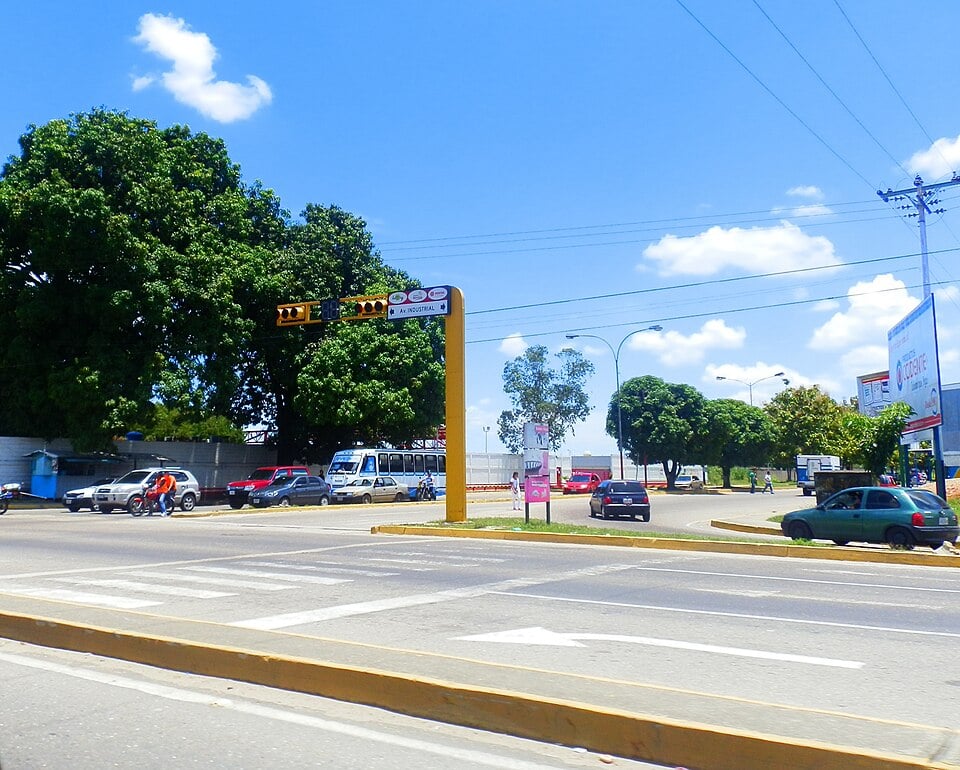
Officers of the Bolivarian National Police (PNB) detained five people on Wednesday, 16 September 2026, in Llano Alto, Barinas state. The newspaper El Impulso reported the place and the police force involved.
The five had joined a protest against power cuts of more than 16 hours in a row. This is according to the Los Llanos Human Rights Foundation (Fundehullan).
The group says the five appeared before a court on Thursday, 17 September 2026. They were released that day under a court order rather than held in custody.
Local media named them as José Carrero, Freddy Daniel Pérez Camacho, Denis Díaz, Maikel Pérez and José Coiran. Several outlets describe them as young people, but their ages have not been published.
The charges after the Barinas power cut protest
Fundehullan said Venezuela’s Ministerio Público, the national prosecutor’s office, accused the five of three offences. These are blocking a public road, public incitement and “agavillamiento”, a form of criminal association.
The newspaper El Impulso gave a slightly different list. It named resisting authority in place of blocking a public road.
The court placed the five under a reporting order. They must appear before a criminal court every 20 days while the case continues.
Fundehullan’s president, Roland García, rejected the charges. He said that asking for basic public services such as electricity is not a crime but a constitutional right.
Why the power cuts sparked anger
On 16 September 2026, the newspaper El Nacional reported more than ten protests at the same time in Barinas. They followed a long power cut during the night.
Residents blocked roads, burned tyres and banged pots in eight parts of the city of Barinas and three other municipalities. They asked for an end to power rationing.
The news agency AFP reported similar protests in Barinas and Valencia in mid-August. In early September, residents also blocked the road between Táchira and Barinas at night.
Traders at two city markets in Barinas, La Carolina and Bicentenario, told La Noticia de Barinas they are close to bankruptcy. They blame fewer customers and shorter working hours.
A wider electricity problem
The outages are not limited to Barinas. On 30 August 2026, the news site Efecto Cocuyo reported a night blackout in at least five western states.
On 15 September 2026, the same outlet reported sharp voltage drops in at least 11 states and the capital, Caracas. Some areas lost power completely.
In August, the government cut working hours in the public sector to ease pressure on the grid, AFP reported. The government blames foreign sanctions for the failures, according to the news agency EFE.
Opposition parties and rights groups point instead to corruption and poor maintenance, EFE reported.
The political setting
Delcy Rodríguez has been Venezuela’s acting president since 5 January 2026, after US forces captured Nicolás Maduro. The National Assembly appointed Larry Devoe as attorney general in April 2026.
On 16 September 2026, a United Nations fact-finding mission said Venezuela’s security structures remain largely unchanged. It said journalists and civil society groups are still obstructed in their work.
The mission’s chair, Sofía Macher, said the drop in some of the harshest forms of repression is notable. She added that it does not yet amount to a change in the system.
Why this matters for expats and investors
For people living in or investing in Venezuela, repeated blackouts are a daily business risk. Shops, farms and offices lose working hours, and cold goods can spoil.
Traders in Barinas say card payments often fail during outages, which cuts sales further. Companies may need generators, backup plans and extra stock.
The case also shows that joining a street protest can bring criminal charges, especially where roads are blocked. Foreign residents should follow local news and avoid road blockades.
Investors often watch how courts treat protests as a sign of legal predictability. This case will be one small signal of how the new government handles public anger over services.
What is not known
The Ministerio Público and the court have not published a statement or case file about the five. The details come from Fundehullan and Venezuelan media.
It is not known who the prosecutor or judge is, or whether the five have private lawyers. The date of any next hearing has also not been announced.
Fundehullan says it will ask for a criminal investigation into how the officers acted. It is not clear if the authorities will respond.
What comes next for the five
The five remain free, but they must report to the court every 20 days. Fundehullan is asking for the case to be dropped.
The next steps will depend on the prosecutor’s office and the court. Any change in the power supply may also shape how many new protests take place.
Frequently Asked Questions
Frequently Asked Questions
What were the five people in Barinas charged with?
According to Fundehullan, prosecutors accused them of blocking a public road, public incitement and criminal association. One newspaper listed resisting authority instead of road blocking.
Are the five in prison?
No. A court released them on 17 September 2026, but they must report to the court every 20 days.
Why did people protest in Barinas?
They protested against power cuts that lasted more than 16 hours in a row, according to Fundehullan.
Sources: Fundación de Derechos Humanos Los Llanos (Fundehullan) statement, 18 September 2026; El Nacional; El Impulso; El Pitazo; Efecto Cocuyo; La Noticia de Barinas; AFP; EFE; UN Independent International Fact-Finding Mission on Venezuela, 16 September 2026.